
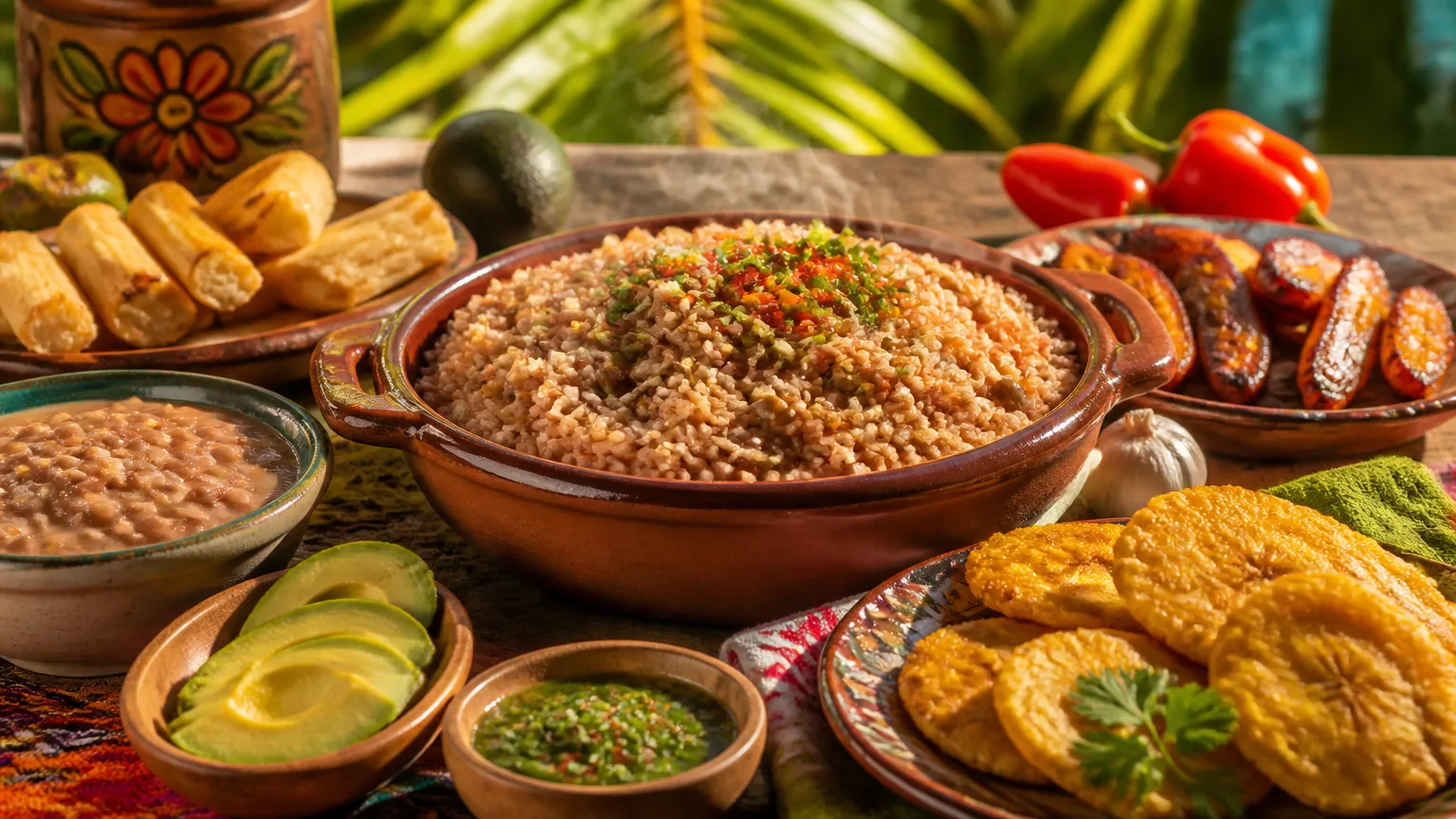
Puerto Rican food is flavorful, starch-centered, and aromatic, shaped by the island’s layered history. Indigenous Taíno ingredients, Spanish cooking methods, African culinary traditions, and wider Caribbean influences come together in dishes built around plantains, rice, beans, root vegetables, herbs, and bold seasonings.
Classic recipes often draw depth from sofrito, a fragrant blend of peppers, onions, garlic, herbs, and other aromatics. Cooking methods such as roasting, frying, stewing, and simmering create satisfying textures and layered flavor. For a broader look at traditional Puerto Rican food, readers can explore the classic dishes that define the island’s culinary identity.
This article focuses on meat-free ways to experience those flavors. Vegetarian Puerto Rican dishes can highlight the cuisine’s essential ingredients without suggesting that every traditional recipe is vegetarian. Instead, they offer thoughtful adaptations that preserve familiar techniques, seasonings, and comforting textures.
Expect dishes centered on creamy beans, savory rice, sweet plantains, hearty tubers, and vegetables prepared with care. A bowl of arroz con habichuelas, for example, can become a complete meal when paired with avocado, roasted vegetables, or crispy plantains.
There is also a spiritual dimension to this approach. Cooking can become an act of gratitude for the land, a mindful practice during preparation, and an expression of compassionate hospitality at the table. These values invite us to slow down and notice how simple ingredients become generous, nourishing meals.
Together, these vegetarian ideas show how Puerto Rican cuisine can be explored with respect, creativity, and a strong connection to its cultural roots.
The Cultural Foundations of Puerto Rican Cuisine
Those values of compassionate hospitality also reflect the cultural foundations of Puerto Rican cuisine. Puerto Rican food developed through centuries of exchange among Taíno, Spanish, and African communities. Each tradition shaped the ingredients, techniques, and shared meals that define the island’s cooking today.
Taíno Ingredients and Island Harvests
The Taíno people introduced foundational ingredients that remain central to Puerto Rican kitchens. These include yuca, yautía, plantains, peppers, and other crops suited to the Caribbean climate.
Root vegetables often appear boiled, mashed, or added to stews. Yuca can become a tender side dish, while yautía adds earthy flavor and a creamy texture to soups. Plantains bring another dimension, ranging from savory green slices to naturally sweet ripe preparations.
These ingredients show how Puerto Rican cooking begins with the land. They also offer a strong foundation for vegetarian meals, especially when paired with beans, grains, vegetables, and herbs.
Spanish Techniques and African Contributions
Spanish influence introduced cooking methods and flavor-building techniques that remain essential. One of the most important is sofrito, a fragrant mixture commonly made with peppers, onions, garlic, herbs, and other aromatics.
Cooks use sofrito as a base for rice, beans, stews, and vegetable dishes. It creates depth before the main ingredients enter the pot. This method helps simple foods develop a rich, savory character without relying on heavy sauces.
African culinary traditions also contributed significantly to Puerto Rican cuisine. African influences can be seen in the use of plantains, tubers, coconut, stews, and resourceful one-pot cooking. These traditions helped shape meals that are practical, flavorful, and designed to serve a group.
A Layered Flavor Profile
Puerto Rican cuisine is not defined by one flavor. Savory sofrito works alongside earthy root vegetables, sweet plantains, coconut, fresh herbs, and gentle heat from peppers.
A vegetarian dish might combine pigeon peas with rice, roasted plantains, and a sofrito-based sauce. Another may pair yuca with garlic, herbs, or a light coconut preparation. These combinations create contrast without overwhelming the ingredients.
For this reason, diners should expect balance rather than intense heat. Puerto Rican food often builds flavor gradually through aromatics, slow cooking, and carefully layered textures.
Vegetarian Adaptations with Cultural Respect
Vegetarian dishes can honor Puerto Rican traditions when they adapt established ingredients and techniques thoughtfully. A plant-based version of beans, rice, or a root vegetable stew can draw from the same cultural foundation as a more traditional preparation.
However, these adaptations should not be presented as replacements for every Puerto Rican dish. They are interpretations inspired by the cuisine’s ingredients, methods, and spirit of sharing. Approaching them with that respect allows vegetarian diners to enjoy the food while recognizing the communities and histories behind it.
Building Vegetarian Puerto Rican Flavor
Vegetarian Puerto Rican food gains its depth from layering flavor, texture, and color. Meat is not required when the cooking begins with a strong base and gives each ingredient time to develop.
Start With Sofrito
Sofrito is the aromatic foundation of many Puerto Rican dishes. It typically combines onion, sweet peppers, garlic, cilantro, and culantro, an herb with a deeper, more earthy flavor.
Culantro may be difficult to find outside Caribbean or Latin American markets. Use extra cilantro, a small amount of ground coriander, or a few cilantro stems as practical substitutes. Blend the ingredients into a coarse paste, then sauté the sofrito gently in oil before adding beans, rice, or vegetables.
This first step builds flavor throughout the dish. For example, sofrito can turn a simple pot of pigeon peas into a fragrant meal or give tomato-based stews a distinctly Puerto Rican character.
Build a Flexible Vegetarian Pantry
Keep ingredients that offer contrasting textures and steady nourishment. Beans provide protein, while starchy vegetables and grains make meals satisfying.
Useful staples include:
- Plantains, rice, yuca, malanga, pumpkin, and corn
- Black beans, red beans, pigeon peas, and chickpeas
- Coconut milk, tomatoes, garlic, onions, and sweet peppers
- Cumin, oregano, black pepper, annatto, and bay leaves
- Fresh cilantro and culantro when available
Green plantains can be boiled, mashed, or fried into savory sides. Ripe plantains add sweetness and caramelized edges. Yuca and malanga bring a dense, creamy texture, while pumpkin softens stews and adds natural sweetness.
Rice and beans create a dependable base, but variety keeps the plate interesting. Try coconut rice with stewed beans, roasted pumpkin with corn, or yuca served with a bright tomato and pepper sauce.
Balance Flavor and Texture
A satisfying plate should include more than one texture. Pair creamy beans with crisp plantains, tender rice with roasted vegetables, or soft pumpkin with toasted corn.
Taste as you cook. Add acidity with lime juice or a small splash of vinegar, then adjust salt and spices gradually. Coconut milk can mellow heat and enrich a stew, while tomatoes add brightness and body.
Mindful preparation also supports the values many readers explore through Hare Krishna Recipes. Clean tools, organized ingredients, and focused cooking make the process calmer and more intentional.
Some cooks may choose to prepare the finished food as an offering. Others may simply practice gratitude for the farmers, ingredients, and shared meal. Either approach encourages attention, cleanliness, and care without assuming a particular devotional practice.
Vegetarian Puerto Rican Dishes to Try
Puerto Rican food offers many satisfying vegetarian options built around plantains, beans, rice, tubers, and bold seasonings. Some dishes are naturally vegetarian, while others require thoughtful substitutions that preserve their traditional character.
Rice, Beans, and Layered Plantain Dishes
Arroz con gandules combines rice with pigeon peas, sofrito, herbs, and savory spices. It is often prepared with pork, but a vegetarian version works well with vegetable broth and extra sofrito. Expect tender, fragrant rice with creamy peas and a rich, herb-forward flavor.
Habichuelas guisadas, or stewed beans, are naturally adaptable to a meat-free kitchen. Simmer pink beans, red beans, or white beans with sofrito, tomato, peppers, potatoes, and spices. The result should be thick and comforting, with soft beans, tender vegetables, and a gently savory sauce. Serve it over arroz con gandules or plain white rice.
Pastelón de plátano is a layered casserole made with ripe plantains and a savory filling. Traditional versions may contain meat, but beans, lentils, mushrooms, seasoned vegetables, or plant-based ground filling create satisfying alternatives. Sweet plantains become soft and custardy as they bake, balancing the filling’s earthy, salty, and aromatic notes.
Stuffed peppers provide another practical home-kitchen adaptation. Fill bell peppers with rice, gandules, beans, sofrito, corn, or chopped vegetables, then bake until tender. Their flavor is savory and slightly sweet, while the filling adds a pleasant contrast between soft vegetables and chewy grains or legumes.
Plantains, Tostones, and Mofongo
Tostones are twice-fried green plantains with crisp edges and a firm, starchy center. They are naturally vegetarian when fried in vegetable oil. Serve them with a garlic dipping sauce, bean stew, or avocado-based accompaniment for a crunchy contrast to softer dishes.
Maduros use ripe plantains, which develop dark skins and deep sweetness. Fry or bake them until caramelized on the outside and tender inside. Their soft, almost jam-like texture pairs especially well with salty beans, savory rice, or spicy vegetable fillings.
Mofongo traditionally combines fried green plantains with garlic, oil, and pork cracklings. To make it vegetarian, replace the cracklings with sautéed mushrooms, roasted vegetables, seasoned beans, or a plant-based filling. The mashed plantains remain dense and slightly coarse, while the filling contributes moisture, umami, and contrast.
Root Vegetables and Calabaza
Yuca con mojo is a naturally vegetarian dish when prepared with oil instead of animal fat. Boiled yuca has a firm, starchy texture, and the garlic, citrus, onion, and herb sauce adds brightness. Remove the tough central fibers before serving, especially when using larger yuca roots.
Calabaza, or Caribbean pumpkin, works in soups, stews, rice dishes, and roasted preparations. Its flesh becomes creamy and mildly sweet when cooked. Combine it with sofrito, beans, coconut milk, or root vegetables for a hearty dish with warm, earthy flavor.
For another plant-based meal, cooks can borrow the careful preparation and devotional simplicity found in a cabbage curry ISKCON recipe. The seasonings differ, but both approaches show how vegetables can become deeply satisfying through patient cooking.
Before serving any vegetarian version, check vegetable broth, seasoning blends, bouillon, sauces, and packaged plant-based fillings. Some contain pork stock, chicken flavoring, lard, dairy, or other animal-derived ingredients. Reading labels helps protect the dish’s vegetarian intent without compromising its Puerto Rican character.
How to Adapt Puerto Rican Classics for a Vegetarian Table
Adapting Puerto Rican classics begins with preserving their cooking methods and flavor foundations. Keep the sofrito, adobo-style seasoning, rice techniques, and slow simmering that give Puerto Rican food its identity.
Match the Substitute to the Dish
Choose a meat alternative based on the texture and cooking time the original dish requires:
Mushrooms: Use in stews, sautés, and fillings where a tender, savory texture works well.
Jackfruit: Add to dishes that traditionally use shredded meat, such as sandwich fillings or braised preparations.
Lentils: Use in picadillo-style dishes, where their hearty texture holds up during simmering.
Chickpeas: Add substance to stews, rice dishes, and vegetable-based fillings.
Tofu: Choose firm or extra-firm tofu for sautéed dishes. Press it first, then brown it for better texture.
Textured vegetable protein: Use when you want a finely crumbled filling that absorbs sofrito and spices.
Extra beans: Add pigeon peas, red beans, or other legumes when the dish benefits from creaminess and staying power.
For example, lentils can replace ground meat in a vegetarian picadillo. Jackfruit works better in a shredded preparation, while mushrooms suit a quick sauté or rich stew.
Build Depth Without Excess Salt
Vegetarian dishes need layered flavor, not simply more seasoning. Roast vegetables before adding them to a stew, and brown mushrooms or tofu to develop savory notes.
Concentrated sofrito provides a strong aromatic base. Tomato adds body and acidity, while toasted cumin, coriander, or oregano can deepen the dish. A small amount of smoked paprika can suggest the richness of slow-cooked meat without overpowering the Puerto Rican profile.
Use tamari sparingly when a dish needs extra umami. It should support the sofrito and vegetables, not make the food taste like soy sauce. Taste as the dish cooks, and adjust acidity, herbs, and spices before reaching for additional salt.
Replace Animal-Based Cooking Staples
Vegetable stock can replace chicken stock in rice, beans, soups, and stews. Select a low-sodium variety so the sofrito and seasonings remain clear.
For pork-based seasoning, combine concentrated sofrito with mushrooms, smoked paprika, toasted spices, and a small amount of tamari. Replace lard with olive oil or another neutral vegetable oil, then brown the ingredients well to preserve the original cooking effect.
Authenticity involves more than copying an ingredient list. It includes technique, cultural context, patience, and the way a dish is shared. Vegetarian cooks can borrow principles from other cuisines, including these healthy vegetarian choices, while keeping Puerto Rican flavor foundations distinct.
Start with the dish’s purpose, then adapt its protein, cooking fat, and stock. This approach preserves its character while making room for a thoughtful vegetarian table.
Creating a Balanced Puerto Rican Vegetarian Meal
A satisfying Puerto Rican vegetarian meal should offer more than a generous portion of starch. Combine familiar flavors with contrasting textures, colors, and levels of richness. The result should feel complete whether you are preparing an everyday dinner, hosting guests, or serving a shared prasadam-inspired meal.
Build the Plate Around Contrast
Rice, plantains, yuca, and mofongo provide comfort and substance. Balance them with beans, vegetables, greens, and something bright or acidic. Sofrito, garlic, herbs, and peppers can provide depth without relying on meat-based stock or heavy sauces.
Try these combinations:
Serve rice and beans with sweet maduros, avocado, and a crisp cabbage salad.
Pair mofongo with sautéed peppers, mushrooms, or eggplant and a simple green salad.
Serve boiled or roasted yuca with seasoned lentils, stewed beans, and garlicky greens.
Balance vegetable pastelón with a bright tomato, cucumber, or citrus salad.
Each plate benefits from clear contrast. Rich mofongo needs fresh vegetables, while sweet plantains pair well with savory beans and a lightly acidic salad. If the meal contains several soft foods, add toasted seeds, pickled onions, or a crisp slaw for texture.
Plan Flavor, Protein, and Texture
Use legumes as the primary protein in many meals. Red beans, pigeon peas, black beans, chickpeas, and lentils add nourishment and pair naturally with rice, yuca, and plantains. For a lighter plate, serve a smaller portion of starch with more greens and vegetables.
Think through the balance before serving:
Richness: Sofrito, olive oil, coconut milk, or avocado
Sweetness: Maduros, roasted squash, or sweet plantains
Acidity: Lime, vinegar, citrus, pickled onions, or fresh tomatoes
Spice: Ají dulce, peppers, black pepper, or a mild hot sauce
Protein: Beans, peas, lentils, or carefully selected plant-based fillings
Texture: Crisp salad, toasted toppings, roasted vegetables, or firm yuca
This approach keeps Puerto Rican food celebratory without making every dish heavy. It also makes substitutions easier when guests avoid dairy, gluten, soy, or particular ingredients.
Cook Ahead and Serve Generously
Batch cooking reduces pressure and supports more thoughtful hospitality. Prepare sofrito in advance and refrigerate or freeze it in small portions. Cook beans, rice, and vegetable fillings ahead of time, then reheat them gently with fresh herbs or a squeeze of citrus.
Plantains can be peeled and sliced before cooking, while yuca and vegetables can be prepared earlier in the day. Keep components separate when possible so textures remain appealing. These methods also work well for easy vegetarian meals when cooking for groups or planning several shared meals.
Serve with presence and generosity. Prepare only what guests can reasonably enjoy, avoid unnecessary waste, and label dishes clearly when dietary needs matter. A colorful salad, warm beans, and a simple rice dish can feel abundant when arranged with care and offered freely.
Frequently Asked Questions About Vegetarian Puerto Rican Food
Is Puerto Rican Food Usually Vegetarian?
Many foundational foods in Puerto Rican food are plant-based. Rice, beans, plantains, yuca, malanga, squash, sofrito, herbs, and peppers form the basis of many meals.
However, traditional recipes often include meat, seafood, pork fat, ham, or animal-based broth. Vegetarians should check preparation methods rather than assume a dish is meat-free. For example, beans may be cooked with ham, and rice may contain chicken stock.
What Is the Best Vegetarian Puerto Rican Dish for Beginners?
A manageable starting point is a plate of beans and rice with fried or baked plantains. This combination introduces several core flavors and textures without requiring advanced cooking skills.
Season the beans with sofrito, garlic, oregano, and a modest amount of cumin if desired. Serve them over rice with sweet plantains for contrast. The meal shows how Puerto Rican cooking builds depth through aromatics, slow cooking, and simple staples.
Is Puerto Rican Food Spicy?
Puerto Rican food is generally aromatic and savory rather than uniformly hot. Sofrito, garlic, onion, oregano, cilantro, and peppers create flavor, but they do not always produce intense heat.
Cooks can adjust spice levels through the type and amount of pepper used. Serve hot sauce separately when feeding a group. This approach keeps the main dish approachable while allowing guests to customize each serving.
Can Vegetarian Puerto Rican Food Be Offered as Prasadam?
Devotees should follow the ingredient standards and preparation practices of their own tradition. Rules may differ regarding onions, garlic, dairy, packaged foods, cooking methods, and whether particular ingredients are suitable for offering.
Mindful preparation can still guide the process:
- Use clean cookware, fresh ingredients, and clearly checked labels.
- Prepare the food with attention, gratitude, and a calm attitude.
- Confirm that broth, seasoning blends, sauces, and plant-based products meet the tradition’s standards.
Some cooks may offer the finished meal, while others may express gratitude without making a formal offering. Both choices require respect for personal practice and community guidance.
How Can Vegetarians Get Enough Protein?
Rice and plantains provide energy, but they should not represent the entire meal. Build balanced portions around beans, lentils, chickpeas, peas, tofu, nuts, or seeds.
For example, serve rice and plantains with pigeon peas, a bean stew, and a fresh salad. Combining legumes with grains across the day supports a varied vegetarian eating pattern. Those with specific nutrition needs should consult a qualified dietitian.
Discovering Puerto Rican Food Through Vegetarian Cooking
Puerto Rican food is defined by history, technique, hospitality, and layered flavor—not by meat alone. Its character often begins with everyday ingredients such as sofrito, beans, rice, plantains, and yuca. Together, these foundations create meals that are aromatic, satisfying, and deeply connected to Puerto Rican kitchens and communities.
Begin with one approachable dish. Prepare rice with pigeon peas, simmer beans with sofrito, or serve roasted plantains with yuca and a fresh salad. These recipes help you understand essential techniques, including seasoning gradually, building flavor in stages, and allowing simple ingredients to complement one another.
As your confidence grows, explore more involved adaptations. Vegetarian mofongo can feature mashed plantains with garlic, olive oil, and a flavorful vegetable filling. A meat-free pastelón can layer sweet plantains with seasoned vegetables, beans, or lentils. These versions should not claim to replace every traditional preparation. Instead, they offer respectful interpretations inspired by the cuisine’s methods, ingredients, and spirit of sharing.
Thoughtful cooking also requires attention to details that can change a dish’s character. Check vegetable broth, bouillon, seasoning blends, sauces, and packaged fillings for animal-derived ingredients. Choose cooking fats and protein substitutes that support the dish’s purpose while preserving its Puerto Rican flavor foundations.
Approach each recipe with curiosity and respect. Learn where its ingredients and techniques come from, recognize that adaptations reflect your own table, and avoid treating vegetarian versions as shortcuts to cultural understanding. A dish becomes more meaningful when its history and the people behind it remain visible.
Vegetarian cooking can also become a practice of presence and service. Prepare food carefully, reduce unnecessary waste, label dishes when guests have dietary needs, and offer meals generously. A warm pot of beans, colorful rice, and ripe plantains can create abundance through care rather than excess.
Start with one dish and allow your understanding to develop through several shared meals. In doing so, you may discover that Puerto Rican cooking offers more than a collection of recipes. It provides a way to honor ingredients, welcome others, and bring gratitude to the table.