
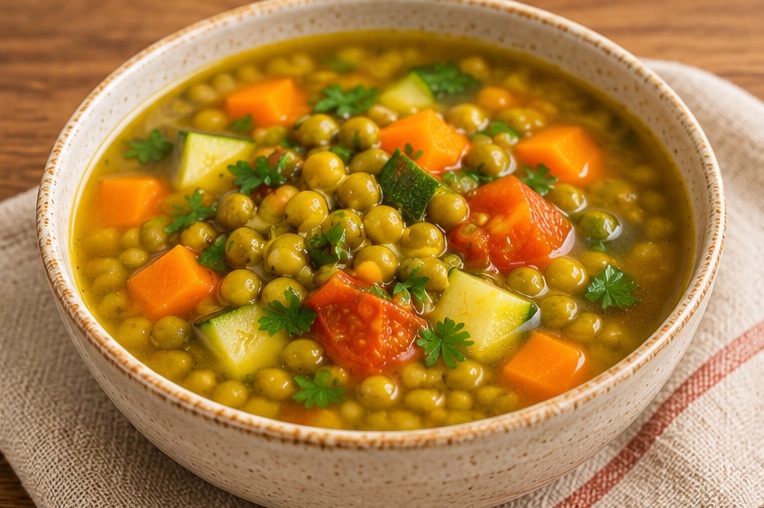
Tender whole green mung beans simmered with carrots, zucchini, ginger and cumin in a light vegetable broth, without onion or garlic.
An original measured recipe for ordinary vegetarian prasadam. No onion, garlic, eggs or mushrooms are specified. This recipe is not a medical treatment or a personalized dietary prescription.
Whole mung beans versus split moong dal
Whole mung beans retain their green skins and give this soup a textured base. It differs from the existing yellow moong dal with radish and the blended pinto-bean tofu soup. Soaking is used to shorten the cooking stage, not as a substitute for cooking.
Cook beans before acidic vegetables
Tomato and lemon can slow softening. Simmer beans until they crush easily before adding tomato, and continue cooking until tender throughout. Timing depends on age and soaking.
Build flavor from individual spices
A little cumin, ginger and coriander provide aroma without stock cubes or commercial masala. The soup should be spoonable; adjust with water rather than adding flour.
Bhakti Thought
Preparing a simple meal with attention and gratitude can support devotional service. Reserve an untouched offering for Krishna before tasting, and share prasadam with care.
PrintWhole Mung Bean and Vegetable Soup

Tender whole green mung beans simmered with carrots, zucchini, ginger and cumin in a light vegetable broth, without onion or garlic.
- Prep Time: 15 minutes
- Refrigerated soaking: 360 minutes
- Cook Time: 45 minutes
- Total Time: 420 minutes
- Yield: 4 servings 1x
- Category: Soup
- Method: Simmering
- Cuisine: Indian-inspired
- Diet: Vegan
Ingredients
- 160 g dry whole green mung beans
- 1 litre drinking water, plus soaking water
- 150 g carrot, diced
- 180 g zucchini, diced
- 120 g tomato, chopped
- 10 g fresh ginger, grated
- 2 teaspoons neutral oil (10 g)
- 1 teaspoon cumin seeds
- 1/2 teaspoon ground coriander
- 1/4 teaspoon ground turmeric
- 1/2 teaspoon fine salt, optional
- 1 tablespoon fresh lemon juice
US & metric measurements — original 1× batch
Use either measurement, not both. Equivalents are approximate; original specified weights are preserved. Counts, optional quantities and amounts to taste remain as written. This reference is for the original batch; multiply both quantities if scaling the recipe.
160 g (approx. 5.64 oz by weight) dry whole green mung beans
1 litre (approx. 4.17 US cups) drinking water, plus soaking water
150 g (approx. 5.29 oz by weight) carrot, diced
180 g (approx. 6.35 oz by weight) zucchini, diced
120 g (approx. 4.23 oz by weight) tomato, chopped
10 g (approx. 0.35 oz by weight) fresh ginger, grated
2 teaspoons neutral oil (10 g)
1 teaspoon (approx. 5 mL) cumin seeds
1/2 teaspoon (approx. 2.5 mL) ground coriander
1/4 teaspoon (approx. 1.25 mL) ground turmeric
1/2 teaspoon (approx. 2.5 mL) fine salt, optional
1 tablespoon (approx. 15 mL) fresh lemon juice
Approximate kitchen conversions: NIST and ingredient-specific baking weights.
Instructions
- Inspect and rinse mung beans. Soak in clean water in the refrigerator for six hours; drain and rinse.
- Simmer beans in fresh measured water for 25–35 minutes, or until nearly tender. Add hot water if needed.
- Warm oil in a clean pan and briefly stir cumin, ginger, coriander and turmeric. Add carrot and cook two minutes. Stir into the beans.
- When beans and carrot are soft, add zucchini and tomato. Simmer another 8–12 minutes until all vegetables and beans are fully tender.
- Finish with optional salt and lemon. Reserve an untouched offering before tasting.
Notes
- Contains mung beans, a legume. Check cross-contact and individual dietary restrictions; not suitable for grain-and-legume-free Ekadasi.
- Nutrition is an approximate estimate per stated reference serving, including measured optional ingredients unless otherwise noted. Product labels, cooked yield and portions affect values. Not kitchen-tested.
- Ingredient quantities and cooking times are editorial estimates; confirm through kitchen testing.
- Nutrition values are estimates per serving unless otherwise specified.
Nutrition
- Serving Size: 1/4 of prepared batch
- Calories: 195
- Sugar: 5 g
- Sodium: 330 mg
- Fat: 3 g
- Saturated Fat: 0.5 g
- Unsaturated Fat: 2 g
- Trans Fat: 0 g
- Carbohydrates: 30 g
- Fiber: 8 g
- Protein: 11 g
- Cholesterol: 0 mg
Serving suggestions
Serve a warm bowl with suitable bread or rice, or alongside other prasadam preparations.
Storage and food safety
Cool in shallow containers and refrigerate within two hours at 40°F (4°C) or below; use within three days. Reheat to 165°F (74°C).
Nutrition and allergens
Contains mung beans, a legume. Check cross-contact and individual dietary restrictions; not suitable for grain-and-legume-free Ekadasi. Nutrient figures are estimates rather than laboratory results.
Frequently Asked Questions
Can I use split moong?
Yes, but it will soften into a different texture and need less cooking.
Do I need to soak beans?
This method assumes soaked beans; unsoaked beans require longer cooking.
Can I omit salt?
Yes.
Is it a fasting soup?
No; mung beans are legumes.
Explore More Recipes
Moong Dal with Carrot, Radish and Tomato