
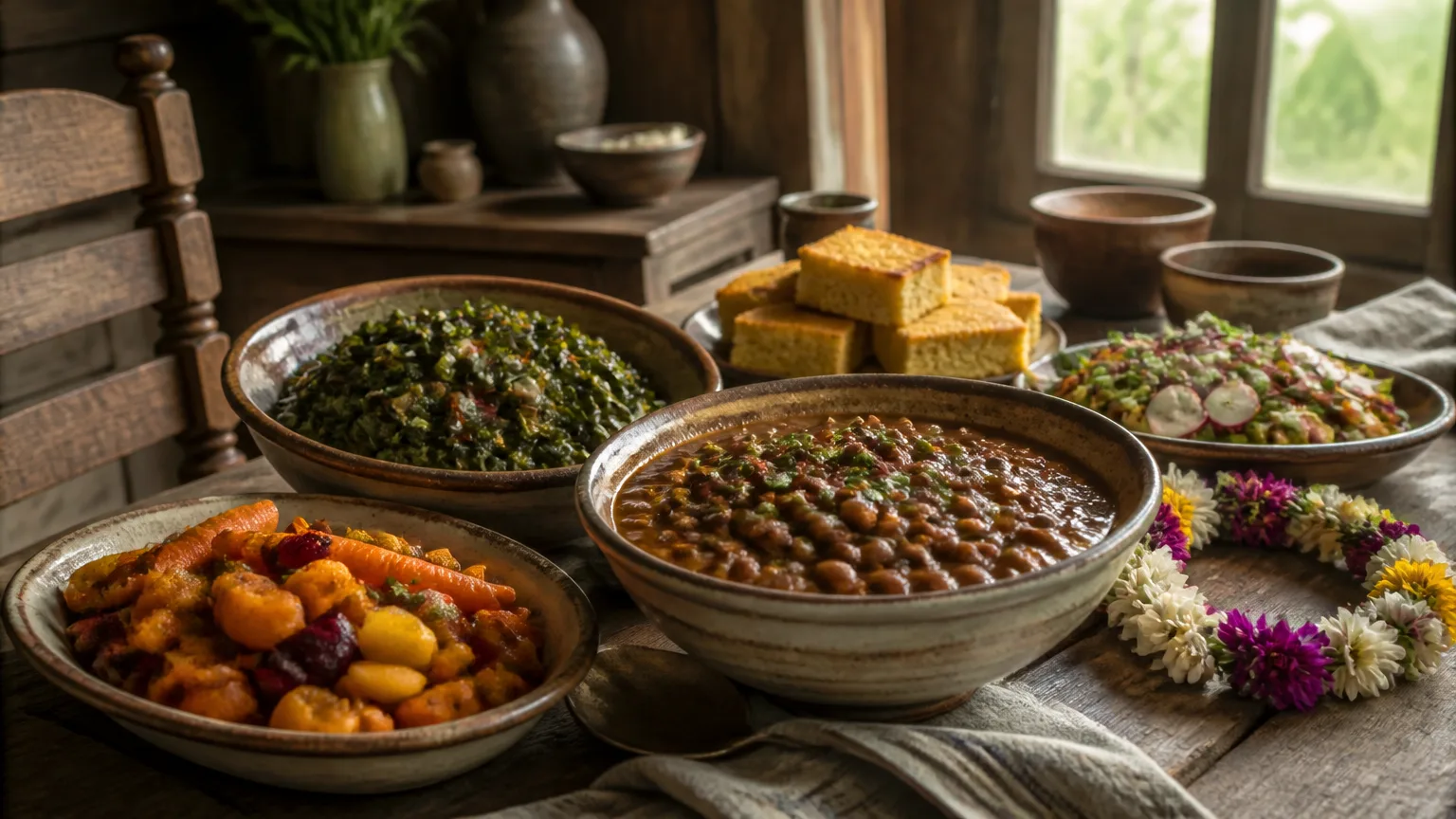
Mary’s Southern cooking brings the warmth of a generous home table to familiar Southern favorites, with every recipe prepared without meat. Think hearty beans, flavorful greens, and comforting sides inspired by Southern traditions. These dishes honor the spirit of home cooking without suggesting there is only one way to make Southern food.
For Hare Krishna practitioners, vegetarian cooking often includes preparing food as an offering to Krishna. You can adapt these recipes to your own beliefs and practices, whether you cook for spiritual reasons or simply want satisfying meat-free meals. The focus is on thoughtful ingredients, welcoming flavors, and food meant to be shared.
Try these classic-inspired recipes when you want Southern comfort with a vegetarian approach. For more devotional vegetarian inspiration, explore the recipe collection at Hare Krishna Recipes.
A Thoughtful Approach to Southern Vegetarian Cooking
Southern vegetarian cooking begins with the qualities that make comfort food memorable: generous seasoning, satisfying textures, and a welcoming spirit. Beans, greens, corn, squash, and other vegetables can carry those qualities without meat. A pot of stewed butter beans, for example, can feel hearty when cooked slowly with herbs, spices, and a flavorful broth.
There is no single definitive Southern recipe. Family methods and ingredients vary across regions and households, shaped by what cooks grow, buy, and pass down. That variety is part of the tradition, and it leaves room to adapt familiar dishes to vegetarian kitchens. For more background on how food and identity connect, see the cultural context of Madea’s home cooking.
A practical starting point is to replace meat stock with vegetable broth. In greens, beans, or vegetable stews, broth adds savory depth while allowing the main ingredients to shine. Smoked paprika can suggest some of the smoky flavor traditionally supplied by ham or bacon. Other useful choices include black pepper, thyme, bay leaf, and a splash of vinegar near the end of cooking.
Build flavor in layers rather than relying on one substitute. Sauté vegetables and seasonings first, then add broth and let the dish simmer until its flavors come together. For example, a pot of black-eyed peas can gain richness from browned mushrooms, smoked paprika, and slow cooking. Taste as you go, and adjust salt, spice, and acidity before serving.
Dietary observances can shape the seasonings, too. Hare Krishna cooking commonly avoids meat, fish, and eggs; some practitioners also avoid onion and garlic. These recipes can be adjusted to individual observances—for instance, by seasoning with ginger, herbs, or other permitted ingredients instead. Check the ingredients and make substitutions that suit your needs.
The goal of mary's southern cooking is not to reproduce one fixed formula. It is to preserve the hospitality and savory character of Southern dishes while choosing ingredients that fit your table. Serve a vegetable-rich stew with cornbread, or share seasoned beans alongside greens for a meal built around comfort and generosity.
Slow-Simmered Collard Greens Without Meat
Collard greens are a staple of Southern tables, valued for their hearty leaves and deep, earthy flavor. A slow simmer makes them tender and savory without ham hocks or bacon. In Mary’s Southern Cooking, a well-seasoned broth and patient cooking bring that familiar comfort to a vegetarian plate.
Start by rinsing the greens carefully under cool water to remove grit. Trim away the tough stems, stack the leaves, and slice them into ribbons. If the leaves are especially mature, cut them into smaller pieces so they cook evenly.
Ingredients and method
For about six servings, gather:
2 pounds collard greens, washed, trimmed, and sliced
1 tablespoon oil
1 small onion, chopped, and 2 garlic cloves, minced
4 cups vegetable broth
½ teaspoon smoked paprika
¼ teaspoon red pepper flakes, or to taste
Salt and black pepper
1–2 teaspoons apple cider vinegar or lemon juice
Warm the oil in a large pot over medium heat. Add the onion and cook until soft, then stir in the garlic, smoked paprika, and red pepper flakes. Add the greens in batches, turning them as they wilt, then pour in the broth and season with salt and pepper.
Bring the pot to a gentle boil, then lower the heat and cover it. Simmer for 45 to 60 minutes, stirring now and then, until the leaves are tender but not falling apart. Add a little water or broth if the pot begins to look dry; the greens should remain moist, with flavorful cooking liquid at the bottom.
For Hare Krishna observance, omit the onion and garlic or follow the practices of your household. You can build flavor with extra ginger, celery, or herbs; use asafoetida only if it is suitable for your observance. Choose a vegetable broth with ingredients that meet your dietary requirements.
Taste the greens before serving and adjust the salt and pepper. A splash of vinegar or lemon juice at the end brightens the broth and balances the greens’ earthy taste. Add it gradually, tasting as you go, so the acidity lifts the flavor without overpowering it.
Serve the collards warm beside cornbread, beans, or rice. The tender leaves and savory broth make a simple side feel generous and complete.
Creamy Southern Black-Eyed Peas
Black-eyed peas bring a hearty, protein-rich option to a vegetarian Southern table. Serve them as a main dish with rice or cornbread, or offer a smaller portion alongside greens and other vegetables. Their mild, earthy flavor pairs well with simple seasonings and a creamy broth.
Start by choosing dried or canned peas. Dried peas take longer: rinse and sort them, then simmer until tender, usually about 45 minutes to an hour, depending on their age. Soaking them beforehand can shorten the cooking time. Canned peas are already cooked, so they need only about 15 to 20 minutes on the stove for the flavors to come together.
When cooking for a specific dietary observance, check the full ingredient list on packaged peas, broth, and seasonings. Some products may contain added salt, flavorings, or ingredients that do not fit your needs. Choosing plain peas and a clearly labeled vegetable broth gives you more control over the dish.
For a straightforward stovetop preparation, warm a modest amount of olive oil or butter in a pot. Add chopped onion and cook until soft, then stir in rinsed peas and vegetable broth. Use enough broth to cover the peas, and bring the mixture to a gentle simmer.
Season with black pepper, thyme, bay leaf, or a little smoked paprika. These ingredients build savory depth without meat. Simmer dried peas until tender, adding broth or water if the pot becomes too dry; for canned peas, heat gently and avoid prolonged cooking. Remove the bay leaf before serving.
To make the dish creamy, mash a spoonful of peas against the side of the pot and stir them back into the broth. For a richer finish, add a small pat of butter or a splash of unsweetened plant-based milk. Olive oil or a dairy-free butter alternative also works well, especially when keeping the recipe dairy-free.
Black-eyed peas are often associated with New Year’s meals in parts of the American South, where some people serve them as a symbol of good fortune. It is a familiar cultural tradition, not a custom followed by everyone. For broader context on food traditions and national identity, see the discussion of America’s national food dish.
This simple preparation suits the welcoming spirit of Mary’s Southern Cooking: familiar flavors, flexible ingredients, and food made to share. Taste before serving, adjust the pepper or salt as needed, and bring the peas to the table warm.
Golden Skillet Cornbread
A warm skillet of cornbread is a natural partner for collard greens, black-eyed peas, or a bowl of seasoned beans. The best pieces offer a crisp, browned edge around a tender, lightly crumbly center. Preheating the pan helps create that contrast by setting the batter as soon as it meets the hot surface.
For one simple batch, whisk together 1 cup cornmeal, 1 cup all-purpose flour, 1 tablespoon baking powder, and ½ teaspoon salt. In a separate bowl, combine 1 cup buttermilk, 1 egg, and ¼ cup melted butter. Stir the wet mixture into the dry ingredients just until combined; overmixing can make the bread dense.
Place a well-seasoned 9-inch cast-iron skillet in a 425°F oven for about 5 minutes. Carefully remove it, add a teaspoon of butter or neutral oil, and swirl to coat the bottom. Pour in the batter—it should sizzle at the edges—then bake for 18 to 22 minutes, until golden and a toothpick inserted in the center comes out clean.
Cast iron holds heat well and encourages an even, crisp crust, but an oven-safe metal pan also works. A glass baking dish is another option, though it may produce a softer edge. Whatever the pan, use oven mitts and set the hot skillet on a heat-safe surface before serving.
To keep the recipe vegetarian, choose a cultured buttermilk and butter made without animal-derived additives if those ingredients matter to your household. For an egg-free version, replace the egg with 1 tablespoon ground flaxseed mixed with 3 tablespoons water. Let the mixture stand for 5 minutes before adding it; the cornbread may be slightly denser and less tender than a traditional batch.
Keep the flavor savory and simple to serve alongside greens and peas. A little chopped chive, thyme, or parsley can add a gentle herbal note. If you prefer a sweeter cornbread, stir in 1 to 2 tablespoons of sugar or honey, but treat that as personal preference rather than a requirement. This flexible approach fits the spirit of mary’s southern cooking: familiar food, made to suit the table.
Okra and Tomatoes, Southern-Style
Okra and tomatoes make a simple skillet dish with the savory, comforting character of Southern cooking. The tomatoes soften into a light sauce, while the okra stays tender and flavorful. Serve it as a vegetable side, or spoon it over rice for an easy vegetarian meal.
Start with about one pound of fresh okra. Rinse it, trim the stems, and dry the pods thoroughly before slicing them into rounds. Excess moisture can make okra feel slimier as it cooks, so take time to pat it dry with a clean towel.
Warm a little oil in a wide skillet over medium heat. Add a chopped onion and cook until softened, then stir in the okra. Let it cook for several minutes before turning it gently. Avoid excessive stirring; frequent movement can break down the pods and release more of their sticky texture.
Add chopped fresh tomatoes or a can of diced tomatoes, along with salt and black pepper. Tomatoes contribute both acidity and moisture, helping balance the okra’s earthy flavor and create a light sauce. If the pan looks dry, add a small splash of water; if it seems too wet, simmer uncovered until some liquid evaporates.
Season the skillet to suit your table. A pinch of cayenne adds heat, while smoked paprika or garlic brings deeper savoriness. Thyme, parsley, or a little chopped green onion can add a fresh herbal note. Taste as the tomatoes cook, then adjust the salt, pepper, and spices before serving.
For a sturdier plate, pair the dish with cornbread, rice, or legumes such as black-eyed peas or butter beans. Rice catches the tomato juices, while beans add protein and make the meal more filling. These combinations also make it easy to plan a varied menu; explore these vegetarian lunch-planning ideas for more ways to build satisfying meat-free meals.
This flexible preparation fits the welcoming spirit of mary’s southern cooking: familiar ingredients, adaptable seasoning, and food meant to be shared. Keep the skillet warm until serving, and offer cornbread or rice alongside so everyone can make a generous plate.
Sweet Potato Casserole with a Balanced Finish
After savory vegetables and beans, sweet potato casserole brings a gentle sweetness to the table. The potatoes provide most of the flavor, so the dish does not need a heavy layer of sugar or a topping everyone may not enjoy.
Roast whole sweet potatoes at 400°F until very tender, usually 45 to 60 minutes, depending on their size. Roasting deepens their flavor and keeps the flesh less watery. For a quicker option, peel and boil the potatoes until a fork slides through easily, then drain them well.
Mash the warm potatoes until smooth, or leave a few small pieces for a more rustic texture. Stir in a little cinnamon or nutmeg, a pinch of salt, and enough milk to make the mixture creamy. Taste before adding sweetener; ripe, flavorful potatoes may need no extra sugar.
For a lightly spiced, nutty finish, sprinkle the casserole with chopped pecans mixed with a small amount of flour, cinnamon, and melted butter. Use just enough topping to add crunch without masking the potatoes. If your household prefers a simpler dish, bake the mashed potatoes plain or add a light dusting of cinnamon instead.
Marshmallows and added sugar are options, not requirements. If you use marshmallows, check the package for ingredients that do not fit your dietary needs. Some brands contain gelatin, and other toppings may include eggs, dairy, or ingredients a cook needs to avoid.
To make the casserole dairy-free, replace butter with olive oil or a plant-based butter, and use unsweetened oat, soy, or almond milk. Add the milk gradually so the mash stays thick enough to hold its shape. Check labels on plant-based products and prepared toppings, since ingredients vary by brand.
Spoon the mixture into a baking dish, add your chosen finish, and bake at 350°F until hot throughout, about 20 to 25 minutes. This flexible approach reflects the welcoming spirit of mary’s southern cooking: familiar comfort, natural flavor, and room to adapt the recipe to the people gathered around the table.
Vegetarian Southern Macaroni and Cheese
Baked macaroni and cheese brings creamy comfort to a Southern-inspired table. Serve it as a substantial side with collard greens and roasted vegetables, or make it the centerpiece alongside a crisp salad. For a meal with a different regional character, explore another collection of vegetarian dishes from a distinct food tradition.
The key to a good bake is tender pasta that still holds its shape. Cook the macaroni in salted water until it is just shy of fully tender, then drain it well. It will finish cooking in the oven; boiling it until soft beforehand can leave the finished dish mushy.
For a smooth cheese sauce, start with a simple roux. Melt butter in a saucepan over medium heat, whisk in an equal amount of flour, and cook for about one minute. Gradually pour in warm milk, whisking as you go to prevent lumps. Simmer until the sauce thickens enough to coat a spoon, then remove it from the heat and stir in shredded cheddar until melted.
Season the sauce with salt, black pepper, and a pinch of paprika or mustard powder, if desired. Fold in the cooked macaroni, transfer the mixture to a baking dish, and top with more cheese or plain breadcrumbs. Bake at 350°F until hot and bubbling, about 20 to 25 minutes. Let it rest briefly before serving so the sauce settles.
For a dairy-free version, use plant-based butter, milk, and shredded cheese. Choose an unsweetened milk alternative, such as oat or soy milk, and check that the cheese melts well. Plant-based products can change the sauce’s flavor and texture, so add the milk gradually and adjust the seasoning after the cheese melts.
To avoid eggs, use an egg-free pasta and skip any custard-style recipe variations. A roux-thickened sauce does not need eggs to hold together. If you want a crisp top, breadcrumbs provide texture without adding egg.
This dish reflects the welcoming spirit of mary’s southern cooking: familiar comfort with room to adapt. Pair it with greens, peas, or another vegetable rather than relying on macaroni and cheese as the only vegetarian choice. A varied plate offers more color and balance while keeping the meal generous and satisfying.
Frequently Asked Questions
Southern recipes can adapt to different tastes and observances without losing their comforting character. Practices vary among individuals and communities, so follow your own standards when cooking, serving, or offering food.
How do you add smoky flavor without meat?
Use smoked paprika, a small amount of chipotle, or a few drops of liquid smoke. Start with a little, taste, and add more only if needed; too much can overwhelm greens, beans, or stews. Smoked spices can bring depth to mary’s southern cooking without relying on meat.
Can these recipes be made without onion and garlic?
Yes. Replace their savory base with ingredients such as celery, bell pepper, ginger, or fresh herbs, depending on the dish. For example, celery and bell pepper can add flavor to beans, while thyme or black pepper can brighten greens. Check packaged broth, spice blends, and other ingredients, since they may contain onion or garlic.
What makes a meal suitable for Hare Krishna devotees?
Dietary practices differ among Hare Krishna devotees and communities. Many avoid meat, fish, eggs, onion, and garlic, and may follow additional standards for ingredients and preparation. Some devotees also offer food to Krishna before eating. Ask the people you are cooking for about their practices, and use ingredients and preparation methods that meet their standards.
Which dishes can be prepared ahead?
Beans, peas, greens, and vegetable stews often taste even better after their flavors have time to develop. Cook them ahead, cool them promptly, and refrigerate in covered containers within two hours. Use refrigerated leftovers within three to four days, and reheat them until steaming hot throughout. Cornbread is best baked close to serving, though you can measure and combine its dry ingredients in advance. Keep foods intended for an offering separate and follow the household’s guidance for handling and serving them.
A Southern Table Made for Sharing
A satisfying vegetarian Southern meal does not need to be complicated. Bring collard greens, black-eyed peas, and cornbread together on one plate, then add roasted squash or a vegetable casserole for more color and variety. The greens bring savory depth, the peas add substance, and cornbread helps make the meal feel complete.
Let the menu fit the people gathered around your table. Adjust salt, pepper, heat, and other seasonings to suit your household’s tastes and dietary needs. You can also choose ingredients and preparation methods that honor your spiritual practices, such as keeping foods intended for an offering separate and following your household’s guidance for handling and serving them.
Thoughtful preparation makes a difference, even when the dishes are familiar. Taste as you cook, make adjustments gradually, and give yourself enough time to prepare and serve each dish with care. If guests have specific dietary needs, a quick conversation beforehand can help you plan a meal everyone can enjoy.
These recipes offer a flexible starting point, not a single formula to follow. Pair greens with peas and cornbread for a straightforward supper, or add a casserole when you want a fuller spread. Serve everything warm, invite guests to choose their portions, and let the meal reflect the comfort and generosity at the heart of Southern cooking.
Gather the ingredients, set the table, and make these dishes your own. Then invite family and friends to share a warm meal, prepared with care and offered in a spirit of hospitality.