
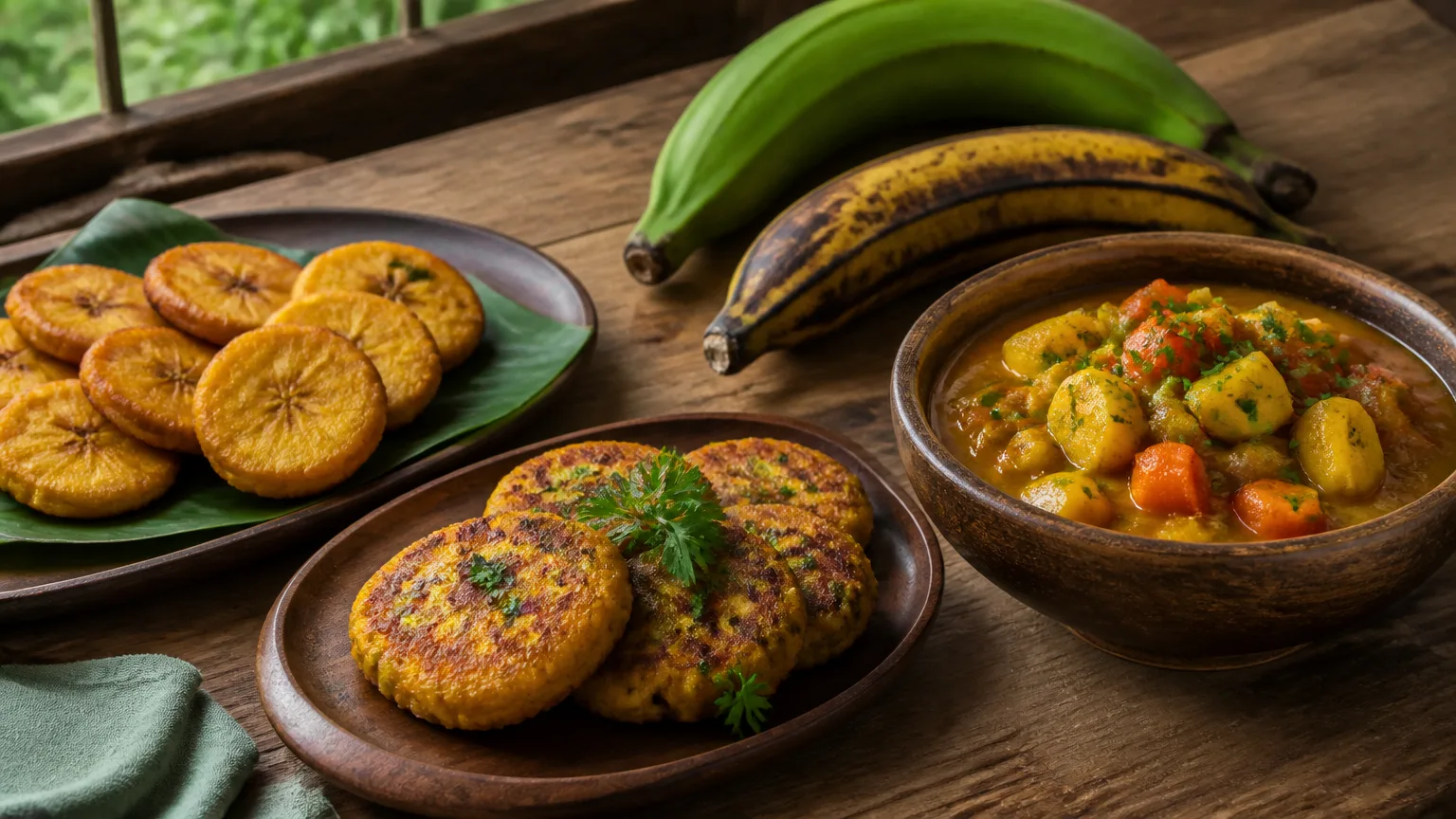
Plantain recipes bring hearty flavor and satisfying texture to everyday meals, from a quick breakfast to a comforting dinner. These seven vegetarian ideas show how one ingredient can work in crisp, savory dishes and softer, sweeter preparations. If you enjoy practical cooking with room for care and gratitude, plantains offer a delicious place to begin.
Plantains are not dessert-style bananas: they are starchier and usually cooked before serving. Their ripeness shapes both flavor and texture. Green plantains are firm and savory, while yellow or dark-skinned ones become softer and sweeter, making them useful for different dishes.
With a few simple ingredients, you can turn plantains into meals that feel both nourishing and flexible. Choose the ripeness that suits your recipe, then adjust seasoning to match your table. For more ideas and inspiration, explore Hare Krishna Recipes.
Choose the Right Plantain and Prepare It Well
Plantains change in texture and flavor as they ripen, so choosing the right stage can shape how a dish turns out. Green plantains are firm and savory, while yellow and nearly black plantains become softer and sweeter. Check the recipe for its preferred stage; a green plantain, for example, holds its shape in stews, while a ripe one works well in baked or pan-fried dishes.
Peeling is simple with a small amount of care. Trim both ends, score the skin lengthwise without cutting deeply into the flesh, then loosen and remove the peel with your fingers or a knife. Cut the plantain into the shape your recipe calls for, such as rounds for frying or chunks for a stew. If you are preparing other ingredients first, place peeled pieces in a bowl of water with a little lemon juice to slow browning.
Cooking method matters, too. Green plantains are well suited to boiling, roasting, frying, or mashing because they stay firm and absorb seasoning. Yellow plantains can be pan-fried or baked for a balance of savory flavor and sweetness. Nearly black plantains are very soft and sweet; bake or sauté them gently so they do not fall apart.
For everyday plantain recipes, adjust the seasoning to suit the meal and your household. Use less oil for baking or roasting, or add a little more for crisp edges when frying. Salt and spices are flexible, too: keep the flavor mild as a side dish, or add chili, garlic, or herbs for a more seasoned meal.
1. Savory Plantain Breakfast Hash
For a filling start to the day, make a breakfast hash with green plantains, vegetables, and mild seasoning. Green plantains have a firm, potato-like texture and a savory flavor that works well in everyday plantain recipes.
Peel the plantains and dice them into small, evenly sized pieces so they cook at the same rate. Warm a little oil in a skillet over medium heat, add the plantains, and season lightly with salt. Cook for several minutes, stirring now and then, until they begin to soften and develop golden-brown edges.
Add a splash of water and cover the pan briefly if the plantains are browning before their centers turn tender. Once they are nearly cooked through, uncover the skillet and let the water evaporate. This helps keep the centers soft while restoring crisp, browned edges.
Stir in quick-cooking vegetables near the end. Bell pepper adds sweetness and color; spinach wilts quickly and brings a fresh, leafy contrast. You can also finish the hash with chopped parsley, cilantro, or scallions.
Keep the seasoning flexible to suit your household. Salt and black pepper make a simple base, while a pinch of paprika, cumin, or garlic powder adds gentle flavor without requiring heat. Add chili only if you want a spicier breakfast.
Serve the hash on its own or pair it with sliced fruit for a fresh contrast. A small serving of rice or another simple grain makes it a more substantial meal. For an easy variation, use whichever vegetables and herbs you already have on hand.
2. Baked Plantain and Vegetable Bowls
A baked plantain bowl makes a flexible everyday meal from a few simple parts. Choose yellow plantains with dark patches for a soft texture and caramelized sweetness. Their flavor pairs well with savory beans, fresh greens, and a tangy sauce.
Heat the oven to 425°F (220°C). Peel the plantains and slice them into rounds or cut them lengthwise. Arrange the slices on a baking sheet with vegetables that take a similar time to roast, such as bell peppers, zucchini, or red onion. Toss with a little oil, salt, and pepper, then roast for about 20–25 minutes, turning once, until tender and browned.
While the plantains roast, prepare the other bowl components. Warm black beans or chickpeas, rinse a handful of greens, and cook rice or another grain if you want a heartier base. For balance, add a tangy lime dressing or a yogurt-based sauce with lemon, garlic, and herbs.
To assemble, start with grains or greens, then add beans and roasted vegetables. Top with plantain slices and spoon the sauce over everything. Use what you have on hand: cabbage can replace leafy greens, and leftover roasted vegetables work just as well.
You can prepare the beans, grains, vegetables, and sauce ahead. Store them separately, then reheat the plantain briefly in the oven or a skillet to bring back its warm, tender texture. These bowls fit easily into a weeknight routine and offer another option among adaptable plantain recipes for fresh vegetarian meal ideas.
3. Plantain and Lentil Curry
For a comforting one-pot meal, simmer plantain with lentils, tomatoes, and warm spices. Choose firm yellow or green-yellow plantains; very ripe fruit softens quickly and may lose its shape. Cut the plantains into thick pieces so they stay intact while absorbing the curry’s flavor.
Warm oil in a heavy pot, then cook chopped onion until soft. Add grated ginger, minced garlic, and spices such as cumin, coriander, turmeric, and a little chili. If onion or garlic does not suit your dietary or devotional practice, leave it out and build flavor with extra ginger and spices.
Stir in chopped tomatoes and rinsed lentils, then add water or vegetable broth. Bring the mixture to a gentle boil and cook until the lentils are nearly tender. Red lentils cook quickly and become soft, while brown or green lentils hold their shape and may need more time.
Add the plantain pieces during the final part of cooking. Keep the curry at a gentle simmer rather than a rolling boil, and stir carefully so the pieces do not break apart. Cook until the plantain is tender when pierced and the lentils are fully cooked. If the lentils need longer, add the plantain later to preserve its shape.
Adjust the liquid to suit your table: use less for a thick, spoonable stew or add broth for a looser curry. Taste and season with salt, then finish with fresh herbs if you like. Serve hot with rice or flatbread to make a satisfying everyday meal. Among flexible plantain recipes, this curry is easy to adapt: swap the spices, choose a different lentil, or add leafy greens near the end of cooking.
4. Crispy Plantain and Black Bean Tacos
These tacos bring together crisp-edged plantain, creamy beans, and cool, crunchy vegetables for a quick, filling dinner. Their sweet-and-savory balance makes them a flexible choice among everyday plantain recipes.
Start by preparing the toppings and lime dressing so everything is ready when the plantains finish cooking. Thinly slice cabbage or lettuce, and stir lime juice into a little yogurt or sour cream. For a dairy-free option, use mashed avocado loosened with lime juice and water.
Peel a ripe but firm plantain and cut it into small cubes. Heat a thin layer of oil in a skillet over medium heat, then add the cubes in a single layer. Cook for 8–10 minutes, turning occasionally, until browned and tender. Avoid overcrowding the pan; cook in batches if needed so the cubes crisp instead of steam.
For an oven method, spread the cubes across a baking tray with space between them. Toss with a little oil and roast at 425°F (220°C), turning once, until browned, about 20–25 minutes.
While the plantains cook, warm black beans in a small saucepan with a splash of water. Season them mildly with cumin and a pinch of salt, or add garlic if your family enjoys it. Keep chili on the side for anyone who wants extra heat.
Warm corn or flour tortillas, then fill each with beans and plantain. Top with cabbage or lettuce and a squeeze of lime dressing. The contrast of crisp plantain, soft beans, and fresh, tangy toppings keeps each bite balanced.
For a shared family meal, set out the beans, plantains, vegetables, and toppings separately. Everyone can assemble their tacos and adjust the seasoning to taste.
5. Plantain and Spinach Coconut Stew
For a gentle change from the tacos, simmer plantain with coconut milk and leafy greens for a creamy, comforting meal. Moderately ripe plantains add a mild sweetness that complements the coconut without making the stew taste like dessert. This balance makes the dish a welcome option among plantain recipes for an everyday lunch or dinner.
Warm a little oil in a pot, then cook chopped onion until soft. Add garlic, a pinch of ground cumin, and vegetable broth, followed by peeled, sliced plantain. Stir in coconut milk and bring the mixture to a gentle simmer. Cook until the plantain is tender when pierced with a fork, usually about 15 to 20 minutes.
Add spinach only near the end, once the plantain is fully cooked. Fold in a few handfuls and let the leaves wilt for two to three minutes. Kale or another sturdy green works, too; give it a little more time to soften. Adding greens late keeps them bright and prevents them from becoming overly soft.
Taste before serving. A squeeze of lime or lemon cuts through the coconut’s richness, while salt and black pepper bring the flavors into focus. If the stew feels too rich, stir in a splash of broth. Serve it with rice, which soaks up the creamy sauce and makes the meal more filling.
For more cozy meals to add to your rotation, browse these warming fall recipe ideas. Refrigerate any leftovers in a covered container. The stew will thicken as it cools, so add a little broth or water when reheating and stir gently until it reaches a smooth, spoonable consistency.
6. Stuffed Plantain Boats with Spiced Chickpeas
These stuffed plantain boats turn ripe fruit, chickpeas, and vegetables into a hearty vegetarian meal. Their sweet, tender base balances savory spices, making them a flavorful addition to everyday plantain recipes.
Heat the oven to 400°F (200°C). Arrange whole, peeled ripe plantains on a baking sheet, or halve them lengthwise for shorter cooking time. Bake until tender and lightly golden, about 20–30 minutes for whole plantains or 15–20 minutes for halves. Check with a fork; the plantains should yield easily but still hold their shape.
While they bake, warm a little oil in a skillet. Add drained chickpeas, diced bell pepper, and chopped onion, then season with cumin, paprika, garlic powder, salt, and black pepper. Cook for 5–7 minutes, stirring occasionally, until the vegetables soften and the chickpeas are hot. Add a handful of spinach near the end, if you like, and stir until just wilted.
Let the plantains cool enough to handle. Carefully press a shallow channel down the center of each one with the back of a spoon, or scoop out a little flesh without piercing the bottom. Spoon in the chickpea mixture and return the boats to the oven for 5–8 minutes, just long enough to warm the filling. A short final bake helps prevent the plantains from becoming too soft.
For a shared meal, prepare the filling and bake the plantains ahead. Assemble them shortly before serving, then bake briefly until hot. Serve with lime wedges or a simple salad. The meal also offers a warm, flexible way to explore the meaning and cultural context of home cooking.
7. Baked Sweet Plantains with Cinnamon and Yogurt
After savory plantain dishes, this simple recipe brings a naturally sweet option to the table. Serve it for breakfast, as an afternoon snack, or as a light dessert. Very ripe plantains soften in the oven and develop lightly caramelized edges, so added sugar is usually unnecessary.
Heat the oven to 400°F (200°C). Peel the plantains and slice them lengthwise or into thick rounds. Arrange them in a single layer on a lightly oiled baking sheet, then sprinkle with cinnamon. Bake for 20 to 25 minutes, turning once, until tender and golden at the edges. Cooking time may vary with the plantains’ size and ripeness.
For the best texture and sweetness, choose plantains with mostly black skins and soft flesh. If they are still firm or mostly yellow, let them ripen longer before baking. A little oil helps prevent sticking, but the fruit’s natural sugars provide plenty of flavor as it cooks.
Serve the warm plantains on their own, or add a spoonful of plain yogurt for a cool, tangy contrast. Chopped nuts add crunch, while fresh fruit such as berries or sliced banana brings extra color and freshness. For a dairy-free option, use unsweetened coconut or soy yogurt, or skip the yogurt and serve with fruit.
This flexible dish can stand alone as a light meal or accompany a more substantial breakfast with oats or eggs. It also works as a simple side for a larger meal when you want a gently sweet contrast. Among easy plantain recipes, it is a useful way to enjoy ripe fruit with little preparation and no need for extra sweetener.
Frequently Asked Questions
How can I tell whether a plantain is ripe?
Unripe plantains are green, firm, and starchy, so they work well in savory dishes such as curry or tacos. As the peel turns yellow and develops dark spots, the flesh softens and becomes sweeter. Very ripe plantains are mostly black and suit dishes where a tender, sweet flavor is welcome.
Can I use bananas instead of plantains?
Usually, no. Bananas contain more sugar and have a softer texture, while plantains are starchier and hold their shape better when cooked. Bananas can work in some sweet recipes, but they may become too soft in dishes designed for plantains. For clear explanations of culinary terms, see our guide to common food terms.
How should I store plantains and cooked leftovers?
Keep unripe plantains at room temperature until they reach your preferred ripeness. Store ripe plantains in the refrigerator to slow further ripening; the peel may darken, but the fruit inside can still be usable. Refrigerate cooked plantains in a covered container within two hours, and use them within three to four days. To keep them longer, freeze them in an airtight container for up to three months, then thaw in the refrigerator and reheat until hot.
Can I adapt these dishes for vegetarian or devotional households?
Yes. Plantains pair well with vegetables, beans, lentils, grains, and seasonings chosen to suit your household. Check packaged ingredients, including broth, sauces, spice blends, and cooking fats, because formulas vary. Then select seasonings and preparation methods that align with your personal dietary standards or devotional practices.
Bring Plantains into Your Everyday Cooking
Plantains can move easily from savory sides and breakfast hash to grain bowls, tacos, and hearty stews. Ripe fruit also makes a naturally sweet finish, so one ingredient can add variety to everyday meals.
For the best results, match the plantain’s ripeness to the recipe: green plantains hold their shape, while ripe ones become softer and sweeter. Give them enough time to cook through, whether you bake, roast, fry, or simmer them. Start with a recipe that suits the plantains available to you, then adjust the seasonings and sides to fit your table.
These plantain recipes are flexible starting points, not fixed rules. With a little care, plantains can bring warmth and variety to a meal—and make everyday cooking more enjoyable when shared.