
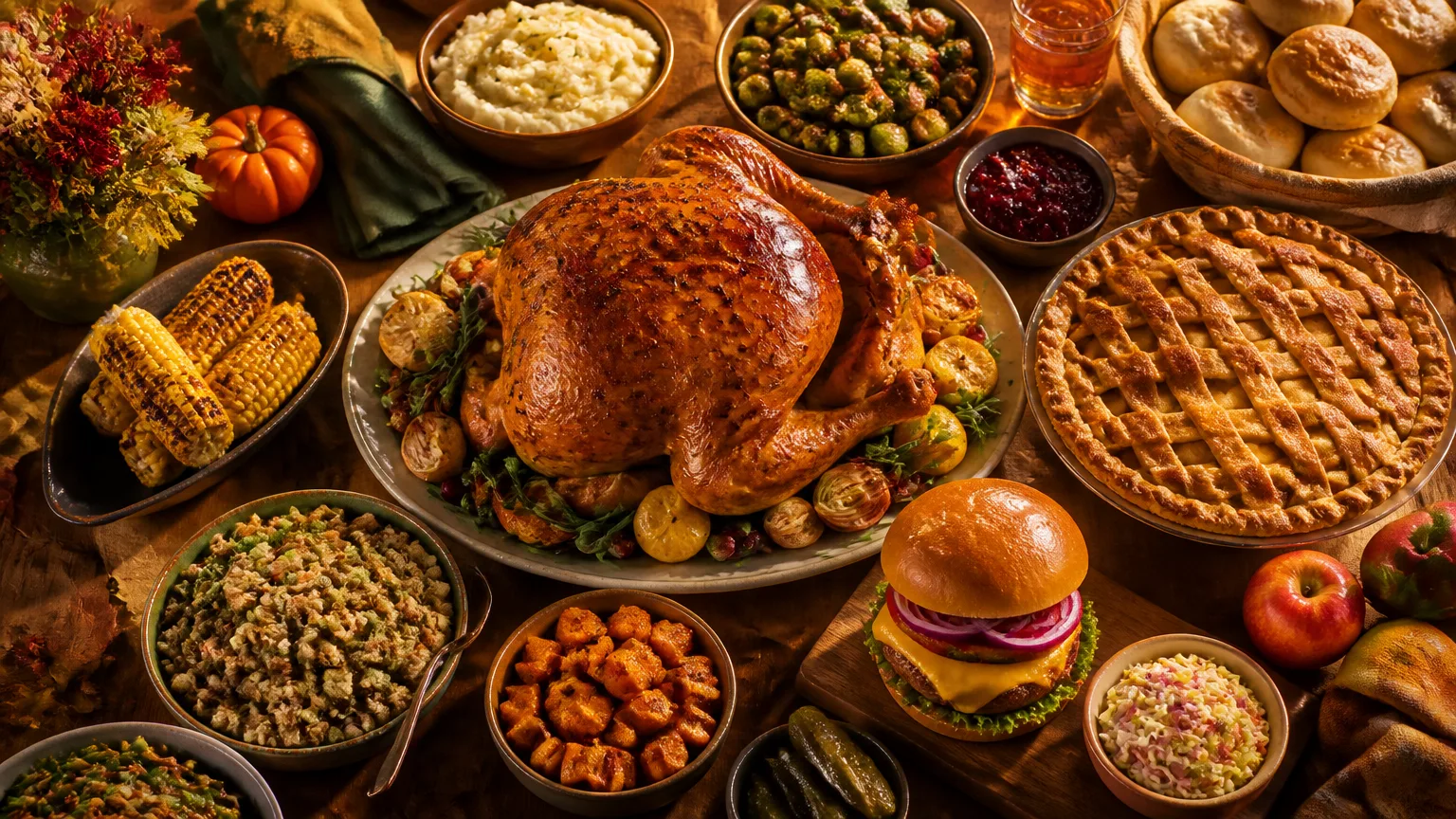
America’s national food dish does not officially exist. The United States has no legally designated dish, so the better question is which meal best reflects its identity, history, regional variety, and changing values.
Several foods make a strong cultural claim. Thanksgiving dinner represents gratitude and gathering, while hamburgers suggest casual hospitality and shared public life. Apple pie carries a familiar symbol of home, although none of these foods can capture the nation’s full culinary story.
American food traditions draw from Indigenous knowledge, African heritage, European settlement, Asian cuisines, Latin American flavors, and generations of immigrant creativity. From this perspective, a national dish should express more than patriotism or consumption. It should also reflect community, hospitality, and the many people who have shaped the American table.
A vegetarian and spiritually conscious lens expands that conversation. It highlights meals built around gratitude, compassion, and mindful living while honoring the diversity of American vegetarian food traditions. The answer, then, may not be one definitive plate. Instead, America’s shared culinary identity may be found in how people adapt food, welcome others, and create meaning around the table.
Why Thanksgiving Dinner Is the Strongest Traditional Candidate
Thanksgiving dinner is the strongest traditional candidate for America’s national food dish because it represents shared celebration more than a single recipe. Across the country, families gather around a recognizable table of stuffing, potatoes, cranberry sauce, vegetables, and pie. Turkey often anchors the meal, but it is not required for Thanksgiving to carry its cultural meaning.
Menus vary by region, household, and heritage. One family may serve cornbread dressing, while another prepares tamales, rice, or a plant-based centerpiece. These differences strengthen Thanksgiving’s national role. The meal creates shared American memory while leaving room for local customs and personal identity.
Its symbolism also requires care. Popular stories often reduce Thanksgiving to a simple meal of friendship between English settlers and Indigenous peoples. The fuller history includes Indigenous sovereignty, colonization, displacement, and ongoing cultural resilience. Recognizing that complexity allows people to preserve gratitude without repeating an oversimplified national mythology.
A vegetarian or sattvic-inspired Thanksgiving can express the same meaning through seasonal produce, grains, legumes, herbs, and lovingly prepared offerings. Roasted squash, lentil stuffing, spiced root vegetables, and fresh cranberry relish can form a generous centerpiece. For ideas, explore these comforting vegetarian meals made in a Dutch oven.
The meal’s spiritual significance may matter more than any ingredient. Preparing food mindfully, offering it with gratitude, and sharing it generously transforms dinner into a practice of connection. In that sense, Thanksgiving may come closest to answering the question of America’s national food dish—not through one fixed plate, but through a shared way of gathering.
The Hamburger and Apple Pie: Powerful Symbols, but Not Complete Answers
The hamburger captures a modern American way of eating. It evokes diners, roadside travel, quick service, and the convenience of mass culture. Its greatest symbolic strength may be customization: diners can choose toppings, sauces, breads, and portion sizes to create a meal that feels personal.
Apple pie carries a different emotional meaning. It suggests home, comfort, seasonal abundance, and family gatherings. The phrase “as American as apple pie” makes the dessert a powerful national symbol. However, pies and similar baked traditions have global histories, so apple pie is not uniquely American in origin.
Both foods therefore help explain America’s food identity, but neither fully answers the question of America’s national food dish. The hamburger centers meat, even though many Americans follow vegetarian, vegan, religious, ethical, or health-conscious diets. A national symbol should reflect this broad range of values and experiences.
Vegetarian adaptations show how familiar traditions can evolve without losing their communal character. Bean burgers and vegetable patties preserve the hamburger’s customizable format. Spiced lentil fillings can bring bold regional flavors to sandwiches, while fruit-based desserts extend the comfort associated with apple pie.
These alternatives also make the idea of a national dish more inclusive. Families can serve a mixed spread with traditional burgers, plant-based options, and seasonal desserts. Readers looking for vegetarian ideas built around beans and other familiar foods can adapt these formats for cookouts, potlucks, and weeknight meals.
The hamburger and apple pie remain influential symbols. Yet America’s culinary character becomes clearer when tradition welcomes adaptation, rather than requiring everyone to eat the same ingredients.
Regional Dishes Reveal That America Has Many National Foods
The hamburger and apple pie remain influential symbols. Yet America’s culinary character becomes clearer when tradition welcomes adaptation, rather than requiring everyone to eat the same ingredients. Regional dishes show why America’s national food dish may be better understood as a collection of foods.
Southern cornbread and greens reflect local agriculture, African American foodways, and generations of culinary knowledge. New England chowder draws from coastal ingredients and practical cooking traditions. In the Southwest, beans and rice combine Indigenous, Mexican, and other regional influences into meals that remain affordable and adaptable.
Other regions add their own defining flavors:
- Midwestern casseroles reflect communal cooking, convenience, and shared potluck traditions.
- California produce-forward bowls highlight fresh vegetables, grains, and the state’s diverse food culture.
- New York-style pizza demonstrates how immigrant techniques became part of American life.
These examples also show that American cuisine develops through migration, adaptation, and exchange. Communities bring recipes and techniques, then reshape them around available ingredients, local tastes, and changing needs. A dish can retain its cultural identity while taking on a distinctly American form.
Vegetarian versions make this flexibility especially clear. Greens with beans, vegetable chowder, rice bowls, and mushroom-based casseroles preserve familiar seasonings and preparation methods without meat. They show that cultural traditions can survive, flourish, and welcome new participants through plant-based cooking.
For that reason, respectful language matters. No single dish represents every American experience, and regional foods should not be treated as interchangeable symbols. Each recipe carries the labor, history, and traditions of the people who created, adapted, and shared it.
A Hare Krishna Perspective: What Makes a Dish Truly Worth Sharing?
A Hare Krishna perspective adds a spiritual question to the search for America’s national food dish: What does the meal encourage in those who prepare and eat it? Popularity matters, but so do gratitude, compassion, mindful preparation, and generous sharing.
In bhakti practice, food is prepared with cleanliness, care, and devotional intention. Vegetarian dishes are then offered to Krishna before they are eaten as prasadam, or food received as grace. This practice invites people to see cooking as an act of service rather than simple consumption.
Prasadam also connects spiritual food with hospitality and equality. A meaningful national dish should welcome people across cultures, beliefs, and ethical choices. A shared meal becomes more inclusive when it does not exclude guests who avoid meat for religious, moral, or personal reasons.
Spiritual food is not defined by one fixed recipe. The ingredients, the cook’s consciousness, the preparation, and the willingness to share all matter. A bowl of rice and lentils can carry deep meaning when prepared attentively and offered with gratitude.
An American feast can express this ideal through grains, legumes, seasonal vegetables, dairy where appropriate, and naturally flavorful spices. Roasted squash, herbed beans, cornbread, greens, and apple desserts can create abundance without violence. These foods also reflect the regional variety that makes American cooking distinctive.
Readers curious about bhakti can begin with everyday meals, including simple, healthy vegetarian dinners for two. The invitation is not to follow one rigid menu. It is to prepare food thoughtfully, receive it gratefully, and share it generously.
So What Should America’s National Food Dish Be?
There is no official national food dish in the United States. The answer depends on the criteria: historical symbolism, popularity, inclusivity, regional reach, or spiritual meaning.
A flexible American vegetarian feast offers the strongest overall representation. It might include:
- Grains or bread
- Beans, lentils, or another protein
- Seasonal vegetables
- A comforting side dish
- Fresh or baked fruit for dessert
This format reflects American values of variety, adaptation, abundance, and gathering. It also echoes the Thanksgiving table, where shared dishes create community without requiring one fixed entrée. Devotional cooking can fit naturally within this model through mindful preparation, gratitude, and thoughtful offering.
The meal can accommodate different dietary preferences without turning dinner into a competition between meat-eaters and vegetarians. Guests might add meat separately, choose plant-based proteins, or enjoy the same vegetables and sides together. Health-focused readers can also adjust portions, cooking methods, and ingredients. A national dish does not need to be indulgent to feel generous; vegetarian-friendly keto meal ideas show how adaptable modern meals can be.
Hamburgers, apple pie, barbecue, regional specialties, and other familiar foods remain important cultural symbols. However, a communal vegetarian feast better captures the broad, evolving character of America’s national food dish: many traditions sharing one table.
America’s National Food Dish May Be the Meal We Share
So, what is America’s national food dish? The country has no single official answer. Thanksgiving dinner remains the strongest traditional candidate because it centers on gratitude, gathering, and shared abundance. Yet hamburgers, apple pie, barbecue, and regional specialties also express distinct parts of America’s culinary identity.
The deeper answer may be the meal Americans continually adapt and share. A vegetarian American feast might include roasted vegetables, cornbread, cranberry sauce, beans, greens, or a regional family favorite. Together, these foods can honor different histories while creating a welcoming table.
Food becomes culturally meaningful through intention, gratitude, ethical awareness, and generous sharing. Readers can create their own American-inspired vegetarian feast, using local ingredients and recipes that reflect their communities. Those drawn to bhakti may prepare the meal with devotion, offer it before eating, and share it as prasadam.
America’s food identity is not fixed on one plate. It remains living, diverse, and continually shaped by the people who cook, gather, and eat together.