
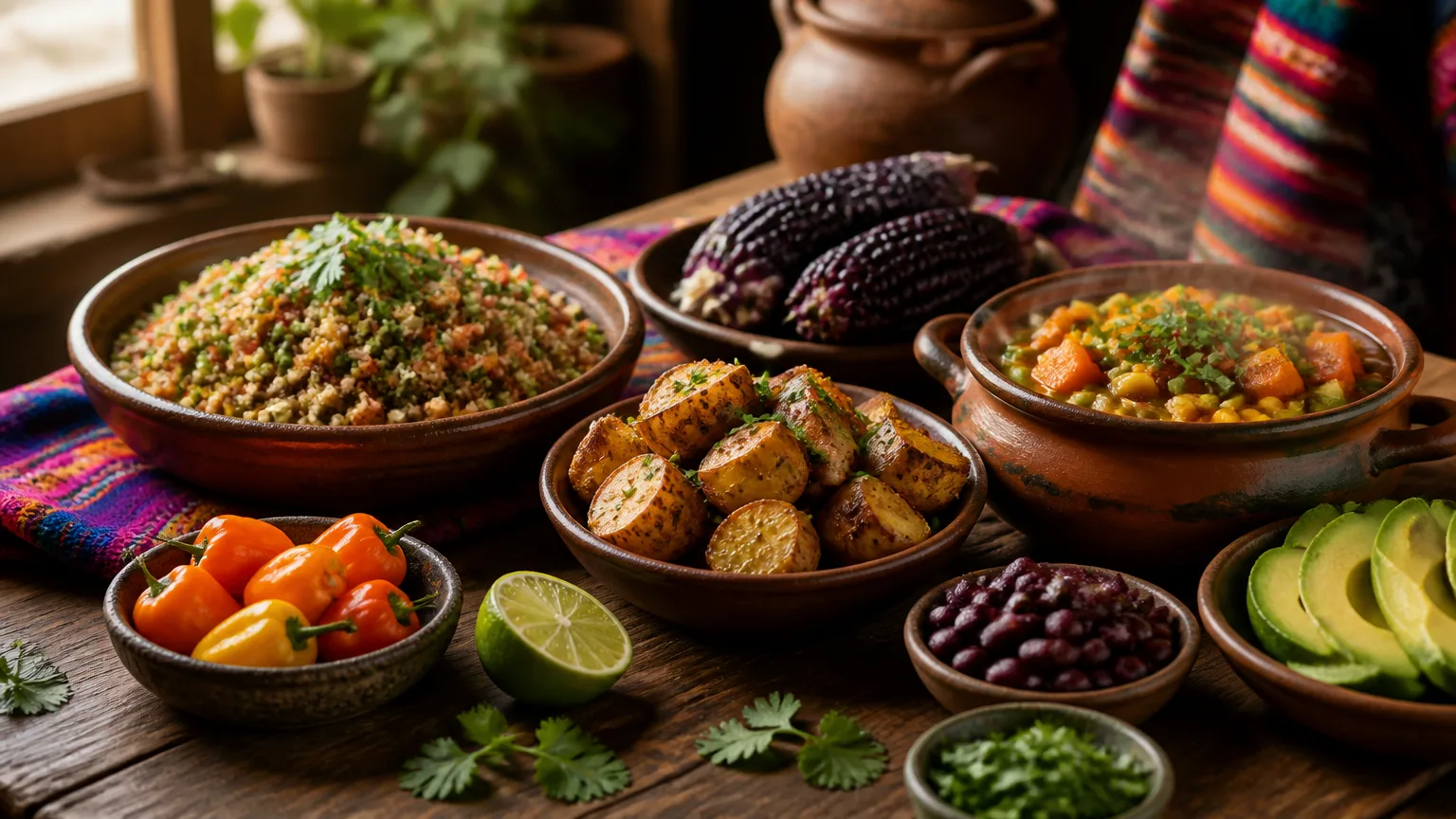
Peruvian food brings together ancient farming wisdom, bold flavors, and remarkable variety. Potatoes, quinoa, corn, beans, vegetables, herbs, and ají peppers can become hearty meals without meat or fish. With a few practical adaptations, these ingredients fit comfortably into a home kitchen.
This article presents 15 vegetarian Peruvian dishes and Peruvian-inspired preparations to try at home. You will find approachable ideas such as potato-based dishes, grain bowls, vegetable stews, and ají-seasoned recipes. Each one offers a way to build satisfying meals from simple, nourishing ingredients.
Vegetarian cooking usually excludes meat, poultry, fish, and seafood. The broader Hare Krishna approach also avoids eggs and may exclude onion and garlic, depending on individual practice. These recipes can be adapted with fresh herbs, asafoetida, ginger, or other suitable seasonings.
Cooking can become more than meal preparation. Washing vegetables, stirring a stew, and offering food with gratitude can create a focused, devotional practice. For broader spiritual inspiration, explore these ISKCON food recipes vegetarian ideas alongside Peru’s vibrant culinary traditions. The result is food that feels colorful, practical, and prepared with mindful intention.
1. Papa a la Huancaína: Potatoes with Creamy Yellow Pepper Sauce
Papa a la Huancaína is an approachable introduction to Peruvian food. Boil yellow or white potatoes until tender, cool them slightly, and slice them into even rounds.
Blend ají amarillo with queso fresco, farmer cheese, or paneer for a creamy sauce. Add milk, lime juice, and a little oil until smooth. The cheese balances the pepper’s heat. For a dairy-free version, use soaked cashews, unsweetened plant milk, and nutritional yeast.
Traditional recipes may include onion and garlic. For devotional cooking, omit both and add a pinch of asafoetida, chopped celery, or extra cilantro. Taste carefully, adjusting the lime, salt, and ají amarillo.
Chill the sauce before serving so it thickens and tastes brighter. Arrange lettuce leaves on a platter, then layer the potato slices neatly over them. Spoon the yellow sauce on top and finish with black olives, parsley, or cilantro. Even slices and contrasting colors create a festive presentation for guests or a mindful home meal.
2. Causa Rellena de Verduras: Layered Potato Terrine
Causa rellena is a colorful Peruvian food classic made with seasoned yellow potatoes. Boil yellow potatoes until tender, peel them while warm, and mash until smooth. Mix in lime juice, ají amarillo paste, salt, and a little neutral oil. Lime adds brightness, ají brings gentle heat, salt balances the flavor, and oil creates a soft, workable texture.
For a devotional-friendly filling, combine mashed avocado with peas, diced carrots, and corn. Stir in lime juice, salt, and a spoonful of thick plain yogurt or blended cashews instead of egg-based mayonnaise. This creates a creamy, flavorful filling without eggs.
Line a loaf pan with plastic wrap, then press in half the potato mixture. Add the vegetable filling evenly, cover with the remaining potatoes, and smooth the top. Chill for at least two hours. Firm, compact layers slice cleanly when the potatoes are mashed finely and pressed firmly.
To serve, invert the causa onto a platter and remove the wrap. Prepare it one day ahead, unmold just before serving, and garnish with avocado, herbs, or olives for gatherings or prasadam-style service.
3. Solterito de Queso: Peruvian Bean, Corn, and Cheese Salad
Solterito de queso is a bright Arequipeño salad and a refreshing example of colorful Peruvian food. It combines creamy beans, crisp corn, tender fava beans, juicy tomato, queso fresco, black olives, and fresh herbs.
Cook dried beans until tender, or use well-rinsed canned beans for a faster meal. Add cooked corn, fava beans, diced tomato, and cheese. The contrasting textures make each bite satisfying, while avocado or extra beans can make the salad substantial enough for a light lunch.
Whisk lime juice, red wine vinegar, cilantro, and mild peppers into a lively dressing. Season with salt, then toss the ingredients gently to protect the cheese and vegetables. Let the salad rest for 10 minutes so the flavors blend.
If queso fresco is unavailable, substitute feta, farmer cheese, or mild mozzarella. Omit onion or garlic when needed; extra cilantro, lime zest, and thinly sliced celery preserve the salad’s freshness. Serve chilled or at room temperature with lettuce leaves.
4. Choclo con Queso: Peruvian Corn with Fresh Cheese
Choclo con queso pairs tender, large-kernel corn with creamy fresh cheese. This simple Peruvian food works as a snack, side dish, or thoughtful offering. Serve it warm and season it lightly so the corn remains the focus.
For the closest texture, use fresh Peruvian-style corn with large kernels. Grilled corn adds a pleasant smoky flavor. Frozen sweet corn is a practical substitute; steam it until tender, then drain well. Canned corn works in a pinch, but rinse and dry it first because its kernels are softer.
Top the corn with queso fresco, farmer cheese, or crumbled paneer. For a dairy-free version, use a mild plant-based cheese. Add a gentle ají sauce, chopped cilantro, parsley, or a little lime juice. Avoid heavy seasoning, which can overpower the corn’s natural sweetness.
To serve, spoon the warm corn into bowls and add the cheese just before eating. Offer it as a quick afternoon snack, a colorful side dish, or part of a vegetarian Peruvian meal.
5. Tacu Tacu: Crispy Rice and Bean Cakes
Tacu tacu transforms leftover rice and beans into an economical, protein-rich vegetarian main. Mash cannellini, kidney, black, or Peruvian beans, then combine them with cooked rice, chopped cilantro or parsley, and a pinch of salt.
Shape the mixture into compact patties about one inch thick. If it feels too soft, add a spoonful of flour or breadcrumbs. Heat a well-oiled skillet until hot, then pan-fry the cakes until both sides turn deep golden brown. The hot pan creates a crisp crust while the center stays soft and hearty.
Top each cake with sliced avocado, tomato relish, sautéed greens, or a spoonful of ají amarillo sauce. These toppings add brightness without relying on eggs or meat. Serve tacu tacu with other dutch oven recipes for dinner for a filling meal inspired by the resourceful spirit of Peruvian food.
6. Locro de Zapallo: Creamy Squash and Potato Stew
Locro de zapallo is a comforting Andean stew made for cool evenings and mindful family cooking. This nourishing one-pot dish combines squash, potatoes, corn, peas, and cheese in a naturally creamy base.
Use pumpkin, kabocha, butternut squash, or calabaza for the stew’s body. Cut the squash and potatoes into even pieces so they cook at the same rate. Simmer them with corn, peas, vegetable stock, cumin, oregano, and ají amarillo. These seasonings build the savory depth expected from traditional Peruvian food without relying on meat-based broth.
Cook until the vegetables are tender and some squash breaks down into the stock. For a smoother texture, mash a portion of the squash and potatoes directly in the pot. Stir in milk near the end, using gentle heat to prevent curdling.
Add queso fresco or another mild cheese after removing the pot from the heat. Stir gently so it melts into the stew without becoming grainy. Serve locro hot with rice, fresh herbs, or warm bread for a complete vegetarian meal.
7. Aguadito de Verduras: Herbed Peruvian Vegetable Soup
Aguadito de verduras brings the fresh, colorful character of Peruvian food to the soup pot. This vegetarian version combines cilantro, rice, potatoes, peas, carrots, corn, and seasonal vegetables in a fragrant broth.
Blend a generous handful of cilantro with a little vegetable stock until smooth. Sauté the mixture briefly with diced onion, cooking it long enough to mellow the raw flavor. Avoid prolonged cooking, which can dull its vivid green color and fresh herbal aroma.
Add vegetable stock, potatoes, carrots, corn, peas, and sliced mushrooms. Chickpeas or white beans also provide satisfying substance and deeper flavor. Simmer until the vegetables are tender, then add rice according to the texture you prefer.
Use less rice for a lighter, brothy soup and more for a hearty meal. Rice continues absorbing liquid as aguadito rests, so add extra hot stock when reheating or serving leftovers. Finish with chopped cilantro and a squeeze of lime for brightness.
8. Arroz con Leche: Cinnamon-Scented Peruvian Rice Pudding
Arroz con leche is a naturally vegetarian Peruvian dessert made with rice, milk, cinnamon, cloves, raisins, and citrus zest. Slow simmering is the key to tender rice and a custard-like consistency without eggs. Stir gently and often as the mixture thickens.
For a dairy-free version, use oat, coconut, or almond milk. Oat milk creates a soft, naturally sweet finish. Coconut milk adds richness and a tropical note, while almond milk produces a lighter pudding. Adjust sugar to match your chosen milk.
Prepare this dessert with attentiveness, especially when serving it as a devotional offering. Use clean utensils, add the spices mindfully, and present each portion with gratitude. For more inspiration, explore these ideas for spiritual cooking. Serve arroz con leche warm or chilled, topped with cinnamon, raisins, and finely grated orange or lemon zest as a celebratory conclusion to a vegetarian meal.
9. Mazamorra Morada: Purple Corn and Fruit Pudding
Mazamorra morada is a jewel-toned Peruvian dessert made from purple corn, fruit, spices, and sweetener. Add dried purple corn to a pot with pineapple and apple peels, cinnamon, and cloves. Simmer until the water becomes fragrant and deeply colored.
Strain the infusion, then return it to the pot with diced pineapple and apple. Sweeten with sugar, panela, or maple syrup. Mix cornstarch or potato starch with cold water, pour it in slowly, and stir until the pudding thickens.
Dried purple corn creates the deepest color and requires simmering to extract its flavor. Purple corn flour is quicker and more convenient, but it produces a softer color and less intense infusion. If dried corn is unavailable, use purple corn flour and add berry juice for brightness.
Serve mazamorra morada chilled in small bowls. For a classic vegetarian dessert pairing, place it beside arroz con leche. This colorful finish brings the warmth and resourcefulness of Peruvian food to the home kitchen.
10. Picarones: Pumpkin and Sweet Potato Fritters
Picarones are ring-shaped Peruvian fritters made with sweet potato, squash, flour, yeast, and warm spices. Their light, airy texture comes from fermentation, which gives the dough time to develop flavor and bubbles.
Boil peeled sweet potato and squash until tender, then mash them until smooth. Mix with flour, yeast, a little cinnamon, and ground anise. Add warm water gradually until the mixture becomes soft and sticky. Unlike ordinary dough, picarones dough should not feel firm or easy to knead.
Cover the bowl and let the dough ferment in a warm place for about one hour, or until visibly expanded. This resting period creates the characteristic tender interior. To shape the fritters, wet your hands, pinch off a portion, and form a hole in the center. Alternatively, pipe small rings onto parchment.
Heat 2–3 inches of oil in a deep, heavy pot over medium heat. Fry a few rings at a time until puffed and golden, turning once. Drain on paper towels and serve warm with chancaca-style syrup. If traditional chancaca is unavailable, simmer dates, panela, or brown sugar with water, cinnamon, and orange peel until glossy.
11. Humitas Dulces: Steamed Sweet Corn Tamales
Humitas dulces are tender Peruvian food parcels made from ground corn, butter, milk, cinnamon, and raisins. Their gentle sweetness makes them a comforting dessert, breakfast, or afternoon snack.
Use fresh corn when possible for the best flavor and moisture. For a convenient alternative, use frozen corn, thaw it completely, and drain it carefully. Blend the corn with melted butter, milk, cinnamon, and a little sugar until the batter is moist but still spoonable.
Prepare the Corn Husks and Fill the Parcels
Separate the husks carefully and soften them in hot water until flexible. Pat them dry, then place a spoonful of batter near the wide end of each husk. Add raisins or another mild filling, fold the sides inward, and tie or tuck the parcel securely.
Arrange the humitas in a steamer with the folded ends facing down. Steam for 35 to 45 minutes, until the parcels feel firm and release cleanly from the husks.
Wrapping humitas is ideal for patient, attentive cooking with family or temple friends. One person can spoon the batter while others fold, tie, and prepare the steamer. Serve them warm, or let them cool slightly before unwrapping.
12. Vegetarian Tallarines Verdes: Green Noodles with Peruvian Pesto
Tallarines verdes turns Peruvian food into a satisfying vegetarian pasta dish. Its creamy green sauce combines basil, spinach, cheese, milk, and nuts without relying on meat accompaniments.
Blend fresh basil with spinach to stretch the herbs and preserve a bright green color. Add queso fresco, walnuts, pecans, sunflower seeds, or another affordable option. Milk creates a smooth texture, while a small amount of pasta water helps the sauce coat every noodle.
For a traditional flavor base, sauté onion and garlic before blending or mixing the sauce. For onion- and garlic-free cooking, use extra basil, lime zest, black pepper, or a pinch of asafoetida. Keep the sauce vibrant by blending it briefly and avoiding prolonged boiling.
Toss the pesto with hot pasta just before serving. Add roasted zucchini, peppers, mushrooms, or cauliflower for color and texture. Beans also provide hearty protein, making this dish especially useful for meat-free meals. For more plant-based inspiration, explore these Hare Krishna vegan recipes.
13. Papa Rellena de Verduras: Stuffed Potato Croquettes
Papa rellena transforms humble potatoes into crisp, golden croquettes with a savory vegetarian center. Use chilled, relatively dry mashed potatoes so the exterior holds its shape around the filling.
Prepare the Potato Shell and Filling
Season the potatoes with salt, pepper, and a little flour if they feel soft. For the filling, sauté mushrooms, diced carrots, peas, and cooked lentils with cumin, garlic, and chopped herbs. Add sliced olives for a bright, salty note, then cool the mixture completely.
Divide the mashed potatoes into portions and flatten each one in your palm. Place a spoonful of filling in the center, then fold the potato around it. Seal the edges firmly and shape each croquette into an oval.
Prevent Splitting During Cooking
Avoid overfilling, wet potatoes, or warm filling, which can cause cracks. Pinch any seams closed, chill the shaped croquettes for 20 minutes, and coat them lightly with flour or breadcrumbs.
Pan-fry in a thin layer of oil until golden on all sides. For a lighter option, brush with oil and bake at 425°F (220°C), or air-fry until crisp and browned. Serve this classic Peruvian food dish warm with ají sauce, salsa criolla, or a fresh green salad.
14. Quinua Atamalada: Creamy Peruvian Quinoa Stew
Quinua atamalada is a hearty, creamy stew that showcases the nourishing side of Peruvian food. Rinse quinoa thoroughly under cold water to remove its natural bitterness. Drain it well, then toast it briefly in a dry pot for a nuttier flavor.
Add carrots, peas, corn, diced squash, potatoes, ají amarillo, cumin, and vegetable stock. Simmer until the quinoa opens and the vegetables become tender. Stir occasionally so the potatoes release some starch and naturally thicken the broth.
For a richer finish, stir in queso fresco or another mild cheese. Coconut milk also creates a smooth, dairy-free option without making the stew overly heavy. Add it during the final few minutes and use gentle heat.
Keep the texture creamy but spoonable by adding stock gradually. If the stew thickens too much as it rests, loosen it with hot water or vegetable broth. This one-pot meal suits vegetarian cooks seeking protein-rich, gluten-free nourishment. Serve it hot with cilantro, lime, or extra ají amarillo.
15. Peruvian-Style Vegetable Lomo Saltado
Reimagine this classic Peruvian food dish as a vibrant meatless stir-fry. Use sturdy mushrooms, pressed tofu, seitan, or cauliflower with tomatoes, peppers, potatoes, soy sauce, vinegar, and steamed rice. For a devotional kitchen, these devotional Hare Krishna meals offer additional inspiration for preparing food with care and gratitude.
Choose a firm meat substitute and dry it thoroughly before cooking. Moisture causes steaming, while a dry surface develops the browned edges that give lomo saltado its savory depth. Cut the vegetables into similar pieces so they cook quickly and evenly.
Cook the potatoes separately, or use oven-roasted fries to simplify timing and reduce oil. Heat a wok or large skillet until very hot, then stir-fry the protein in batches. Add the peppers, tomatoes, soy sauce, and vinegar near the end.
High heat creates the dish’s signature balance of smoky, savory, and tangy flavors. Toss everything briefly so the vegetables remain crisp and the sauce coats each piece. Serve immediately over rice with the potatoes alongside or mixed through.
Check soy sauce and packaged meat substitutes for additives. Readers following specific devotional standards should confirm that every ingredient meets their practices.
Preparing Peruvian Ingredients with Devotional Intention
A flexible pantry makes vegetarian Peruvian food easier to prepare and adapt. Keep potatoes, rice, quinoa, corn, beans, ají amarillo paste, cilantro, cumin, cinnamon, panela, and vegetable stock available. These staples support dishes ranging from causa and locro to soups, stews, and desserts.
Before cooking, organize ingredients, wash produce, and prepare tools. If you avoid onion and garlic, build depth with asafoetida, ginger, fresh herbs, toasted cumin, and carefully browned vegetables. Add stock gradually, taste as you go, and adjust ají amarillo, lime, salt, or sweetness rather than following each recipe rigidly.
A practical meal plan pairs one substantial dish with a grain, a fresh salad, and a simple dessert. For example, serve bean stew with quinoa, tomato salad, and arroz con leche. This approach balances textures, nutrition, and preparation time while allowing seasonal substitutions.
For Hare Krishna practitioners, cleanliness, gratitude, remembrance, and attentive recitation can guide the cooking process. Offer the finished food according to your established practice and community guidance. These customs vary, so treat personal devotional routines as meaningful options rather than universal requirements. Mindful preparation can turn everyday Peruvian food into a focused act of service.
Frequently Asked Questions About Vegetarian Peruvian Food
Is Peruvian Food Naturally Vegetarian?
Peru has many plant-based staples, including potatoes, corn, quinoa, beans, squash, and peppers. However, traditional menus often include meat, fish, chicken, eggs, or dairy. Vegetarian Peruvian food therefore requires intentional adaptation rather than assuming every classic dish is meat-free.
What Can Replace Ají Amarillo?
If fresh ají amarillo is unavailable, use one of these practical substitutes:
- Yellow chili paste for the closest color and flavor
- A mild fresh pepper blended with turmeric
- Roasted bell pepper with a small amount of chili
- A yellow pepper sauce adjusted with lime and salt
- Coconut milk or cashew cream instead of dairy
- Plant-based cheese instead of queso fresco
- Aquafaba instead of eggs in selected batters
- Extra vegetables instead of cheese or egg fillings
Start with a small amount, then increase the heat gradually. This approach preserves the dish’s bright color without overwhelming its other flavors.
Are These Dishes Suitable for a Hare Krishna Kitchen?
Suitability depends on each practitioner’s standards and community guidance. Some cooks avoid onion and garlic, while others also check eggs, packaged products, additives, and specific offering procedures.
Review every ingredient before cooking. When needed, replace onion and garlic with herbs, ginger, celery, or hing, and prepare the meal according to your established devotional practice.
How Can I Make These Recipes Vegan?
Most recipes adapt easily with a few focused substitutions:
Choose unsweetened products so they do not alter savory flavors.
Which Recipes Are Best for Beginners?
Start with solterito, locro de zapallo, arroz con leche, quinoa stew, or tacu tacu. These dishes use accessible techniques, flexible ingredients, and forgiving cooking methods. They also provide a practical introduction to Peru’s colorful flavors without requiring specialized equipment.
Bring the Spirit of Peru to Your Home Kitchen
Vegetarian Peruvian food celebrates abundance, color, texture, and hospitality—not the absence of meat. This collection offers many ways to explore that tradition, from potato appetizers and bean cakes to hearty stews, noodles, fritters, and fruit-forward desserts.
Begin with one approachable dish, such as solterito, locro de zapallo, quinoa stew, or arroz con leche. Cook attentively, then build a complete meal over time with contrasting flavors, textures, and thoughtful presentation. A broader Hare Krishna recipe book can also provide inspiration for mindful, plant-based cooking.
Adapt ingredients respectfully while honoring Peru’s cultural roots and regional diversity. Substitutions may suit your kitchen, but they should preserve each dish’s spirit and acknowledge its origins.
With patience, gratitude, and care, an ordinary home-cooked meal becomes more than nourishment. It becomes a heartfelt offering—an expression of service, hospitality, and appreciation for Peru’s generous culinary heritage.