
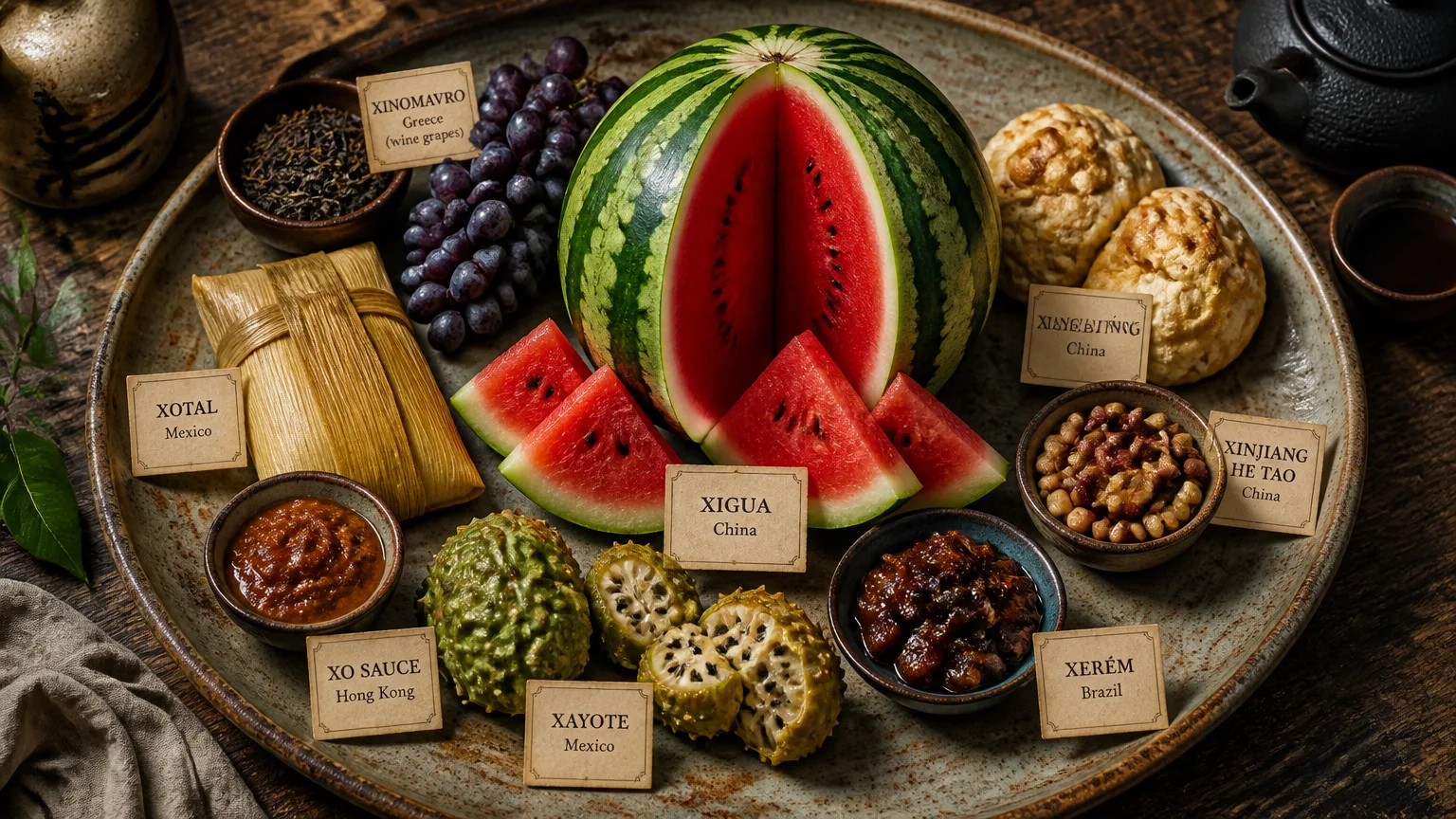
Finding a food that begin with x can feel like a word-game challenge. Yet this rare letter opens the door to global dishes, fruits, grains, vegetables, sauces, spices, sweets, and other curious ingredients.
This guide explores 15 unusual foods from different culinary traditions. Some are complete dishes, while others are ingredients or regional food names. Where useful, we include pronunciation, cultural context, and practical vegetarian serving ideas—not just an alphabetical glossary.
For readers who cook for offerings or follow sattvic and devotional practices, unfamiliar foods require careful review. Check labels for additives, alcohol, onion, garlic, and animal-derived ingredients before adapting a product. A dish may be vegetarian in name but still contain ingredients that do not suit your kitchen.
Use this article alongside our guide to food names starting with X for broader inspiration. Come with curiosity, then decide which discoveries belong in your cooking and devotional routine.
1. Xacuti
Xacuti is a fragrant Goan curry built around toasted spices, coconut, and chilies. Although often made with meat, its defining character comes from the roasted spice blend and coconut, not the protein.
For a satisfying vegetarian version, simmer the sauce with cauliflower, chickpeas, potatoes, mushrooms, or paneer. Devotees can omit onion and garlic, prepare the curry mindfully, and offer it before serving. This unusual food that begins with X shows how traditional flavors can adapt to a plant-based kitchen.
2. Xalapa-Style Enchiladas
Xalapa-style enchiladas are associated with Xalapa, Mexico, rather than named after a single fixed recipe. This food that begins with X can take a vegetarian form, filled with beans, cheese, squash, or roasted vegetables.
For an accessible home version, dip homemade tortillas in a simple fresh chile sauce, fill them, and fold or roll them. Add crema, herbs, or crumbled cheese before serving. Homemade tortillas and fresh sauce make these enchiladas especially suitable for a vegetarian feast or devotional offering.
3. Xanthan Gum
Xanthan gum is a fermentation-derived thickener, not a dish, but it earns a place on any list of foods that begin with X. A very small amount improves structure in gluten-free cakes, breads, and batters. It also thickens sauces and helps vegan recipes bind smoothly.
Choose simple, clearly labeled products and follow the recipe’s measurement. Highly processed ingredients are not automatically spiritually significant or spiritually unsuitable; consider their purpose, quality, and fit within your cooking or devotional routine.
4. Xanthosoma
Xanthosoma is a tropical root and leafy plant related to taro. Its starchy corms can replace potatoes in many recipes, including boiled side dishes and roasted vegetable plates.
Never eat xanthosoma raw. Thorough cooking helps make the root safe and tender. Boil or roast it, or add the cooked corm to a coconut-based curry with vegetables and chickpeas for a nourishing vegetarian meal. This lesser-known food that begins with X offers a useful option for plant-based cooking.
5. Xigua
Xigua is the Chinese name for watermelon, a familiar fruit with an unfamiliar name across languages and cultures. Its juicy texture and natural sweetness make it a refreshing food that begins with X for warm-weather prasadam.
Serve xigua fresh on fruit plates, in chilled drinks, or in simple salads with mint and cucumber. Keep preparation uncomplicated to preserve its flavor. Remove the rind and seeds as needed, chill the fruit, and offer it soon after cutting.
6. Ximenia
Ximenia is the fruit of several African and tropical trees. Its tart, plum-like flavor appears in preserves, beverages, and regional foods. Availability varies widely, so you may find ximenia as fresh fruit, pulp, or oil rather than supermarket produce.
Balance its sourness with naturally sweet fruit in a chutney or preserve. Because preparation methods differ by region, check local traditions before cooking. This unusual food that begins with X can add distinctive flavor to vegetarian dishes and beverages.
7. Xinomavro Grapes
Xinomavro is a Greek grape variety known for bold acidity, dark color, and complex flavor. It is strongly associated with wine, but fresh grapes offer alcohol-free uses for vegetarian and devotional kitchens.
Enjoy Xinomavro grapes fresh, or use them in grape juice, raisins, fruit salads, chutneys, and desserts. When selecting juice or vinegar for an offering, verify that it contains no alcohol or unwanted additives. This distinctive food that begins with X can add flavor without requiring alcoholic preparation.
8. Xnipec
Xnipec is a fiery Yucatecan salsa made with habanero, citrus, and tomato or onion. Its name is associated with heat and a “dog’s nose,” a memorable cultural note that reflects its intense bite.
For a vegetarian version, combine roasted tomato, citrus juice, and habanero with chopped onion, or omit onion if desired. Serve xnipec with roasted vegetables, beans, rice, or homemade corn tortillas. This unusual food that begins with X adds brightness and heat to a plant-based meal.
9. Xôi
Xôi is Vietnamese sticky rice served in sweet and savory forms. Common versions include mung beans, coconut, corn, or peanuts, making it a filling food that begins with X for breakfast, festival tables, and shareable vegetarian meals.
For a devotional kitchen, prepare a simple coconut, mung bean, or fruit-based xôi with clean, suitable ingredients. Steam the soaked rice until tender, fold in the chosen additions, and serve it warm as part of a mindful offering.
10. Xi Fan
Xi fan is a Chinese rice porridge often served for breakfast. This gentle, economical comfort food suits a mindful morning routine. Simmer rice with water or broth until soft, then add vegetables, ginger, tofu, sesame seeds, or peanuts.
Its simplicity also connects with what Hare Krishnas eat: fresh vegetarian ingredients prepared with care and gratitude, rather than culinary extravagance. Keep the seasoning clean, prepare the porridge attentively, and serve it warm as a nourishing breakfast or offering.
11. Xiaobing
Xiaobing is a Chinese flatbread or stuffed pancake with crisp edges and a tender center. Regional forms vary, so no single recipe defines this unusual food that begins with X.
Vegetarian fillings may include scallions, cabbage, mushrooms, or spiced potatoes. Make the dough and filling at home to control ingredients, adjust seasoning, and prepare the meal with focused attention. Serve xiaobing warm as a satisfying breakfast, snack, or simple offering.
12. Xoconostle
Xoconostle is a tart prickly pear fruit widely used in Mexican cooking. Unlike sweet prickly pear varieties, it has a distinctly sour flavor that brightens salsas, stews, drinks, and preserves.
Use its acidity to balance beans, roasted vegetables, or a fresh chutney. Prepare it carefully by removing the tough outer skin and handling the small seeds according to your recipe. This unusual food that begins with X brings lively, citrus-like contrast to vegetarian meals and mindful offerings.
13. Xylitol
Xylitol is a sugar alcohol used in reduced-sugar sweets, baked goods, chewing gum, and beverages. Although it comes from plant-based sources, it is a processed sweetener—not a naturally whole-food ingredient like fruit or dates.
Some people experience gas, bloating, or diarrhea after consuming xylitol, especially in larger amounts. It is also extremely dangerous to dogs, so store it securely and never share xylitol-containing foods with pets.
Use xylitol sparingly when preparing desserts for guests or a devotional gathering. Label dishes clearly, disclose the ingredient, and choose a sweetener that suits everyone’s dietary needs and preferences.
14. Xylocarp Coconut
A xylocarp is a woody fruit, and coconut is its most familiar culinary example. This botanical term feels less obscure when connected to ingredients used every day in vegetarian kitchens.
Coconut supports many recipes. Use coconut milk in vegetable curries, grated coconut in sweets and rice dishes, and coconut water in refreshing drinks. In prasadam, fresh coconut can also serve as a simple offering. For a richer meal, pair coconut-based dishes with an Ekadashi paneer recipe. This versatile food that begins with X brings nourishment and variety to devotional cooking.
15. Xylopia
Xylopia is a group of aromatic plants whose seeds are used as spices in parts of Africa and Asia. Their peppery, fragrant character makes them more likely to appear in specialty spice markets or regional recipes than ordinary grocery aisles.
Use xylopia sparingly, especially when trying it for the first time. Pair a small amount with rice, grains, legumes, or vegetables so it complements rather than overwhelms the dish. It can also add depth to suitable Ekadashi ISKCON recipes when prepared mindfully.
Making X Foods Part of a Mindful Vegetarian Kitchen
The foods that begin with X fit into practical kitchen groups: fruits such as xigua and xoconostle; roots such as xanthosoma; grains such as xôi; and spices such as xylopia. Sauces, coconut, and cooking aids such as xylitol add further variety, but each ingredient deserves careful checking.
Begin with accessible choices, including xigua, coconut, xôi, xacuti, or xoconostle. Choose one ingredient, prepare a simple vegetarian dish, and taste it attentively. For example, serve chilled xigua, steam xôi with coconut, or use xacuti to season vegetables.
A mindful kitchen also follows devotional principles. Cook cleanly and attentively, select suitable vegetarian ingredients, offer the finished food with gratitude, and share the meal respectfully. Check labels for alcohol, animal products, onion, garlic, and other ingredients that may not suit your practice.
When you are ready to create complete menus, explore this Hare Krishna recipe book for additional ideas. Let curiosity guide your choices, while simplicity, respect, and thoughtful preparation shape your food that begin with X journey.