
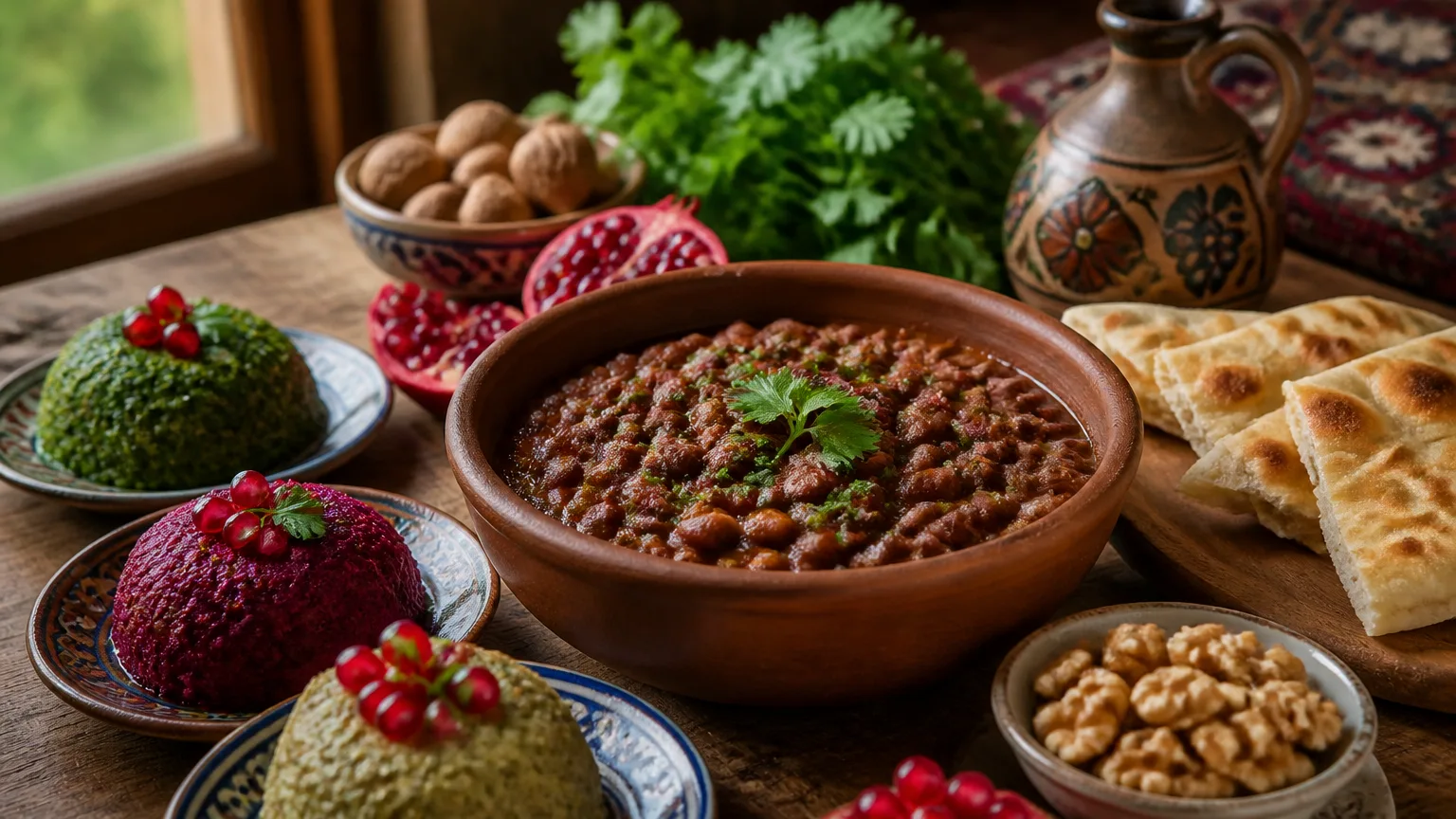
Georgian food is known for a generous table, where vegetables, beans, herbs, and walnuts bring color and substance to everyday meals. Dishes such as lobio, a seasoned bean stew, and pkhali, vegetables blended with herbs and walnuts, show how satisfying plant-based cooking can be.
But Georgian cuisine is a living food culture, not a fixed menu shared by every household. Recipes and customs vary across regions and families, shaped by local ingredients, seasons, and personal traditions. Even a meat-free dish may contain dairy, eggs, or other ingredients that matter to a particular diet.
This guide introduces representative vegetarian dishes, familiar ingredients, and the customs that shape how people share a meal. It also offers practical ways to ask about ingredients and navigate a Georgian table with care. Vegetarian cooking in Georgia is distinct from Hare Krishna devotional practice, though readers seeking devotional recipes can explore more vegetarian recipes.
The Georgian Table: Hospitality, Seasonality, and Shared Meals
Georgian food is often served in a social setting where conversation and shared dishes matter as much as the meal itself. A gathering may include plates placed in the center for everyone to sample, alongside individual servings. The table can feel abundant, but its size and style depend on the occasion, the region, and the family.
A formal feast is called a supra. It may mark a wedding, holiday, or other milestone, though not every shared meal is a supra. At a supra, a tamada, or toastmaster, typically guides a series of toasts. The tamada may speak about friendship, family, or remembrance, while guests respond or offer their own words. The order, length, and tone of these gatherings vary; there is no single script followed by every household.
Hospitality is an important cultural value, and hosts may encourage guests to eat well or try a dish. That warmth is expressed through welcome, conversation, and generosity. Toasts and hospitality are social and cultural practices, not a substitute for religious offerings or devotional rituals.
Seasonality also shapes what appears on the table. In one season, a meal might feature fresh herbs, tomatoes, beans, or eggplant; in another, preserved vegetables and hearty stews may be more common. Local produce and regional cooking traditions influence the menu, while family recipes and personal preferences add further variation.
Many Georgian tables include both meat dishes and substantial vegetable-based foods. Guests might see grilled meat alongside lobio, a bean dish, pkhali, chopped vegetables mixed with herbs and walnuts, or vegetable stews. Bread, herbs, sauces, and pickled vegetables may round out the spread. These dishes can make a meal satisfying for vegetarians, but their presence does not mean that every dish—or the whole table—is vegetarian.
If you have dietary needs, ask about ingredients and preparation rather than relying on a dish’s name. A vegetable dish may include meat stock, animal fat, or another ingredient that is not obvious. You can ask whether a dish contains meat, dairy, eggs, or walnuts, and whether it was cooked separately from meat. A clear, respectful question helps the host or restaurant identify suitable options without assuming that a familiar-sounding dish is prepared the same way everywhere.
The Flavor Foundation: Herbs, Walnuts, Beans, and Spices
Georgian vegetarian food builds flavor through ingredients that balance richness, freshness, and acidity. Walnuts add body, herbs bring brightness, and souring agents keep substantial dishes from tasting heavy. Knowing these elements makes it easier to recognize how a dish may taste and what to ask about when ordering.
Walnuts are more than a garnish. Ground finely, they form a thick, flavorful base for sauces served with vegetables such as eggplant, beet, or cabbage. Garlic, vinegar, and spices often join the nuts, creating a creamy texture without dairy. In dishes like eggplant with walnut filling, the walnut mixture coats or fills the vegetable rather than simply topping it.
Fresh herbs offer contrast to that richness. Cilantro, parsley, dill, and sometimes mint appear in salads, bean dishes, and vegetable fillings. Their green, fragrant flavors lift earthy ingredients and add freshness to each bite. A plate of beans may taste deeper and fuller when paired with herbs and a sharp, acidic accent.
Beans are a staple of Georgian cooking, especially kidney beans. They can be simmered until soft, then seasoned with herbs, garlic, and spices. Some preparations are mashed or partly crushed, giving the beans a thick texture while leaving enough whole beans for contrast. Beans also appear in lobio, a family of dishes with varied recipes and consistency.
Vegetables take on different textures through cooking. Eggplant may be fried or roasted until tender, while cabbage and beet can be cooked and shaped into small vegetable balls. Souring ingredients such as vinegar, pomegranate, or tart fruit can balance oily, nut-based sauces. The exact choice depends on the recipe and region.
Khmeli suneli is a variable spice blend, not one fixed formula. Its ingredients differ by cook and producer, but coriander, fenugreek, and marigold are common components. The blend adds warmth and a rounded, aromatic quality to beans, vegetables, and walnut sauces. Ask about a specific recipe if you need to know which spices it contains.
A few practical points can help you read a dish’s flavor and texture: walnuts bring richness and thicken sauces; fresh herbs add fragrance and a clean, green note; beans provide substance, whether whole or partly mashed; sour ingredients sharpen rich or earthy flavors; and spice blends add aroma, though their recipes can vary.
Traditional recipes may also include garlic or wine. If you follow specific devotional standards, check your own guidelines and ask about the preparation. For broader ideas on other vegetarian foods and ingredients, explore examples from other cuisines as well.
Breads, Cheese Breads, and the Comfort of Georgian Baking
Bread is a daily staple in Georgia, served alongside meals and used to scoop up sauces, beans, and vegetables. It also appears at feasts and family gatherings, where freshly baked loaves and cheese breads bring warmth to the table. In Georgian food traditions, bread can be a simple side or the centerpiece of a vegetarian meal.
Khachapuri and its regional forms
Khachapuri is Georgia’s best-known cheese bread, but it comes in many regional forms. Imeretian khachapuri is typically round, with cheese enclosed inside the dough. Adjarian khachapuri is boat-shaped, filled with cheese, and often finished with butter and a raw egg stirred into the hot center.
These are familiar examples, not the full range. Other regional breads vary in shape, filling, and preparation, reflecting local ingredients and baking customs. Recipes may use a wood-fired oven, a pan, or another method, so texture and flavor can differ from one bakery or household to another.
Cheese breads are vegetarian for many diners, but they are not vegan. They usually contain dairy, and some versions include egg. Cheese may also be made with animal-derived rennet, so diners who avoid it should ask how the cheese was produced.
Bread as part of a vegetarian meal
Bread can anchor a filling meal when paired with vegetable dishes, beans, or salads. For example, a portion of cheese bread alongside beans and fresh vegetables offers a hearty combination. Plain breads may also suit a wider range of diets, but recipes and serving practices still vary.
Ask what is in the dough and filling, especially if you follow specific dietary rules. Yeast, dairy, and eggs may be used in different breads, while spreads or toppings may contain onion or garlic. If avoiding animal products or following stricter devotional standards, confirm ingredients rather than relying on the dish’s name.
A short question can help: “Does this bread contain dairy, eggs, or animal rennet?” You can also ask whether it is baked or served with butter, cheese, or another topping. These details matter because even a plain-looking loaf may include ingredients that do not fit your needs.
Georgian bread offers a satisfying way to explore local food, whether you choose a simple loaf or a regional khachapuri. If you are looking for more vegetarian food ideas, explore dishes from other cuisines as well.
Beans, Walnuts, and Hearty Vegetarian Classics
Georgian cooks make filling vegetarian dishes with beans, walnuts, and seasonal vegetables. These ingredients bring different textures and flavors to the table, from soft, fragrant bean stews to finely chopped greens bound with rich walnut paste.
Lobio: A Family of Bean Dishes
Lobio is not one fixed recipe but a family of bean dishes. Cooks may serve it warm or cold, and recipes differ in seasoning and texture. Some versions keep the beans mostly whole; others mash them into a thicker, more cohesive dish.
The flavor often comes from herbs and seasonings, which may include coriander, garlic, or other ingredients. Recipes vary by household and region, so ask about preparation if you avoid particular ingredients or need to know whether the dish was cooked separately from meat.
At the table, warm lobio may arrive in a clay pot, while a chilled version can be served as part of a spread. Beans pair naturally with bread, pickles, and fresh herbs, making a simple but substantial meal. This is a useful serving picture, not a rule: dishes and accompaniments differ across Georgia.
Pkhali: Vegetables with Walnut Paste
Pkhali describes a preparation style rather than a single vegetable dish. Cooks combine cooked or finely chopped vegetables with walnut paste, herbs, and seasonings, then shape or serve the mixture as a spread or small portion.
Spinach and beet greens are familiar choices, though recipes may use other vegetables. The walnut paste adds richness, while herbs and seasonings bring brightness. Pkhali is often served cool, which makes it a practical contrast to warm beans, bread, or other cooked dishes.
Ask which vegetable is used and whether the recipe includes any ingredients you avoid. Walnut paste is central to many pkhali preparations, so it is especially important to check for nut allergies.
Build a Balanced Vegetarian Plate
A Georgian meal may include several shared dishes rather than one main course. For a satisfying vegetarian plate, combine a serving of lobio with bread, a portion of pkhali, and something crisp or fresh, such as pickles or herbs. The exact mix depends on the meal and the host; not every regional table follows the same pattern.
If you enjoy hearty, adaptable dishes, beans and vegetables offer plenty to explore beyond Georgian food. For another collection of simple, filling meals, browse more vegetarian potato recipe ideas.
Vegetables, Mushrooms, and Seasonal Dishes
Vegetable dishes bring color, texture, and seasonal variety to Georgian food. Cooks may roast, stew, grill, or simmer produce with herbs, garlic, spices, and walnuts. The same dish can taste different from one household or region to another, depending on what is fresh and how it is prepared.
Badrijani nigvzit commonly refers to thin slices of eggplant rolled around a seasoned walnut mixture. The eggplant is usually fried or otherwise softened before it is filled. Recipes vary: the walnut paste may include garlic, herbs, vinegar, or spices, while garnishes can range from pomegranate seeds to fresh herbs. Its rich, savory filling pairs well with crisp vegetables or a sharp pickle.
Ajapsandali is a vegetable stew often built around eggplant, tomatoes, peppers, and herbs. Cooks may fry or roast the vegetables first, then simmer them together until tender. Recipes differ by household and region, and some include additional ingredients, such as potatoes. The result can be chunky or soft, lightly seasoned or deeply flavored. Ask about the recipe if you need to check for particular ingredients.
Seasonality also shapes dishes made with greens and mushrooms. Spinach, beet leaves, leeks, and other greens may be cooked with herbs or walnuts, or served as pkhali: a finely chopped vegetable mixture seasoned with ground walnuts and aromatics. Depending on the season and local practice, wild or cultivated mushrooms may be sautéed, stewed, or cooked on a clay pan. Their flavor and texture vary with the variety and method, so a simple preparation can be especially telling.
Corn appears in several forms, particularly in western Georgia, where cornmeal is used for breads and porridges. Mchadi, a cornmeal bread, is often served alongside beans or cheese; recipes and textures differ. Some corn-based dishes include dairy, so check ingredients if you avoid it. Fresh corn and other produce can also change the character of a meal as the harvest shifts.
For a balanced table, pair walnut-rich dishes with brighter flavors. Fresh herbs, sliced tomatoes, cucumbers, or pickled vegetables add freshness and contrast. When choosing seasonal options, ask what is currently available and how it was cooked. A locally prepared vegetable dish may offer a clearer taste of the season than a fixed menu item.
Making a Georgian Meal Work for Vegetarian and Devotional Diets
A Georgian dish described as “vegetarian” may still contain ingredients that matter to you. Recipes vary by cook, and menus may not list cooking fats, broth, or seasonings. Dishes may also be prepared in shared kitchens or on surfaces used for meat. Ask politely rather than assuming a familiar dish fits your needs.
For a restaurant meal, ask specific questions: “Is this made with meat broth or animal fat?” “Does it contain dairy or eggs?” “Can it be prepared without them, using a clean pan?” If you avoid particular ingredients, name them directly. Staff may be able to check with the kitchen, but preparation practices can vary.
Vegetarian and vegan requirements are not the same. Georgian dishes with beans, vegetables, or bread may contain butter, cheese, yogurt, or eggs. If you eat vegan, confirm that the dish contains no animal products and ask whether the kitchen can prepare it without them.
Devotional diets require a separate check. Hare Krishna devotees should follow the standards of their own tradition, including any restrictions on onion, garlic, alcohol, or food offered to Krishna. A dish made only with plant ingredients is not automatically suitable: its seasoning, preparation, and offering may also matter. Ask the cook what is included, then apply your own guidelines.
At home, build a Georgian-inspired plate from several components rather than relying on one dish. Pair beans with seasonal vegetables, fresh herbs, and bread or a corn-based staple such as mchadi. Add a suitable protein source that meets your needs, such as more beans or another permitted option. For a vegan meal, use plant-based accompaniments instead of cheese or yogurt.
Balance hearty and fresh elements. For example, serve a bean dish with tomatoes, cucumbers, herbs, and bread; add pickled vegetables for a sharper contrast. Check packaged or prepared ingredients, including cooking oil and seasonings, if your diet has strict requirements. This approach keeps the meal flexible without treating any Georgian recipe as inherently suitable for every practice.
If you want to broaden the menu beyond Georgian food, explore more vegetarian meal ideas. Choose recipes that let you verify ingredients and adapt preparation to your own standards.
Frequently Asked Questions
Does Georgian cuisine have vegetarian dishes?
Yes. Georgian food includes many vegetable- and legume-based dishes, such as lobio, a seasoned bean stew, and pkhali, a spread made with vegetables, walnuts, and herbs. Meals may also include salads, eggplant dishes, and breads. Recipes vary by region, household, and restaurant.
Are traditional Georgian dishes often vegan?
Some traditional dishes are vegan, but ingredients and preparation methods differ. A vegetable-centered dish may contain dairy, eggs, animal fat, or seasonings made with animal products. Even beans or vegetables may be cooked in broth or on shared equipment. Ask about ingredients and cooking methods rather than relying on a dish’s name or appearance.
What are good Georgian dishes for first-time cooks?
Lobio and pkhali are approachable starting points. Lobio uses beans, herbs, and spices, while pkhali combines cooked vegetables with a walnut mixture. Both can be adapted to available ingredients, though recipes vary. Begin with a version that lists each ingredient clearly, then adjust the seasoning to taste.
How can I find vegetarian dishes when dining out?
Ask staff which dishes contain meat, dairy, eggs, or animal fat, and whether the food was prepared separately from meat. You can ask about familiar options such as beans, vegetable stews, salads, or pkhali, but confirm how each is made. Communicate your dietary needs clearly, including whether you avoid dairy or eggs, and explain any cross-contact concerns.
How do I begin cooking Georgian food at home?
Choose one simple recipe, such as lobio, and gather its ingredients before you start. Fresh herbs, garlic, walnuts, and spices feature in many Georgian dishes, but the exact combination depends on the recipe. Check labels on seasonings and prepared ingredients, and follow your own dietary standards when choosing substitutions.
A Generous Cuisine with Room for Many Tables
Georgian food offers many naturally vegetarian possibilities, shaped by seasonal produce, fresh herbs, beans, and walnuts. Yet recipes and preparation vary, so verify ingredients and cooking methods, especially when following personal or devotional commitments.
Start with one approachable dish, such as lobio or a vegetable preparation with walnuts, and use a reliable recipe to understand its ingredients. Then adapt thoughtfully to your needs. Georgian hospitality and mindful cooking can bring people together, even when their food traditions and practices differ.