
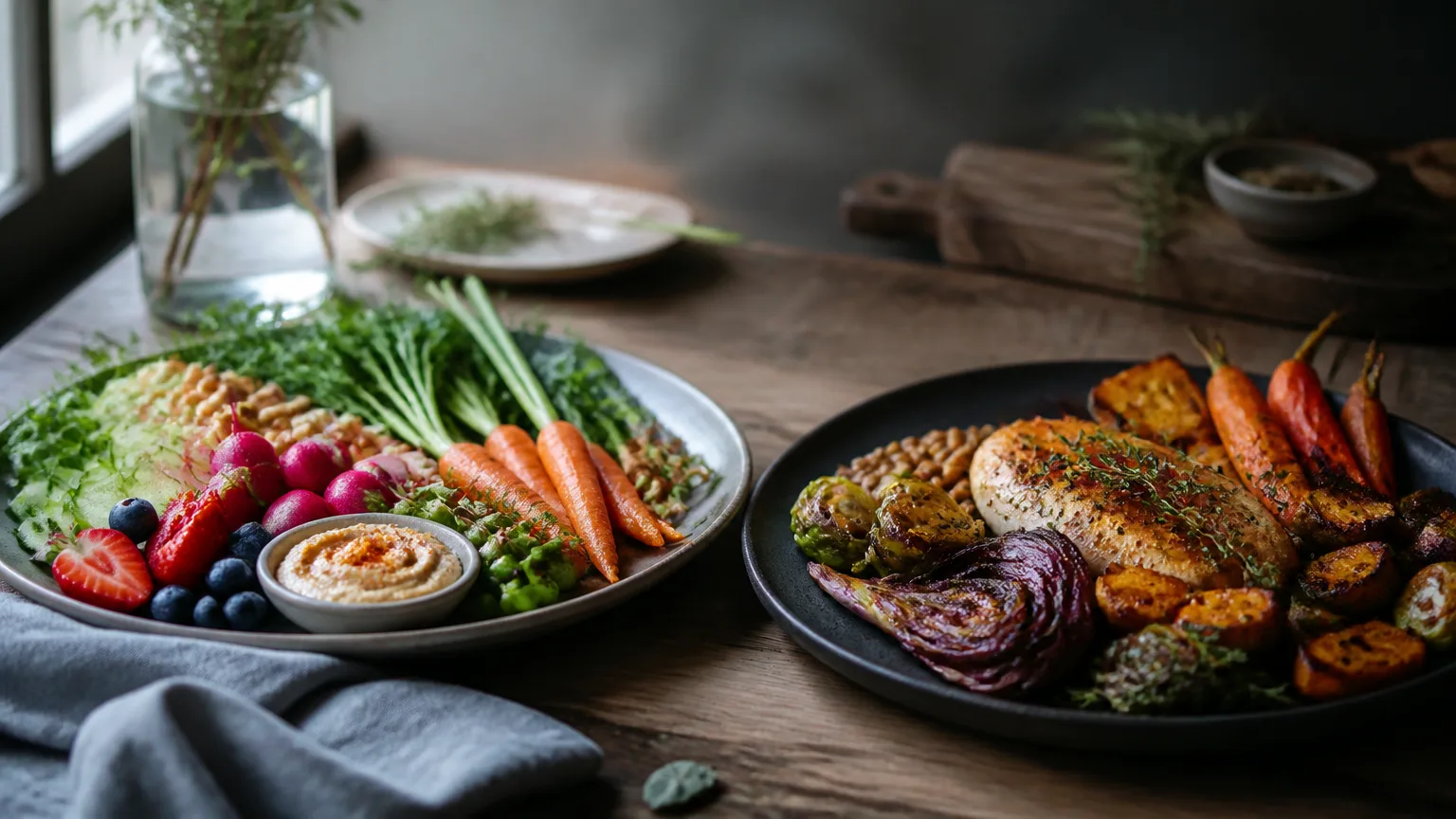
Culinary antonyms help make food language clearer by showing meaningful contrasts. They may describe ingredients, preparation methods, textures, flavors, or dietary choices. For example, raw contrasts with cooked, while sweet often contrasts with savory. These pairings help readers understand recipes, menus, and cooking instructions with greater confidence.
However, culinary antonyms are not always perfect dictionary opposites. Some are practical contrasts shaped by how people cook and eat. A crisp salad and a creamy lentil dish differ in texture, while a light vegetable soup contrasts with a rich coconut curry. These terms describe useful differences, even when they do not form strict linguistic opposites.
This guide will distinguish true opposites from culinary contrasts and from related terms that should not be treated as interchangeable. For instance, vegetarian and vegan describe different dietary practices, while fresh and raw can overlap without meaning the same thing. Clear examples will help you choose the right word and apply it accurately.
Food also carries meaning beyond taste and technique. In Hare Krishna cooking, mindful preparation emphasizes cleanliness, care, gratitude, and the respectful offering of vegetarian food. Resources such as Hare Krishna Recipes reflect this connection between nourishing meals and spiritual practice. As you explore these terms, consider not only how food differs, but also how intention shapes the way it is prepared, shared, and offered.
What Are Culinary Antonyms?
Culinary antonyms are food terms that describe contrasting qualities, methods, or choices. They help readers compare how ingredients taste, feel, look, or fit within a meal. Common examples include hot and cold, sweet and sour, soft and crisp, and raw and cooked.
Some culinary antonyms are direct opposites. “Hot” and “cold” describe different temperatures, while “fresh” and “stale” describe different states of quality. “Raw” and “cooked” refer to opposing preparation stages. These pairs usually have clear meanings across recipes and menus.
Other contrasts depend on context. Homemade and processed, for example, are not exact opposites. A homemade soup may contain processed ingredients, such as canned beans or packaged stock. In this case, the terms compare the level of industrial preparation, not two fixed ends of one scale.
Food language also allows several contrasts to exist in one dish. A rice preparation may be warm, soft, and mildly sweet, yet include a crisp garnish. Its temperature, texture, and flavor work together rather than canceling each other out. Understanding culinary antonyms means identifying which quality each term describes.
A Practical Taxonomy of Culinary Antonyms
Use these categories to recognize oppositional food language more accurately:
- Temperature: hot and cold, chilled and warm, frozen and room temperature
- Flavor: sweet and savory, bitter and mild, spicy and bland
- Texture: soft and crisp, creamy and crunchy, tender and chewy
- Cooking technique: raw and cooked, fried and steamed, grilled and boiled
- Freshness: fresh and stale, ripe and unripe, preserved and perishable
- Dietary or ethical category: vegetarian and meat-based, vegan and animal-derived, plant-based and animal-based
These categories provide a useful framework for describing meals. For example, a grilled vegetable skewer may be cooked, warm, smoky, and crisp on the outside. A chilled fruit salad may be raw, cold, fresh, juicy, and sweet.
The categories can also overlap. “Fried” identifies a cooking technique, while “crunchy” identifies texture. “Vegan” describes a dietary choice, while “savory” describes flavor. A single term may therefore belong to one category while combining with several others.
Culinary antonyms also clarify menu descriptions and recipe instructions. A menu may contrast a chilled starter with a hot entrée, or a rich sauce with a light salad. In each case, the opposing terms guide expectations about the eating experience and the choices available.
Temperature and Freshness: Raw vs. Cooked, Hot vs. Cold, Fresh vs. Preserved
Temperature and freshness create familiar culinary antonyms. These terms help readers understand how food was prepared, how it should be served, and what kind of eating experience to expect.
Raw and Cooked Vegetables
Raw vegetables retain their natural crispness, bright color, and fresh taste. Cucumber salad, grated carrot, and sliced bell pepper offer firm textures and clean flavors. Raw preparation can also preserve delicate aromas that may fade during cooking.
Cooking changes food in several important ways. Heat softens vegetables, develops deeper aromas, and brings out sweetness through processes such as browning. It can also make some foods easier to digest. For example, steamed spinach becomes tender, while roasted cauliflower develops a richer, toasted flavor.
Neither form is universally better. Raw vegetables suit salads, garnishes, and light meals. Cooked vegetables work well in soups, curries, stir-fries, and warm grain dishes. The best choice depends on the desired texture, flavor, and recipe.
Hot and Cold Foods
“Hot” and “cold” may describe serving temperature, perceived effects, or culinary traditions. A bowl of warm khichdi provides physical warmth and a soft, comforting texture. By contrast, chilled raita combines cool yogurt with cucumber, herbs, and spices for a refreshing accompaniment.
Serving temperature is not the same as food safety. Hot food should be cooked thoroughly and held at a safe temperature. Cold foods, including yogurt-based preparations, should remain properly chilled when required. A dish may feel cooling while still requiring careful storage and handling.
Cultural traditions also influence these descriptions. In some food systems, ingredients are considered warming or cooling based on their perceived effects on the body. These classifications differ from the actual temperature of the dish.
Fresh and Preserved Ingredients
Fresh produce is valued for its immediate flavor, moisture, and natural texture. Fresh coriander, for example, has a vivid aroma and soft leaves. Dried coriander has a longer shelf life and a warmer, more concentrated flavor, making it useful in spice blends and cooked dishes.
Preservation creates several distinct categories:
Dried: Removes moisture and concentrates flavor, as with dried herbs or lentils.
Fermented: Uses controlled microbial activity, as with yogurt or fermented batter.
Pickled: Preserves food in vinegar, salt, or brine while adding acidity and complexity.
Frozen: Extends shelf life while often retaining much of an ingredient’s texture and nutrition.
Fresh mango offers juicy sweetness, while mango chutney provides a preserved, spiced, and often tangy alternative. These culinary antonyms describe different qualities rather than a simple ranking. Choosing between fresh, dried, fermented, pickled, and frozen ingredients depends on availability, storage, preparation time, and the intended dish.
Flavor Antonyms: Sweet and Savory, Mild and Spicy, Sour and Rich
Flavor terms help diners understand what to expect from a dish. However, these culinary antonyms describe points on a spectrum, not fixed categories. A balanced vegetarian meal may include several contrasting tastes at once.
Sweet and Savory Create Contrast
Sweet flavors often come from fruit, jaggery, dates, or dairy-based preparations. Rice pudding sweetened with jaggery offers a gentle, rounded taste, while ripe mango adds natural sweetness to a fresh meal.
Savory describes flavors linked with lentils, vegetables, grains, herbs, and spices. A bowl of lentils, roasted vegetables, or spiced rice can taste deeply savory without containing meat. A dish may also combine both qualities, such as roasted carrots with jaggery, or a lentil stew served with sweet fruit chutney.
Mild and Spicy Depend on Context
Mild food contains little heat or uses warming spices in small amounts. Spicy food creates stronger stimulation, often through chili, ginger, black pepper, or similar ingredients. Yet these terms remain relative.
The same vegetable curry may taste mild to one diner and spicy to another. Serving size, preparation method, and personal tolerance all affect perception. A small amount of chili may gently lift a large pot of dal, while the same amount may dominate a single serving.
When adjusting a recipe, cooks can:
- Reduce chili and black pepper for a gentler dish.
- Add ginger gradually because its heat develops during cooking.
- Serve yogurt, rice, or vegetables alongside a spicy preparation.
- Taste before adding more seasoning.
For example, an ISKCON sambar recipe can be adapted to suit different diners while preserving its layered vegetable and lentil flavors.
Sour, Bitter, Salty, and Rich Are Different Dimensions
Sourness comes from ingredients such as tamarind, lemon, yogurt, or fermented foods. Bitterness appears in greens, fenugreek, and some roasted spices. Saltiness comes from added salt and naturally mineral ingredients, while richness describes fullness from ghee, coconut, cream, nuts, or a concentrated cooking method.
These qualities can coexist in one recipe. A vegetable stew may combine sour tamarind, bitter greens, salt, and a rich coconut finish. None of these terms automatically signals better quality; each helps explain the dish’s sensory structure.
A sattvic-inspired approach favors freshness, simplicity, harmony, and appreciation rather than excessive stimulation. Cooks can use contrasting flavors with restraint, allowing seasonal vegetables, grains, lentils, and herbs to remain clear. The goal is not to eliminate strong tastes, but to create a nourishing meal whose balance supports mindful preparation and respectful sharing.
Texture and Structure: Soft vs. Crisp, Creamy vs. Crunchy, Dense vs. Light
Texture describes how food feels as you chew, press, or swallow it. These culinary antonyms help readers understand structure, cooking methods, and sensory contrast within a vegetarian meal.
Soft and Crisp Foods
Soft foods usually yield easily under gentle pressure. Cooked dal becomes tender after simmering, while mashed potatoes develop a smooth, comforting texture. Steamed vegetables, soaked rice, and well-cooked beans also become softer as heat and moisture break down their structure.
Crisp foods provide a firm surface and a noticeable snap. Roasted chickpeas, papad, and fresh salad vegetables offer contrast beside softer dishes. A salad of cucumber, carrot, and radish can make a meal feel brighter and more active, especially when served with dal or mashed potatoes.
Texture often changes through preparation:
Soaking softens beans, grains, and nuts before cooking.
Steaming preserves moisture while keeping vegetables tender.
Roasting removes moisture and creates a crisp exterior.
Frying forms a firm, brittle surface on foods such as papad.
Resting allows breads, baked goods, and cooked grains to settle.
Creamy and Crunchy Combinations
Creamy foods feel smooth, thick, or cohesive. Examples include hummus, blended lentil soup, yogurt-based raita, and puréed pumpkin. Grinding, blending, or prolonged cooking can transform separate ingredients into a unified preparation.
Crunchy foods require more chewing and create a clear textural break. Toasted seeds, roasted chickpeas, fried onions, crushed nuts, and crisp vegetables can add this quality. Cooks often place these toppings over creamy foods to create sensory balance.
For example, creamy hummus becomes more interesting with roasted chickpeas or toasted sesame seeds. Smooth raita gains contrast from cucumber, roasted cumin, or crisp sev. This approach prevents a dish from feeling uniform and gives each bite a changing texture.
Dense and Light Foods
Dense foods contain compact structure and often feel filling. Whole-grain breads, stuffed parathas, cooked chickpeas, lentil cakes, and grain-based sweets may require more chewing and remain satisfying over time.
Light foods feel airy, delicate, or fluid. Clear vegetable broth, steamed greens, puffed rice, fresh fruit, and thin soups provide a less compact mouthfeel. Light does not mean low in nutrition, and dense does not automatically mean heavy or unhealthy. A broth can contain protein-rich lentils, while a small nut-based sweet can be both dense and nourishing.
These contrasts help explain how preparation affects structure. Grinding can make legumes creamy, roasting can make them crisp, and resting can firm breads or sweets. Recognizing these culinary antonyms helps cooks plan meals with variety, balance, and deliberate sensory appeal.
Cooking Methods in Contrast: Boiled vs. Fried, Steamed vs. Roasted, Raw vs. Processed
Cooking methods create clear culinary antonyms by changing moisture, texture, flavor, and preparation time. Boiling softens food in water, while frying cooks food in hot oil. Steaming preserves moisture with gentle heat, while roasting uses dry heat to develop browning and deeper flavor.
Boiled, Steamed, Roasted, Sautéed, and Fried
Boiled potatoes become tender and mild. They work well in soups, curries, mashed dishes, and simple meals. Fried potatoes develop a crisp surface and richer taste, but they require more oil and careful temperature control.
Steaming cooks food above simmering water rather than directly in it. Steamed cauliflower, grains, and dumplings often retain a clean flavor and soft, firm texture. Roasting cauliflower or potatoes produces browned edges and concentrated flavor, though it usually requires more time and preparation.
Sautéing cooks small pieces quickly in a shallow layer of oil. Vegetables such as carrots, beans, cabbage, or peppers remain more colorful and slightly crisp. Frying generally uses more oil and higher heat, creating a stronger crust. Both methods can suit a festive meal, while steaming or boiling may better support simple daily nourishment.
Method choice also affects nutrition. Boiling can cause some water-soluble nutrients to move into the cooking liquid. Steaming often limits this loss, while roasting and frying can increase flavor through browning. The best method depends on the ingredient, portion size, oil used, and purpose of the meal.
Raw and Processed Foods
Raw food has received little or no heat treatment. Fresh fruit, grated vegetables, and some salads preserve their natural crunch and bright flavor. Cooked food, by contrast, may become softer, warmer, and easier to combine with grains, legumes, or sauces.
The word “processed” requires context. Ground wheat, fermented batter, rolled oats, and dried beans are processed in simple ways. Highly manufactured snacks may contain refined ingredients, added sugars, excess salt, or several additives. Processing itself is not automatically harmful; the degree and purpose matter.
For example, flour used in unleavened flatbread from India recipes and insights is processed by grinding grain, then shaped and cooked with care. This differs greatly from an industrial product designed for long storage.
Intention in the Kitchen
Preparation can reflect the meal’s purpose. A boiled grain dish may provide practical nourishment on an ordinary day. Roasted vegetables, fried dumplings, or carefully sautéed dishes may suit guests or a festival.
For devotional cooking, no method is automatically spiritual or unspiritual. Clean utensils, quality ingredients, moderation, attention, and a respectful attitude matter. A simple steamed meal and an elaborate roasted offering can both express care when prepared consciously and shared respectfully.
Dietary and Cultural Contrasts: Vegetarian vs. Nonvegetarian, Homemade vs. Store-Bought
Food choices often reflect health needs, ethical beliefs, family traditions, or spiritual practices. In culinary language, vegetarian and nonvegetarian describe whether a meal includes animal flesh, while homemade and store-bought describe how food is sourced and prepared.
Vegetarian and Related Dietary Terms
A vegetarian diet excludes meat, poultry, and seafood. Many vegetarians still eat dairy products, eggs, or both, so the term requires practical context.
Vegan: Excludes all animal-derived foods, including dairy, eggs, gelatin, and often honey.
Lacto-vegetarian: Includes dairy but excludes meat, poultry, seafood, and eggs.
Plant-based: Emphasizes foods from plants but may allow occasional animal products.
Sattvic: In some Indian and Hare Krishna settings, describes food prepared to support purity, balance, and mindful living. Practices differ, but sattvic cooking commonly avoids meat, fish, eggs, intoxicants, and certain strongly stimulating ingredients.
For many Hare Krishna devotees, vegetarian cooking represents both an ethical choice and a devotional practice. Food may be prepared with care, offered to Krishna, and then shared as prasadam. However, individuals differ in their beliefs, observance, and dietary needs. A vegetarian label does not automatically indicate a particular spiritual commitment.
The opposite term, nonvegetarian, generally refers to food that includes meat, poultry, fish, or seafood. This contrast describes ingredients rather than a person’s character or values. For example, a menu might identify a lentil curry as vegetarian and a chicken curry as nonvegetarian.
Regional traditions also show why culinary antonyms require context. Greek cuisine includes many vegetable-forward dishes, and these vegetarian Greek dishes may be prepared differently in homes, restaurants, or devotional kitchens. A dish can remain traditional while adapting to another community’s ingredients or dietary practices.
Homemade and Store-Bought Food
Homemade food is prepared in a personal or community kitchen. It often provides greater control over ingredients, seasoning, freshness, allergens, and preparation methods. A cook can replace packaged stock, reduce salt, or prepare a meal specifically for an offering.
Store-bought food is produced commercially or purchased ready-made. It offers convenience, consistent portions, a longer shelf life, and access to ingredients that may take time to prepare. Reading labels remains important, especially when checking for eggs, dairy, gelatin, additives, or ingredients that do not fit a devotional practice.
Neither category has automatic moral superiority. Homemade food may be simple or elaborate, while store-bought food may support a busy family or provide a useful ingredient. The key contrasts involve sourcing, intention, freshness, convenience, and control—not personal worth or spiritual value.
Frequently Asked Questions About Culinary Antonyms
Culinary antonyms often describe useful contrasts rather than perfect opposites. Their meaning depends on flavor, preparation, texture, dietary choices, and cultural context.
Are culinary antonyms always exact opposites?
No. Many culinary antonyms are practical contrasts shaped by technique, sensory description, or the situation. For example, a menu may contrast a light salad with a rich stew, even though “light” and “rich” are not exact opposites in every context.
These terms help readers understand choices. A recipe might contrast fresh herbs with dried herbs, raw vegetables with cooked vegetables, or homemade sauce with store-bought sauce.
What is the opposite of savory?
Sweet is often used as the contrast to savory in flavor discussions. However, savory does not have one universal antonym.
For example, a sweet mango chutney contrasts with a savory lentil dish. Yet sour, bitter, or spicy foods may also contrast with savory foods, depending on the comparison.
Is raw always the opposite of cooked?
Usually, “raw” and “cooked” describe opposite preparation states. However, food can exist along a wider spectrum. Partially cooked vegetables, fermented cabbage, dried fruit, and marinated fish each show that culinary states are not always binary.
Recipe writers should use precise terms. “Lightly steamed,” “fully roasted,” and “uncooked” give clearer instructions than relying on broad opposites alone.
Are fried foods the opposite of healthy foods?
No. Frying does not automatically make food unhealthy, and steaming does not guarantee a balanced meal. Ingredients, cooking method, portion size, frequency, and overall dietary pattern all matter.
A vegetable stir-fry with moderate oil may fit a balanced meal, while a heavily sweetened baked dish may not.
How can devotees use culinary antonyms in devotional cooking?
Devotees can use these terms to choose ingredients and methods intentionally. They may compare fresh and preserved foods, mild and strongly seasoned dishes, or steamed and roasted preparations.
The vocabulary supports planning, but devotion also emphasizes cleanliness, gratitude, attention, and preparing food as an offering according to one’s tradition.
Using Culinary Antonyms to Cook With Clarity and Consciousness
Culinary antonyms provide a practical vocabulary for reading recipes, shopping wisely, and planning balanced menus. Terms such as hot and chilled, mild and bold, soft and crisp, or fresh and preserved clarify what ingredients and techniques will create.
These contrasts also improve decision-making. A recipe calling for roasted vegetables differs from one using steamed vegetables, while a menu pairing a rich entrée with a light salad sets clear expectations. When shopping, compare fresh, frozen, dried, and canned options based on availability, storage, cost, and the dish you intend to prepare.
Cooks should notice contrasts without ranking every category. A thoughtful meal may combine soft and crisp textures, mild and bright flavors, or warm and cool elements. For inspiration, explore Puerto Rican vegetarian dishes that demonstrate how grains, legumes, vegetables, herbs, and sauces create variety.
Precise food language supports more intentional cooking, sharing, and offering. It helps you choose with care, prepare with attention, and recognize the qualities each ingredient contributes. In vegetarian cooking, that clarity can deepen gratitude for nature’s abundance and the opportunity to prepare nourishing food as a respectful spiritual offering.