
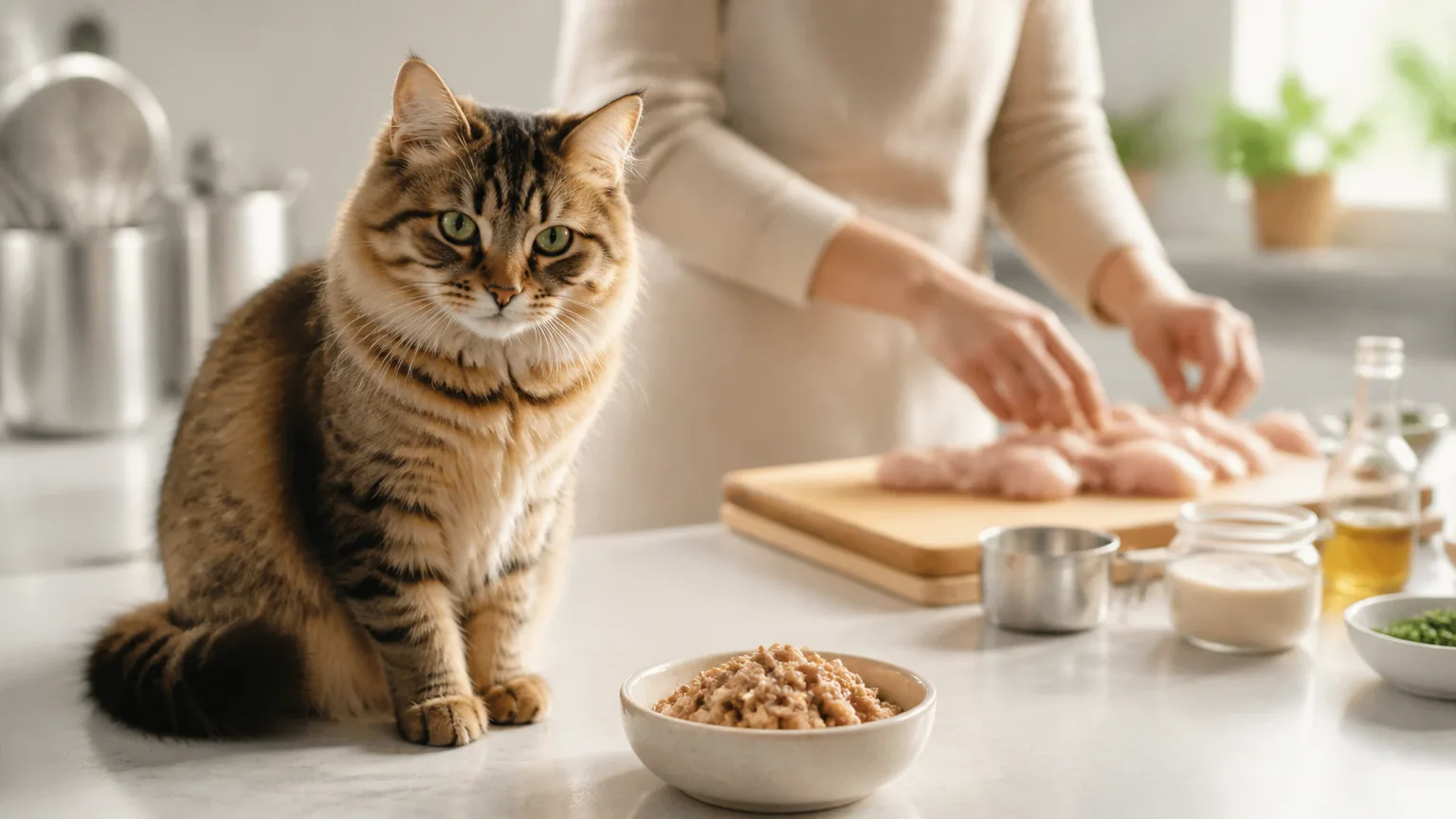
Homemade cat food recipes can appeal to caregivers who value compassion, mindful service, and careful preparation. For devotees, cooking may also express spiritual practice, much like preparing Hare Krishna recipes from ISKCON with attention and love. However, food prepared for people cannot simply be adapted for cats.
Cats are obligate carnivores. Their bodies require specific nutrients from animal-based ingredients, including taurine, arachidonic acid, and preformed vitamin A. A vegetarian meal or prasadam recipe may be meaningful and nourishing for people, yet still leave a cat deficient or seriously ill. Respecting spiritual food traditions also means recognizing a cat’s biological needs.
This guide focuses on safe, practical preparation. You will learn when to seek veterinary guidance, how to handle animal proteins safely, and why balanced formulation matters more than appearance or variety. It also covers preparation methods, storage limits, portion control, and warning signs that require professional attention. With the right safeguards, homemade feeding can be approached responsibly—without allowing religious principles or good intentions to replace evidence-based feline nutrition.
Before You Cook: Understand What Cats Actually Need
Cats are obligate carnivores, so their nutritional needs differ sharply from human vegetarian cooking. Familiar ingredients such as rice, lentils, vegetables, or dairy may suit a spiritual meal tradition, but they cannot provide everything a cat requires.
A safe homemade diet must supply animal-derived nutrients, including taurine, preformed vitamin A, and arachidonic acid. It must also maintain carefully calculated calcium and phosphorus levels. Meat alone is not automatically complete. For example, plain cooked chicken may provide protein but lack essential vitamins, minerals, and amino acids.
This is why homemade cat food recipes should be formulated cautiously rather than improvised. Ingredient substitutions, cooking methods, and portion sizes can change the diet’s nutritional balance. Supplements may be necessary, but the wrong product or dose can also cause harm.
Speak with your veterinarian or a board-certified veterinary nutritionist before replacing commercial food. Professional guidance is especially important for:
- Kittens, whose bodies are still developing
- Senior cats with changing nutritional needs
- Pregnant or nursing cats
- Cats with kidney, urinary, digestive, or other chronic conditions
- Cats taking medication or following a therapeutic diet
- Onions, garlic, or chives
- Excessive salt or spicy seasonings
- Chocolate or alcohol
- Grapes or raisins
- Xylitol
- Cooked bones
- Raw meat, eggs, or fish unless a veterinarian has provided specific safety guidance
- Cooked chicken or turkey
- Sufficient water or unsalted broth
- The exact veterinary-prescribed nutrient premix
Homemade meals can serve as a carefully planned complete diet or an occasional supplement. However, they should not displace complete-and-balanced cat food without professional formulation. Even a recipe made with quality meat can create deficiencies over time if it lacks the correct nutrient profile.
Treat vegetarian ingredients as optional additions, not the foundation of a cat’s diet. Cats may enjoy small amounts of certain cooked vegetables, but these foods cannot replace the animal-derived nutrients their bodies depend on.
Safe Ingredients for a Homemade Cat Food Recipe
A veterinarian-approved recipe should use plain, thoroughly cooked animal protein as its base. Chicken, turkey, beef, or selected fish may work, but the final proportions and required supplements must come from a qualified veterinary nutritionist or veterinarian.
Texture also matters. Serve the food finely chopped, shredded, or blended with added moisture, depending on your cat’s age, dental health, preferences, and ability to chew. For example, a senior cat with dental disease may manage a smooth blend better than firm chunks.
Avoid ingredients that can cause poisoning, digestive problems, or physical injury. Never add:
Cooked bones can splinter and damage the mouth or digestive tract. Raw ingredients may carry harmful bacteria or parasites, creating risks for both cats and household members.
Milk, plant proteins, rice, vegetables, and lentils cannot replace the animal-derived nutrients cats require. Small amounts of certain cooked vegetables may serve as optional additions, but they should remain limited and veterinarian-approved. This approach differs from spiritual cooking traditions, where plant-based ingredients may play a central role; cats have specific biological nutrition needs.
Supplements require the same precision as the food itself. Taurine, vitamins, minerals, and oils are not interchangeable, and adding more does not make a recipe safer. Measure each supplement exactly as directed, using the formulation created for your cat’s age, health status, and portion size.
Do not rely on generic online homemade cat food recipes without professional review. A recipe that appears balanced may still cause serious deficiencies over time if it lacks the correct nutrient profile.
Three Practical Homemade Cat Food Preparation Approaches
Homemade cat food recipes can follow several practical formats, but none should replace a nutritionally complete formulation. Obtain veterinary approval first, then use the recipe exactly as prescribed for your cat’s age, health status, and portion needs.
1. Gently Cooked Poultry Format
This format uses plain poultry as the main protein and includes:
Cook the meat thoroughly, remove bones and skin as directed, and avoid salt, garlic, onion, herbs, butter, and other human seasonings. If the formulation lists raw ingredient weights, weigh the meat before cooking. Cooking changes moisture and weight, which can affect the final nutrient balance.
2. Soft Meat-and-Moisture Pâté
For cats that prefer smooth food, blend cooked meat with the required water or unsalted broth. Add the prescribed nutrient premix only as instructed by the formulator.
Blending can improve hydration and make each portion easier to measure. It also creates a soft texture for cats with dental discomfort or strong preferences. Prepare consistent batches, refrigerate them promptly, and measure each serving according to the approved feeding plan.
3. Limited Topper for Careful Introductions
A small amount of plain cooked meat can help cautious cats accept a new feeding routine. Add it to the cat’s established complete food rather than serving it as a standalone diet.
Keep toppers limited so they do not dilute essential nutrients. Vegetarian ingredients should remain optional additions, not the dietary foundation; cats require animal-derived nutrients. People interested in vegetarian dishes to make at home should not apply those recipes to feline feeding.
Fish-based recipes require extra caution. Offer fish occasionally, or use a professionally formulated recipe, because frequent or poorly balanced fish feeding may create nutritional and contamination concerns. Never substitute ingredients without checking with the veterinary nutritionist or recipe formulator.
Kitchen Hygiene, Portioning, and Storage
Safe preparation begins with strict kitchen hygiene. Wash your hands before and after handling ingredients, use clean utensils, and keep a separate cutting board for raw meat. Thoroughly cook ingredients according to the veterinary-formulated recipe, and prevent contact between pet food, raw ingredients, and human meals—including anti-inflammatory dinner recipes prepared for your family.
Chill cooked food promptly rather than leaving it at room temperature. Divide it into cat-sized portions, then label each container with the recipe name and preparation date. Keep refrigerated portions only within the veterinarian- or food-safety-recommended window, and freeze extra portions promptly if you will not use them soon.
Thaw frozen portions safely in the refrigerator. Serve each meal in a clean bowl, and discard food that has sat out too long. Warm refrigerated food gently, if needed, until it reaches a comfortable temperature; never overheat it, because hot spots can burn your cat’s mouth.
Introduce homemade food gradually over several days or longer. Start by mixing a small amount with the current diet, then increase it slowly if your cat tolerates the change. Monitor appetite, stool quality, vomiting, energy, and body weight. If problems develop, pause the transition and contact your veterinarian rather than forcing the new diet.
Consistency matters more than elaborate preparation. A clean workflow, accurate portions, and respect for your cat’s appetite provide more meaningful care than complex homemade cat food recipes. Keep preparation areas organized, follow the prescribed formulation, and make changes only with professional guidance.
How to Tell Whether the Diet Is Working
A homemade feeding plan should support stable health, not merely a full food bowl. Track your cat’s body weight, muscle condition, coat quality, stool consistency, hydration, appetite, and behavior. Ask your veterinarian to assess these measures, because appearance alone can hide nutrient deficiencies or illness.
Contact your veterinarian if your cat refuses food, vomits repeatedly, has persistent diarrhea, becomes lethargic, loses or gains weight suddenly, or shows urinary changes. Cats that stop eating can become seriously ill, so do not wait several days to seek advice.
Keep a simple food-and-symptom log. Record ingredients, portion sizes, feeding times, appetite, stool changes, vomiting, and unusual behavior. This information can help the veterinarian identify ingredient intolerance, portion problems, or gaps in the recipe’s formulation.
Schedule follow-up checks after starting or changing homemade cat food recipes. Your veterinarian may recommend weight monitoring, blood tests, or a revised formulation based on your cat’s response. Use the same careful tracking approach you might apply to healthy meal planning, while recognizing that feline nutrition has stricter requirements.
Your cat’s well-being is the clearest expression of compassionate care. If a recipe does not support good health, choose a commercial complete diet or stop the homemade plan without hesitation.
Cook With Care, Feed With Responsibility
Homemade cat food recipes should begin with safety, not creativity. Use a veterinarian-approved, nutritionally complete formula; choose safe, plain ingredients; maintain careful hygiene; and monitor your cat throughout the transition. Accurate portions and proper storage matter as much as ingredient quality.
Vegetarian cooking and devotional food practices can remain central to your household. Your cat, however, still requires animal-derived nutrients that its body cannot obtain from plants alone. These principles can coexist when feline nutrition remains evidence-based.
Before buying ingredients or changing meals, discuss your cat’s health history and a suitable formulation with your veterinarian. This step turns homemade feeding into attentive caregiving—focused on your cat’s long-term well-being, not culinary experimentation.