
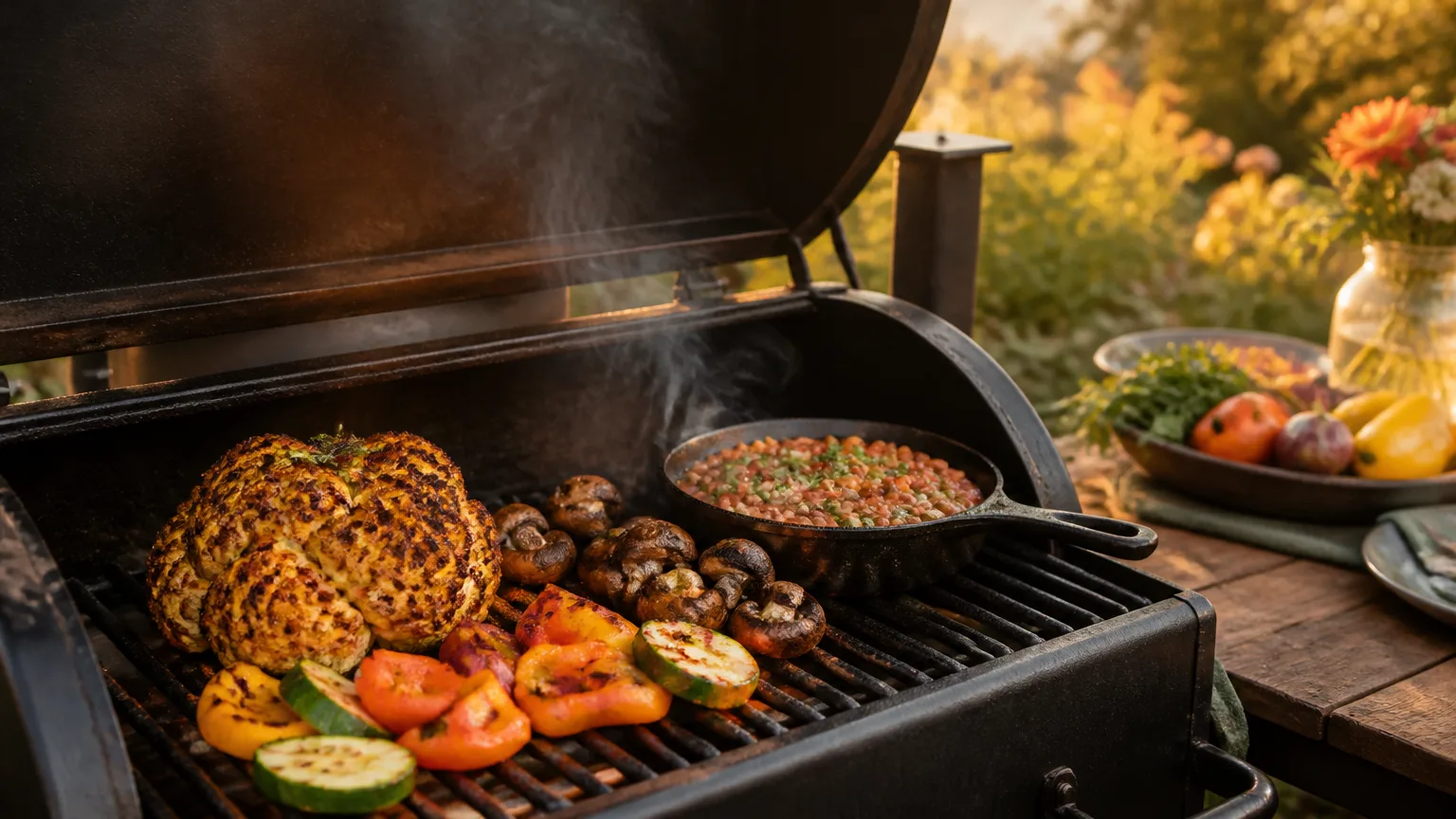
A Traeger can bring new depth to vegetarian cooking. These traeger recipes use wood-fired smoke to add aroma and complexity to vegetables, grains, and plant-based proteins without making meat the center of the meal. A smoked cauliflower, a pan of savory beans, or a hearty mushroom dish can feel generous enough to share.
Cooking for others can be an act of care, gratitude, or devotion. Hare Krishna readers and people from other devotional traditions may find inspiration in preparing food thoughtfully, while ingredient practices vary across traditions and households. Adapt each dish to the choices and customs that matter to you.
This collection offers approachable ideas for bringing smoky flavor to a home-cooked vegetarian meal. Expect dishes that are satisfying on their own and inviting at a shared table. For more tradition-conscious vegetarian inspiration, visit Hare Krishna Recipes.
Set Up the Traeger for Flavorful Vegetarian Smoking
A few simple choices can help your Traeger bring out vegetables’ natural sweetness without overpowering them. For reliable traeger recipes, match the pellets, heat, and cooking time to the ingredients.
Choose a mild wood, such as apple or maple, for tender vegetables, squash, and cheese. Hickory can add a stronger smoke flavor to hearty ingredients like mushrooms, eggplant, or potatoes. Start with a light smoke profile; vegetables absorb smoke quickly, and cheese can become bitter if exposed to heavy smoke for too long.
Use moderate heat for most vegetables and cheese, then adjust for size and texture. Delicate vegetables and cheese often need shorter cooking times, while dense potatoes, winter squash, or whole cauliflower take longer. Cooking times vary by ingredient size and Traeger model, so check doneness by texture rather than relying only on a universal timer. Vegetables should be tender with some structure, and cheese should be warmed or melted without becoming greasy.
A little preparation helps prevent drying. Toss vegetables with oil, cut pieces to a similar size, and place smaller items in a grill basket. For ingredients that need longer cooking, cover them or use a shallow dish to retain moisture. Keep an eye on the food near the end of cooking, especially when smoking thin slices or small pieces.
Before cooking, clean the grates and remove residue from previous cooks. People following particular dietary or devotional standards may prefer a dedicated cooking surface or one that has been thoroughly cleaned. Vegetarian casseroles are also a practical choice for feeding a group: layers of vegetables, grains, sauce, and cheese can cook together in one dish. Find more meal ideas in these easy casserole recipes.
1. Smoked Paneer Tikka
Paneer tikka makes a bold, satisfying starter or a filling main dish. Marinate paneer cubes in yogurt, grated ginger, lemon juice, and spices such as cumin, coriander, and paprika. Adjust the heat with more or less chili, and swap spices to suit your household’s tastes or pantry.
Use thick yogurt so the marinade clings to the paneer. Coat the cubes gently, then refrigerate for 30 minutes to a few hours. Avoid marinating for too long in a very acidic mixture, which can affect the paneer’s texture.
Thread the paneer onto skewers with chunks of onion and bell pepper. Leave a little space between each piece so smoke can circulate and the edges can brown evenly. Set the Traeger to 375°F and cook the skewers, turning once, until the vegetables soften and the paneer develops light char. Cooking time depends on cube size, so check early and remove the paneer once it is heated through; overcooking can make it firm.
These Traeger recipes are easy to adapt for a casual meal or a shared spread. Serve the tikka with rice or warm flatbread, plus a cooling yogurt accompaniment such as raita.
2. Smoked Stuffed Bell Peppers
Bell peppers make natural edible bowls for a smoky vegetarian filling. For reliable results, partially cook rice or another grain before stuffing; it will finish heating on the Traeger without keeping the peppers on the smoker too long.
Mix the grain with beans, chopped vegetables, herbs, and enough sauce or broth to keep the filling moist. A tomato-and-bean mixture with corn and cumin offers a hearty option. For a different flavor, combine spiced rice with sautéed onion, zucchini, and fresh parsley. Add cheese if desired, either inside the filling or on top near the end of cooking.
Choose peppers that can stand upright, then trim their tops and remove the seeds. Fill each pepper without packing the mixture tightly, leaving room for heat to circulate. Set them in a grill-safe pan to catch any filling that spills and help support the peppers as they soften.
Smoke at 350°F until the peppers are tender but still hold their shape, usually about 35 to 50 minutes, depending on size. Check with a knife: it should slide into the pepper with little resistance, while the sides remain upright rather than collapsed. The center should be steaming hot; if using a food thermometer, check that it reaches 165°F. These traeger recipes work well as a main dish with a green salad or grilled vegetables.
3. Traeger-Smoked Plantains
For a simple sweet-savory side, smoke ripe plantains on your Traeger. Peel them, then cut them in half lengthwise or into thick slices. Brush lightly with oil so they brown without sticking, and arrange them on the grill grate.
Set the grill to 225°F and smoke the plantains until tender and lightly bronzed, about 30–45 minutes, turning once. Cooking time varies with thickness and ripeness, so start checking early. They’re ready when a fork slides in easily and the edges begin to caramelize.
Ripeness shapes both flavor and texture. Yellow plantains with a few dark spots taste mildly sweet and hold their shape, while mostly black plantains become softer and much sweeter. Choose firmer fruit for a savory side or very ripe fruit for a dessert-like snack.
Keep the seasoning light to let the fruit’s flavor stand out. For a savory version, add a pinch of salt, black pepper, smoked paprika, or chili powder before cooking. For a gentle sweet variation, sprinkle on cinnamon, or drizzle with a little honey after smoking. Serve them on their own, alongside beans and rice, or as part of a larger meal. Explore more plantain recipes for other ways to cook this versatile fruit.
4. Smoked Eggplant with Garlic and Herbs
Smoked eggplant becomes soft and savory, making a versatile base for a dip, sandwich filling, or plated side. Smoke whole eggplant for a tender interior with a creamy texture. Halve it lengthwise to shorten the cooking time and expose more surface for seasoning.
Brush the cut sides with olive oil and season lightly with salt before smoking. Cook until the flesh is soft and easy to scoop or slice; timing will vary with the eggplant’s size and your smoker’s temperature. Finish with lemon juice, minced garlic, chopped herbs, and a drizzle of olive oil. Parsley, dill, mint, or cilantro can each bring a different character.
Serve the eggplant warm as a side or sandwich filling, or chill it and mash the flesh into a dip. These options draw on the many vegetable traditions home cooks may know and adapt, rather than claiming the dish belongs to one culture. For more regional inspiration, explore Georgian vegetarian dishes.
This simple preparation fits naturally among Traeger recipes for a shared meal. Pair it with flatbread, grains, or other smoked vegetables, and adjust the herbs and acidity to suit your table.
5. Smoked Corn on the Cob with Spiced Butter
Smoked corn is an easy addition to a shared meal, and you can cook it with the husks on or off. Set the Traeger to 350°F and smoke the ears for about 30–40 minutes, turning them once. Cooking time may vary with the size and freshness of the corn.
Leave the husks on for a gentler result. They help shield the kernels from direct smoke, keeping them moist and tender with a light smoky flavor. For a more pronounced smoke taste and deeper color, remove the husks and silk before cooking. Turn the ears occasionally so they color evenly.
While the corn smokes, soften butter and season it to suit your guests. Try lime zest and chili powder for a bright, warm finish, chopped herbs for a fresh option, or a mild spice blend for subtle flavor. You can also serve plain butter and seasonings separately, allowing diners to dress their own corn.
This flexible side pairs well with flatbread, grains, or other smoked vegetables. It is a simple way to round out Traeger recipes for a casual dinner, while letting everyone choose how much spice, butter, and smoke they prefer.
6. Smoked Tofu Skewers
Smoked tofu skewers add plant-based protein and savory flavor to a spread of Traeger recipes. Choose extra-firm tofu, then press it for 20 to 30 minutes to remove excess moisture. Drier tofu holds its shape, absorbs marinade more readily, and browns more evenly.
Cut the tofu into even cubes and marinate for at least 30 minutes. Combine soy sauce, grated ginger, minced garlic, a little oil, and a small amount of maple syrup or brown sugar. For a gluten-free option, use tamari; for a milder, less salty marinade, reduce the soy sauce and add a splash of water or lime juice.
Thread the tofu onto skewers with vegetables that cook at a similar pace, such as bell pepper, red onion, and zucchini. Cut the vegetables into pieces close to the tofu’s size, and leave a little space between each piece so smoke can circulate. If using wooden skewers, soak them in water beforehand.
Preheat the Traeger to 375°F. Lightly oil the grill grates and arrange the skewers with room between them. Smoke for about 20 to 25 minutes, turning carefully once the tofu’s exterior begins to firm. Avoid moving the skewers too early; the tofu can stick or break before it develops a browned surface. Serve with rice, flatbread, or a tangy dipping sauce.
7. Smoked Cauliflower Steaks
Thick cauliflower steaks make a satisfying centerpiece, with a lightly browned exterior and tender interior. A simple blend of smoked paprika, garlic, salt, and pepper complements the wood-fired flavor without overpowering the vegetable.
To help the steaks stay intact, trim away the leaves and stem end, then set the head upright. Cut straight through the center into slices about 1 inch thick. The core holds the slices together, so avoid cutting too far toward the outer edges. Save any loose florets for the smoker tray, or use them in a salad, soup, or another meal.
Brush both sides lightly with oil, then add an even layer of seasoning. A thin coating helps the cauliflower brown while retaining moisture. Arrange the steaks in a single layer on the Traeger and smoke at 375°F for about 25 to 30 minutes, turning once if needed. Cooking time varies with thickness; check for tenderness with a fork and remove the steaks when the centers are easy to pierce.
The savory, smoky flavor pairs well with something fresh or mild. Serve the steaks with a bright lemon-herb sauce, chimichurri, or yogurt sauce, alongside rice, couscous, or another grain. This flexible addition to your traeger recipes works as a vegetarian main or a shareable side.
8. Traeger-Smoked Mac and Cheese
Mac and cheese is a comforting choice among traeger recipes, and the smoker adds a gentle layer of wood-fired aroma. The creamy sauce coats the pasta as it bakes, helping keep the dish moist. Use a sturdy, shallow baking dish made from cast iron or oven-safe ceramic so the cheese heats evenly and develops a lightly browned top.
Cook the pasta just shy of fully tender before combining it with the sauce. It will continue to soften in the smoker, and starting with slightly firm pasta helps prevent a mushy texture. Choose cheeses that melt smoothly, such as cheddar and Monterey Jack, and season the sauce before baking.
Set the filled dish in the smoker at a moderate temperature, around 225°F, and cook until the center is hot and bubbling. A moderate smoking time—often about 30 to 45 minutes—adds aroma without overpowering the dairy and seasoning. Check the center with a spoon; it should be hot and creamy, not dry or stiff. Cooking time may vary with the dish’s depth and the smoker’s temperature.
Serve the mac and cheese promptly while the sauce is still smooth. If you want a crisp topping, add buttered breadcrumbs near the end of cooking so they brown without becoming too dark.
9. Smoked Portobello Mushrooms
Large portobello caps make a satisfying vegetarian main and work especially well as burger-style fillings. Their earthy flavor pairs with smoke, herbs, and a little acidity, so keep the marinade light rather than covering the mushrooms with strong seasonings.
Wipe each cap clean with a damp cloth or paper towel; avoid soaking it, since mushrooms absorb water. Trim the stems if you prefer, then brush both sides with a simple marinade of olive oil, chopped thyme or rosemary, minced garlic, and a splash of balsamic vinegar or lemon juice. Season the gill side as well as the top so the flavor reaches the whole cap.
For a firmer result, let excess marinade drip off before placing the mushrooms on the Traeger. Smoke them gill-side up at 225°F for about 30 to 40 minutes, checking early for smaller caps. They are ready when tender but still hold their shape. Avoid leaving them in pooled liquid or cooking until limp; both can make the texture overly soft.
Serve the caps whole with roasted potatoes, grains, or a crisp salad. For a burger, add them to buns with greens and a tangy sauce. You can also slice smoked portobellos over salad, grain bowls, or sandwiches. This straightforward method fits easily into a collection of traeger recipes and lets the mushrooms’ savory character stay front and center.
10. Smoked Vegetable and Chickpea Skewers
For a colorful finish to this collection of Traeger recipes, make skewers with sturdy vegetables that hold their shape on the grill. Cut zucchini, onion, and bell pepper into similarly sized pieces so they cook at a similar rate. Toss them with olive oil, salt, pepper, and a mild seasoning blend before threading them onto metal or soaked wooden skewers.
Chickpeas add protein and a tender contrast, but they can dry out or slip off narrow skewers. Instead, place cooked, drained chickpeas in a grill basket alongside the vegetables. If you have wide, flat skewers designed to hold small ingredients, thread chickpeas carefully and leave enough space for smoke and heat to circulate.
Arrange the skewers and basket in the smoker without overcrowding. Smoke at 375°F for about 15 to 20 minutes, turning the vegetables once, until they are lightly browned and tender but not falling apart. Check early, since smaller pieces can cook quickly.
Finish with a lemony herb dressing made with lemon juice, chopped parsley, and olive oil, or serve with a mild spiced sauce. These skewers work as a shareable side or a simple main with warm flatbread, rice, or couscous.
Frequently Asked Questions
Which vegetables are easiest for beginners to smoke?
Start with sturdy vegetables such as bell peppers, zucchini, mushrooms, or thick-cut eggplant. They are easy to prepare and less likely to fall apart than delicate greens. Cut pieces to a similar size, leave space between them, and check for tenderness early. Remove each vegetable when it reaches the texture you want rather than waiting for every item to finish at once.
How can I control the smoke flavor?
Pellet flavor, smoker temperature, and cooking time all affect smoke intensity. A stronger-flavored pellet or longer cook can produce a more pronounced smoky taste, while a milder pellet and shorter cook keep it subtle. Recipe timings are starting points, not guarantees: piece size, weather, and smoker performance can change cooking time. Check food as it cooks and adjust the next batch to suit your preference.
For spicy dishes, build flavor with herbs, citrus, or seasoning before adding more heat. These tips for making spicy food flavorful without overpowering heat can help you balance smoke and spice.
Can vegetarian dishes share a Traeger with other foods?
They can, but follow the standards that matter to you and your guests. If contact with meat, fish, or other ingredients is a concern, use clean equipment and a separate cooking surface, such as a clean pan or foil tray. When needed, clean the grates and utensils thoroughly before cooking. Ask guests about their requirements rather than assuming one approach works for everyone.
Can I prepare these recipes as a devotional offering?
That depends on your tradition and household practices. Ingredient rules, preparation methods, and expectations for cooking equipment vary. Check your own guidance before choosing a recipe, and adapt ingredients or preparation as needed. For example, you may need to omit certain seasonings or use dedicated, clean utensils and surfaces.
A Smoky, Shareable Vegetarian Meal
Choose one dish that suits your plans, then make it your own. Adjust herbs, spice, salt, and acidity to match your household’s tastes and traditions. A small change, such as serving a bright sauce on the side, can help everyone enjoy the meal their way.
These traeger recipes show how a smoker can bring variety and satisfying flavor to plant-based cooking. Whether you serve a hearty main or a few dishes around the table, the goal is not perfect presentation. It is food that feels welcoming and gives people a reason to gather.
Take care with preparation, especially when ingredients, utensils, or cooking surfaces need to follow particular household practices. Then serve the food while it is fresh, make room for different preferences, and enjoy the conversation that follows. Thoughtful hospitality can matter as much as the smoker or the ingredients.