
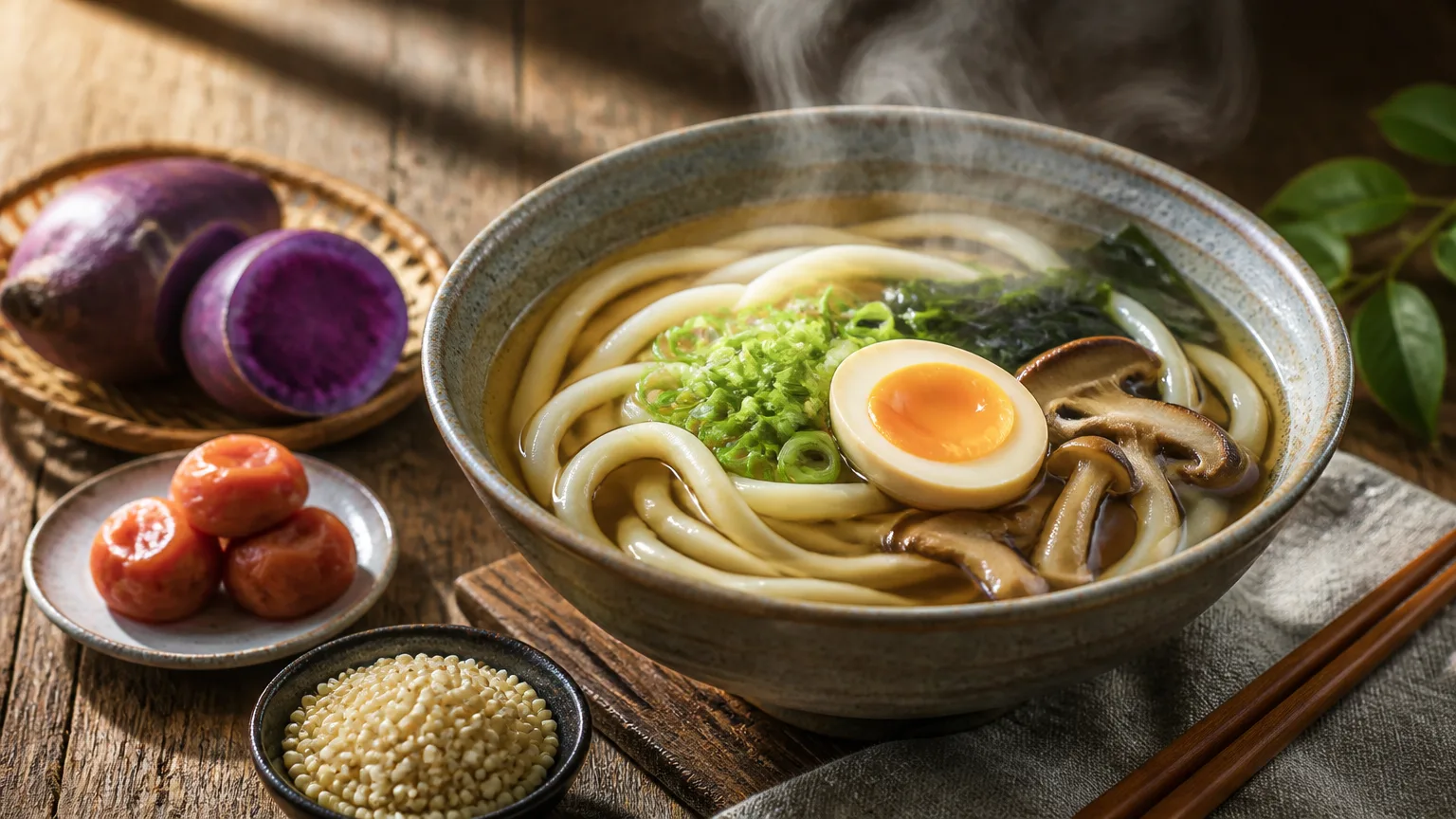
Finding a food beginning with a U can be harder than it sounds. Whether you’re playing a word game, exploring new ingredients, or looking for fresh vegetarian meal ideas, this guide offers 12 options and practical ways to use them.
The list ranges from familiar ingredients, such as udon noodles, to less common foods from different culinary traditions. Some are naturally vegetarian; others can be adapted with plant-based ingredients. For example, serve udon in a vegetable broth or prepare a savory dish with a vegetarian filling.
Hare Krishna cooking commonly emphasizes vegetarian ingredients and devotional intention, though not every food in this list belongs to that tradition. If you’d like more devotional vegetarian inspiration, browse the recipe collection at Hare Krishna Recipes.
1. Ube: The Purple Yam for Sweets and More
Ube is a purple yam associated with Filipino cooking. It is not simply a purple-colored sweet potato, though the two can look similar. Its vivid violet flesh and mellow, gently sweet flavor make it stand out among foods beginning with a U.
Ube is popular in ube halaya, a thick, sweet spread often served as a dessert or filling. You can also add it to cakes, cookies, and other baked goods, or stir a modest amount into pudding or another dessert for color and flavor. For a simple vegetarian pairing, combine ube with coconut milk in a pudding or sauce.
Whole ube may be difficult to find outside Filipino or Asian grocery stores. Prepared products, such as frozen ube or packaged paste, are more widely available. Whole yam gives you more control over sweetness, while prepared paste may already contain sugar. Check the label before adding extra sweetener, especially when making ube halaya or baking.
2. Udon: Thick Noodles for Comforting Meals
After the soft sweetness of ube, udon offers a savory change of pace. These thick Japanese wheat noodles have a pleasantly chewy texture and work well in both simple and hearty meals.
To build a satisfying vegetarian udon bowl, add vegetables such as mushrooms, bok choy, carrots, or spinach, along with cubes of tofu. Simmer them in kombu-based stock, then add cooked noodles and season with soy sauce or miso. Traditional dashi may contain fish, so check broth labels or choose a clearly labeled vegetarian option.
Udon is sold dried, fresh, and frozen. Ingredients and cooking times vary by product, so follow the package directions; some noodles need boiling, while others only need reheating. Rinse cooked noodles if the instructions recommend it, especially when serving them chilled.
For a warm meal, serve udon in broth with vegetables and tofu. For a cooler option, chill the noodles and serve them with a dipping sauce, such as a vegetarian soy-based sauce. This versatile food beginning with a U can suit a quick lunch or a more filling dinner.
3. Umeboshi: Tart, Salty Japanese Pickled Plums
After the mild, comforting flavor of udon, umeboshi offers a sharp contrast. These Japanese pickled plums have a briny, tart taste and are usually served as a seasoning or accompaniment, not eaten in a snack-sized portion.
Their concentrated flavor can enliven simple meals. Place a small piece beside a bowl of plain rice, or mash a little into a dressing for a bright, salty-sour lift. You can also use a small amount to add contrast to cooked or raw vegetables.
Because umeboshi is intensely flavored, start with less than you think you need and taste as you go. A little can bring balance to a dish; too much may overpower its other ingredients. This makes umeboshi a distinctive food beginning with a U, especially when a meal needs a lively, savory accent.
If you buy packaged umeboshi, check the ingredient list and sodium content. Products vary in saltiness and may include added ingredients, so adjust the amount to suit both the recipe and your dietary needs.
4. Urad Dal: A Versatile Split Lentil
Urad dal is a protein-rich pulse used in many South Asian meals. It can form a hearty main dish or add body and flavor to batters and seasoning blends.
The name refers to several forms. Whole black urad retains its dark skin and usually cooks to a creamy, robust texture. Split, hulled urad dal is white, cooks faster, and has a milder taste. Recipes may call for one form specifically, so check before substituting.
Soak whole or split lentils to help them cook more evenly, then simmer until tender. Cooking times vary by form, age, and recipe; follow the timing and texture cues in your chosen recipe. Urad dal also appears in fermented batters for foods such as idli and dosa, and small amounts are toasted in seasoning blends.
For a filling vegetarian meal, simmer urad with spices and serve it with rice or flatbread. Dal makhani is a familiar example, traditionally made with whole black urad. Vegetarian versions can omit cream or use a suitable alternative, such as coconut cream. This food beginning with a U offers a satisfying way to add plant-based protein to everyday cooking.
5. Upma: A Savory Semolina Breakfast
Upma is a South Indian dish often served for breakfast, though it also works as a light lunch or snack. Cooks typically make it with semolina, vegetables, and spices, creating a warm, savory meal with a soft, slightly grainy texture.
To prepare upma, toast the semolina in a dry pan before adding liquid. This step helps keep the grains distinct and gives the finished dish its characteristic texture. Then cook it with hot water or broth, stirring until the semolina absorbs the liquid and becomes tender.
Add vegetables such as peas, carrots, or green beans for color and extra substance. You can adjust the spices and garnish to taste: curry leaves, mustard seeds, ginger, green chili, cilantro, or lemon juice are common choices. For example, use less chili for a mild breakfast, or add extra vegetables to make a more filling meal.
This food beginning with a U is easy to adapt for vegetarian cooking. Serve it on its own or alongside yogurt, chutney, or a simple salad. Semolina contains wheat, so it is not suitable for people avoiding gluten. For a wheat-free option, look for recipes designed specifically for other grains, such as rice or millet.
6. Uttapam: A Savory South Indian Pancake
Uttapam is a soft, substantial South Indian pancake made from fermented rice-and-lentil batter, usually rice and urad dal. Cooks spread the batter on a hot griddle and add toppings such as onion, tomato, green chili, or cilantro. The vegetables cook into the surface, adding color and flavor.
Unlike a dosa, which is thin and often crisp, uttapam is thicker and tender, with a lightly browned exterior. It is not meant to be a crisp crepe. Its satisfying texture and generous toppings make this food beginning with a U a good choice for a vegetarian lunch or dinner.
Prepared batter can make cooking easier: stir it, pour it onto a greased griddle, add vegetables, and cook until the center is set. Homemade batter takes more planning because the rice and lentils need soaking, grinding, and time to ferment. If making it from scratch, prepare the batter ahead rather than expecting a quick meal.
Serve uttapam hot with coconut chutney, tomato chutney, or sambar, a savory lentil-and-vegetable stew. Add a side salad or extra vegetables for a fuller plate. If using packaged batter, chutney, or sambar mix, check the ingredient labels for dietary needs; recipes and products may vary, and some mixes may include ingredients you do not expect.
7. Ugali: A Filling Maize-Based Staple
Ugali is a firm maize meal staple eaten in parts of East Africa. Its simple base is maize flour and water, though names and serving customs vary by region.
To prepare it, cooks gradually stir maize flour into hot water until the mixture thickens and holds together. The texture and method can differ between households, so no single approach represents every local tradition. Cook it until firm enough to scoop or shape, then serve it warm.
Ugali has a mild flavor, making it a practical partner for savory dishes. Pair it with cooked greens, beans, or a flavorful tomato-based stew. For example, a plate of ugali with sautéed leafy vegetables and tomato sauce makes a filling vegetarian meal.
This food beginning with a U can also serve as a sturdy base for sauces and stews. Adjust the accompaniments to suit your taste, and check packaged maize flour labels if you need to avoid cross-contact with other grains.
8. Ugli Fruit: A Sweet-Tart Citrus to Try
Ugli fruit is a Jamaican citrus hybrid known for its rough, uneven rind. Beneath the thick peel, the juicy segments have a citrus flavor that balances sweet and tart. The taste varies with ripeness, so one fruit may be sweeter while another tastes sharper.
When choosing ugli fruit, pick one that feels heavy for its size, a sign it may be juicy. Avoid fruit that feels excessively soft. To prepare it, peel away the rind and separate the segments, removing any seeds you find.
Enjoy the segments fresh, or add them to a fruit salad with ingredients such as banana, berries, or melon. Their bright flavor works well alongside sweeter fruit. You can also squeeze the juice into a simple dressing with olive oil and a little honey, then toss it with leafy greens.
This food beginning with a U offers an easy way to bring fresh citrus flavor to snacks and everyday meals. Start with a small amount of juice in a dressing, then adjust to taste.
9. Unripe Plantain: A Starchy Ingredient for Savory Cooking
Unripe plantain is firmer and less sweet than ripe plantain, so it works well in savory meals. As it cooks, its flesh softens but remains satisfyingly starchy, making it a useful base or side dish.
Boil, steam, or roast unripe plantain until tender. Serve it with beans and vegetables for a filling vegetarian meal, or pair it with a well-seasoned tomato, pepper, or coconut sauce. For example, boiled plantain with black-eyed peas and greens makes a simple, balanced plate.
Unlike ripe plantain, which is often fried for a sweet, caramelized flavor, unripe plantain has a milder taste that readily takes on seasoning. Add herbs, spices, or a little oil before roasting, or simmer sliced plantain directly in a vegetable stew.
This food beginning with a U offers an easy way to add substance to meat-free cooking. For more ideas, explore these plantain recipes for easy vegetarian meals.
10. Uzbek Plov: A Fragrant Rice Dish With Vegetarian Options
Uzbek plov is a fragrant rice-centered dish associated with Uzbekistan. Many versions combine rice, carrots, onions, and seasoning, often cooking them together so the grains absorb the savory flavors. Ingredients and techniques vary by region and household, so no single recipe represents every plov.
Meat appears in many traditional preparations, which means plov should not be assumed to be vegetarian. For a meat-free version, cook onions and carrots with spices such as cumin, then add rice and broth or water. Chickpeas or another legume can provide extra protein and make the dish more substantial.
A vegetarian plov can stand on its own, with tender vegetables, aromatic rice, and legumes in every serving. You might serve it with a crisp salad or plain yogurt, if suitable for your diet. This food beginning with a U is a useful example of adapting a traditional dish thoughtfully: preserve its familiar flavors while choosing ingredients that meet your needs.
11. Uszka: Small Filled Dumplings for Soup
Uszka are small Polish dumplings often served in clear soup, especially at festive meals. Their name means “little ears,” describing the folded shape: a small circle or square of dough is filled, folded, and pinched at the edges.
Fillings vary by recipe. Traditional versions may contain meat or mushrooms, so check recipes and product labels if you have dietary requirements. For a meat-free option, use finely chopped mushrooms and onion. Cook the filling until tender and well seasoned, then let it cool before wrapping it in soft, tender dough.
Simmer the dumplings until they are cooked through, then serve them in a clear vegetable broth. Their delicate shape and savory filling make them a satisfying addition without overwhelming the soup. Uszka can also be served alongside other festive dishes, such as salads or roasted vegetables.
This food beginning with a U offers a simple way to add a comforting Polish dish to a meat-free menu. Adjust the filling to suit your preferences, and serve the dumplings soon after cooking for the best texture.
12. Unsweetened Yogurt: A Cool, Tangy Kitchen Staple
Unlike the regional dishes in this list, unsweetened yogurt is a flexible ingredient used in many cuisines. Choose plain yogurt with no added sugar; flavored varieties can contain sweeteners that may not suit savory recipes.
Stir it with cucumber, lemon juice, and herbs for a cooling sauce to serve alongside spiced vegetables. You can also mix plain yogurt with garlic and chopped herbs to make a quick savory dip for raw vegetables or flatbread. For a simple snack, top it with fresh fruit, nuts, or seeds.
Yogurt can add a creamy, tangy contrast to meals with bold spices. For example, spoon it beside roasted cauliflower or serve it with a bowl of lentil stew. Avoid boiling it directly into hot dishes, since it may separate; stir it in off the heat instead.
Dairy-free options include plant-based yogurts made from soy, coconut, oats, or other ingredients. Their flavor and texture vary, so choose one suited to the recipe: an unsweetened, thicker option works well in dips, while a coconut version may bring a noticeable flavor. As a food beginning with a U, unsweetened yogurt is easy to adapt to snacks and savory meals alike.
Frequently Asked Questions
Which foods on this list are vegetarian?
Several are naturally plant-based, including ube, udon noodles, umeboshi, urad dal, ugali, yuzu, and plantain. Plain semolina, dosa, and unsweetened yogurt may also suit vegetarian diets, depending on how they are prepared.
Check ingredient labels and recipes for additions such as meat broth, fish-based seasonings, or animal-derived ingredients. Some versions of dishes like upma, biryani, and pierogi may contain meat or dairy, but they can often be adapted with vegetables, plant-based broth, or suitable alternatives.
What is the easiest U food to cook first?
Start with an ingredient you can find easily and use in a familiar way. Udon is a practical choice if you can buy packaged noodles: serve them in vegetable broth with tofu and vegetables. Plantain is another accessible option; slice and roast it with oil and seasoning.
Specialty ingredients may take more planning. Ube, urad dal, and some varieties of maize flour may be easier to find at Asian, South Asian, or African grocery stores. If a product is unfamiliar, check its label and follow a recipe suited to its form, such as fresh, dried, frozen, or prepared.
Do U foods come from one cuisine?
No. Foods beginning with U come from many culinary traditions, including Japanese, Filipino, Indian, African, and Polish cooking. Their ingredients, preparation methods, and cultural meanings differ.
Explore each food in its own context rather than treating it as interchangeable with another. For example, udon is a Japanese wheat noodle, while ugali is a maize-based staple served in parts of Africa. Learning how a dish is traditionally prepared can help you adapt it thoughtfully while respecting its origins.
Bring a New U Food to Your Table
The foods beginning with U in this guide range from noodles and lentils to fruit, everyday staples, and dumplings. Some, such as udon, urad dal, ugali, and upma, can fit naturally into vegetarian meals. Others may need a thoughtful substitution or a quick label check to suit your diet.
You do not need a complicated recipe to get started. Try a familiar preparation with a new ingredient: roast plantain as you would other vegetables, add urad dal to a comforting lentil dish, or serve udon in a simple broth. For an especially easy first step, taste fresh ugli fruit or make a basic upma.
Choose one ingredient that matches your tastes, cooking habits, and what you can find locally. If a packaged product or traditional recipe includes ingredients you avoid, check the label or adapt it with a suitable alternative. Small changes can make exploring new foods feel practical, not intimidating.
When you are ready to continue, explore more alphabetical guides for fresh ideas. Browse these foods that start with A or discover foods that begin with H. Each letter offers new ingredients to try, familiar dishes to revisit, and opportunities to make everyday meals more varied.