
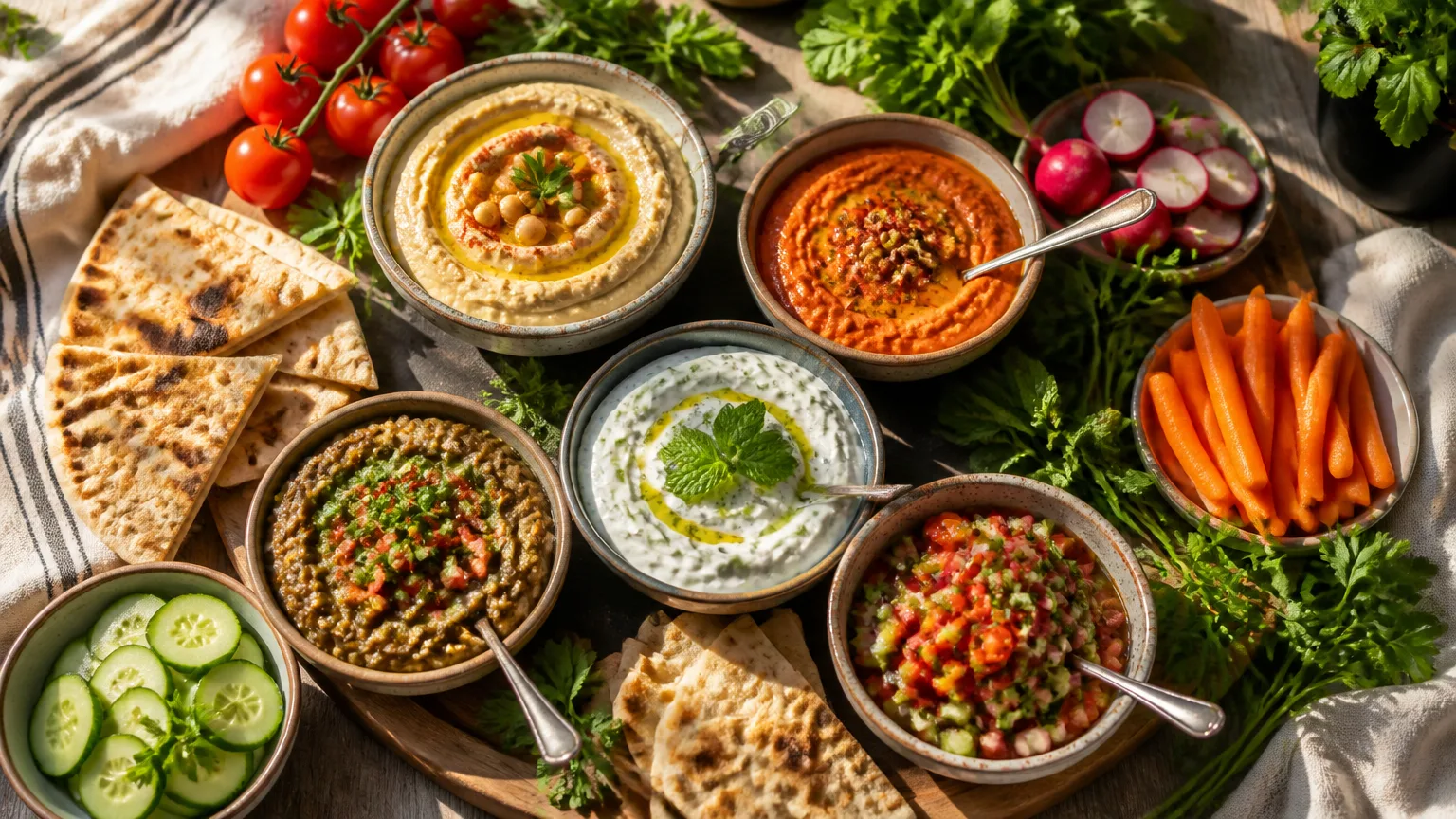
These dip recipes turn fresh vegetarian ingredients into colorful, shareable foods for everyday snacks, gatherings, and devotional hospitality. Each bowl offers a simple way to prepare food with care, present it respectfully, and share it generously with family, guests, or a spiritual community.
This collection includes creamy, chunky, roasted, herb-filled, and legume-based dips. You will find options made with ingredients such as chickpeas, lentils, fresh herbs, roasted vegetables, yogurt, seeds, and seasonal produce. Pair them with crisp cucumbers, carrots, bell peppers, warm flatbreads, toasted bread, or wholesome crackers.
The recipes also support sattvic-friendly cooking and thoughtful offering practices. You can adjust ingredients to suit your household traditions, dietary needs, and preferred methods of preparation. For example, omit ingredients your tradition avoids, choose plant-based yogurt, or reduce strong spices while preserving each dip’s fresh flavor and satisfying texture.
Before serving, consider the setting and the people you are welcoming. A modest bowl of herb-filled dip can accompany a casual lunch, while a carefully arranged platter can become part of a devotional offering. Clean preparation, fresh produce, and a respectful attitude add meaning beyond presentation.
Whether you are planning a family snack, a shared gathering, or a simple offering, Hare Krishna Recipes provides inspiration for preparing food with purpose. Explore these adaptable recipes, then serve them in ways that reflect both your practical needs and your values.
1. Fresh Cucumber, Yogurt, and Herb Dip
This cooling dip takes inspiration from raita, a classic yogurt-based side seasoned with fresh vegetables and herbs. Thick yogurt, grated cucumber, cilantro, and mint create a bright, gentle flavor that pairs well with many fresh vegetarian snacks.
Start by grating a peeled cucumber, then place it in a clean kitchen towel or fine-mesh strainer. Squeeze firmly to remove excess liquid. This step keeps the dip thick and scoopable instead of watery, especially after it rests.
Stir the drained cucumber into thick plain yogurt. Add finely chopped cilantro and mint, then season lightly with salt and a small pinch of ground coriander or black pepper. For added depth, include roasted cumin, fresh ginger, or extra finely chopped herbs while keeping the flavor mild and refreshing.
Taste the mixture before serving and adjust the seasoning gradually. If the dip seems too sharp, add a spoonful of yogurt. If it tastes flat, a small squeeze of lemon can brighten the flavors without overpowering the herbs.
These simple dip recipes work best when prepared shortly before serving. Chill the dip for 15 to 30 minutes so the flavors combine, then garnish it with a few herbs or a light dusting of roasted cumin.
Serve it as a refreshing offering with:
- Carrot sticks and cucumber rounds
- Warm flatbread or small pieces of roti
- Lightly seasoned crackers
- Bell pepper strips or steamed vegetables
For a gathering, place the dip in a shallow bowl and arrange colorful vegetables around it. This presentation makes the fresh ingredients easy to reach and adds an inviting touch to the snack table.
2. Creamy Roasted Red Pepper and Walnut Dip
Roasted red peppers give this dip its vibrant color and naturally sweet flavor. Roasting softens the peppers and deepens their sweetness, while removing the skins creates a smoother texture. Toasted walnuts add richness without overpowering the fresh pepper flavor.
Ingredients and Preparation
Blend the following ingredients until creamy:
3 large red bell peppers, roasted, peeled, and seeded
½ cup toasted walnuts
1 tablespoon fresh lemon juice
1 small garlic clove, optional
1 tablespoon chopped parsley or cilantro
Salt, to taste
1–2 tablespoons olive oil, as needed
To roast the peppers, place them under a broiler or over a gas flame until the skins blister and blacken. Cover them for 10 minutes, then peel away the loosened skins. This extra step helps produce a silky dip rather than a coarse one.
Adjust the consistency carefully. Add more walnuts for a thicker, richer spread, or blend in 1 tablespoon of breadcrumbs for added body. You can also add a small amount of chickpeas for a heartier texture. Add olive oil gradually so it supports the peppers without masking their flavor.
Serve the dip in a shallow bowl as the centerpiece of a snack platter. Garnish it with chopped herbs, toasted walnut pieces, and pomegranate seeds for contrast. Offer it with roti, crackers, bell pepper strips, or steamed vegetables.
For more inspiration, explore vegetarian ideas featuring roasted ingredients. This make-ahead dip stores well in the refrigerator, making it a practical choice among fresh dip recipes for gatherings.
3. Classic Chickpea Hummus with Fresh Lemon
Classic chickpea hummus is one of the most dependable dips for fresh vegetarian snacks. It combines cooked chickpeas, tahini, fresh lemon juice, garlic, and water into a smooth, satisfying spread. The protein and fiber in chickpeas also make this dip filling enough for a light meal or shared offering.
For the creamiest texture, use warm chickpeas instead of chilled ones. Blend the chickpeas with tahini first, then gradually add the lemon juice and water. This method creates a smoother emulsion than adding every ingredient at once. Continue blending until the hummus looks light and silky, scraping the sides of the food processor as needed.
Begin with a simple seasoning profile, then adjust it according to your devotional kitchen and offering tradition. Garlic may be suitable in some kitchens but omitted in others. You can also add:
Chopped parsley for a fresh, herbal flavor
Roasted cumin for earthy depth
Cooked beet for color and gentle sweetness
Mild chili for balanced warmth
Taste the hummus after blending and carefully adjust the lemon, water, or salt. A small amount of water can loosen the texture without weakening the tahini’s richness.
Serve the hummus with raw carrots, cucumbers, celery, or bell peppers. It also pairs well with pita, toasted bread, roti, or small savory pastries. For gatherings, spoon it into a shallow bowl and garnish with parsley or a light drizzle of olive oil.
4. Avocado, Cilantro, and Lime Dip
This quick green dip brings together ripe avocado, fresh cilantro, and lime juice. The result is creamy, bright, and well suited to fresh vegetarian snacks or a lighter offering.
Mash two ripe avocados with the juice of one lime, a handful of chopped cilantro, and a pinch of salt. Lime juice brightens the avocado and balances its natural richness. For a lighter texture, stir in a spoonful of plain yogurt or mashed peas. Yogurt adds tang, while peas gently stretch the dip without overpowering its fresh flavor.
Serve the dip soon after mixing for the best color and taste. Avocado begins to brown when exposed to air, so prepare it close to serving time. If you must make it ahead, press parchment or reusable wrap directly onto the surface before refrigerating.
Offer this dip with cucumber rounds, carrot sticks, bell pepper strips, celery, or steamed vegetables. It also pairs well with roti, toasted bread, or lightly seasoned crackers. For a gathering, place it in a shallow bowl and add cilantro leaves or lime wedges as a simple garnish.
This recipe supports lighter vegetarian meal planning because it relies on fresh produce and requires little preparation. It can anchor a health-conscious snack spread alongside roasted vegetables, hummus, and whole-grain bread. For more structured vegetarian meal planning ideas, use the dip as a fresh side with a simple vegetable-based meal. Among easy dip recipes, it offers color, freshness, and useful flexibility.
5. Warm Spinach, Paneer, and Yogurt Dip
This warm spinach, paneer, and yogurt dip offers a substantial option among fresh vegetarian dip recipes. Spinach provides color and nutrients, while crumbled paneer adds protein and a soft, satisfying texture. Yogurt brings gentle tang without making the mixture overly rich.
Blanch the spinach briefly in boiling water, then transfer it to cold water. Alternatively, sauté it quickly in a dry pan. Drain it well before blending so the dip keeps its fresh green color and does not become watery.
Blend the spinach with plain yogurt, garlic, cumin, ground coriander, and a small amount of salt. Stir in crumbled paneer after blending, or pulse it briefly for a more textured finish. Avoid prolonged heating, which can make the yogurt split and create a grainy sauce.
Warm the mixture gently over low heat, stirring often. Do not let it boil. If the dip seems too thick, add a spoonful of yogurt rather than water. Taste before serving and adjust the salt or spices as needed.
Serve the dip warm in a shallow bowl. Suitable accompaniments include:
- Pieces of naan or roti
- Roasted sweet potato wedges
- Thick slices of cucumber, bell pepper, or carrot
For a gathering, keep the dip warm in a heatproof serving dish and refresh the surface with a light sprinkle of paneer or chopped cilantro. Its creamy texture and mild spices pair well with roasted vegetables, hummus, and whole-grain bread.
6. Sweet Potato and Coconut Curry Dip
Roasted sweet potato creates a naturally sweet, creamy base for this dairy-free dip. Roasting concentrates its flavor and gives the finished dip a deeper, more rounded taste than steaming or boiling.
How to Make the Dip
Roast peeled sweet potato cubes at 425°F until tender and lightly browned, about 25–30 minutes. Blend them with a small amount of coconut milk, fresh lime juice, grated ginger, curry powder, and a modest pinch of cumin.
Adjust the coconut milk gradually until the dip reaches a smooth, spoonable texture. Lime provides essential brightness, while ginger and cilantro balance the sweet potato without relying on excessive heat. Add salt to sharpen the flavors, and use chili sparingly if you want gentle warmth.
This preparation shows how simple ingredients can create a satisfying alternative to dairy-based dips. The roasted vegetables provide body, while coconut milk adds a soft, rich finish without cream or yogurt.
Serving Suggestions
Spoon the dip into a shallow bowl and finish it with chopped cilantro, toasted coconut, or a light squeeze of lime. Its golden color makes it especially appealing on a shared snack table.
Serve it with:
Roasted cauliflower florets
Crisp snap peas
Plantain chips
Warm flatbread or roti
For a colorful offering, arrange the dip beside green snap peas, golden cauliflower, and plantain chips. Among versatile dip recipes, this curry dip works well as a fresh vegetarian snack, a party starter, or a flavorful accompaniment to a simple vegetable meal.
7. Fresh Tomato, Basil, and White Bean Dip
Fresh tomatoes, basil, white beans, lemon, and olive oil create a dip that feels light while offering satisfying substance. The white beans provide a creamy base and gentle protein, making this more filling than a traditional tomato salsa.
Use ripe tomatoes for the best flavor, but manage their moisture before blending. If they are especially juicy, drain them in a fine-mesh sieve for several minutes. You can also roast them briefly until they soften and some liquid evaporates. This concentrates their sweetness without making the dip thin.
Blend the prepared tomatoes with rinsed white beans, lemon juice, olive oil, and a small pinch of salt. Keep the mixture slightly textured rather than completely smooth. Fold in finely chopped basil after blending to preserve its fresh color and delicate herbal flavor.
Add the basil just before serving whenever possible. If you prepare the dip ahead, refrigerate the tomato and bean mixture, then stir in the basil shortly before offering it. A final drizzle of olive oil and a few torn basil leaves provide a simple, fresh finish.
Serve this dip with toasted sourdough, cucumber boats, or crisp bell pepper strips. It also pairs well with roti, lightly seasoned crackers, or warm flatbread. For a larger prasadam-style spread, place small spoonfuls beside roasted vegetables, fresh fruit, and grains so guests can enjoy its bright flavor alongside heartier offerings.
Among versatile dip recipes, this combination brings color, freshness, and balanced nourishment to a snack table. It works equally well for a family snack, a shared gathering, or a simple vegetarian offering.
8. Green Pea, Mint, and Lemon Dip
This bright green dip brings a fresh, springlike flavor to any vegetarian snack table. Sweet peas, cool mint, lemon, and a creamy base create a smooth offering that takes only a few minutes to prepare.
Frozen peas provide a practical option when fresh peas are unavailable. Briefly blanch them in boiling water until tender and bright, then cool them immediately in cold water. This quick step helps preserve their color and natural sweetness.
Blend the cooled peas with plain yogurt or cashew paste, mint leaves, lemon zest, lemon juice, and a small amount of fresh ginger. Add salt to taste, then adjust the consistency with a spoonful of water or olive oil. The ginger should add gentle warmth without overpowering the peas.
For a smooth dip, blend the mixture until creamy enough to spread on toast, roti, or crackers. For a more rustic texture, pulse it briefly and leave small pieces of peas throughout. This version works especially well for scooping with vegetable crudités.
- Carrot sticks
- Cucumber rounds
- Bell pepper strips
- Sugar snap peas
- Steamed asparagus or broccoli
Serve the dip chilled or slightly cool in a shallow bowl. Garnish it with mint, lemon zest, or a few whole peas for a simple finish. Its color and refreshing flavor make it especially appealing at spring lunches, warm-weather gatherings, and casual shared offerings.
Among easy dip recipes, this pea-based option adds variety without requiring complicated preparation. It pairs well with roasted vegetables, fresh fruit, grains, and other light vegetarian offerings.
9. Roasted Eggplant and Sesame Dip
This smoky, silky dip draws inspiration from baba ganoush. Roasted eggplant, tahini, lemon juice, and fresh herbs create a rich yet balanced spread for fresh vegetarian snacks and shared offerings.
Roast the Eggplant for Smoky Flavor
Prick two medium eggplants with a fork, then roast them at 425°F until the skins collapse and the flesh feels completely tender. For a deeper smoky flavor, char the skins over a gas flame or under the broiler before finishing the roasting process.
Allow the eggplants to cool slightly, then split them and scoop out the flesh. Thorough roasting softens the eggplant and makes it easier to blend into a smooth dip. It also reduces the raw, bitter flavor that can affect undercooked eggplant.
Drain Before Mixing
Place the cooked eggplant in a fine-mesh strainer for 10 to 15 minutes. Press gently with a spoon to release excess liquid. This step matters when preparing the dip for a platter because it prevents a watery texture.
Transfer the drained flesh to a bowl and mix in 3 tablespoons of tahini, 2 tablespoons of lemon juice, a small grated garlic clove, and chopped cilantro or parsley. Season gradually with salt, tasting after each addition. If the eggplant tastes bitter, add more lemon juice, tahini, or a small pinch of salt to balance it.
Spoon the dip into a shallow bowl and garnish with sesame seeds, cilantro, or pomegranate arils. Serve it with warm bread, roti, bell pepper strips, cucumber, or crunchy carrots. Among adaptable dip recipes, this eggplant offering brings smoky depth and elegant color to any snack table.
10. Cashew, Carrot, and Ginger Dip
Close your list of dip recipes with this creamy, dairy-free blend of cashews, carrots, ginger, lemon, and mild spices. Its smooth texture and festive orange color make it an attractive choice for fresh vegetarian snacks, seasonal gatherings, and thoughtful offerings.
Soak the cashews in water until soft, then drain them well. Soaking creates a rich, smooth base that blends more easily. Add water gradually while processing, stopping when the dip reaches your preferred consistency. Use less water for a thick spread or slightly more for a soft, spoonable dip.
Choose roasted carrots for concentrated sweetness and deeper flavor. Steamed carrots create a lighter, fresher profile. Blend the carrots with the cashews, grated ginger, lemon juice, cumin, and a small pinch of salt until completely smooth.
Taste the dip before serving and adjust the lemon, ginger, or spices as needed. A little extra lemon can brighten the carrots, while additional ginger adds gentle warmth without overpowering the other ingredients.
For an especially polished offering, pipe the dip into small serving cups or spoon it into a shallow bowl. Finish it with toasted pumpkin or sesame seeds, chopped cilantro, parsley, or another fresh herb.
Serve the dip with:
Bell pepper strips, cucumbers, or crunchy carrots
Warm bread, roti, or toasted pita
Lightly seasoned crackers or steamed vegetables
Its bright color adds contrast beside hummus, roasted vegetables, and fresh fruit. Among adaptable dip recipes, this cashew and carrot combination offers a nourishing, elegant finish with simple ingredients and make-ahead convenience.
Frequently Asked Questions About Vegetarian Dips and Offerings
Which dips can I prepare ahead?
Most of these dip recipes can be made several hours or one day before serving. Hummus, roasted eggplant dip, roasted vegetable dip, curry dip, pea dip, and cashew-carrot dip generally keep well for up to three days in a covered container.
Refrigerate dairy-based dips for up to two days, especially those containing paneer or fresh yogurt. Store dips at 4°C (40°F) or below, and discard any dip left at room temperature for more than two hours.
How can I refresh a dip before serving?
Cold storage can make dips thicker and less smooth. Let them stand at room temperature briefly, then stir in a small amount of water, lemon juice, yogurt, or oil, depending on the recipe.
Taste and adjust the seasoning after chilling. Serve warm dips gently reheated, and add fresh herbs, seeds, or pomegranate arils just before serving.
How do I build a balanced dip platter?
Use contrast to make the platter appealing and easy to enjoy. Combine:
Bright dips, such as beet or pea, with neutral hummus
Creamy textures with crunchy vegetables and crackers
Warm flatbread with chilled dips
Mild flavors with one more strongly spiced option
Raw vegetables with roasted or steamed offerings
For example, arrange beet dip, hummus, roasted eggplant, cucumber, carrots, roti, and lightly seasoned crackers in separate sections. Keep serving spoons with each bowl to support cleanliness and easy sharing.
Can I adapt these dips for dietary needs?
You can replace dairy with plain plant-based yogurt or blended tofu when the flavor and texture remain suitable. Use seeds instead of nuts in some recipes, and serve gluten-free dips with vegetables, rice crackers, or gluten-free flatbread.
For allium-free preparation, omit onion, garlic, or related ingredients and adjust the herbs and spices. However, not every substitution suits every devotional tradition. Confirm ingredient standards with your spiritual teacher or household practice.
How should I offer vegetarian dips devotionally?
Offering procedures vary by lineage, temple, and household. Follow the guidance of your spiritual teachers or established community practices regarding ingredients, preparation, utensils, timing, and presentation.
Some households prepare food separately and offer it before serving guests. Others follow specific rules for freshness and tasting. When uncertain, ask a trusted community leader rather than assuming one procedure applies universally.
Serve Freshness with Care and Devotion
These ten dip recipes show how simply prepared ingredients can create meaningful vegetarian snacks and offerings. Vegetables, legumes, grains, herbs, dairy, and plant-based ingredients each bring distinct textures, colors, and nourishment to the table.
For a balanced snack spread, combine one creamy dip, one roasted dip, and one fresh dip. Serve them with colorful vegetables, warm roti, whole-grain bread, crackers, or seasonal fruit. Thoughtful garnishes and simple serving bowls can make everyday ingredients feel welcoming and special.
The deeper value comes from the care behind each preparation. When ingredients are handled attentively, presented beautifully, and shared with gratitude, a simple snack becomes an expression of service. Prepare each dip mindfully, considering freshness, cleanliness, timing, and the needs of those you serve.
For broader bhakti-centered inspiration, explore ideas for bhakti meals prepared with care. Then choose one dip, prepare it with devotion, and share it generously. A thoughtful offering does not require complexity—only sincerity, attention, and a willing spirit.