
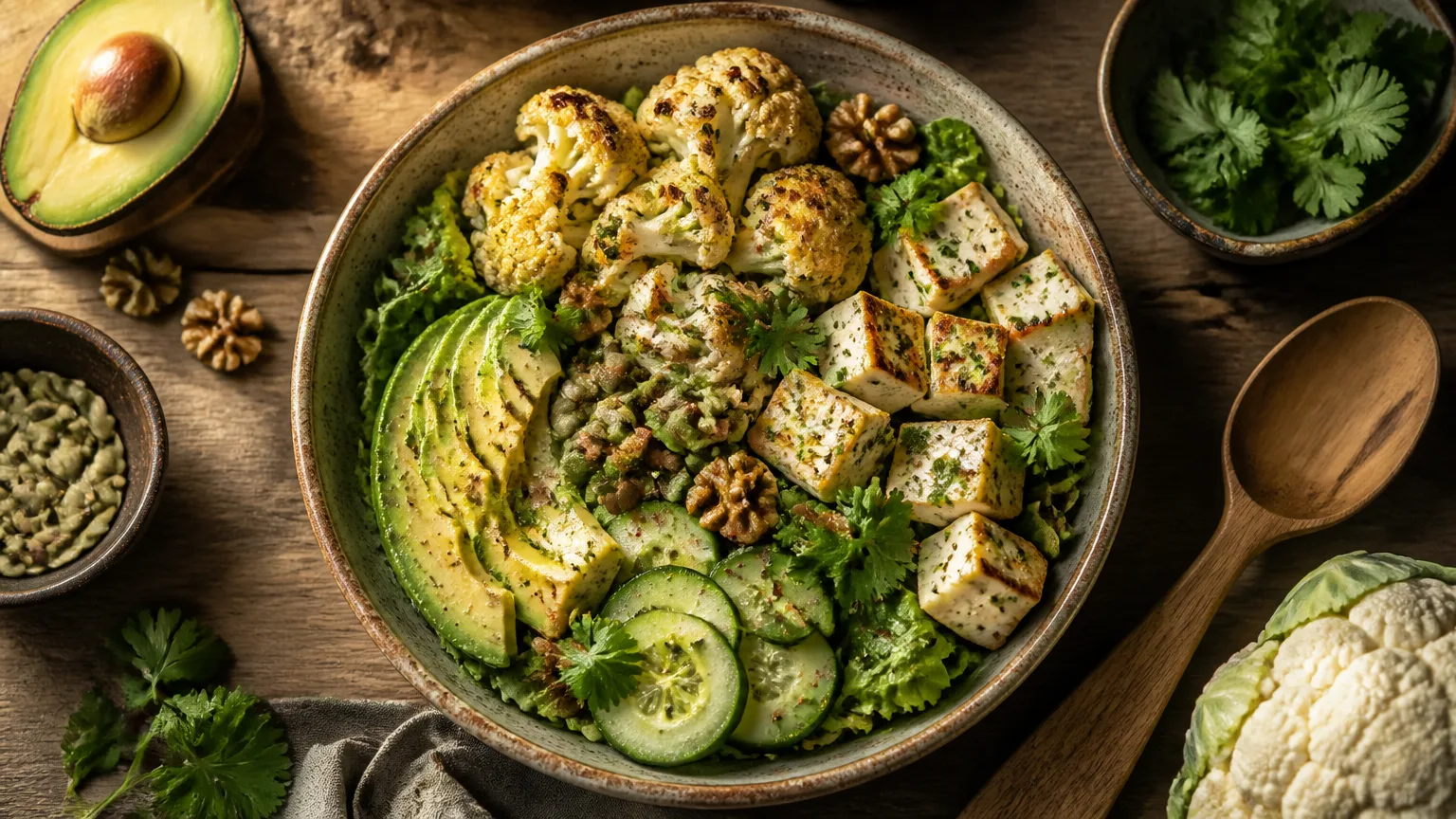
A keto meal plan can be simple, satisfying, and suitable for mindful home cooking. This seven-day vegetarian framework brings together low-carbohydrate vegetables, dairy, nuts, seeds, fresh herbs, and practical recipes for busy households.
The plan can also support devotees and spiritual seekers who follow sattvic or Hare Krishna-inspired food values. Meals emphasize fresh ingredients, conscious preparation, and offering food with care. Because devotional practices differ, you can avoid onion, garlic, or other ingredients that do not align with your tradition. Explore more plant-forward ideas through Hare Krishna Recipes.
Across the week, expect simple breakfasts, nourishing lunches, and easy dinners that use familiar ingredients. Examples include paneer with sautéed vegetables, creamy cauliflower soup, coconut-based curries, and salads topped with seeds or homemade dairy dressings. Portions remain flexible, and optional substitutions can help you adapt meals for lactose-free, egg-free, or lower-dairy needs.
Vegetarian keto is restrictive because it limits grains, most legumes, starchy vegetables, and many fruits. The goal here is not to provide medical advice, but to offer a practical starting point for home cooking. If you have diabetes, are pregnant or breastfeeding, have a history of disordered eating, or manage another medical condition, consult a qualified healthcare professional before changing your diet.
Before You Begin: Vegetarian Keto and Sattvic Kitchen Basics
A successful keto meal plan begins with a clear plate formula and a calm kitchen routine. Each meal should include a moderate portion of protein-rich vegetarian food, plenty of non-starchy vegetables, and a measured amount of fat. Full-fat dairy is optional, depending on your preferences and personal dietary guidance.
Use this simple structure throughout the week:
- Protein: Paneer, plain Greek yogurt, or tofu if it suits your tradition and dietary needs
- Vegetables: Cauliflower, zucchini, spinach, mushrooms, and cucumber
- Fat: A measured serving of ghee, coconut, avocado, nuts, or seeds
- Optional additions: Full-fat yogurt, herbs, and suitable spices
Build a Low-Carbohydrate Pantry
Plan your shopping before the week begins. Choose plain, unsweetened products and check labels for added sugar, starch, or flour. Paneer can become a quick skillet meal, while Greek yogurt works well with cucumber, spices, or a few seeds.
Prepare vegetables soon after shopping. Wash spinach and mushrooms, cut cauliflower and zucchini, and portion nuts or seeds into small containers. Keep avocado, coconut, ghee, and basic spices available for meals that need more flavor or fat. You can also explore exotic ingredients for creative vegetarian meals when they fit your cooking style.
Carbohydrate awareness matters on a vegetarian keto plan. Total carbohydrates include all carbohydrates in a food, while net carbohydrates generally mean total carbohydrates minus fiber. Labels and dietary approaches can vary, so use one method consistently and follow guidance from your healthcare professional.
Cook With Mindfulness and Personal Guidance
In a sattvic kitchen, cooking can become an act of attention and offering. Before preparing food, clean the workspace, choose fresh ingredients, and cook without rushing. You may offer the finished meal according to your tradition, prayer practice, or personal beliefs.
Rules differ among families and spiritual communities. Seek personal guidance about dairy, fermented foods, tofu, mushrooms, fasting days, and ingredients your tradition limits or avoids. This plan should support your practice rather than override it.
Drink water regularly throughout the day. Some people may also need sodium or other electrolytes when changing their carbohydrate intake, but needs vary. Do not assume electrolyte products are necessary or risk-free; ask a qualified professional if you have kidney, heart, or blood-pressure concerns.
Day 1: Creamy Paneer, Spinach, and Cucumber Meals
Begin this keto meal plan with familiar ingredients and simple cooking methods. Full-fat dairy, paneer, leafy greens, cucumber, and cauliflower provide satisfying meals without complicated preparation.
Breakfast: Greek Yogurt with Chia and Walnuts
Combine plain full-fat Greek yogurt with chia seeds, a few crushed walnuts, and cinnamon. If your carbohydrate limit allows, add a small serving of berries, such as two or three sliced strawberries.
This bowl takes minutes to assemble and provides protein, fat, and fiber. Prepare the dry toppings in advance so breakfast requires little effort on busy mornings.
Lunch: Paneer and Spinach Sauté
Warm ghee in a skillet, then add cumin, turmeric, grated ginger, and paneer. Cook until the paneer is lightly golden. Add fresh spinach and stir until it wilts.
Finish with fresh cilantro or another preferred herb. Serve the sauté with cucumber raita or a simple cucumber salad seasoned with salt, lime juice, and herbs. For raita, mix chopped cucumber with unsweetened full-fat yogurt and a pinch of cumin.
Dinner: Coconut-Lime Cauliflower with Paneer or Tofu
Roast cauliflower florets until tender and lightly browned. Toss them with unsweetened coconut, lime juice, and chopped cilantro after roasting for a bright, satisfying finish.
Serve the cauliflower with a smaller portion of paneer or tofu, depending on your dietary practice. Tofu works well for readers who avoid dairy, while paneer adds richness for lacto-vegetarian meals.
Simple Preparation for Day 2
Reduce tomorrow’s kitchen time by preparing extra ingredients today:
- Roast additional cauliflower and sauté extra paneer while the oven and skillet are already in use. Store each component in separate airtight containers and refrigerate promptly.
Reheat the paneer and cauliflower gently to protect their texture. Keep cucumber salad components separate until serving to prevent excess moisture.
Day 2: Avocado, Zucchini, and Herbed Cottage Cheese
Day 2 uses quick assembly meals, creamy textures, and fresh vegetables to keep this keto meal plan varied. Choose moderate portions of higher-carbohydrate ingredients while using fats, herbs, and protein for satisfaction.
Breakfast: Avocado With Herbed Cottage Cheese
Halve one small avocado and top it with cottage cheese, pumpkin seeds, lime juice, and black pepper. Finish with fresh cilantro or parsley for brightness.
Cottage cheese provides protein, but its carbohydrate content varies by brand. Check the label and choose a full-fat option without added sugar. If you need a lighter portion, use less cottage cheese and add extra herbs or seeds.
Lunch: Zucchini Noodles With Basil-Coconut Cream
Use a spiralizer or vegetable peeler to make zucchini noodles. Keep the portion moderate, especially if you are also adding paneer, halloumi, or another vegetarian protein that fits your dietary practice.
For the sauce, blend or gently warm coconut cream with fresh basil, garlic, lime juice, salt, and black pepper. Toss the sauce with briefly sautéed zucchini noodles, then add browned paneer or halloumi. Avoid overcooking the zucchini, which can release excess water and thin the sauce.
Dairy-based proteins can be filling but may add calories and carbohydrates. Measure the cheese before cooking, and adjust the portion based on your daily needs and the product label.
Dinner: Warm Cabbage and Mushroom Skillet
Sauté sliced mushrooms in olive oil until browned. Add shredded cabbage and cook until tender but still slightly crisp. Season with garlic, ginger, or chili flakes, then finish with toasted sesame seeds.
Serve the skillet with a small side of full-fat yogurt or sliced cucumber. Cabbage contains more carbohydrate than leafy greens, so use a measured serving rather than filling the entire plate. Pairing it with mushrooms, fat, and protein-rich yogurt helps create a satisfying meal without relying on a large volume of vegetables.
Day 3: Cauliflower Rice, Paneer Bowls, and Coconut Flavors
Day 3 uses cauliflower rice, paneer, and aromatic spices to recreate the comfort of grain-based meals. These dishes deliver warmth and texture without rice, wheat, or other higher-carbohydrate staples.
Breakfast: Scrambled Paneer With Spinach
Crumble paneer into a skillet with a little ghee or oil. Add chopped spinach, a modest portion of diced tomatoes, cumin, turmeric, and black pepper. Cook until the spinach softens and the paneer is warm.
Finish with fresh cilantro or parsley. If you avoid dairy, use crumbled tofu instead, and choose olive oil rather than ghee. For a lower-oxalate option, replace spinach with chopped zucchini or cabbage.
Eat slowly and notice the contrast between the soft paneer, tender greens, and bright herbs. This simple breakfast can feel substantial without a serving of toast or other grain-based foods.
Lunch: Spiced Paneer Cauliflower Rice Bowl
Sauté grated cauliflower until tender but not mushy. Season it with cumin, coriander, paprika, and a pinch of salt. In a separate pan, brown paneer cubes with the same warm spices.
Build the bowl with cauliflower rice, spiced paneer, sautéed greens, and sliced cucumber. Add one spoonful of mint or cilantro yogurt for freshness. Keep the yogurt portion measured, especially if you are following a strict keto meal plan.
Dinner: Coconut Vegetable Soup
Simmer cauliflower, zucchini, and spinach in vegetable broth with ginger, garlic, turmeric, and black pepper. Stir in a measured amount of unsweetened coconut milk near the end. Too much coconut milk can quickly increase the meal’s calories and carbohydrate content.
Top each bowl with roasted pumpkin or sunflower seeds for crunch. Serve the soup warm and eat mindfully; fresh vegetables, fragrant spices, and a creamy broth can make a modest meal deeply satisfying.
Day 4: Simple Salads, Crispy Tofu, and Yogurt-Based Sauces
Day 4 keeps preparation light while adding protein, healthy fats, and contrasting textures. Crisp vegetables, creamy sauces, and browned toppings make this keto meal plan feel varied without complicated recipes.
Breakfast: Coconut Chia Pudding
Stir chia seeds into unsweetened coconut milk and refrigerate overnight. In the morning, top the pudding with chopped almonds and a small amount of unsweetened shredded coconut.
Choose plain coconut milk without added sugar. If the pudding becomes too thick, loosen it with a tablespoon of water or additional coconut milk.
Lunch: Paneer and Avocado Seed Salad
Build a salad with crisp lettuce, cucumber, avocado, and cubed paneer. Add a measured spoonful of seeds, such as pumpkin or sunflower seeds, for crunch and additional fat.
Whisk lemon juice, olive oil, chopped herbs, salt, and pepper into a simple dressing. Add the dressing just before eating to keep the lettuce crisp. For more protein, increase the paneer slightly rather than adding a sugary packaged topping.
Dinner: Crispy Tofu With Broccoli
Press firm tofu to remove excess moisture, then cut it into cubes. Bake or pan-crisp the tofu until golden, and serve it with roasted broccoli. Use paneer instead if you prefer its firmer texture; pan-sear it until lightly browned.
For the sauce, combine full-fat plain yogurt, tahini, lemon juice, water, and garlic. Adjust the consistency with water, then spoon it over the tofu and broccoli just before serving.
Check Packaged Ingredients Carefully
Packaged foods can contain carbohydrates that are easy to miss. Before adding yogurt, sauces, tofu marinades, or seed mixes, check the ingredient list and nutrition panel for:
- Added sugar, syrups, maltodextrin, or sweetened coconut
- Wheat, rice, potato starch, or other thickening starches
- Sweetened sauces, glazes, or flavored yogurt
Select plain, unsweetened products whenever possible. Compare serving sizes, because a small listed portion may not match the amount used in your meal.
Day 5: Vegetarian Keto Comfort Food at Home
Comfort food can fit a vegetarian keto meal plan when you focus on familiar flavors, measured portions, and slow preparation. Warm spices, creamy textures, and shared presentation can make the meal feel generous without relying on bread, rice, or potatoes.
Breakfast: Savory Pancakes With Yogurt and Herbs
Prepare small savory pancakes with almond flour or coconut flour, eggs, and seasoning. Cook them slowly over medium-low heat so the centers set without burning. Serve with plain, full-fat yogurt and chopped coriander, parsley, or chives.
Use flour sparingly. Even lower-carbohydrate flours contribute carbohydrates, especially when several pancakes become a full serving. Measure the flour before mixing, and keep the yogurt unsweetened.
Lunch: Creamy Cauliflower and Paneer Curry
Simmer cauliflower with paneer, turmeric, cumin, ginger, and a modest amount of cream or coconut milk. Let the curry cook gently until the cauliflower softens and the sauce thickens. This slow method develops warmth and flavor without requiring a flour-based thickener.
Serve the curry on its own for a simple, filling meal. If you prefer a rice-like base, add a small portion of cauliflower rice rather than a large serving. For another practical idea, adapt an easy vegetarian dinner recipe with keto-friendly ingredient swaps.
Dinner: Zucchini Boats With Crunchy Salad
Halve zucchini and scoop out some of the center. Fill each piece with spiced cottage cheese, spinach, and grated cheese, then bake until tender and lightly browned. The filling offers protein and richness while the zucchini keeps the dish fresh.
Serve the boats with a crunchy cucumber salad dressed with lemon juice, herbs, and a small amount of oil. Add salt just before serving to protect the cucumber’s texture.
Comfort also comes from conscious preparation. Cook slowly, offer each dish respectfully, and eat without assuming restrictive food must be joyless. A carefully arranged plate and shared home-cooked meal can provide warmth, devotion, and satisfaction.
Day 6: Indian-Inspired Spices Without Grains or Legumes
Indian-inspired spices can bring warmth, aroma, and variety to a vegetarian keto meal plan. Use cumin, coriander, turmeric, ginger, green chili, and fresh cilantro to build flavor without relying on grains or legumes.
Breakfast: Spiced Yogurt Bowl
Combine plain, unsweetened full-fat yogurt with diced cucumber, grated coconut, roasted pumpkin or sunflower seeds, and chopped cilantro or mint. Add cumin, black pepper, and a small pinch of salt for a refreshing savory bowl.
Check the yogurt label for added sugar. Serve a measured portion, since dairy and coconut can contribute carbohydrates and calories quickly.
Lunch: Paneer Tikka-Style Skillet
Cook paneer with turmeric, cumin, paprika, ginger, garlic, and a modest portion of bell pepper. Use ghee or another suitable cooking fat, and finish with lemon juice and fresh herbs.
Serve the skillet with cabbage slaw or sautéed greens instead of naan or rice. Keep the cabbage portion measured, especially if you are following a strict carbohydrate target.
Dinner: Creamy Spinach and Mushroom Dish
Sauté mushrooms with garlic and spices, then add chopped spinach. Stir in a small amount of coconut cream or ghee for richness, and adjust the seasoning before serving.
Pair the dish with roasted cauliflower seasoned with turmeric, cumin, and black pepper. The cauliflower provides a grain-free base without adding the carbohydrate load of rice or potatoes.
Many traditional vegetarian staples are wholesome in other eating patterns but may not fit strict keto portions. Lentils, chickpeas, potatoes, rice, and wheat breads can raise total carbohydrates quickly, even when served with nutritious vegetables.
To adapt familiar devotional or South Asian-influenced meals, focus on spices, dairy, vegetables, and respectful preparation. Read packaged ingredient labels carefully, since prepared paneer, yogurt, spice blends, and sauces may contain added starch, sugar, or flour.
Day 7: A Nourishing Vegetarian Keto Feast
Make the final day feel special without adding complicated recipes. This celebratory menu works for simple home cooking and can be shared with family or a devotional community.
Breakfast: Baked Egg-and-Spinach Cups
Whisk eggs with chopped spinach, herbs, salt, and pepper. Pour the mixture into greased muffin cups and bake until the centers are firm.
For an egg-free option, use seasoned paneer instead. Serve with sliced avocado and fresh herbs, adjusting the ingredients to suit your dietary preferences. This balanced start provides protein, nourishing fat, and a modest amount of low-starch vegetables.
Lunch: A Colorful Vegetarian Platter
Arrange roasted cauliflower, cucumber, paneer, leafy greens, and a small handful of nuts on a large platter. Add olives if they fit your preferences and dietary practice.
Serve two low-sugar yogurt-based sauces, such as herbed yogurt and a cumin-cucumber yogurt dip. Keep sauces plain and unsweetened, then season them with lemon, fresh herbs, or spices. For more inspiration, explore these vegetarian foods to savor.
A platter encourages relaxed sharing while letting each person choose suitable portions. It also creates a festive presentation without relying on bread, rice, or sugary condiments.
Dinner: Coconut-Paneer Vegetable Stew
Simmer paneer, zucchini, and spinach in a lightly spiced coconut broth. Use coconut milk sparingly, because larger amounts can raise the meal’s calories and carbohydrate content.
Finish with a small portion of berries and unsweetened whipped cream or plain yogurt. Check labels carefully to avoid added sugar.
Use this final day as a template for future meals:
- One protein, such as paneer, eggs, or tofu
- Two low-starch vegetables
- One nourishing fat, such as avocado, nuts, or measured coconut milk
- One flavorful, low-sugar sauce
This simple formula can guide a flexible keto meal plan while keeping cooking practical, satisfying, and suitable for shared meals.
Frequently Asked Questions
Can I follow vegetarian keto without eggs or meat?
Yes. A vegetarian keto plan can provide protein through paneer, full-fat plain yogurt, tofu where it fits your household practices, nuts, and seeds. Carefully selected dairy products can also help meet protein and energy needs.
However, protein requirements vary by age, activity level, health status, and total food intake. If you avoid eggs and meat, review your meals with a qualified dietitian to ensure the plan meets your individual nutrition needs.
Are rice, dal, potatoes, and chapati allowed?
Rice, dal, potatoes, and chapati are nutritious foods, but they are generally too high in carbohydrates for strict keto portions. A small serving may fit a less restrictive, lower-carbohydrate approach, depending on your goals.
Dietary traditions and health priorities differ. If removing these staples feels unsuitable, consider a moderate carbohydrate plan instead of forcing a strict keto meal plan.
How can I keep meals sattvic or aligned with Hare Krishna practices?
Follow the guidance of your spiritual authorities and your household’s established standards. Practices may differ regarding onion, garlic, mushrooms, eggs, fermented foods, and which ingredients are appropriate to offer in devotion.
Plan meals around approved vegetables, dairy, spices, nuts, and seeds. Prepare food respectfully, offer it according to your tradition, and check packaged products for ingredients that conflict with your practice.
What if I feel tired or hungry?
First, review your total food intake, fluids, electrolytes, protein, and level of carbohydrate restriction. Hunger may indicate that meals lack enough paneer, yogurt, tofu, nuts, seeds, or nourishing fats.
Fatigue can have many causes. If symptoms continue, become severe, or affect daily activities, stop and seek advice from a qualified healthcare professional.
Can I prepare this plan ahead?
Yes. Meal preparation can make this seven-day plan easier to follow. Prepare sauces, roasted vegetables, paneer, chopped salad ingredients, and cauliflower rice in advance.
Store components separately in airtight containers and refrigerate them promptly. Assemble delicate greens and avocado just before serving, so they retain their texture and freshness.
Make the Seven-Day Plan Your Own
This seven-day keto meal plan is a flexible framework, not a rigid prescription. Prepare a few versatile ingredients, then build meals around low-carbohydrate vegetables and vegetarian proteins such as paneer, eggs, or tofu. Add herbs, spices, dairy, and healthy fats to create satisfying flavor without making cooking complicated.
Repeat the days you enjoy most, and exchange vegetables as seasons change. You can also adjust portions to match your hunger, schedule, and nutritional needs. One imperfect meal does not require abandoning the plan; simply return to the next balanced choice.
Keep your preparation simple and mindful. Exploring mindful foods and meditative meals can offer further inspiration for a thoughtful kitchen routine. With care, gratitude, and an appropriate spiritual practice, home cooking can support both your physical intentions and a devotional mood.