
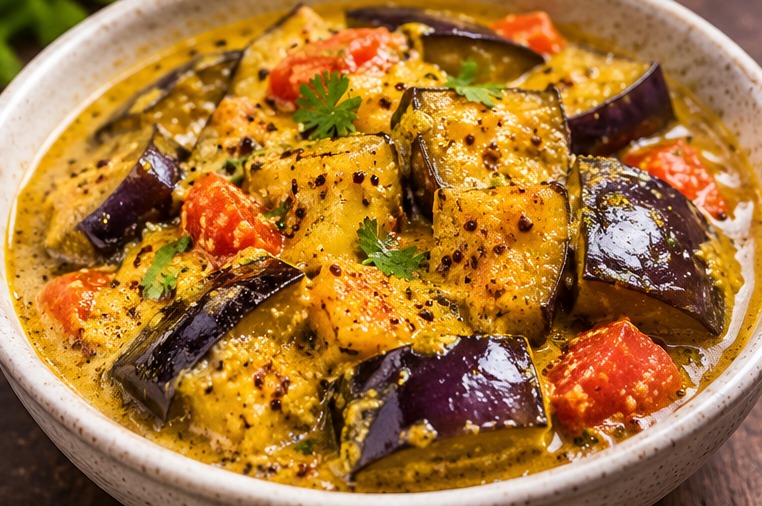
Soft eggplant cooked in a mustard, ginger and tomato gravy with coriander, without onion or garlic. Sorse or shorshe refers to mustard Serve it as part of a vegetarian prasadam meal.
Mustard as the central flavor
Sorse or shorshe refers to mustard. Use fresh whole black mustard seeds and grind after soaking. The paste is pungent by nature, so avoid prolonged frying, which can make the sauce harsh. Mild chili lets the mustard remain prominent.
Choosing eggplant
Select a firm glossy eggplant without soft spots. Cut into similarly sized pieces and keep the skin for structure. The eggplant absorbs fat and moisture readily, so use the measured ghee and cover the pan rather than continuously adding oil.
Using tomato for body
Cook ripe chopped tomatoes until they soften before adding eggplant. Their natural moisture and acidity balance the mustard paste. Add only enough water to prevent sticking. When the eggplant is cooked, reduce any excess liquid to make a coating gravy.
Bhakti Thought
Even a strongly flavored ingredient can be used with balance and care, bringing thoughtful preparation into devotional practice.
PrintBengali Sorse Begun (Mustard Eggplant Curry)

Soft eggplant cooked in a mustard, ginger and tomato gravy with coriander, without onion or garlic.
- Prep Time: 15 minutes
- Mustard soaking: 60 minutes
- Cook Time: 25 minutes
- Total Time: 100 minutes
- Yield: 4 servings 1x
- Category: Main Course
- Method: Stovetop
- Cuisine: Bengali
- Diet: Vegetarian
Ingredients
- 500 g eggplant, cut into 2.5 cm cubes
- 1 1/2 tablespoons black mustard seeds (15 g)
- 1 teaspoon grated ginger
- 2 tablespoons water (30 ml), for grinding
- 200 g ripe tomatoes, chopped
- 2 tablespoons ghee (28 g)
- 1/2 teaspoon turmeric
- 1/2 teaspoon ground coriander
- 1/4 teaspoon mild chili powder
- 3/4 teaspoon fine salt (4.5 g)
- 1/2 cup water (120 ml), as needed
- 3 tablespoons chopped cilantro
US & metric measurements — original 1× batch
Use either measurement, not both. Equivalents are approximate; original specified weights are preserved. Counts, optional quantities and amounts to taste remain as written. This reference is for the original batch; multiply both quantities if scaling the recipe.
500 g (approx. 1.1 lb) eggplant, cut into 2.5 cm (approx. 0.98 in) cubes
1 1/2 tablespoons black mustard seeds (15 g)
1 teaspoon (approx. 5 mL) grated ginger
2 tablespoons water (30 ml), for grinding
200 g (approx. 7.05 oz by weight) ripe tomatoes, chopped
2 tablespoons ghee (28 g)
1/2 teaspoon (approx. 2.5 mL) turmeric
1/2 teaspoon (approx. 2.5 mL) ground coriander
1/4 teaspoon (approx. 1.25 mL) mild chili powder
3/4 teaspoon fine salt (4.5 g)
1/2 cup water (120 ml), as needed
3 tablespoons (approx. 45 mL) chopped cilantro
Approximate kitchen conversions: NIST and ingredient-specific baking weights.
Instructions
- Soak mustard seeds for one hour in clean water. Drain and grind with ginger and two tablespoons fresh water to a paste.
- Heat ghee over medium-low heat. Stir the paste for one minute without allowing it to darken.
- Add tomatoes, turmeric, coriander, chili and salt. Cook 5–7 minutes until tomatoes form a soft sauce.
- Add eggplant and a splash of water. Cover and simmer 12–18 minutes, stirring gently, until fully tender. Add remaining water only as necessary.
- Uncover briefly to concentrate gravy. Sprinkle with cilantro and offer a portion before serving.
Notes
- Serving: 4 portions; weights refer to edible ingredients.
- Use plain ingredients and individual spices without onion, garlic, eggs or mushrooms.
- Nutrition estimates use representative ingredient composition, measured fat and salt; minor spices omitted. Actual yield and nutrient values vary.
- Proportions and times have not been kitchen-tested.
- Ingredient quantities and cooking times are editorial estimates; confirm through kitchen testing.
- Nutrition values are estimates per serving unless otherwise specified.
Nutrition
- Serving Size: 1/4 of prepared batch (excluding accompaniments)
- Calories: 123
- Sugar: 6 g
- Sodium: 449 mg
- Fat: 8.7 g
- Saturated Fat: 4.5 g
- Unsaturated Fat: 4.2 g
- Trans Fat: 0.2 g
- Carbohydrates: 10.5 g
- Fiber: 4.9 g
- Protein: 2.7 g
- Cholesterol: 18 mg
Serving suggestions
Pair with plain rice, a mild dal and a small vegetable side. The distinct mustard flavor complements lightly seasoned staples. Serve warm, and set aside an untouched portion as an offering before distributing the food.
Storage and troubleshooting
If the sauce becomes too pungent, dilute with a little water and adjust the portion served. Refrigerate leftovers within two hours and use within three days. Reheat gently until hot. Avoid crushing the tender eggplant with repeated stirring.
Allergen and nutrition notes
Contains mustard and milk-derived ghee. Mustard can cause allergic reactions; disclose it when cooking for others. The nutrient estimate assumes four servings and the full measured ghee, without accompaniments.
Frequently Asked Questions
Can I use prepared mustard?
Not directly. Prepared condiments may contain unwanted ingredients and differ in acidity.
Why is my mustard sauce bitter?
The paste may have been overheated. Grind fresh seeds and cook gently.
Can I use small eggplants?
Yes, cut them into evenly sized pieces.
Can I use oil instead of ghee?
Yes, for a vegan variation.
Explore More Recipes
Bengali Beguni (Eggplant Fritters)
Regional recipe: For a different Bengali mustard-seasoned vegetable dish, try Bengali Bati Chorchori.
Regional recipe: For a coconut-cashew stuffed eggplant preparation, try Maharashtrian Bharli Vangi.