
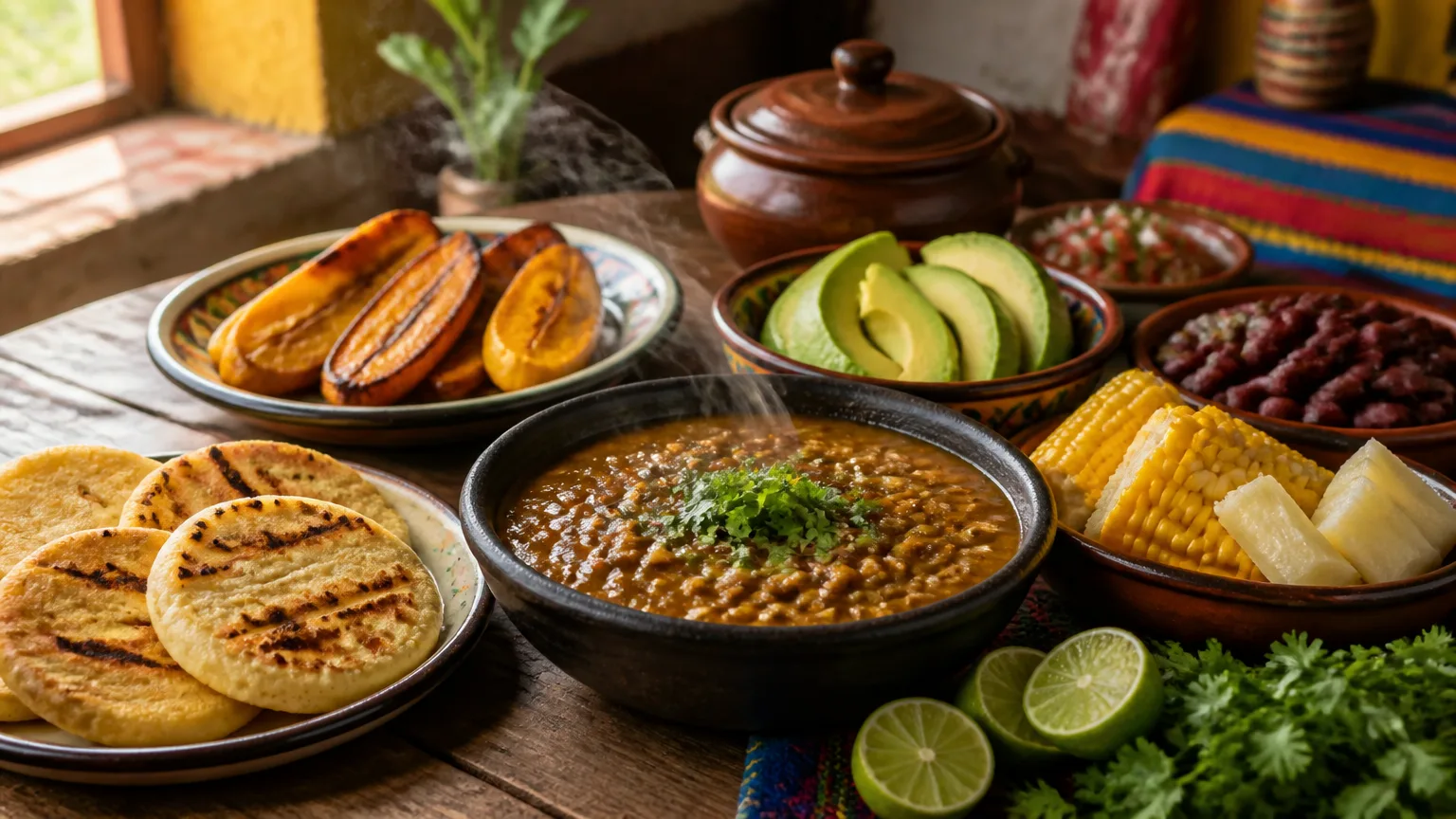
Colombian food is colorful, comforting, and deeply satisfying—even without meat. Across the country’s diverse regions, home cooks build flavorful meals with grains, legumes, roots, corn, plantains, and fresh herbs. These ingredients create nourishing dishes with hearty textures, bright flavors, and plenty of variety.
This collection features seven vegetarian recipes inspired by Colombian home cooking. You will find practical ideas for preparing filling meals with familiar ingredients, whether you are new to Colombian cuisine or already enjoy dishes such as beans, rice, arepas, and plantains. The recipes are adaptable for a vegetarian or sattvic kitchen, with simple adjustments for your preferences and spiritual practices.
Rather than treating vegetables as a substitute, approach each dish as a complete meal. Creamy beans, roasted roots, sweet plantains, and warm corn-based specialties can bring comfort and balance to the table. Fresh cilantro, scallions, garlic, and seasonal produce add character without requiring complicated techniques.
As you cook, consider slowing down and preparing each ingredient with care. A mindful process, clean ingredients, and a spirit of gratitude can transform an everyday meal into a meaningful offering. For more devotional recipes and vegetarian inspiration, visit Hare Krishna Recipes, or explore Puerto Rican vegetarian food for another Caribbean perspective.
These Colombian dishes invite you to cook generously, adapt confidently, and enjoy the rich possibilities of meat-free cuisine at home.
1. Arepas de Choclo: Sweet Corn Cakes with Cheese
Arepas de choclo are sweet corn cakes filled with melted cheese. This naturally vegetarian Colombian food is a comforting choice for breakfast, lunch, or a light dinner. Each cake has crisp, golden edges, a tender center, and gentle sweetness from fresh corn.
To make the batter, blend fresh corn kernels with masa harina, a small amount of water or milk, and a pinch of salt. Frozen corn also works well; thaw it first and drain excess moisture. Processing the corn breaks down the kernels, creating a soft, moist mixture that holds together while cooking.
Avoid blending the corn into a completely smooth purée. A slightly textured batter gives the arepas a more satisfying bite. If the mixture feels too wet, add masa harina one tablespoon at a time. Let the batter rest for several minutes so the masa can absorb moisture and become easier to shape.
Divide the mixture into portions and shape each one into a thick, round cake. Place cheese in the center, then carefully seal the edges. Suitable fillings include:
- Vegetarian mozzarella, queso Oaxaca, mild farmer cheese, or vegan melting cheese. For a dairy-free option, use plant-based cheese or a layer of mashed avocado seasoned with salt and lime.
Cook the arepas on a lightly greased skillet or griddle over medium to medium-low heat. Moderate heat allows the outside to brown gradually while the corn cooks through. High heat can burn the naturally sweet batter before the center becomes firm.
Cook each cake for several minutes per side, turning it when the underside develops a deep golden color. Press gently with a spatula, but avoid flattening the arepa too much. The cheese should soften without escaping through the edges.
Mindful preparation makes a noticeable difference. Blend the corn patiently, rest the batter, and shape each cake without rushing. Serve the arepas de choclo warm, when the edges remain crisp and the cheese is soft.
For a complete meal, pair them with sliced avocado, tomato salad, black beans, or a simple cabbage slaw. Their sweet corn flavor also works well with a spicy tomato sauce or fresh cilantro.
2. Bandeja Paisa Vegetariana: A Plant-Based Colombian Platter
Bandeja paisa is one of Colombia’s most recognizable meals. This vegetarian version keeps its Antioquian spirit while replacing meat with satisfying plant-based ingredients.
Rather than treating it as one large recipe, think of the platter as a composition of contrasting textures and flavors. Creamy beans, fluffy rice, sweet plantains, crisp or tender arepa, rich avocado, and fresh garnish each bring something different.
Build the platter in manageable components
Preparing each element separately makes this Colombian food classic easier to organize. Most components can be cooked ahead and assembled just before serving.
Cook the main components:
Simmer red or pinto beans with onion, garlic, cumin, and a pinch of salt.
Prepare white rice until light and fluffy.
Roast ripe plantain slices until caramelized and tender.
Warm a small arepa for each diner.
Add avocado wedges and a fresh garnish, such as tomato, onion, cilantro, and lime.
Choose one hearty meat substitute, such as roasted mushrooms, scrambled tofu, or seasoned lentils.
Beans provide the platter’s traditional depth, while mushrooms add a savory, meaty texture. Scrambled tofu works well for a protein-rich option, especially when seasoned with garlic, cumin, paprika, and scallions. Lentils offer a firm, hearty bite and can be prepared with sofrito for extra flavor.
Keep the portions balanced
A bandeja paisa should feel festive without becoming excessively heavy. Use the ingredients as accents on a broad plate rather than piling every component into a large serving.
For each person, plan on approximately:
½ cup cooked beans
½ cup rice
½ cup roasted plantains
One small arepa
¼ to ½ avocado
½ cup of mushrooms, tofu, or lentils
A generous handful of fresh garnish
Serve the beans and rice in modest portions, then let the plantains and avocado provide richness. The tomato-onion garnish adds acidity and freshness, helping balance the platter’s softer, denser ingredients.
For an efficient meal, cook the beans, rice, lentils, and plantains earlier in the day. Reheat them gently, then prepare the avocado and garnish just before serving. Arrange everything in distinct sections so each component remains visible and inviting. This approach preserves the abundance of traditional bandeja paisa while making the meal approachable for a weeknight kitchen.
3. Frijoles Colombianos: Slow-Simmered Beans with Plantains
Frijoles colombianos turn humble beans into a rich, protein-packed vegetarian main dish. The beans simmer with onion, garlic, cumin, herbs, and ripe plantain, creating a comforting meal with balanced sweetness and savory depth.
Prepare the Beans for a Rich, Creamy Texture
Start with dried pinto, cranberry, or red kidney beans. Rinse them well, then soak them in plenty of water for 8 to 12 hours. Drain and rinse the beans before cooking.
Transfer the beans to a large pot and cover them with fresh water by several centimeters. Add chopped onion, garlic, a pinch of cumin, and a bay leaf or fresh cilantro stems. Simmer gently for 1½ to 2½ hours, until the beans are tender.
For a faster weeknight version, use canned beans. Rinse and drain three to four cans, then simmer them with a smaller amount of water and the same aromatics for 20 to 30 minutes. This shortcut still produces satisfying Colombian food when time is limited.
Build Flavor with Plantain and Clean Seasoning
Add diced ripe plantain during the final 20 to 30 minutes of cooking. It softens into the broth and adds gentle sweetness. Choose a plantain with mostly black skin for the richest flavor, or use a yellow plantain for a firmer texture.
Season with cumin, black pepper, salt, and fresh cilantro. For a devotional vegetarian kitchen, keep the seasoning clean and balanced. You can include onion and garlic, as used in many traditional preparations, or omit them and increase the herbs and cumin.
Avoid boiling the beans aggressively. A gentle simmer keeps them intact while allowing the broth to become flavorful and nourishing. Stir occasionally, especially near the end of cooking.
Adjust the Broth and Serve Generously
For soupy beans, add hot water or vegetable stock as they cook. For a thicker, creamier consistency, mash one cup of beans against the side of the pot and stir them back into the broth. You can also blend a small portion, then return it to the pot.
Serve the frijoles with white rice, sliced avocado, and sweet plantains. A spoonful of fresh cilantro or a simple tomato salad adds brightness. Leftovers become excellent fillings for arepas, empanadas, or tortillas. You can also serve them over rice the next day for a fast second meal.
4. Patacones: Crispy Green Plantain Rounds with Fresh Toppings
Patacones are twice-cooked green plantains with crisp edges and a tender center. This popular Colombian food works as a side dish, snack, or sturdy base for a complete vegetarian meal.
Choose firm green plantains with unblemished skin. Their starchy texture holds together during cooking and creates the best contrast between the crunchy exterior and soft interior.
How to Cook and Press the Plantains
Start by trimming the ends and cutting each plantain into four or five thick pieces. Heat a shallow layer of oil in a skillet, then cook the pieces over medium heat for several minutes per side.
The first cooking stage softens the plantain rather than making it crisp. Remove the pieces when they turn slightly golden and yield easily when pressed.
While they are still warm, flatten each piece evenly. Use a tostonera, the bottom of a small pan, or a sheet of parchment to press them into rounds about one-quarter inch thick.
Return the flattened plantains to the skillet for the second cooking stage. Fry them until both sides become deeply golden and crisp, then drain them on a rack or paper towel. Season immediately with salt, lime zest, garlic powder, or a light dusting of smoked paprika.
For a lower-oil option, brush the plantains lightly with oil and bake them at 425°F (220°C), turning once after they soften and flatten. You can also air-fry them until crisp, although the texture may be slightly drier and less richly golden than traditional fried patacones.
Build a Balanced Vegetarian Plate
Patacones provide a neutral, crunchy foundation for fresh and creamy toppings. Keep the flavors balanced by combining one rich ingredient, one bright topping, and one fresh garnish.
- Top with mashed avocado, diced tomato, lime juice, and cilantro.
- Add black beans or seasoned red beans for protein and a more filling plate.
- Spoon over a coconut-based sauce, then finish with sliced scallions or fresh herbs.
- Layer avocado, tomato, and beans in separate sections for strong color and texture.
Serve the patacones immediately so they retain their crunch. For a complete meal, pair them with the frijoles and rice from the previous section, adding a crisp cabbage slaw or a simple tomato salad for contrast.
5. Ajiaco Vegetariano: Colombian Potato and Corn Soup
Ajiaco vegetariano brings the comfort of Bogotá’s celebrated potato soup to a meat-free table. This hearty Colombian classic combines several types of potatoes, corn, herbs, and a creamy finish into a satisfying main course.
Build a Rich, Thick Broth
Use a mixture of waxy and starchy potatoes for the best texture. Waxy potatoes, such as red potatoes or fingerlings, hold their shape. Starchy potatoes, such as russets or Idaho potatoes, soften and break down, naturally thickening the broth.
For four to six servings, begin by sautéing one chopped onion and two minced garlic cloves in oil. Add six cups of vegetable stock, three ears of corn cut into rounds, and about two pounds of mixed potatoes. Season with salt, and simmer for 30 to 40 minutes.
Stir occasionally, but avoid breaking apart every potato. The broth should become creamy from the starchy pieces while retaining visible chunks of potato and corn. For an even thicker soup, mash a few potatoes against the side of the pot before serving.
Add Guascas for Traditional Flavor
Guascas is the defining herb in ajiaco. It gives the soup a distinctive earthy, grassy flavor that separates it from other potato soups. Add one to two tablespoons of dried guascas during the final 10 minutes of cooking.
Look for guascas in Latin American grocery stores, specialty markets, or online spice shops. If it is unavailable, use a small amount of dried oregano with fresh cilantro. The flavor will not be identical, but this combination adds similar herbal depth without overpowering the potatoes.
Taste the soup before serving and adjust the salt. A small squeeze of lime can also brighten the rich broth, especially when using plant-based cream.
Finish with Hearty Vegetarian Toppings
Traditional ajiaco often includes cream and avocado. For a dairy-free version, stir in plant-based cream or unsweetened oat cream just before serving. Coconut cream can work, but use it sparingly because its flavor changes the dish.
Set out toppings so everyone can customize their bowl:
Sliced avocado for richness
Capers for a sharp, salty contrast
Fresh cilantro for brightness
Plant-based cream or regular cream for smoothness
Lime wedges for acidity
Serve the soup hot, with plenty of potato, corn, and toppings in every bowl. With its thick broth and substantial vegetables, ajiaco vegetariano needs no meat to serve as a complete, warming meal.
6. Ensalada Colombiana: Fresh Avocado, Tomato, and Lime Salad
Ensalada colombiana brings a bright, crisp contrast to heavier dishes such as beans, rice, and fried plantains. This simple salad relies on ripe tomatoes, creamy avocado, onion, cilantro, and fresh lime rather than complicated preparation.
For four servings, combine:
- 3 ripe tomatoes, cut into wedges or chunks
- 1 large avocado, diced
- ¼ small red or white onion, thinly sliced
- ¼ cup fresh cilantro, roughly chopped
- Juice of 1 to 2 limes
- 1 tablespoon olive oil
- Salt and black pepper, to taste
- Optional: ½ cucumber or ½ cup cooked corn
Add the cucumber for extra crunch or corn for mild sweetness. You can also include a pinch of ground cumin or finely chopped jalapeño, although the classic version works best when the produce remains the focus.
Whisk the lime juice, olive oil, salt, and pepper in a small bowl. For more dressing inspiration, explore these Hare Krishna salad dressing ideas. Taste the dressing before adding it to the vegetables; it should be tangy, lightly salty, and balanced.
Keep the tomatoes, onion, cucumber, and cilantro chilled until shortly before serving. Dice the avocado last, then add the dressing immediately before serving. This timing helps the vegetables remain crisp and prevents the avocado from absorbing excess liquid and becoming watery.
Serve the salad beside frijoles, quinoa, white rice, or crispy patacones. The lime and herbs cut through rich flavors, making the entire meal feel lighter. It also works as a light meal when you add black beans, quinoa, toasted corn, or a few spoonfuls of cooked lentils.
For the best texture, serve the salad within 15 minutes of dressing it. If preparing it ahead, refrigerate the chopped vegetables separately and keep the avocado whole until mealtime. This flexible salad adds freshness to Colombian food while giving you an easy way to use seasonal produce.
7. Empanadas Vegetarianas: Colombian Hand Pies with Corn Dough
Empanadas vegetarianas are a classic Colombian food made with crisp yellow corn dough and flavorful fillings. Potatoes, peas, lentils, vegetables, and cheese all work well inside these hand pies.
Prepare the Corn Dough
Use precooked yellow corn flour, such as masarepa, rather than regular cornmeal. Precooked flour hydrates quickly and creates a smooth dough that is easy to shape and seal.
Mix the flour with warm water and salt. Add a small amount of oil for tenderness, then knead until the dough feels soft and pliable. Let it rest for 5 minutes so the flour can absorb the water fully.
Hydration controls the dough’s texture. If it cracks around the edges, add water one teaspoon at a time. If it feels sticky, add a little more flour. Properly hydrated dough bends without splitting, which makes sealing easier.
Build a Flavorful Vegetarian Filling
Combine a soft vegetable or potato base with a seasoned legume component. This contrast gives each empanada a creamy texture and a hearty bite.
Try this simple combination:
Mashed potatoes, sautéed onion, and grated carrot
Seasoned green or brown lentils
Cooked peas for color
Cumin, paprika, garlic, and black pepper
Crumbled cheese, if desired
Cook the filling until it becomes fairly dry. Excess moisture can weaken the dough and cause the empanadas to open during cooking. Cool the mixture before assembling.
Shape and Cook the Empanadas
Place a portion of dough between two sheets of plastic or parchment. Press it into a thin round, then add a spoonful of filling to the center. Fold the dough over the filling and press the edges firmly with your fingers or a fork.
Heat oil to approximately 350°F (175°C), then fry the empanadas in batches until golden and crisp. Drain them on a rack or paper towels.
For a lighter option, brush the empanadas with oil and bake them at 400°F (200°C) until golden, turning once.
Frying delivers the classic crisp shell associated with Colombian empanadas. Baking is less traditional but offers a lighter, cleaner alternative for a home kitchen.
Serve them hot with ají, lime wedges, avocado, or a fresh tomato relish. For more vegetarian ideas for a joyful gathering, prepare smaller empanadas and serve them as a colorful appetizer.
Frequently Asked Questions About Vegetarian Colombian Food
What are the best Colombian vegetarian dishes for beginners?
Start with recipes that use familiar ingredients and simple techniques. Arepas, beans, patacones, and avocado-tomato salad are excellent choices for new cooks.
Arepas require only cornmeal, water, and salt. Beans simmer into a flavorful main dish, while fried or baked plantains offer a satisfying side. The salad adds freshness without complicated preparation.
How can I make Colombian food vegan?
Many Colombian dishes already rely on plant-based staples, including beans, corn, plantains, potatoes, rice, and vegetables. To make them fully vegan, replace dairy ingredients with practical alternatives:
- Use vegan cheese for arepas, plant-based cream for soups, and olive oil or vegan butter instead of dairy butter.
Check prepared ingredients carefully, especially bouillon, sauces, and packaged fillings. A homemade vegetable broth can also improve flavor while keeping control of every ingredient.
Which Colombian vegetarian dishes are highest in protein?
Beans and lentils provide the strongest protein base among these dishes. Serve them with rice or corn to create a more balanced meal with complementary amino acids.
Tofu-based fillings also work well in arepas and empanadas. For example, seasoned tofu can replace cheese or meat-style fillings while adding a firm, satisfying texture.
Can these recipes fit a Hare Krishna or sattvic kitchen?
They can, but each cook should adapt the ingredients and seasonings according to personal spiritual practice. Avoid ingredients your tradition does not use, and choose suitable alternatives for dairy, spices, onions, garlic, or other seasonings.
Clean preparation also matters. Many practitioners approach cooking with gratitude, care, and devotional intention, treating the meal as an offering rather than only a recipe.
How do I serve these dishes for a spiritual gathering?
Plan a simple progression that balances freshness, nourishment, and visual variety. Begin with an avocado-tomato salad, then serve a hearty bean dish or vegetarian soup.
Add arepas, patacones, or another corn-based dish, followed by fresh fruit. Before serving, prepare the food mindfully and complete the offering ritual according to your community’s practice. This approach allows Colombian food to support both fellowship and devotion.
Cooking Colombian Vegetarian Food as a Nourishing Offering
Colombian food becomes especially meaningful when it is prepared with care and shared generously. These seven vegetarian dishes offer a flexible starting point for building nourishing meals at home, whether you are cooking for yourself, your family, or a larger gathering.
Each dish serves a different role:
Arepas de choclo: A warm breakfast or snack with sweet corn and soft cheese.
Vegetarian empanadas: A crisp, shareable snack or appetizer served with ají and lime.
Ajiaco vegetariano: A hearty soup for cool days or comforting family meals.
Vegetarian bandeja paisa: An abundant platter that brings several flavors and textures together.
Patacones: A crunchy plantain side that balances beans, rice, and fresh toppings.
Lentil salad: A bright, fresh salad that adds color and acidity.
Frijoles: A substantial, shareable main course that becomes even more satisfying with rice, avocado, and plantains.
You do not need to prepare every component at once. Begin with one accessible dish, such as lentil salad, patacones, or arepas de choclo. As your confidence grows, combine dishes into complete Colombian-inspired meals, such as frijoles with rice and patacones or ajiaco with avocado and fresh fruit.
Adaptation is part of practical home cooking. Adjust the spice level to suit your guests, choose dairy or plant-based alternatives, and use the beans, vegetables, and herbs available in your kitchen. You can bake empanadas instead of frying them, replace hard-to-find potatoes, or prepare a smaller platter for a weeknight meal. These changes preserve the warmth, generosity, and welcoming spirit of Colombian food.
The most important ingredient is attention. Wash and cut vegetables carefully, season gradually, and taste as you cook. Arrange each dish so its colors and textures invite people to the table. Even a simple bowl of beans with rice can communicate hospitality when it is served thoughtfully.
If your practice includes devotional cooking, you can make every meal a sacred offering before sharing it. Pause to express gratitude for the ingredients, the people who helped bring them to you, and everyone who will receive the meal.
With mindful preparation, an everyday vegetarian dinner becomes more than nourishment. It becomes an act of service, connection, and sacred care, one generous plate at a time.