
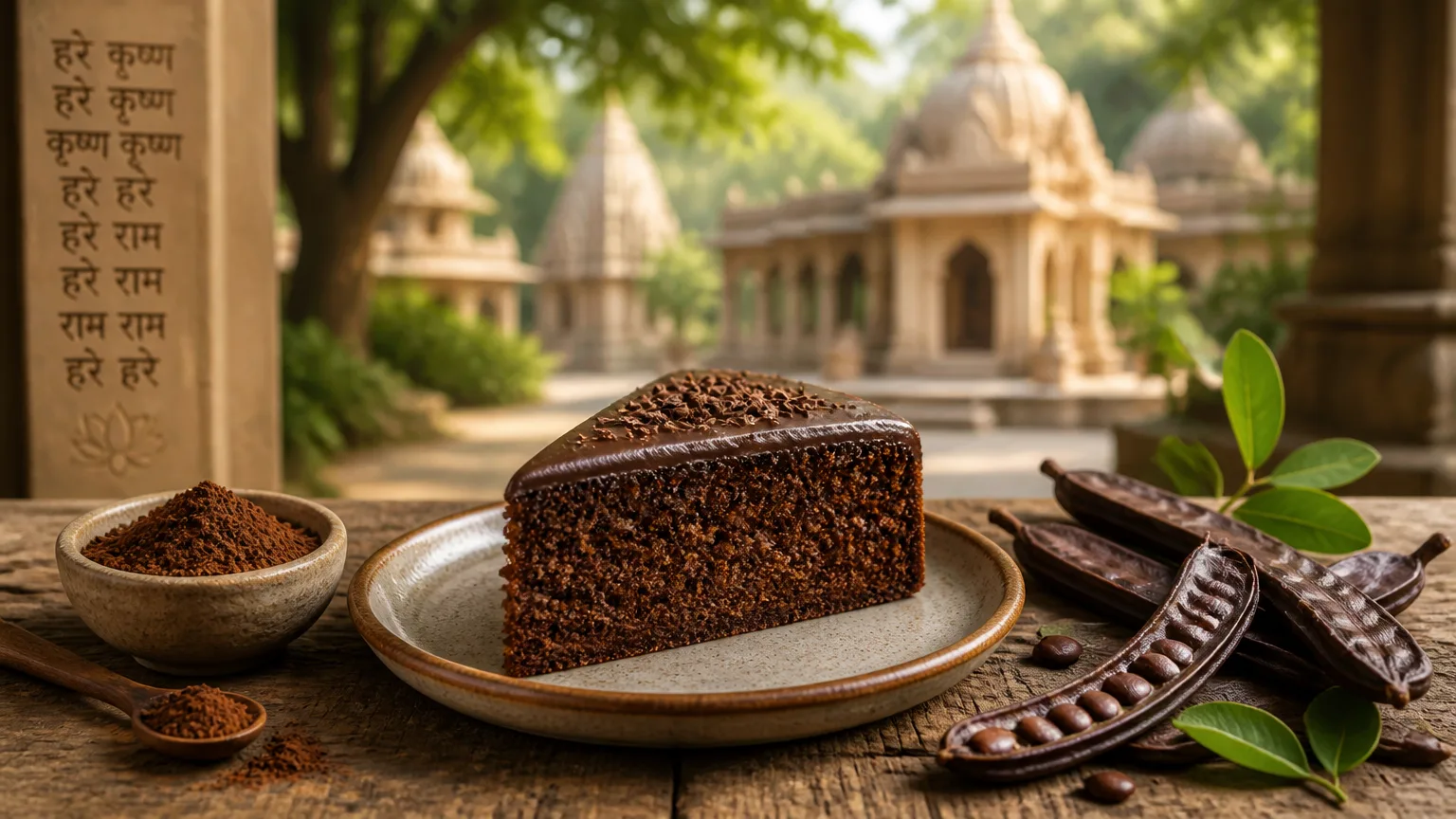
This ISKCON Carob Cake Recipe is a Hare Krishna tradition. This Eggless Carob Cake Recipe transcends mere sustenance; it embodies spiritual nourishment. Meals are considered offerings to Krishna, infused with devotion and love. Each dish serves as a medium to connect with the divine, fostering a sense of community and reverence.
Carob cake, a delightful alternative to traditional chocolate cake, embodies this philosophy beautifully. Rich in flavor yet free from caffeine, carob is a wholesome choice that aligns with the spiritual values of ISKCON. Its natural sweetness and earthy notes make it a perfect vehicle for expressing devotion through cooking.
As we delve into the carob cake recipe ISKCON, we invite you to explore its deeper significance. This cake not only satisfies the palate but also enriches the soul, making it an ideal offering during festivals and gatherings. By preparing and sharing this cake, you participate in a tradition that honors both the food and the spirit behind it. Join us on this culinary journey, where each ingredient becomes a step closer to divine connection, and every bite resonates with joy and purpose.
The Health Benefits of Carob
Carob serves as a remarkable ingredient in spiritual cooking, particularly in the beloved carob cake recipe popularized by ISKCON. Rich in fiber and antioxidants, carob promotes digestive health, making it an excellent choice for those seeking both nourishment and wellness. Its high fiber content aids in maintaining regularity and can contribute to a healthier gut.
Furthermore, carob is naturally caffeine-free, making it suitable for all ages. This characteristic allows families to enjoy the sweet, rich flavors of carob without the stimulating effects of caffeine, fostering a calm and centered atmosphere during spiritual practices or gatherings.
Additionally, carob is low in fat and offers a distinct sweetness without the need for added sugars. This quality not only enhances the flavor profile of your carob cake but also aligns with a health-conscious approach to cooking. Incorporating carob into your diet, especially through a carob cake recipe ISKCON, supports both physical health and spiritual well-being.
Preparing the Perfect Carob Cake Batter
To create a delightful carob cake recipe ISKCON, begin by gathering organic, fresh ingredients. The quality of your components significantly influences the final taste and texture. Opt for unrefined flour, natural sweeteners like maple syrup, and high-quality carob powder to enhance both flavor and spiritual intention.
Start by preheating your oven to 350°F (175°C). In a mixing bowl, combine the dry ingredients: flour, carob powder, baking soda, and a pinch of salt. Whisk these together to ensure an even distribution of the leavening agents and flavors.
In a separate bowl, blend the wet ingredients. Combine organic applesauce, vegetable oil, and your chosen sweetener. Whisk until the mixture is smooth and well-integrated. This step is crucial; properly mixed wet ingredients help create a uniform batter.
Gradually add the dry mixture to the wet ingredients, stirring gently. This technique prevents overmixing, which can lead to a dense cake. Aim for a smooth, slightly thick batter. If the batter appears too thick, incorporate a small amount of non-dairy milk until you reach the desired consistency.
Finally, fold in any additional ingredients, such as nuts or dried fruits, to infuse the batter with texture and flavor. Each addition serves not only to enhance the cake but also to deepen your connection to the cooking process.
Baking and Decorating the Carob Cake
To achieve a moist and flavorful carob cake, preheat your oven to 350°F (175°C). This temperature ensures even baking, allowing the cake to rise beautifully. Bake the cake for approximately 30 to 35 minutes. To check for doneness, insert a toothpick into the center; it should come out clean. This attention to optimal baking times enhances the texture, creating a delightful experience for the palate.
Once the cake has cooled, consider decorating it in a way that reflects its spiritual significance. Edible flowers, such as violets or nasturtiums, can add a vibrant touch while symbolizing purity and devotion. You may also adorn the cake with fresh fruits, like berries, which not only enhance its visual appeal but also align with the principles of offering healthy, natural foods as prasad.
Offering a cake as prasad holds profound spiritual significance in ISKCON traditions. It embodies gratitude, transforming a simple dish into a sacred gift. By sharing this carob cake with friends and family, you foster a sense of community and connection, elevating the act of baking into an expression of devotion and love.
Serving and Sharing Your Carob Cake
When serving your carob cake within devotee circles, it is essential to approach the act with reverence and care. Present the cake on a clean, decorative plate, possibly adorned with flowers or sacred symbols. This attention to detail enhances the spiritual ambiance, inviting participants to engage with the offering meaningfully.
In ISKCON traditions, serving prasad is a communal act that fosters connection. Encourage guests to share their thoughts on the cake, creating a dialogue that deepens their spiritual experience. As attendees savor each bite, they partake not only in the cake but also in the shared energy of devotion and gratitude.
The impact of sharing spiritually infused food extends beyond the gathering. It nurtures personal practice, reminding participants of the sacredness in everyday actions. By offering your carob cake, you cultivate a spirit of community, reinforcing the bonds of friendship and devotion that enrich your spiritual journey.
Embracing the Spiritual Experience of Cooking
As you prepare and share the carob cake recipe ISKCON, recognize the divine nature of food preparation. Each step in the baking process transforms mere ingredients into a sacred offering. By infusing your cooking with intention, you elevate the experience, making it a true act of devotion.
Embrace creativity in the kitchen. Experiment with flavors and textures, allowing your personal touch to shine through. This not only enhances the cake but also deepens your spiritual engagement. Cooking becomes a journey where each choice reflects your devotion and love.
Finally, remember the importance of sharing meals. Offering your carob cake fosters community connections and nurtures relationships. In doing so, you invite others to partake in the joy and spirituality that food represents. Your kitchen becomes a space of love, gratitude, and divine connection, enriching both your spiritual practice and those around you.