
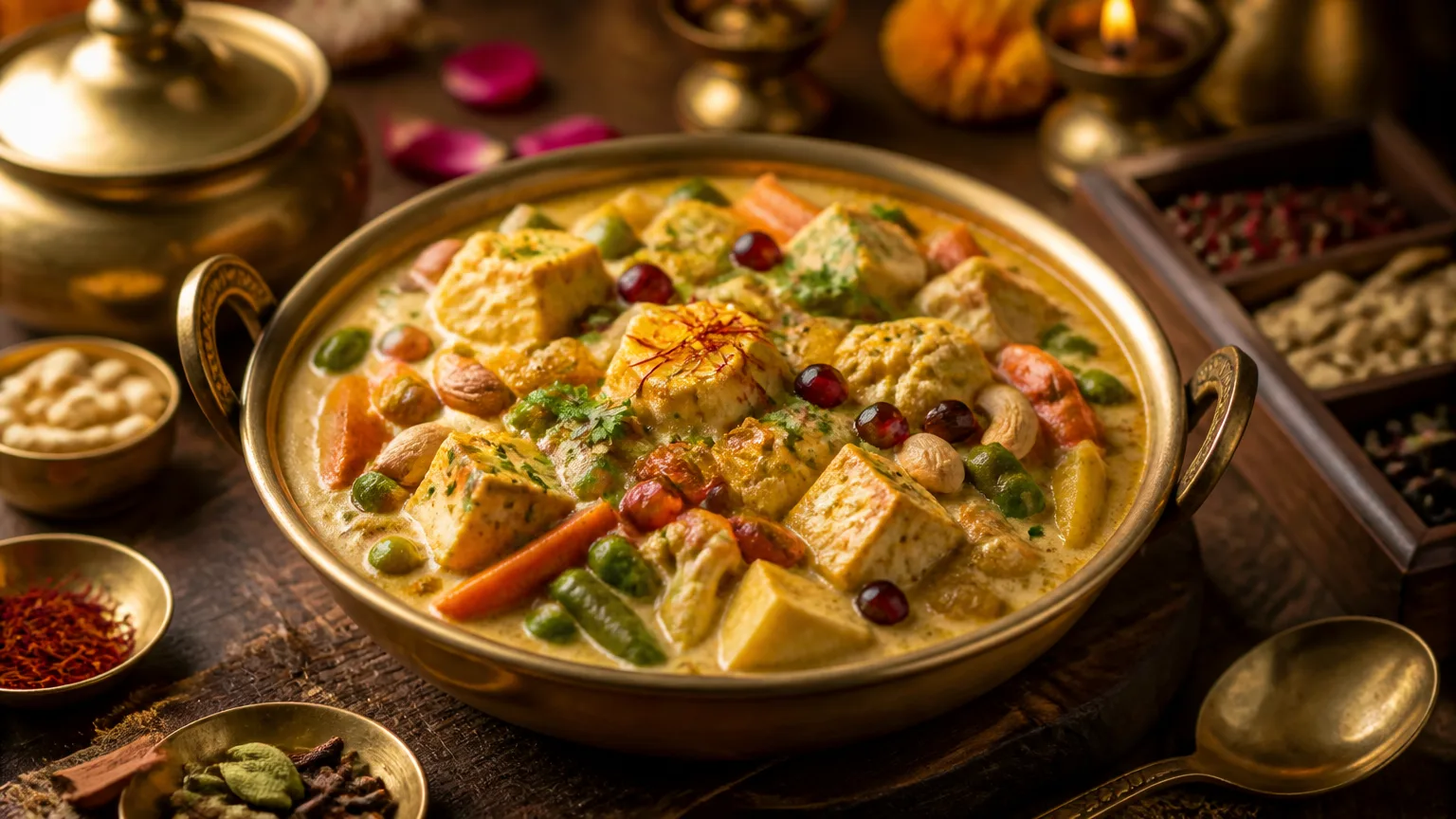
Navratan Korma stands as a beacon of richness and variety within Hare Krishna cuisine, embodying the essence of devotion through the art of cooking. This exquisite dish, featuring a harmonious blend of vegetables, fruits, and nuts, symbolizes abundance in both flavor and spirituality. In the Hare Krishna tradition, preparing food is not merely a culinary task; it is an act of devotion that transforms the kitchen into a sacred space.
As you explore the history, ingredients, and spiritual significance of Navratan Korma, you will discover how each ingredient contributes not only to the dish’s sumptuous taste but also to the spiritual journey of the cook. The vibrant colors and diverse textures reflect the beauty of creation, inviting you to savor each moment of the cooking process. This guide will illuminate the steps necessary to craft this divine dish, fostering a deeper connection to your culinary practice and spiritual growth.
Understanding the Ingredients of Navratan Korma
Navratan Korma is a harmonious blend of colorful vegetables, fruits, and nuts, each contributing to both flavor and nutrition. The foundational ingredients—fresh vegetables like carrots, peas, and bell peppers—are rich in vitamins and minerals. These nutrients not only support physical health but also enhance mental clarity, essential for one’s spiritual journey.
Incorporating ingredients like cashews and almonds adds a luxurious texture and provides healthy fats. These nuts are known for their heart-healthy properties and are a source of protein, aligning with the Hare Krishna principle of promoting vitality through vegetarianism. By choosing organic options, you further honor Krishna consciousness, ensuring that your meal is pure and nourishing.
Fruits such as pineapple or raisins introduce a subtle sweetness, balancing the dish’s flavors while offering antioxidants that support a vibrant lifestyle. The use of spices like cardamom and cinnamon not only elevates the dish’s aroma but also contributes to digestion and overall well-being.
Each ingredient in this navratan korma recipe serves a dual purpose: to satisfy the palate and to nourish the spirit. By selecting fresh, organic ingredients, you embrace the values of Krishna consciousness, fostering a deeper connection to both the food and the divine.
Authentic Hare Krishna Navratan Korma Recipe
Our temple-style Hare Krishna Navratan Korma features a luxurious gravy made from almonds, cashews, raisins, and melon seeds rather than cream alone. Whole spices, yogurt, and a colorful blend of vegetables create a rich, flavorful dish that is perfect for Sunday feasts, festivals, and special offerings to Krishna.
Navratan Korma is traditionally prepared by creating a rich paste from almonds, cashews, raisins, and melon seeds, which forms the creamy base of the gravy. Whole spices such as cardamom, cloves, cinnamon, and bay leaves are tempered in ghee before being combined with tomato, ginger, yogurt, and a colorful assortment of vegetables.
The finished dish is gently simmered until the vegetables absorb the aromatic flavors of the korma sauce and then finished with garam masala, kasoori methi, and fresh coriander leaves.
While every temple and family may have its own variation, our favorite version uses a rich nut-and-seed gravy that creates exceptional depth of flavor without onion or garlic.
Ready to make it yourself? Get the complete ingredient list, detailed instructions, cooking tips, serving suggestions, and printable recipe card here:
→ Authentic Hare Krishna Navratan Korma Recipe (No Onion, No Garlic Mixed Vegetable Korma)
Serving and Offering Navratan Korma
Once you have prepared your Navratan Korma, it is essential to serve it thoughtfully, as this meal is not merely for nourishment but also a medium for devotion. Offer the dish to Krishna with a pure heart, fostering a mindset of gratitude and surrender. Begin by placing the korma in a clean, beautiful serving dish, symbolizing your respect for the divine.
During the offering, recite a prayer or mantra, inviting Krishna’s presence and blessings into your meal. This ritual acts as a spiritual connection, transforming your culinary creation into a sacred offering. Remember, the intention behind the offering is as vital as the ingredients themselves.
To enhance your meal experience, serve the Navratan Korma with basmati rice or soft, warm naan. These accompaniments not only balance the flavors but also hold significance, representing the abundance of Krishna’s blessings. Consider adding a cooling cucumber raita or a tangy lemon pickle, which harmonizes with the richness of the korma and elevates the overall taste.
Ultimately, the act of serving and offering Navratan Korma becomes a celebration of love and devotion. By engaging in this sacred practice, you deepen your spiritual journey while sharing joy through the gift of food.
Celebrating with Navratan Korma
Navratan Korma plays a significant role in fostering community spirit among Hare Krishna devotees. This rich and flavorful dish is often prepared during communal gatherings, where the act of sharing food enhances bonds and nurtures connections.
Special festivals, such as Janmashtami and Diwali, highlight the importance of Navratan Korma in spiritual celebrations. During these occasions, the dish symbolizes abundance and gratitude, inviting devotees to partake in divine offerings. The vibrant colors of the korma reflect the joy of the festivities, encouraging a collective expression of devotion.
Moreover, preparing Navratan Korma together can become a transformative experience. It allows congregants to unite in purpose, engaging in a shared journey that transcends individual spiritual paths. Each ingredient, lovingly selected and combined, becomes a testament to the community’s commitment to love and service.
In this way, Navratan Korma is not merely a dish; it is a celebration of life, spirituality, and togetherness in the Hare Krishna tradition.
Embrace the Divine Experience of Navratan Korma
As we conclude our journey through the history, ingredients, and spiritual significance of Navratan Korma, it is essential to recognize the profound connection between cooking, spirituality, and community within the Hare Krishna tradition. Each step in preparing this dish serves not only to satisfy hunger but also to nourish the soul.
By engaging mindfully in this culinary practice, you invite a spirit of devotion into your kitchen. The vibrant colors and aromatic spices reflect the divine beauty of creation, transforming the act of cooking into a sacred ritual.
We encourage you to share your experiences preparing and offering Navratan Korma with family and friends. This communal aspect not only enhances your culinary experience but also strengthens bonds within your community.
Ultimately, embracing Navratan Korma is an invitation to celebrate life, love, and unity—principles at the heart of the Hare Krishna philosophy. May your kitchen become a sanctuary of peace and joy as you create this divine dish.