
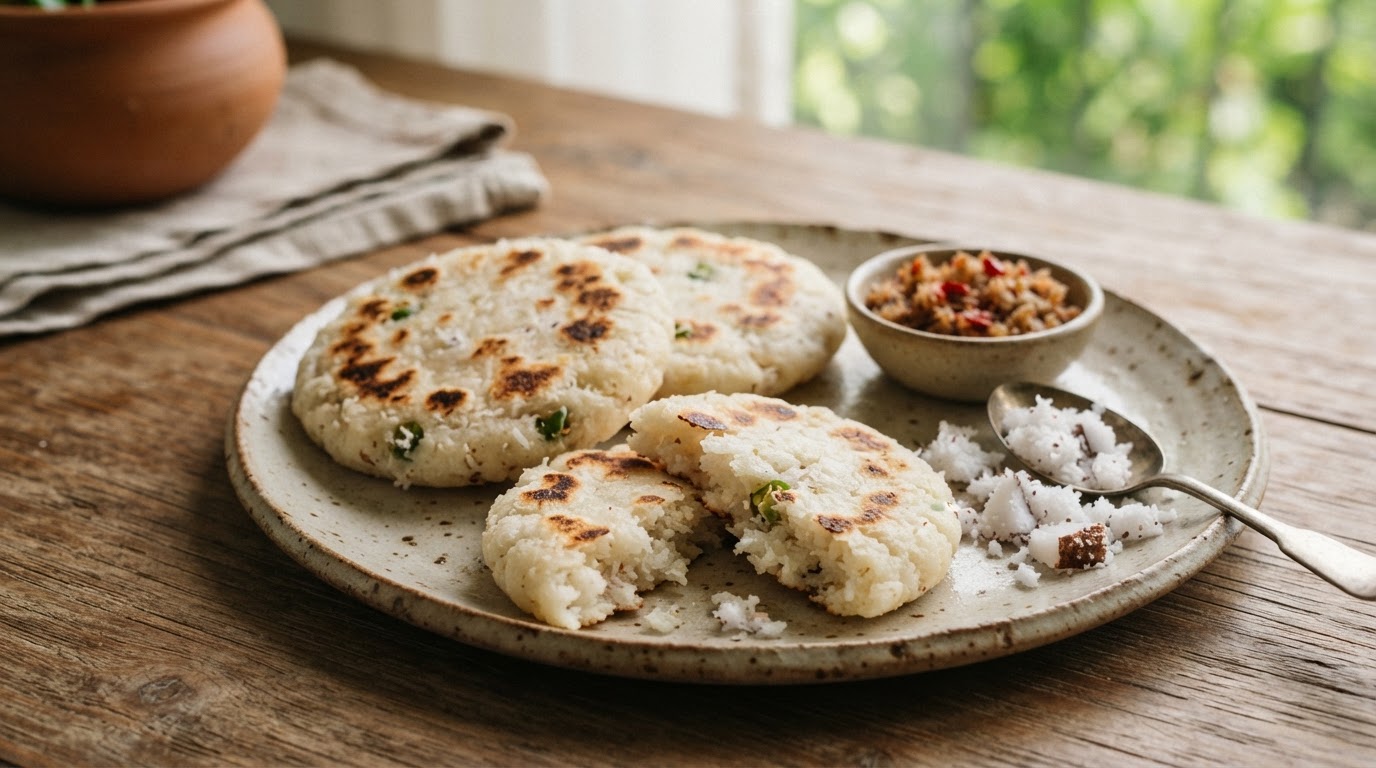
Thick, tender Sri Lankan-style coconut flatbreads cooked on a skillet with mild chili, without onion, garlic or eggs. This independently standardized preparation provides measured quantities and practical guidance for home cooks preparing prasadam.
What is coconut roti?
Pol roti is a Sri Lankan coconut flatbread, thicker and more rustic than ordinary chapati. Grated coconut is mixed into the flour rather than used as a separate topping. This devotional adaptation leaves out onion and garlic and keeps the optional chili mild. Coconut is the central flavor.
Selecting the coconut
Use unsweetened grated fresh coconut or thawed frozen coconut. Sweetened baking coconut changes both flavor and hydration. If desiccated coconut is the only option, rehydrate briefly and drain excess water. Add the remaining liquid gradually because coconut products vary in moisture.
Cooking the thicker rounds
The breads need moderate heat to cook throughout. Shape them to an even thickness and keep each round small enough to turn easily. A heavy skillet provides consistent heat. Brush with a little coconut oil between batches rather than adding a large amount. Check that the interior has set before serving.
Bhakti Thought
The aroma of coconut enriches a simple bread. Prepare it attentively and share the offering.
PrintSri Lankan Coconut Roti (Pol Roti)
Thick, tender Sri Lankan-style coconut flatbreads cooked on a skillet with mild chili, without onion, garlic or eggs.
- Prep Time: 15 minutes
- Dough resting: 15 minutes
- Cook Time: 25 minutes
- Total Time: 55 minutes
- Yield: 6 servings 1x
- Category: Bread
- Method: Griddle cooking
- Cuisine: Sri Lankan
- Diet: Vegan
Ingredients
- 2 cups all-purpose flour (240 g)
- 1/2 cup finely grated unsweetened fresh coconut (40 g)
- 1 small green chili, minced, optional
- 1/8 teaspoon pure asafoetida, optional; verify ingredients
- 1/2 teaspoon fine salt (3 g)
- 1/2 cup warm water (120 ml), plus up to 3 tablespoons if needed
- 1 tablespoon coconut oil (14 g), for cooking
US & metric measurements — original 1× batch
Use either measurement, not both. Equivalents are approximate; original specified weights are preserved. Counts, optional quantities and amounts to taste remain as written. This reference is for the original batch; multiply both quantities if scaling the recipe.
2 cups all-purpose flour (240 g)
1/2 cup finely grated unsweetened fresh coconut (40 g)
1 small green chili, minced, optional
1/8 teaspoon (approx. 0.63 mL) pure asafoetida, optional; verify ingredients
1/2 teaspoon fine salt (3 g)
1/2 cup warm water (120 ml), plus up to 3 tablespoons (approx. 45 mL) if needed
1 tablespoon coconut oil (14 g), for cooking
Approximate kitchen conversions: NIST and ingredient-specific baking weights.
Instructions
- Combine flour, coconut, optional chili and hing, and salt.
- Add warm water gradually and knead to a firm, pliable dough. Cover and rest 15 minutes.
- Divide into six balls and press or roll into 5-inch (approx. 12.7 cm) rounds about 5 mm (approx. 0.2 in) thick.
- Heat a flat skillet over medium heat, brush lightly with coconut oil and cook each round until golden patches appear, about 3–4 minutes.
- Turn and cook the other side until the interior is set. Keep covered briefly and reserve a clean offering portion.
Notes
- Makes 6 flatbreads. Weights and household measures are approximate.
- Use plain ingredients and individual spices without onion, garlic, eggs or mushrooms.
- Nutrition is estimated from representative ingredient composition and measured fats and salt, excluding minor spices and accompaniments. Kitchen testing pending.
- Ingredient quantities and cooking times are editorial estimates; confirm through kitchen testing.
- Nutrition values are estimates per serving unless otherwise specified.
Nutrition
- Serving Size: 1 flatbread (1/6 of batch)
- Calories: 190
- Sugar: 0.5 g
- Sodium: 199 mg
- Fat: 5 g
- Saturated Fat: 4 g
- Unsaturated Fat: 1 g
- Trans Fat: 0 g
- Carbohydrates: 31.5 g
- Fiber: 1.7 g
- Protein: 4.3 g
- Cholesterol: 0 mg
Ways to serve
Serve warm with vegetable curry, dal or a suitable homemade coconut chutney. The mild savory coconut flavor works well for breakfast or a light lunch. Prepare small rounds for a mixed prasadam platter, and keep an untouched portion for offering.
Storage and reheating
Freshly cooked coconut roti has the best texture. Refrigerate leftovers within two hours and use within three days. Reheat on a skillet until hot, covering briefly to preserve moisture. If the dough cracks when shaped, add water by the teaspoon rather than adding more oil.
Diet and nutrition
This plant-based recipe contains wheat and coconut. Check compounded hing for unsuitable ingredients or omit it. Nutrition estimates assume six breads and all measured coconut oil, excluding accompaniments. The recipe contains grain and is not a standard Ekadasi preparation.
Frequently Asked Questions
Can I use dried coconut?
Yes, use unsweetened coconut and rehydrate it briefly.
Can I leave out chili?
Yes, the coconut remains the defining flavor.
Does this recipe contain dairy?
No, it uses coconut oil.
Why is my roti dry?
Add a little water and avoid excessive heat or cooking time.
Explore More Recipes
Family recipe: For a soft coconut-flavored potato pancake, try Sri Lankan Coconut Potato Cakes.