
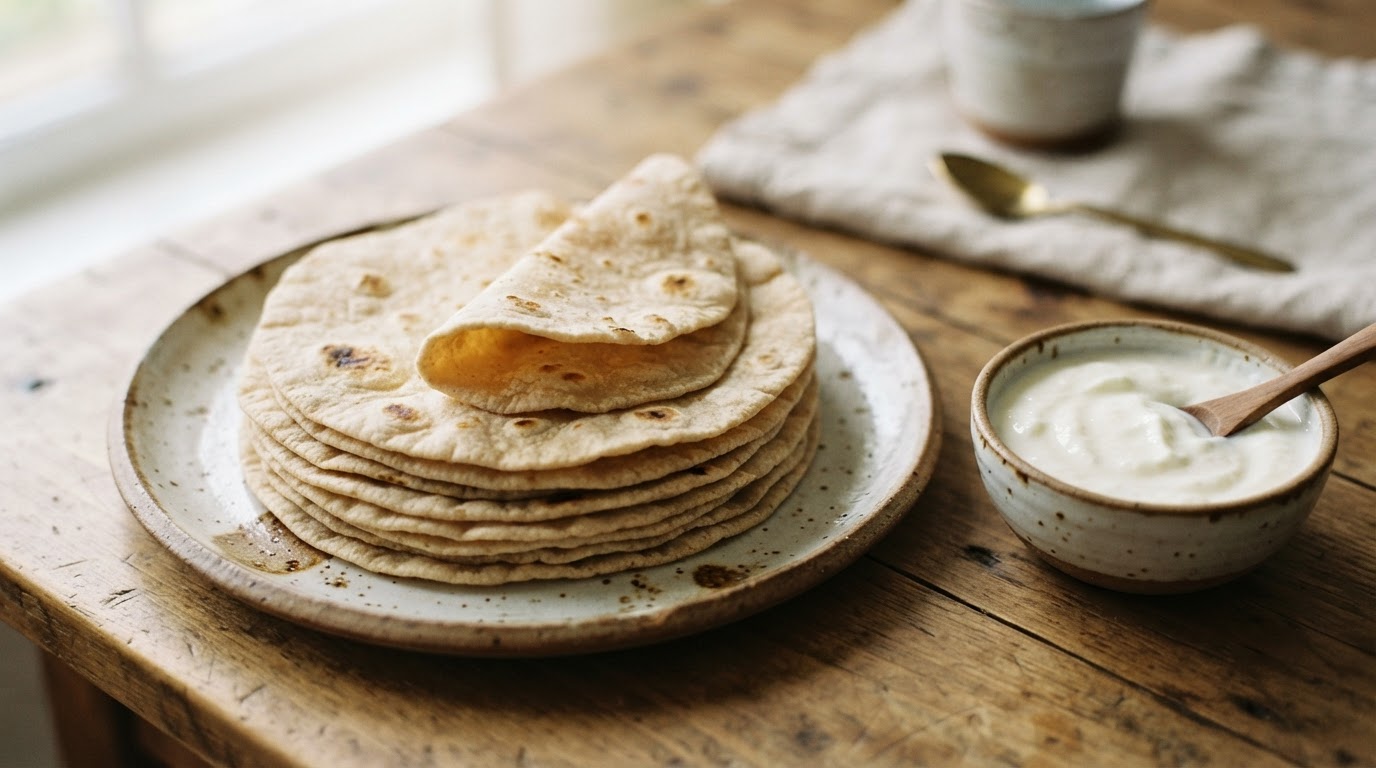
Soft whole wheat flatbreads kneaded with plain yogurt, rested and cooked on a dry griddle, without onion or garlic. This independently standardized flatbread is designed for a Hare Krishna meal, with clear measurements and practical instructions for home cooks.
How yogurt changes roti
Plain yogurt supplies moisture and mild acidity, helping produce a soft bread with a subtle tang. This is not a yeast-leavened naan or a stuffed paratha. The dough is rolled into ordinary small rotis and cooked directly on the griddle. Use plain unsweetened yogurt rather than a flavored dairy product.
Kneading and resting
Yogurt thickness varies between regular and strained varieties. Start with less water and add gradually until the dough is smooth, not wet. Kneading hydrates the flour and develops the elasticity needed for rolling. Cover during the half-hour rest to prevent the surface drying. This rest also makes the dough easier to roll without shrinking.
Cooking without drying the bread
A reasonably hot pan encourages bubbles before the surface dries. Shake off excess dusting flour, which can scorch. Turn when bubbles and pale brown patches appear, not after the whole surface has hardened. Brush with a small amount of ghee after cooking and stack the rotis under a clean cloth to retain softness.
Bhakti Thought
Making a stack of soft breads for others is a direct form of hospitality. Let the care given to each roti become part of the offering.
PrintDahi Roti (Soft Yogurt Flatbread)

Soft whole wheat flatbreads kneaded with plain yogurt, rested and cooked on a dry griddle, without onion or garlic.
- Prep Time: 15 minutes
- Dough resting: 30 minutes
- Cook Time: 25 minutes
- Total Time: 70 minutes
- Yield: 8 servings 1x
- Category: Bread
- Method: Griddle cooking
- Cuisine: Indian
- Diet: Vegetarian
Ingredients
- 2 1/2 cups whole wheat chapati flour (300 g)
- 1/3 cup plain unsweetened yogurt (80 g)
- 1/2 teaspoon fine salt (3 g)
- 1/2 cup warm water (120 ml), plus up to 2 tablespoons if needed
- 1 tablespoon ghee (14 g), for brushing
US & metric measurements — original 1× batch
Use either measurement, not both. Equivalents are approximate; original specified weights are preserved. Counts, optional quantities and amounts to taste remain as written. This reference is for the original batch; multiply both quantities if scaling the recipe.
2 1/2 cups whole wheat chapati flour (300 g)
1/3 cup plain unsweetened yogurt (80 g)
1/2 teaspoon fine salt (3 g)
1/2 cup warm water (120 ml), plus up to 2 tablespoons (approx. 30 mL) if needed
1 tablespoon ghee (14 g), for brushing
Approximate kitchen conversions: NIST and ingredient-specific baking weights.
Instructions
- Combine flour and salt. Rub in the plain yogurt with fingertips until evenly distributed.
- Add warm water gradually and knead for 5–7 minutes to make a smooth, soft dough that is not sticky. Cover and rest for 30 minutes.
- Divide into eight equal balls. Dust lightly with flour and roll each into a 6-inch (approx. 15.2 cm) round of even thickness.
- Heat a dry griddle over medium-high heat. Cook each roti until small bubbles appear, turn and cook the opposite side until light brown spots develop; turn again briefly if needed.
- Transfer to a clean plate, brush sparingly with the measured ghee and keep covered with a clean cloth. Reserve a portion for offering before serving.
Notes
- Makes 8 flatbreads. Measurements use edible ingredient weights and approximate US cup equivalents.
- Use individual spices and plain ingredients without onion, garlic, eggs or mushrooms.
- Nutrition estimates include measured fats and salt, but exclude minor spices and accompaniments. Proportions and timings are not kitchen-tested.
- Ingredient quantities and cooking times are editorial estimates; confirm through kitchen testing.
- Nutrition values are estimates per serving unless otherwise specified.
Nutrition
- Serving Size: 1 flatbread (1/8 of the batch)
- Calories: 149
- Sugar: 0.6 g
- Sodium: 154 mg
- Fat: 3 g
- Saturated Fat: 1.5 g
- Unsaturated Fat: 1.6 g
- Trans Fat: 0.1 g
- Carbohydrates: 27.5 g
- Fiber: 4 g
- Protein: 5.3 g
- Cholesterol: 6 mg
Pairing dahi roti with prasadam
Serve with a dal, dry sabji or a tomato-based curry. Its subtle yogurt flavor is especially useful alongside a dish with a stronger spice tempering. For a gathering, portion the dough evenly and roll while another cook manages the griddle. Offer an untouched portion before distributing the breads.
Storage and reheating
Keep uncooked dough covered in the refrigerator if not using promptly and cook within one day. Refrigerate cooked rotis within two hours and consume within three days. Reheat in a covered skillet until hot; a few drops of water can help soften dry bread. Do not store warm dairy-containing dough for prolonged periods.
Dietary considerations
Dahi roti contains wheat and milk from yogurt and ghee. It is lacto-vegetarian but neither vegan nor gluten-free. Choose yogurt without gelatin or unsuitable additives. The nutrition estimate is for one of eight rotis, using the measured flour, yogurt, salt and ghee. Additional butter or other toppings are not included.
Frequently Asked Questions
Can I use Greek yogurt?
Yes, but add water gradually because it is thicker.
Does dahi roti need yeast?
No, the recipe uses no yeast.
Why does my roti shrink while rolling?
Let the dough rest a little longer so it relaxes.
Can I cook it without brushing ghee?
Yes; the finished bread will be less rich.
Explore More Recipes
Snack and tiffin recipe: For crisp folded nigella crackers, try Baked Bengali Nimki.