
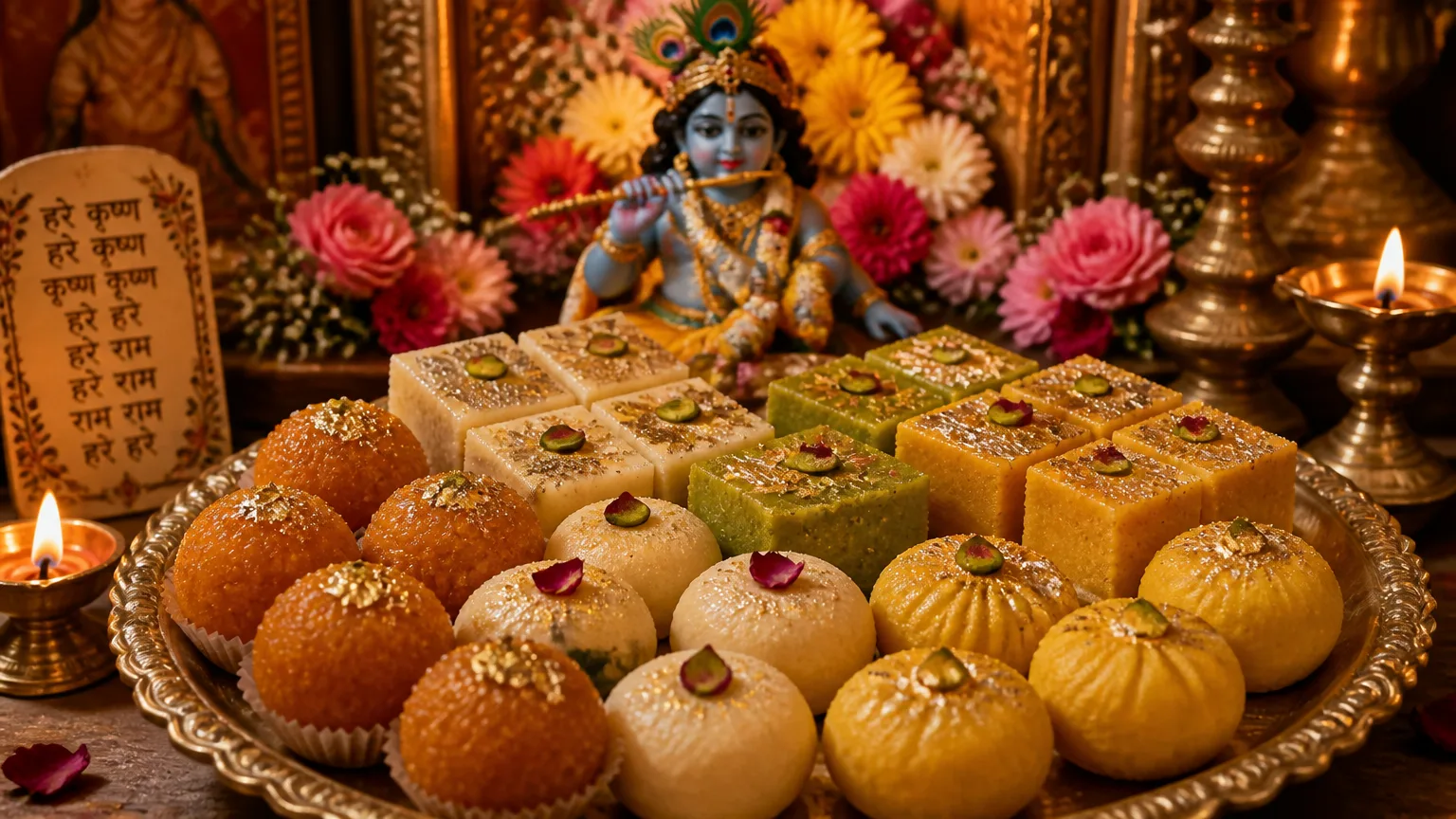
In the Hare Krishna tradition, sweets hold profound spiritual significance, symbolizing devotion and love for the divine. These delightful treats, known as Hare Krishna sweets, are not merely confections; they represent offerings to Krishna, enriching spiritual practices and deepening one’s connection with the deity.
Sweets play an essential role in various occasions, from daily rituals to grand festivals. For instance, during Janmashtami, the celebration of Lord Krishna’s birth, devotees prepare an array of sweets to honor Him. Similarly, during weddings and other auspicious events, these confections enhance the joy and reverence of the occasion.
This guide explores the diverse range of Hare Krishna sweets, illustrating their significance and providing insights into when and how to enjoy them. Whether you are a seasoned devotee or new to the tradition, understanding these sweets will enhance your spiritual journey and celebrations.
1. Laddu: The Classic Offering
Laddu is a quintessential sweet in Hare Krishna culture, deeply rooted in tradition and spirituality. This round confection is often offered during religious ceremonies, symbolizing purity and devotion. Its significance extends beyond mere taste; laddu embodies the spirit of sharing and community.
Historically, laddus have been prepared in Indian households for centuries. They are commonly associated with festivals and special occasions, enhancing their cultural relevance. In the Hare Krishna tradition, they represent an offering to deities, making them sacred and cherished.
Traditional Recipe and Variations
The classic laddu is made from gram flour (besan) and flavored with ghee, sugar, and cardamom. Here’s a simple recipe to try:
- Ingredients:
- Coconut Laddu: Incorporates grated coconut for a tropical twist.
- Motichoor Laddu: Made from tiny, fried gram flour balls soaked in sugar syrup.
- Peanut Laddu: Blends ground peanuts for added crunch and flavor.
- Traditional Techniques: Use khoya (dried milk) for a richer flavor. Ensure the dough is neither too soft nor too firm for optimal frying.
- Modern Variations: Experiment with flavored syrups, such as saffron or orange blossom, to offer a contemporary twist.
- Festivals: Enhance the dish with dried fruits, such as raisins and pistachios, to elevate its richness.
- Puja Offerings: Use organic ingredients to maintain purity, which is essential during spiritual rituals.
- Celebratory Events: Experiment with variations, like chocolate kheer or fruit-infused options, to cater to modern tastes.
- Classic Sandesh: Traditionally flavored with cardamom or saffron, it highlights the natural sweetness of the chhena.
- Mango Sandesh: A seasonal treat that incorporates fresh mango pulp, adding a fruity twist.
- Chocolate Sandesh: For the contemporary palate, this variation includes cocoa, appealing to chocolate lovers.
– 2 cups gram flour
– 1 cup ghee
– 1 cup sugar, powdered
– 1 teaspoon cardamom powder
– Chopped nuts (cashews, almonds)
1. Heat ghee in a pan and add gram flour.
2. Roast until golden brown, stirring continuously.
3. Mix in sugar and cardamom, then add nuts.
4. Once cool, form into small balls.
Flavor Variations
Laddus can be customized in numerous ways:
These variations not only celebrate the versatility of hare krishna sweets but also cater to diverse palates. Enjoying laddu during festivals or family gatherings brings a sense of joy and unity, making it a beloved offering in every celebration.
2. Gulab Jamun: A Sweet Delight
Gulab Jamun is a quintessential Hare Krishna sweet that captivates devotees and dessert lovers alike. Originating from Indian culinary traditions, this dessert symbolizes joy and celebration. Its rich flavor and soft texture make it a favorite during festivals and special occasions.
The preparation of Gulab Jamun typically involves milk solids, which are kneaded into small balls and deep-fried until golden brown. These are then soaked in a fragrant syrup made from sugar, cardamom, and rose water. This combination not only enhances the taste but also adds a cultural significance, as sharing this sweet fosters community and togetherness.
To perfect your Gulab Jamun, consider these tips:
By mastering both traditional and modern approaches, you can enjoy this beloved Hare Krishna sweet at any gathering, enhancing the experience for all.
3. Kheer: The Festive Creamy Delight
Kheer, a traditional sweet rice pudding, is a staple in Hare Krishna celebrations. Its creamy texture and rich flavor make it a beloved offering during festivals and pujas. The dish varies significantly across regions, showcasing diverse ingredients and preparation methods.
In North India, kheer often features basmati rice, milk, sugar, and cardamom. Saffron or almonds may be added for an aromatic touch. In contrast, South Indian versions might use jaggery and coconut milk, offering a unique flavor profile. In Bengal, kheer transforms into “payesh,” sometimes incorporating fresh fruits or khoya.
To make kheer suitable for different occasions, consider the following suggestions:
By embracing these regional variations and suggestions, kheer can become a versatile sweet, perfect for any celebration within the Hare Krishna tradition.
4. Sandesh: The Bengali Treasure
Sandesh is a soft, delectable Bengali sweet that holds a special place in the hearts of the Hare Krishna community. Made primarily from fresh chhena (Indian cottage cheese), Sandesh symbolizes purity and simplicity, reflecting the spiritual essence of devotion. Its light texture and subtle sweetness make it a delightful offering during various ceremonies and festivals.
Unique Variations of Sandesh
Sandesh offers a unique versatility, allowing for numerous variations to suit diverse tastes:
Each variation not only enhances the flavor profile but also serves to engage a wider audience during celebrations, making Sandesh a cherished sweet in the Hare Krishna tradition. Whether served at weddings, festivals, or family gatherings, this Bengali treasure invites everyone to partake in its joy and richness.
5. Barfi: A Versatile Treat
Barfi stands out as one of the most beloved Hare Krishna sweets, celebrated for its extraordinary versatility. This traditional Indian confection can accommodate a wide variety of flavors, including almond, pistachio, coconut, and chocolate. Each variation not only offers a unique taste but also allows for creativity in presentation, making it suitable for various festive occasions.
In vegetarian cooking, Barfi serves as a delightful and inclusive treat. Its base ingredients—milk, sugar, and nuts—are easily modified. For health-conscious devotees, consider substituting traditional ingredients with healthier options. For instance, using almond flour instead of refined sugar can create a nutty flavor while reducing calorie content. Additionally, incorporating natural sweeteners like agave or maple syrup can further enhance its appeal to those monitoring their sugar intake.
Barfi is perfect for celebrations such as Diwali, Janmashtami, or weddings. Its adaptability means you can tailor it to fit the theme of any event, making every gathering special. Whether served as part of a festive platter or as an individual treat, Barfi continues to enchant devotees and guests alike.
Celebrating with Hare Krishna Sweets
As we conclude this ultimate guide to Hare Krishna sweets, it is essential to reflect on the role these delicacies play in fostering community spirit. Sharing sweets during communal celebrations not only enhances the joy of the occasion but also strengthens bonds among participants. Whether it’s a festival, wedding, or family gathering, the act of offering Hare Krishna sweets invites everyone to partake in a shared experience of love and devotion.
We encourage you to experiment with the recipes provided throughout this guide. Each sweet offers a unique opportunity to express creativity while honoring tradition. For instance, consider introducing modern twists to classic recipes, such as adding exotic flavors to traditional laddu or kheer.
By embracing these culinary adventures, you not only enrich your personal celebrations but also contribute to the communal joy that Hare Krishna sweets embody. So, gather your family and friends, and make these cherished recipes a part of your festivities. Your efforts will surely create lasting memories and deepen connections within your community.