
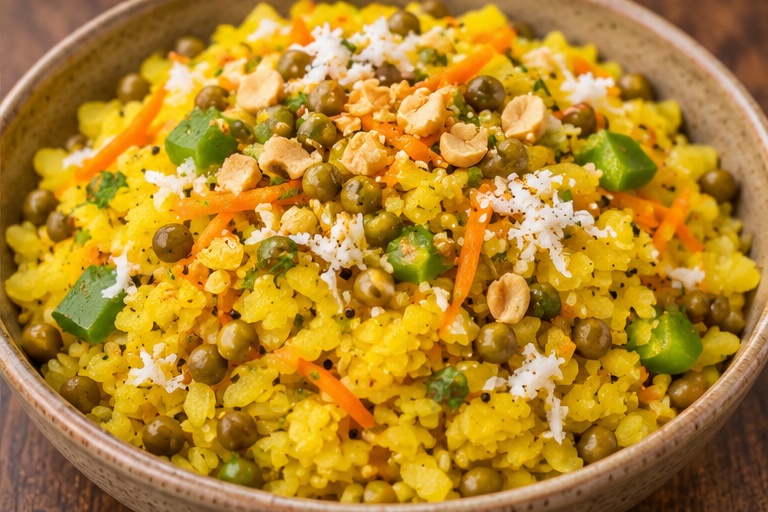
Thick flattened rice with fully cooked whole moong, carrots, bell pepper, peanuts, coconut and lime, without onion or garlic.
This independently standardized preparation is intended for home prasadam and packed lunches, with practical preparation and temperature-control advice.
A more substantial flattened-rice tiffin
This adaptation combines poha with whole moong, carrots, peppers, peanuts and coconut. The reference preparation uses fresh moong sprouts; here the beans are fully cooked instead, which avoids using raw sprouts and makes the cooking method easier to verify. The result is a warm, lightly seasoned meal with distinct grains and legumes rather than a dry snack.
Cook moong completely before mixing
Whole green moong takes longer to cook than split yellow dal. Soak and simmer until the beans are fully tender, allowing more time for older legumes. Drain well before adding to the poha. You may use equivalent properly cooked beans prepared in advance, provided they were cooled and refrigerated safely.
Hydrate poha gently
Use thick plain flattened rice. Rinse briefly and let the flakes soften; do not soak until they disintegrate. Cook the vegetables first, then fold in drained moong and hydrated flakes. Add only enough water to finish softening. Lime and coconut are added near the end, and peanuts can be packed separately for crunch.
Bhakti Thought
Prepare a clean portion for Krishna before tasting and pack the remaining prasadam with thoughtfulness for those who will receive it.
PrintVegetable Moong Poha (Power Poha)
Thick flattened rice with fully cooked whole moong, carrots, bell pepper, peanuts, coconut and lime, without onion or garlic.
- Prep Time: 20 minutes
- Moong soaking: 60 minutes
- Cook Time: 40 minutes
- Total Time: 120 minutes
- Yield: 4 servings 1x
- Category: Tiffin
- Method: Stovetop
- Cuisine: Indian
- Diet: Vegan
Ingredients
- 2 cups thick plain poha (flattened rice; 160 g)
- 1/2 cup dry whole green moong (100 g)
- 150 g grated carrot
- 100 g diced green bell pepper
- 1/4 cup plain unsalted roasted peanuts (35 g), coarsely crushed
- 1/4 cup unsweetened grated coconut (20 g)
- 1 tablespoon neutral cooking oil (14 g)
- 1 teaspoon cumin seeds
- 1/4 teaspoon turmeric
- 1 pinch mild red chili powder, optional
- 1 small green chili, minced, optional
- 1/2 teaspoon fine salt (3 g)
- 2 tablespoons fresh lime juice (30 ml)
- 2 tablespoons chopped cilantro
- Water for soaking and cooking
US & metric measurements — original 1× batch
Use either measurement, not both. Equivalents are approximate; original specified weights are preserved. Counts, optional quantities and amounts to taste remain as written. This reference is for the original batch; multiply both quantities if scaling the recipe.
2 cups (approx. 480 mL) thick plain poha (flattened rice; 160 g (approx. 5.64 oz by weight))
1/2 cup dry whole green moong (100 g)
150 g (approx. 5.29 oz by weight) grated carrot
100 g (approx. 3.53 oz by weight) diced green bell pepper
1/4 cup plain unsalted roasted peanuts (35 g), coarsely crushed
1/4 cup unsweetened grated coconut (20 g)
1 tablespoon neutral cooking oil (14 g)
1 teaspoon (approx. 5 mL) cumin seeds
1/4 teaspoon (approx. 1.25 mL) turmeric
1 pinch mild red chili powder, optional
1 small green chili, minced, optional
1/2 teaspoon fine salt (3 g)
2 tablespoons fresh lime juice (30 ml)
2 tablespoons (approx. 30 mL) chopped cilantro
Water for soaking and cooking
Approximate kitchen conversions: NIST and ingredient-specific baking weights.
Instructions
- Rinse whole moong, soak in clean water for one hour in the refrigerator, drain and simmer in fresh water until fully tender, about 30–40 minutes or longer as needed. Drain thoroughly.
- Rinse thick poha briefly in a sieve and rest 5–10 minutes until flexible but not mushy. Drain any excess water.
- Warm oil in a wide pan. Add cumin, optional green chili and diced pepper; cook 2–3 minutes. Add grated carrot and cook until just tender.
- Fold in cooked moong, poha, turmeric, optional chili powder and salt. Cover for 3–4 minutes, adding a tablespoon of water only if needed, until the poha is tender and everything is hot throughout.
- Finish with crushed peanuts, coconut, lime and cilantro. Reserve a clean offering, divide into four portions and serve or cool promptly for chilled packing.
Notes
- Makes 4 portions. Verify suitable plain ingredients without onion, garlic, eggs, mushrooms, caffeine or alcohol-based extracts.
- Allergens: Peanuts, coconut and legumes.
- Nutrition is estimated from representative ingredient values; minor spices omitted. Quantities, timing and yield are not kitchen-tested. Follow the packing and storage guidance.
- Ingredient quantities and cooking times are editorial estimates; confirm through kitchen testing.
- Nutrition values are estimates per serving unless otherwise specified.
Nutrition
- Serving Size: 1/4 of prepared batch
- Calories: 353
- Sugar: 5.3 g
- Sodium: 329 mg
- Fat: 10.4 g
- Saturated Fat: 2.6 g
- Unsaturated Fat: 7.8 g
- Trans Fat: 0 g
- Carbohydrates: 55.1 g
- Fiber: 7.4 g
- Protein: 11.7 g
- Cholesterol: 0 mg
Packing a balanced tiffin
Pack one measured portion in a sealed lunch container. For crispness carry peanuts separately. If packing hot, use a suitable preheated insulated food jar; for a chilled lunch, cool the poha and beans promptly before packing. Pair with fruit or a suitable side according to the needs of the diner.
Rice and legume storage
Keep perishable food at 40°F (4°C) or below. Use an insulated lunch bag with two cold sources, and refrigerate at the destination when possible. Alternatively, pack freshly heated food in a preheated insulated food jar that maintains at least 140°F (60°C). Do not leave perishable food at room temperature for more than two hours, or one hour above 90°F (32°C). A regular metal tiffin does not provide temperature control. Cool leftovers quickly in shallow containers, preferably within one hour, refrigerate promptly and consume within one day. Reheat only once until steaming hot throughout.
Dietary and nutrition notes
Vegan and made without wheat ingredients, subject to label and cross-contact checks. Contains peanuts and legumes. The estimate uses dry moong and poha weights and all measured cooking oil, divided into four portions. No raw sprouts are required.
Frequently Asked Questions
Can I use raw sprouts instead?
This adaptation deliberately uses fully cooked moong; do not substitute raw sprouts for packed meals.
Why is the poha mushy?
Rinse briefly and drain cooked beans well; avoid excess water.
Can I omit peanuts?
Yes; prevent cross-contact if there is an allergy.
Is it suitable for Ekadasi?
No; it contains rice and legumes.
Explore More Recipes
Bhaja Muger Dal (Bengali Roasted Moong Dal)
Cooked Moong and Chana Kosambari Salad
Bread Upma (Spiced Toasted Bread)
For a crisp alternative to soft poha, try Dry-Roasted Poha Chivda.