
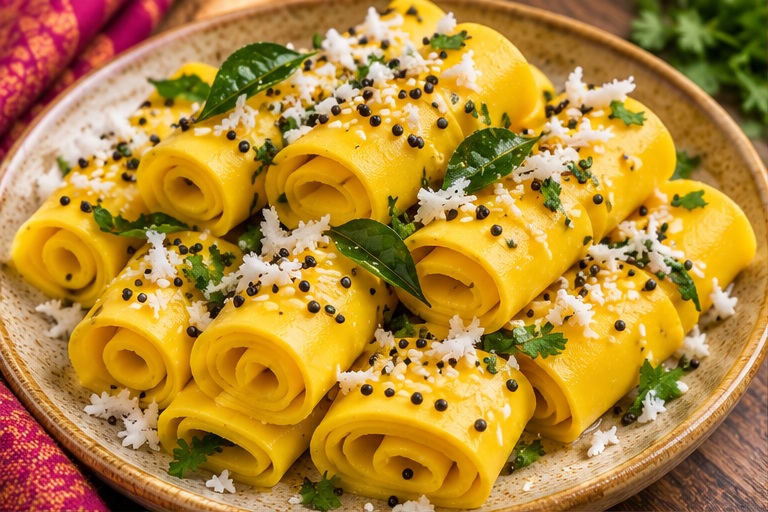
Delicate yellow chickpea-flour and buttermilk rolls with mustard, sesame, coconut and curry leaf tempering.
This independently standardized regional adaptation is intended for home cooks preparing vegetarian prasadam.
The distinctive roll shape
Khandvi is made by cooking a chickpea flour and cultured dairy batter until it can be spread into a delicate sheet. Once set, the sheet is rolled into small coils and dressed with a tempering. The original recipe includes a brief test of cooked consistency; this adaptation makes that test explicit because cooking time varies between pans and flour brands.
Whisk before applying heat
A smooth batter is important because lumps can tear the thin sheets. Use unsweetened plain buttermilk without added salt or unsuitable flavorings; diluted plain yogurt is an alternative. Mix while cold, then cook in a heavy pan. Set out trays before starting because the cooked batter begins to set quickly.
Use the test strip method
A small spoonful spread thinly and allowed to cool should peel away and roll without smearing. If it remains pasty, continue stirring over low heat and try again. Once the test succeeds, spread the rest quickly before it cools in the saucepan. Do not try to roll thick slabs; the sheets should be thin and even.
Bhakti Thought
The variety of regional cooking provides many opportunities for devotional service. Prepare a clean offering before tasting and share the prasadam thoughtfully.
PrintGujarati Khandvi (Chickpea Flour Rolls)
Delicate yellow chickpea-flour and buttermilk rolls with mustard, sesame, coconut and curry leaf tempering.
- Prep Time: 15 minutes
- Cook Time: 15 minutes
- Total Time: 30 minutes
- Yield: 6 servings 1x
- Category: Snack
- Method: Stovetop
- Cuisine: Gujarati
- Diet: Vegetarian
Ingredients
- 1/2 cup besan (50 g)
- 1 cup plain unsalted cultured buttermilk (240 ml), or 120 g yogurt whisked with 120 ml water
- 1/4 teaspoon turmeric
- 1/4 teaspoon fine salt (1.5 g)
- 1 teaspoon pure ghee (5 g), for batter
- 2 teaspoons pure ghee (9 g), for tempering
- 1/2 teaspoon mustard seeds (1.5 g)
- 1 teaspoon sesame seeds (3 g)
- 6 fresh curry leaves, dried well
- 1 small green chili, minced, optional
- 1 tablespoon finely grated unsweetened coconut (6 g)
- 1 tablespoon chopped cilantro
US & metric measurements — original 1× batch
Use either measurement, not both. Equivalents are approximate; original specified weights are preserved. Counts, optional quantities and amounts to taste remain as written. This reference is for the original batch; multiply both quantities if scaling the recipe.
1/2 cup besan (50 g)
1 cup plain unsalted cultured buttermilk (240 ml), or 120 g (approx. 4.23 oz by weight) yogurt whisked with 120 ml (approx. 0.5 US cup) water
1/4 teaspoon (approx. 1.25 mL) turmeric
1/4 teaspoon fine salt (1.5 g)
1 teaspoon pure ghee (5 g), for batter
2 teaspoons pure ghee (9 g), for tempering
1/2 teaspoon mustard seeds (1.5 g)
1 teaspoon sesame seeds (3 g)
6 fresh curry leaves, dried well
1 small green chili, minced, optional
1 tablespoon finely grated unsweetened coconut (6 g)
1 tablespoon (approx. 15 mL) chopped cilantro
Approximate kitchen conversions: NIST and ingredient-specific baking weights.
Instructions
- Prepare several clean, lightly greased steel trays or smooth heatproof plates. Whisk besan with buttermilk, turmeric and salt until completely lump-free.
- Warm the batter ghee in a heavy saucepan. Stir in the batter and cook over medium-low heat, stirring continuously for 8–12 minutes until thick and glossy. Avoid tasting raw chickpea batter.
- Spread a small test spoonful on a plate, let it cool briefly and check whether it lifts and rolls. If it sticks, cook the remaining batter a little longer. Once ready, spread the batter quickly into very thin sheets using a spatula.
- Let sheets cool until set, cut into strips about 4–5 cm (approx. 2 in) wide and roll each strip gently. Arrange the rolls on a plate.
- Warm remaining ghee, add mustard, sesame, curry leaves and optional chili briefly. Pour over the rolls, finish with coconut and cilantro, and reserve an offering.
Notes
- Makes 6 equal portions. Use plain suitable ingredients without onion, garlic, eggs, mushrooms, caffeine or alcohol-based extracts.
- Allergens: Milk, mustard, sesame and chickpeas.
- Nutrition is estimated from typical ingredient composition; minor spices omitted. Recipe measurements, timing and yield are not kitchen-tested.
- Ingredient quantities and cooking times are editorial estimates; confirm through kitchen testing.
- Nutrition values are estimates per serving unless otherwise specified.
Nutrition
- Serving Size: 1/6 of prepared batch
- Calories: 77
- Sugar: 3 g
- Sodium: 147 mg
- Fat: 3.9 g
- Saturated Fat: 2.1 g
- Unsaturated Fat: 1.8 g
- Trans Fat: 0.1 g
- Carbohydrates: 7.1 g
- Fiber: 1.1 g
- Protein: 3.4 g
- Cholesterol: 8 mg
Serving ideas
Arrange the rolls on a clean plate, temper and garnish just before offering. Serve as a small savory snack with a suitable chutney or beside a Gujarati-style meal. Khandvi is delicate, so avoid piling many rolls on top of one another.
Storage
Keep prepared khandvi refrigerated and serve within one day for the best texture. Do not leave the dairy-containing rolls out for more than two hours. They may firm after refrigeration; serve chilled or briefly temper at room temperature immediately before the meal.
Allergens and nutrition
Contains milk, mustard, sesame and chickpeas. Choose verified besan and avoid flour cross-contact where required. The estimate assumes six small snack portions and unsalted cultured buttermilk, including all the measured ghee and salt.
Frequently Asked Questions
Why will my khandvi not roll?
The batter may be undercooked or spread too thickly. Test a thin strip before spreading the batch.
Can I use yogurt?
Yes, whisk plain yogurt with water to create a thin cultured dairy mixture.
Does it need baking powder?
No.
Can I omit the sesame?
Yes; disclose remaining allergens and prevent cross-contact.