
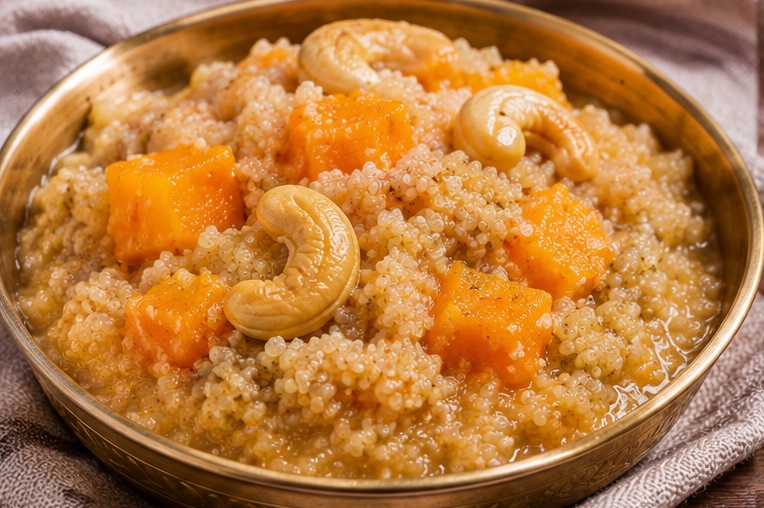
A soft, savory pongal-inspired breakfast made with whole amaranth, pumpkin, fresh ghee and cashews, without rice, millet or dal.
For food-taking Ekadasi observance, not a complete fast. Confirm each ingredient with your temple. Pure amaranth, tapioca, particular vegetables, dairy, nuts, coconut and seasonings may be accepted differently. Use fresh ghee and clean utensils free from grain and legume residues. Avoid peanuts, cereal grains, legumes and commercial masalas.
A rice-free, dal-free pongal-inspired preparation
Traditional savory pongal typically combines rice and moong dal. Sama rice is barnyard millet, also a cereal grain. This independently developed adaptation uses amaranth, a pseudocereal, and pumpkin instead. It is savory and cooked in water rather than the site's existing sweet milk-based amaranth porridge.
Use pure amaranth only where permitted
Amaranth is botanically distinct from cereal grains, but its acceptance differs among Gaudiya and other fasting traditions. Check with your temple. Inspect the seeds for foreign grains and avoid pre-seasoned mixes or blends.
Achieve a soft pongal-like texture
The small seeds naturally produce a slightly sticky porridge. Use a heavy pan, gentle heat and regular stirring. Mashing some softened pumpkin adds body without rice starch or dal. Adjust with hot water rather than overcooking the mixture.
Bhakti Thought
Let simple preparation support hearing, chanting and remembrance of Krishna. Reserve an untouched offering before tasting, and share prasadam with gratitude.
PrintEkadasi Savory Amaranth Pongal
A soft, savory pongal-inspired breakfast made with whole amaranth, pumpkin, fresh ghee and cashews, without rice, millet or dal.
- Prep Time: 10 minutes
- Resting: 5 minutes
- Cook Time: 30 minutes
- Total Time: 45 minutes
- Yield: 4 servings 1x
- Category: Breakfast
- Method: Simmering
- Cuisine: Indian-inspired
- Diet: Vegetarian
Ingredients
- 160 g pure raw whole amaranth seeds (rajgira), not popped amaranth
- 200 g peeled pumpkin, cut into 1 cm cubes
- 25 g plain unsalted cashews
- 1 tablespoon fresh pure ghee (14 g), divided
- 650 ml drinking water, plus more if needed
- 1/4 teaspoon pure rock salt (1.5 g), optional
- 1/8 teaspoon ground black pepper, optional
US & metric measurements — original 1× batch
Use either measurement, not both. Equivalents are approximate; original specified weights are preserved. Counts, optional quantities and amounts to taste remain as written. This reference is for the original batch; multiply both quantities if scaling the recipe.
160 g (approx. 5.64 oz by weight) pure raw whole amaranth seeds (rajgira), not popped amaranth
200 g (approx. 7.05 oz by weight) peeled pumpkin, cut into 1 cm (approx. 0.39 in) cubes
25 g (approx. 0.88 oz by weight) plain unsalted cashews
1 tablespoon fresh pure ghee (14 g), divided
650 ml (approx. 2.71 US cups) drinking water, plus more if needed
1/4 teaspoon pure rock salt (1.5 g), optional
1/8 teaspoon (approx. 0.63 mL) ground black pepper, optional
Approximate kitchen conversions: NIST and ingredient-specific baking weights.
Instructions
- Inspect pure amaranth seeds for foreign grains. Rinse in a fine-mesh sieve and drain.
- Warm half the fresh ghee in a clean saucepan. Toast cashews over low heat until lightly golden and remove to a clean plate.
- Add amaranth, pumpkin and water to the saucepan. Bring to a gentle simmer and cover partly. Cook 25–30 minutes, stirring periodically along the base, until the seeds and pumpkin are tender.
- Mash a few pumpkin cubes against the side of the pan and stir to create a soft, spoonable consistency. Add a little hot water if needed.
- Remove from heat, add remaining ghee, permitted seasoning and toasted cashews. Rest 5 minutes, reserve an untouched offering and serve warm.
Notes
- For food-taking Ekadasi observance, not a complete fast. Confirm each ingredient with your temple. Pure amaranth, tapioca, particular vegetables, dairy, nuts, coconut and seasonings may be accepted differently. Use fresh ghee and clean utensils free from grain and legume residues. Avoid peanuts, cereal grains, legumes and commercial masalas.
- Contains cashews and milk-derived ghee. Amaranth, pumpkin and optional seasonings must be permitted under your own observance.
- Nutrition estimates are based on four equal reference portions and include measured ghee and optional salt. Values vary by product; recipe is not kitchen-tested.
- Ingredient quantities and cooking times are editorial estimates; confirm through kitchen testing.
- Nutrition values are estimates per serving unless otherwise specified.
Nutrition
- Serving Size: 1/4 of prepared batch
- Calories: 228
- Sugar: 2 g
- Sodium: 155 mg
- Fat: 9 g
- Saturated Fat: 3 g
- Unsaturated Fat: 6 g
- Trans Fat: 0.1 g
- Carbohydrates: 31 g
- Fiber: 3 g
- Protein: 7 g
- Cholesterol: 9 mg
Serving suggestions
Offer a modest warm portion as breakfast or a simple main course. Avoid adding customary pongal tempering ingredients such as dal, mustard or prepared hing.
Storage and reheating
Refrigerate leftovers within two hours at 40°F (4°C) or below and consume within three days. Reheat until steaming hot, stirring in a little water.
Nutrition and allergens
Contains cashews and milk-derived ghee. Amaranth, pumpkin and optional seasonings must be permitted under your own observance. Nutrient values are estimates, not laboratory analysis.
Frequently Asked Questions
Does this contain sama rice?
No. It uses whole amaranth instead of barnyard millet.
Is it traditional ven pongal?
No. It is a fasting-oriented editorial adaptation without rice or dal.
Can I omit cashews?
Yes, if nuts are restricted. The texture and nutrition will change.
Why is the amaranth sticky?
That is normal for this soft preparation. Add a little hot water if it becomes too thick.
Explore More Recipes
Ekadasi Farali Upma (Buckwheat Groats with Potato)
Ekadasi Buckwheat Vegetable Pilaf
For a sweet amaranth-flour preparation, see Rajgira Halva Recipe. Check ingredient acceptance with your temple.