
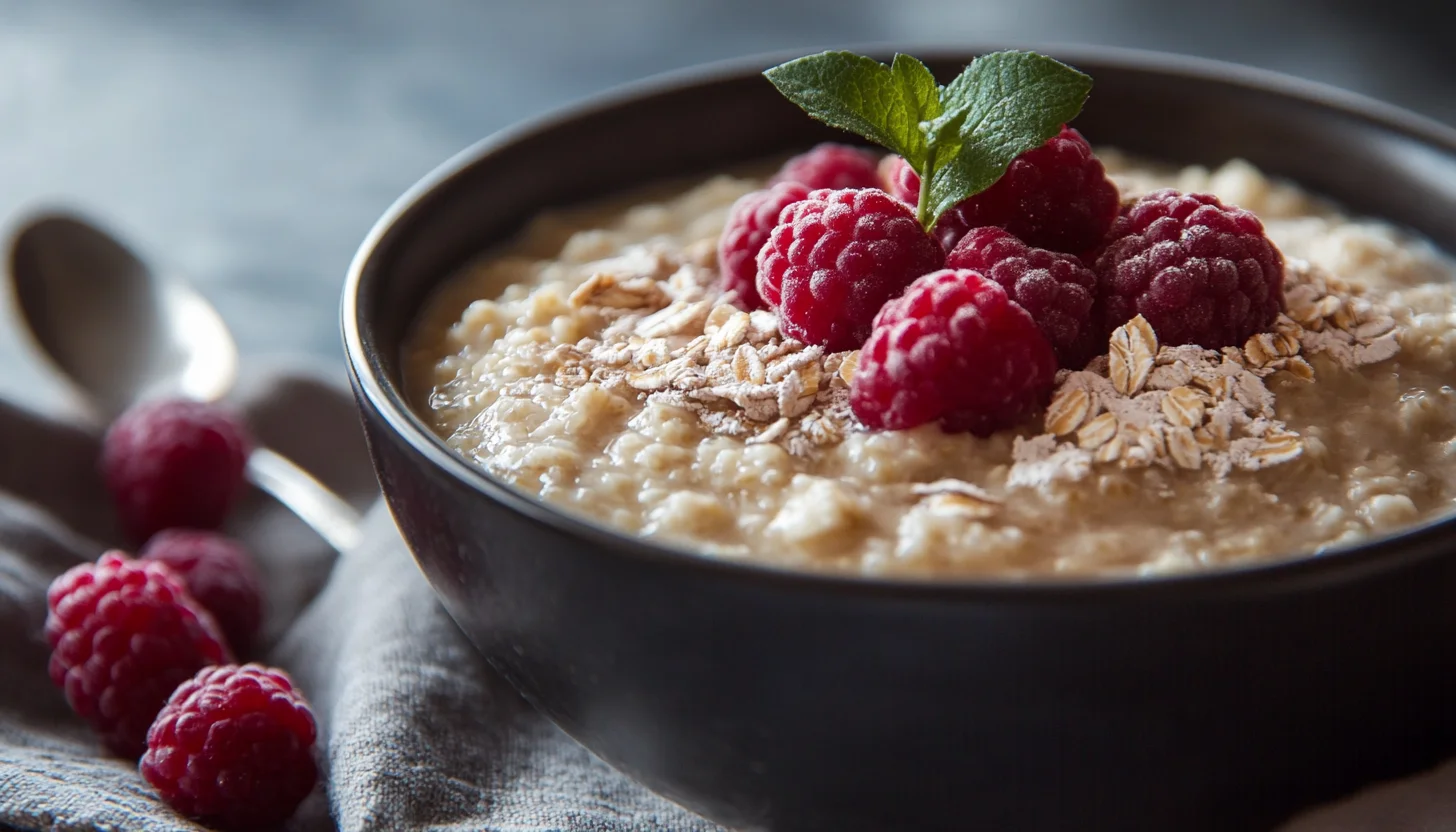
Whole amaranth porridge is a soft, spoonable breakfast made with amaranth seeds, water and milk. The original recipe includes honey or jaggery for sweetness, with optional fresh fruit.

The original serving illustration may show additional toppings, including oats. These are not part of the measured recipe. Follow the written ingredients; replacement illustration pending.
This Hare Krishna recipe excludes onion, garlic, eggs and mushrooms. Check ingredient labels and individual dietary requirements; nutrition is estimated, not a medical recommendation.
Choose pure whole amaranth
Amaranth is a pseudocereal, not a wheat grain. Use whole seeds rather than popped amaranth or flour. Check ingredient labels and clean utensils for gluten cross-contact.
Cook slowly for a creamy consistency
Simmer amaranth in water until the small seeds are tender, checking after about 20 minutes and adding water if needed. Stir regularly to prevent sticking. Its texture is naturally softer and stickier than cooked rice.
Add milk and sweetener after cooking
Stir in milk or a suitable plain plant milk and warm gently. Use jaggery rather than honey if preparing a vegan version; both contribute sugar. Add only the optional fruit listed in the recipe, not oats or packaged cereal toppings.
Bhakti Thought
Prepare the food with care, reserve an untouched offering for Krishna before tasting, and share prasadam with gratitude.
PrintAmaranth Porridge Recipe

Hare Krishna Amaranth Porridge is a warm and nourishing breakfast perfect for any day. This easy-to-make porridge combines amaranth grains with milk and natural sweeteners, creating a wholesome and delicious start to your day.
- Prep Time: 5 minutes
- Cook Time: 25 minutes
- Total Time: 30 minutes
- Yield: 2 servings 1x
- Category: Gluten-Free
- Method: Stovetop
- Cuisine: Indian
- Diet: Vegetarian
Ingredients
- 1 cup amaranth grains
- 2 cups water
- 1 cup milk (or almond milk for vegan option)
- 2 tablespoons honey or jaggery
- 1/4 teaspoon rock salt (sendha namak)
- Fresh fruits for garnish (optional)
US & metric measurements — original 1× batch
Use either measurement, not both. Equivalents are approximate; original specified weights are preserved. Counts, optional quantities and amounts to taste remain as written. This reference is for the original batch; multiply both quantities if scaling the recipe.
1 cup (approx. 240 mL) amaranth grains
2 cups (approx. 480 mL) water
1 cup (approx. 240 mL) milk (or almond milk for vegan option)
2 tablespoons (approx. 30 mL) honey or jaggery
1/4 teaspoon (approx. 1.25 mL) rock salt (sendha namak)
Fresh fruits for garnish (optional)
Approximate kitchen conversions: NIST and ingredient-specific baking weights.
Instructions
- Cook Amaranth: In a saucepan, bring 2 cups of water to a boil. Add the amaranth grains, reduce the heat, and simmer for 20 minutes or until the grains are tender and the water is absorbed.
- Add Milk and Sweetener: Stir in the milk, honey or jaggery, and rock salt. Cook for an additional 5 minutes, stirring frequently until the porridge thickens to your desired consistency.
- Serve: Serve warm, garnished with fresh fruits if desired.
Notes
- Amaranth Soaking: Soaking the amaranth grains overnight can reduce cooking time and improve texture.
- Sweetener Option: Adjust the amount of honey or jaggery to your taste preference. You can also use maple syrup as an alternative.
- Serving Suggestion: Top the porridge with sliced bananas, berries, or nuts for added texture and flavor.
- Vegan Option: Use almond milk or coconut milk for a vegan-friendly version of this porridge.
Nutrition
- Serving Size: 1 cup
- Calories: 200 kcal
- Sugar: 12g
- Sodium: 80mg
- Fat: 4g
- Saturated Fat: 2g
- Unsaturated Fat: 1g
- Trans Fat: 0g
- Carbohydrates: 36g
- Fiber: 5g
- Protein: 6g
- Cholesterol: 10mg
Dietary notes and allergens
Contains milk in the dairy version and may contain almonds if almond milk is used. For a vegan variation choose plant milk and jaggery, not honey. Amaranth is accepted in some but not all Ekadasi traditions; verify with your temple. Do not treat this as universally fasting-compliant.
Estimated nutrition
Approximately 230–245 kcal, 8–10 g protein, 35–40 g carbohydrate and 4–6 g fat per quarter of the batch, assuming about 190 g whole amaranth, one cup whole milk and two tablespoons jaggery. Optional fruit and plant milk substitutions change values.
Storage and reheating
Cool promptly, refrigerate within two hours and use within three days. Reheat gently with a splash of suitable milk until steaming hot.
Frequently Asked Questions
Is amaranth the same as millet?
No. Amaranth is a pseudocereal; millet is a cereal grain.
Can I use almond milk?
Yes, if suitable for your dietary needs.
Is honey vegan?
No. Use jaggery with plant milk for a vegan version.
Can I eat amaranth on Ekadasi?
Only if your particular fasting observance permits it.