
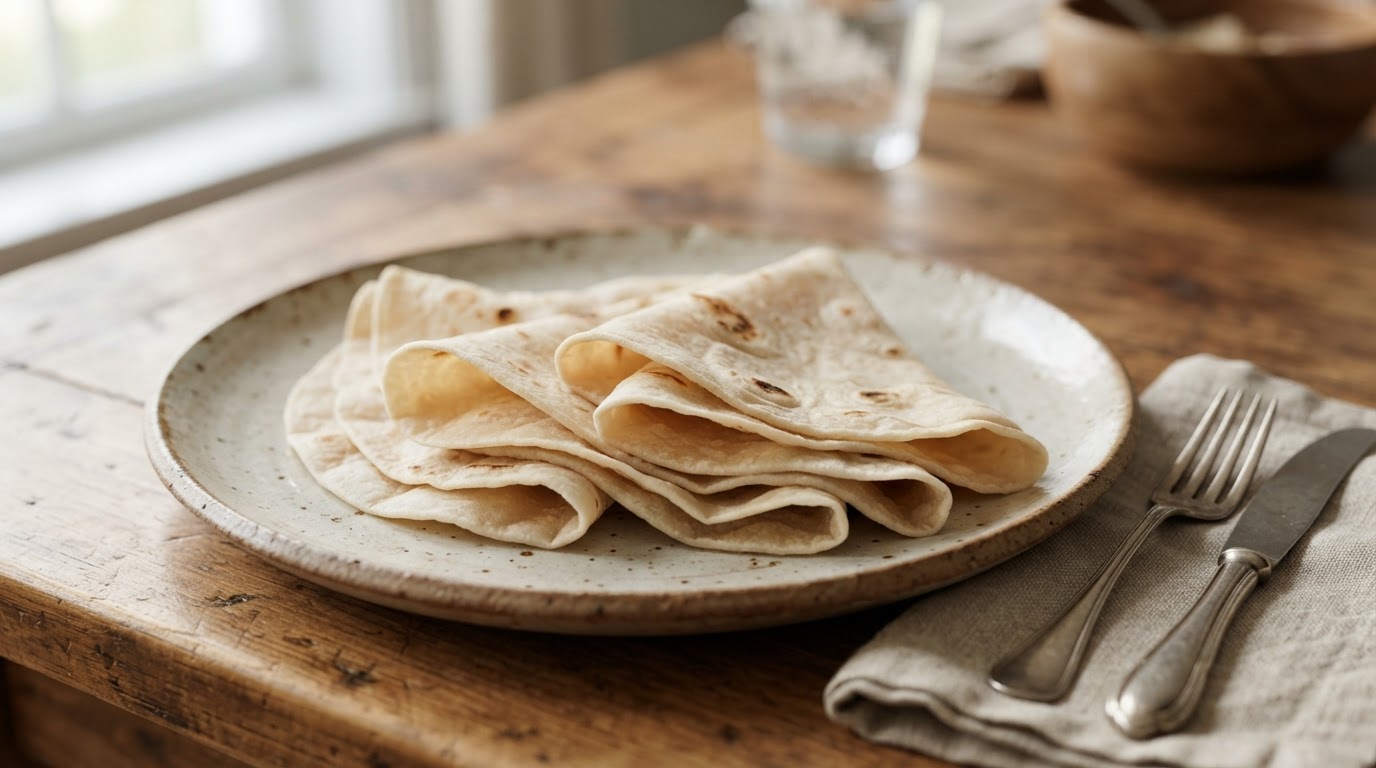
Very thin, soft handkerchief-style flatbreads made with whole wheat and refined wheat flour, without onion, garlic or eggs. This independently standardized preparation provides measured quantities and practical guidance for home cooks preparing prasadam.
Why is it called handkerchief bread?
Rumali roti is known for its thin, supple texture and folded presentation. It should bend easily rather than shatter or become crisp. The combination of atta and refined flour balances wheat flavor and elasticity. This version uses a modest quantity of baking powder and no eggs or yeast.
Making elastic dough
Kneading develops the dough's ability to stretch, and resting relaxes it before rolling. Add water in increments because flour absorption varies. The finished dough should be smooth, soft and manageable. Keep the portions covered and avoid incorporating too much dusting flour, which can make the bread dry.
Using a home griddle safely
Traditional methods may use a specialized convex cooking surface. A broad flat griddle is a stable, practical home alternative. Roll the bread only as wide as the pan holds. Avoid stretching the dough over an exposed flame. Cook briefly and turn as soon as bubbles and light brown patches form.
Bhakti Thought
A delicate bread takes patience rather than force. Let that gentleness become part of the offering.
PrintRumali Roti (Handkerchief Flatbread)
Very thin, soft handkerchief-style flatbreads made with whole wheat and refined wheat flour, without onion, garlic or eggs.
- Prep Time: 25 minutes
- Dough resting: 30 minutes
- Cook Time: 20 minutes
- Total Time: 75 minutes
- Yield: 8 servings 1x
- Category: Bread
- Method: Griddle cooking
- Cuisine: North Indian
- Diet: Vegetarian
Ingredients
- 1 1/2 cups whole wheat chapati flour (180 g)
- 1 1/2 cups all-purpose flour (180 g)
- 1/2 teaspoon baking powder (2 g)
- 1/2 teaspoon fine salt (3 g)
- 2 tablespoons ghee (28 g)
- 3/4 cup warm water (180 ml), plus up to 1/4 cup if needed
- A little additional flour for dusting
US & metric measurements — original 1× batch
Use either measurement, not both. Equivalents are approximate; original specified weights are preserved. Counts, optional quantities and amounts to taste remain as written. This reference is for the original batch; multiply both quantities if scaling the recipe.
1 1/2 cups whole wheat chapati flour (180 g)
1 1/2 cups all-purpose flour (180 g)
1/2 teaspoon baking powder (2 g)
1/2 teaspoon fine salt (3 g)
2 tablespoons ghee (28 g)
3/4 cup warm water (180 ml), plus up to 1/4 cup (approx. 60 mL) if needed
A little additional flour for dusting
Approximate kitchen conversions: NIST and ingredient-specific baking weights.
Instructions
- Combine flours, baking powder and salt. Rub in ghee and gradually add warm water to form a soft dough.
- Knead 8–10 minutes until elastic. Cover and rest 30 minutes.
- Divide into eight balls. Roll each on a lightly floured surface into a very thin 9–10 inch (approx. 25.4 cm) round, using gentle pressure.
- Heat a wide, stable flat griddle over medium-high heat. Shake off excess flour, lay the bread on the dry surface and cook until bubbles and pale brown spots appear. Turn and finish, about 30–60 seconds per side.
- Remove before the bread becomes crisp. Fold into quarters, keep covered and reserve an offering portion.
Notes
- Makes 8 flatbreads. Weights and household measures are approximate.
- Use plain ingredients and individual spices without onion, garlic, eggs or mushrooms.
- Nutrition is estimated from representative ingredient composition and measured fats and salt, excluding minor spices and accompaniments. Kitchen testing pending.
- Ingredient quantities and cooking times are editorial estimates; confirm through kitchen testing.
- Nutrition values are estimates per serving unless otherwise specified.
Nutrition
- Serving Size: 1 flatbread (1/8 of batch)
- Calories: 190
- Sugar: 0.2 g
- Sodium: 176 mg
- Fat: 4.3 g
- Saturated Fat: 2.3 g
- Unsaturated Fat: 2 g
- Trans Fat: 0.1 g
- Carbohydrates: 33.4 g
- Fiber: 3 g
- Protein: 5.3 g
- Cholesterol: 9 mg
Serving ideas
Fold the breads into quarters and serve with a mild paneer curry, dal or vegetable gravy. Their flexibility makes them useful for scooping sauce. Keep freshly cooked breads stacked under a clean cloth, and reserve an untouched portion for offering.
Making ahead
Fresh rumali rotis are preferable. Refrigerate leftovers within two hours and consume within three days. Warm briefly on a skillet until hot; cover if needed to retain softness. Brittle breads may have been cooked too long or rolled too thin for the heat used.
Dietary information
Contains wheat and milk-derived ghee. It is not gluten-free or vegan. Nutrition estimates cover eight breads and measured ingredients, excluding dusting flour and accompaniments. Choose plain flours and baking powder without unsuitable additions. This is not a grain-free fasting recipe.
Frequently Asked Questions
Do I need an inverted tawa?
No, use a wide, stable flat griddle.
Why does the dough shrink?
Let it rest covered for a little longer.
Why is the roti crisp?
Shorten cooking time and adjust the heat.
Does rumali roti need eggs?
No, this version is entirely eggless.