
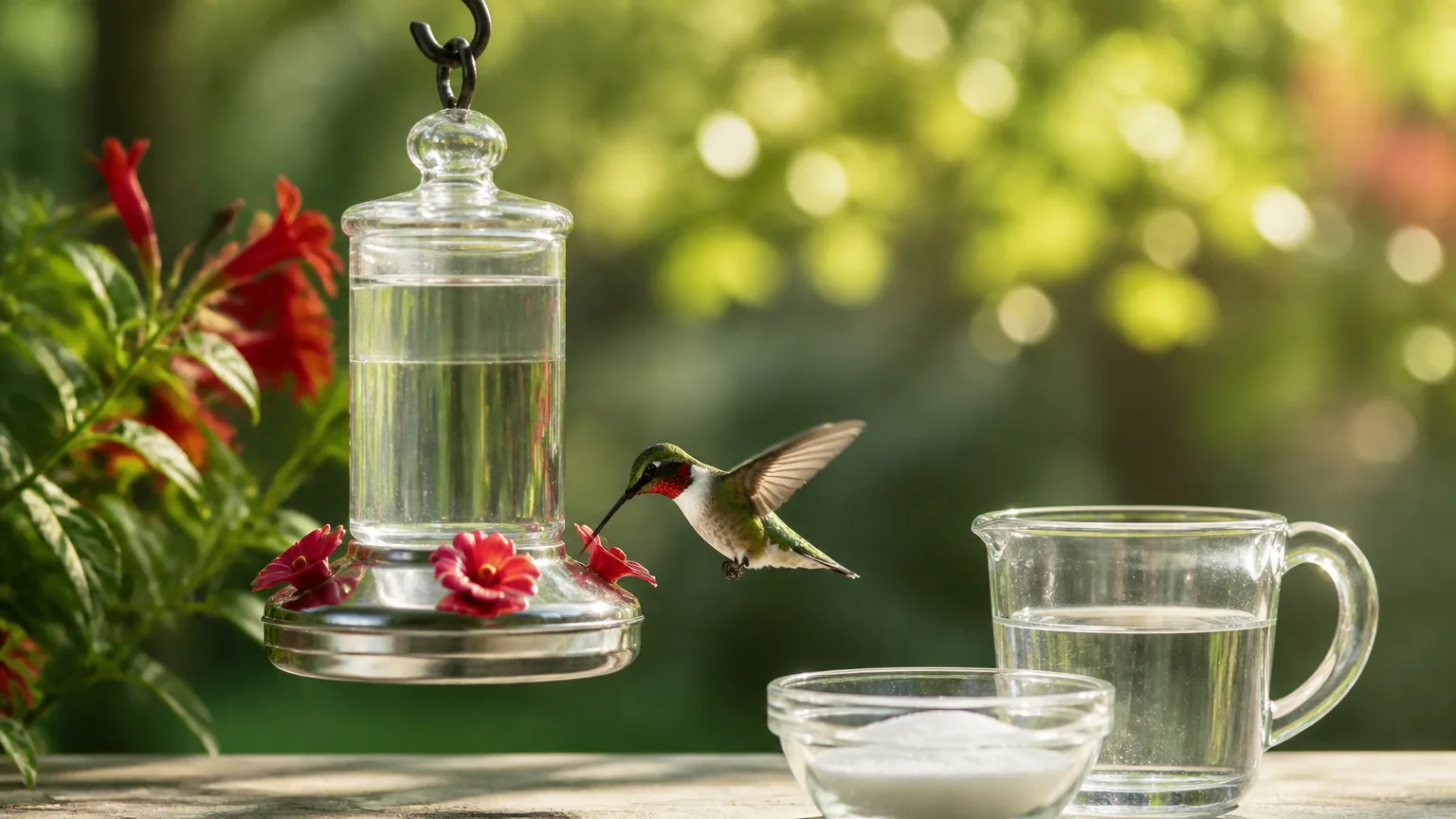
A reliable hummingbird food recipe starts with one part plain white granulated sugar to four parts water. For example, combine ¼ cup sugar with 1 cup water. Stir until the sugar dissolves, then let the nectar cool completely before filling a feeder.
The recipe is simple, but safe feeding also depends on fresh nectar and a clean feeder. Replace nectar regularly, and clean the feeder between refills to help prevent mold and fermentation. In hot weather, nectar can spoil faster, so check it daily and change it if it looks cloudy or smells off.
Homemade nectar supplements a hummingbird’s natural diet; it does not replace it. Hummingbirds also feed on small insects and spiders, which provide nutrients nectar does not. Use this mixture only for hummingbirds—not as human food or general-purpose animal feed. Avoid honey, artificial sweeteners, and food coloring.
Caring for birds is a practical act of attentiveness: prepare the right mixture, keep the feeder sanitary, and observe how quickly birds use it. Whether you found this recipe through Hare Krishna Recipes or another source, spiritual practice or vegetarian cooking does not change the basic safety requirements. Simple ingredients and consistent care help make a feeder a safer, more dependable food source.
The Safe Hummingbird Nectar Recipe and Exact Measurements
A safe hummingbird food recipe uses only white granulated sugar and water. Measure both by volume: use one cup of sugar for every four cups of water. Keep that ratio for any batch size; do not add extra sugar to make nectar sweeter.
Choose a batch that matches your feeder and how quickly birds use it. For example, make one cup of nectar with ¼ cup sugar and one cup water. For a larger amount, combine two cups of sugar with eight cups of water.
- Measure the sugar and potable water with clean tools.
- Warm some or all of the water until it is hot, but it does not need to boil.
- Stir in the sugar until it dissolves completely. If you warmed only part of the water, add the remaining measured water afterward.
- Let the mixture cool fully to room temperature before filling the feeder.
Heating water helps sugar dissolve, but prolonged boiling is unnecessary. It does not improve the recipe, and hot nectar must never go into a feeder. Allow enough cooling time before use; if you need to prepare nectar quickly, use cool water and stir until the sugar dissolves.
Use plain white granulated sugar. Do not substitute honey, brown sugar, raw sugar, artificial sweeteners, or flavored products. These ingredients can spoil more quickly or provide an unsuitable mixture for hummingbirds. Food coloring is also unnecessary: feeder color can attract birds without adding dye to the nectar.
Prepare only as much nectar as you expect to use before it spoils. A small feeder or low-traffic location may need a smaller batch, while a busy feeder may use more. Check the nectar regularly, and replace it if it becomes cloudy, develops an unusual smell, or shows signs of mold. Warm conditions can make nectar spoil faster, so avoid filling a feeder with more than birds are likely to drink soon.
Keep extra preparation simple and consistent. Use clean measuring cups and a clean container, and start with safe drinking water. If you make a larger batch, store the unused portion covered in the refrigerator and check it before refilling. Clean the feeder before adding fresh nectar; fresh ingredients cannot make a dirty feeder safe.
Why the Four-to-One Ratio Matters
A four-to-one ratio means mixing four parts water with one part plain white granulated sugar. For example, combine four cups of water with one cup of sugar. This simple mix is a commonly recommended starting point for homemade hummingbird nectar.
The ratio provides a practical nectar substitute without trying to make the mixture richer than necessary. Adding more sugar may seem like a way to attract more birds, but a stronger mix is not a safer or more reliable choice. Follow the standard ratio rather than experimenting with extra sugar or concentrated recipes.
Ingredient choice matters as much as measurement. Use plain white granulated sugar, and avoid honey, brown sugar, raw sugar, and specialty sugars labeled organic. These products can contain other substances or behave differently in water. Artificial sweeteners do not provide the sugar energy hummingbirds need, so they are not suitable substitutes.
Avoid commercial nectar products that contain dyes or other additives. Red dye is unnecessary; the feeder itself can provide a visible cue. A straightforward hummingbird food recipe needs only sugar and water, along with clean preparation and regular feeder care.
Nectar is only one part of a hummingbird’s diet. Birds also feed naturally on insects and other small invertebrates, which provide nutrients that sugar water does not. A feeder should supplement natural food sources, not replace them. This is different from choosing a complete diet for a pet; for comparison, see a guide to guinea pigs’ food.
Keep the recipe consistent and let birds forage naturally. If you want to make more nectar, scale up the same four-to-one ratio rather than changing the proportions. Then store any unused mixture safely and clean the feeder before refilling, as described above.
Ingredients and Additives to Avoid
A safe hummingbird food recipe uses only plain white granulated sugar and water in the recommended proportion. Do not add pantry ingredients to change the flavor, color, or nutritional value. Hummingbirds need nectar for energy, while flowers and small insects provide other parts of their natural diet.
Honey is not a safe substitute for sugar. It can ferment quickly in a feeder and support harmful microbial growth, which may put birds at risk. Brown sugar, raw sugar, and other less-refined sugars are also unsuitable. They may contain minerals or other components that are not appropriate for this recipe.
Avoid adding anything beyond sugar and water, including:
- Red food coloring or other dyes
- Flavorings, extracts, or spices
- Vitamins, supplements, or electrolyte products
- Artificial sweeteners, including stevia and sugar substitutes
These additions are unnecessary and may make the nectar unsafe. Artificial sweeteners also do not provide the sugar energy hummingbirds need. Even products marketed as natural or beneficial for people are not automatically safe for birds.
You do not need to make nectar red to attract hummingbirds. If you want a visible color cue, choose a feeder with a red part or place it near flowering plants. The nectar itself should remain clear.
Keep the recipe focused on bird safety rather than adapting it to human food preferences. Vegetarian, devotional, or other dietary practices do not change which ingredients are appropriate for a hummingbird feeder. Recipes for people and animals also have different safety requirements; for comparison, follow safe preparation basics for homemade cat food when preparing meals for cats.
When in doubt, leave an ingredient out. Use the same sugar-to-water ratio each time, and do not try to improve the mixture with extra ingredients. Safe nectar depends on simple preparation, a clean feeder, and regular replacement—not colorants or homemade substitutions.
How to Clean, Fill, and Place a Hummingbird Feeder
A safe hummingbird food recipe is only part of good feeder care. Wash the feeder whenever you change the nectar, and clean it regularly between refills. Follow the manufacturer’s instructions, since feeder parts and cleaning methods can vary.
Take the feeder apart as directed and clean each part thoroughly. Rinse away all soap and cleaning residue before adding fresh nectar. Even a small amount left behind can contaminate the mixture, so rinse carefully and let the parts drain before reassembly.
Fill Only What Birds Can Use
Add enough fresh nectar for the birds’ likely needs, rather than filling the feeder to its maximum capacity every time. A crowded feeder can leave nectar sitting longer than necessary. Start with a modest amount, observe how quickly birds use it, and adjust the next refill.
Check the nectar and feeder between cleanings. If the mixture looks cloudy, smells unusual, or shows signs of spoilage, discard it and clean the feeder before refilling. Do not top off old nectar with a fresh batch; empty and wash the feeder first.
Use clean utensils and a clean container when handling nectar, just as you would when preparing safe vegetarian options for dogs. Keep food intended for different animals separate, and do not use ingredients or preparation methods meant for one species in another animal’s food.
Choose a Safer, Shadier Location
Place the feeder in shade where possible. Direct sun can warm nectar more quickly, while a shaded spot may help it stay fresh longer. Choose a location that birds can reach easily but where predators, such as cats, cannot readily ambush them.
Consider windows before hanging the feeder. Avoid spots where birds may fly directly into glass, especially along clear flight paths between the feeder and nearby trees or shrubs. If you cannot avoid a risky window, use effective window markers or other collision-prevention measures.
The goal is a clean, accessible feeding station—not a feeder crowded with excess nectar. Regular washing, careful rinsing, modest refills, and thoughtful placement help support safer feeding. Keep the four-to-one sugar-and-water ratio unchanged; good feeder care, rather than extra ingredients, helps make homemade nectar dependable.
How Often to Change Nectar and Store Leftovers
Check your feeder at least once a day, even when the weather is mild. Warm temperatures, direct sunlight, and a feeder’s exposure to heat can make nectar spoil faster. As a cautious routine, replace nectar every two to three days in mild weather and daily during hot weather. If the feeder sits in full sun or temperatures are especially high, check it more often and change the nectar sooner.
Use the nectar’s condition—not just the calendar—to guide your decision. Discard it immediately if it looks cloudy, smells sour or otherwise unusual, shows mold, or has attracted insects. Do not top up old nectar with a fresh batch; empty the feeder, clean it, and refill it with fresh mixture.
Cleaning matters whenever you change nectar, especially if it has spoiled. Take the feeder apart as directed by its manufacturer, wash it thoroughly, and rinse away all soap before refilling. Check small openings and feeding ports, where residue or mold can collect. Fresh nectar will not make a dirty feeder safe.
Make only as much of your hummingbird food recipe as you expect to use soon. Smaller batches can reduce waste, particularly during hot weather or when birds visit infrequently. If you have more nectar than the feeder needs, pour the unused portion into a clean, sealed container and refrigerate it briefly.
Before using refrigerated nectar, check that it still looks and smells normal. If its storage time or freshness is uncertain, discard it rather than risk using it. Do not leave the mixture at room temperature for extended periods, and do not return nectar from the feeder to the storage container. Once nectar has been outdoors, it may contain dust, insects, or other contaminants.
A simple routine helps keep feeding consistent:
- Check the feeder daily for signs of spoilage or insects.
- Replace nectar more frequently in heat or direct sun.
- Clean and rinse the feeder before every refill.
- Refrigerate unused nectar in a clean, sealed container, and discard it if freshness is uncertain.
Regular checks help prevent spoiled nectar from remaining in the feeder. Adjust the schedule to the weather and feeder conditions, and refill with fresh mixture as needed.
Troubleshooting: Fermentation, Mold, Ants, and Few Visitors
A quiet feeder or a change in nectar’s appearance does not automatically mean your hummingbird food recipe needs different proportions. Keep the sugar-to-water ratio unchanged, and address problems by checking freshness, cleaning, and feeder placement.
Discard spoiled nectar and clean the feeder
If nectar looks cloudy, shows visible mold, smells unusual, or appears to be fermenting, discard it immediately. Do not taste it, strain it, or try to salvage it by adding fresh nectar. Wash the feeder thoroughly according to its care instructions, rinse it well, and let it dry before refilling.
Warm weather can make nectar spoil faster, so inspect it often and replace it when needed. If the same feeder spoils quickly, use smaller refills and clean it more frequently rather than changing the recipe.
Reduce ants and other insects safely
Ants may reach a feeder through its hanging hook, pole, or nearby branches. Move the feeder away from connecting surfaces, trim branches that touch it, and wipe up spills around the feeding area. A feeder with a built-in ant moat can also help; keep the moat clean and filled as directed.
Avoid pesticides and insecticides near feeders, flowers, or other bird-feeding areas. These products can expose birds and beneficial insects to harmful chemicals. Use non-toxic maintenance and placement adjustments instead of stronger nectar or unverified remedies.
Give hummingbirds time to visit
Few visitors do not necessarily signal a problem with the recipe. Hummingbird activity changes with migration, season, local habitat, and the flowers available nearby. Birds may also need time to discover a new feeder.
Keep the feeder clean, place it where birds can find it, and continue to provide natural forage by planting suitable flowers when possible. Resist the urge to add coloring, honey, or other ingredients to attract more birds; a simple, correctly prepared nectar is the safer choice.
A feeder is one small part of a broader food environment. If you are also planning a meal for guests, explore these vegetarian appetizer recipes, while keeping food preparation separate from feeder care.
Frequently Asked Questions
Can I use tap water for hummingbird food?
Yes, if your tap water is safe to drink. Use clean measuring cups and a clean container, and follow the same four-to-one recipe: four parts water to one part plain white granulated sugar. If your water is not safe for drinking, use safe drinking water instead.
Avoid adding extra ingredients or changing the ratio to compensate for water quality. The recipe works best when it stays simple, and clean equipment helps prevent contamination.
Can I make nectar without heating the water?
Yes. Heating is not required, but the sugar must dissolve fully before you fill the feeder. Stir the mixture well; if the water is cold and the sugar is slow to dissolve, warm the water slightly.
Let warm nectar cool completely before putting it in the feeder. Never pour hot or warm mixture into a feeder for birds. Whatever method you use, keep the four-to-one ratio unchanged and prepare the nectar with clean utensils.
Do I need to add red dye?
No. Red dye is unnecessary, and it does not improve the nectar. Many feeders already have red parts that help birds locate them, so the mixture itself can remain clear.
Use only plain white granulated sugar and water. Do not add food coloring, honey, artificial sweeteners, or other ingredients. A safe hummingbird food recipe relies on the correct proportions and good feeder care—not color or flavor additions.
How long can nectar stay in a feeder?
There is no single safe time limit for every feeder. Temperature, direct sun, humidity, and feeder cleanliness all affect how quickly nectar can degrade. Hot weather can shorten the time it remains fresh, while cooler conditions may slow changes.
Check the feeder regularly, and replace the nectar if it looks cloudy, smells unusual, or contains visible debris. Do not wait for obvious signs of spoilage if conditions are warm or the feeder is exposed to sun. When freshness is uncertain, discard the mixture.
Clean and rinse the feeder before each refill; adding fresh nectar to a dirty feeder does not make it safe. In warm weather, check it daily and adjust how often you refill based on the conditions and how quickly birds use it. Store unused nectar covered in a clean container in the refrigerator, and make fresh batches as needed.
A Simple Recipe, Made Safer by Good Habits
A safe hummingbird food recipe needs only plain white sugar and water. Mix one part sugar with four parts water, keeping the ratio unchanged. Skip dyes and other additions; they are not needed for homemade nectar.
Good care matters as much as the recipe. Clean and rinse the feeder before every refill, and replace nectar regularly. In warm weather, check it daily and refresh it sooner if it becomes cloudy or dirty. Store unused nectar covered in a clean container in the refrigerator, and discard it if you are unsure it is fresh.
A feeder is only one part of a welcoming habitat. Plant suitable nectar-producing flowers, and help keep the area safe by reducing risks such as window collisions and exposure to pesticides. These steps give hummingbirds more ways to find food and shelter.
Some people may also see mindful care for living creatures as a personal or spiritual practice. Whatever your perspective, sound wildlife guidance comes first: keep the nectar simple, the feeder clean, and the birds free to forage naturally.