
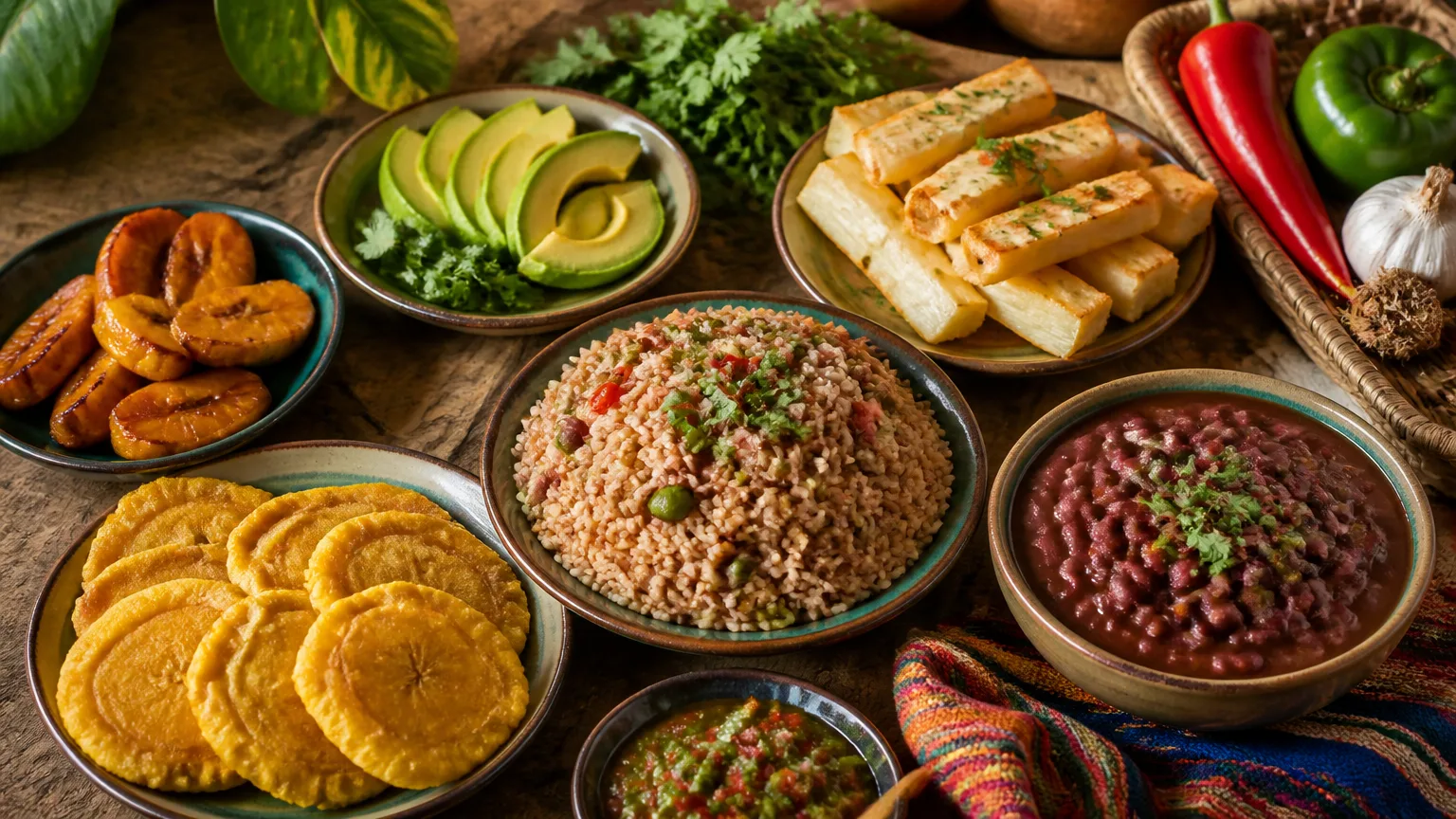
Popular Puerto Rican food is built on plantains, beans, rice, root vegetables, fresh herbs, and warming spices. This guide reimagines that vibrant heritage through 15 vegetarian dishes, including naturally meat-free recipes and thoughtful adaptations. For broader culinary context, explore traditional Puerto Rican food.
Each dish preserves the island’s bold flavors while fitting vegetarian and devotional kitchens. Check broths, seasonings, and packaged ingredients for hidden animal products. Cooking fresh food mindfully can become an act of care and gratitude. Hare Krishna readers may also offer each preparation to Krishna according to their personal practice.
1. Arroz con Gandules
Arroz con gandules is a signature of popular Puerto Rican food and a naturally adaptable vegetarian centerpiece. Sofrito builds deep flavor, while annatto oil, sweet peppers, olives, and herbs give the rice its golden color and savory character. Use vegetable stock or water instead of meat-based broth; the aromatic sofrito provides plenty of depth.
Pigeon peas add plant-based protein and a satisfying bite. For prasadam, prepare the dish without onion and garlic according to your devotional standards. Serve it with vegetables or beans, and explore more ideas in this vegetarian A–Z guide.
2. Mofongo de Vegetales
Mofongo de vegetales offers a hearty vegetarian take on popular Puerto Rican food. Traditionally, cooks mash fried green plantains in a pilón with garlic-free seasoning and vegetable stock. This creates the dish’s signature rustic, textured bite.
For a lighter preparation, roast the plantains before mashing them. Fill the mofongo with sautéed mushrooms, jackfruit, or seasoned vegetables instead of pork cracklings. Serve it with a bright tomato or pepper-based sauce to balance the plantains’ richness. Check packaged stock and seasonings for hidden animal products when preparing it for vegetarian or devotional kitchens.
3. Tostones with Avocado and Bean Toppings
Tostones turn green plantains into a crisp, naturally vegetarian base for a colorful appetizer or light meal. Slice and fry the plantains once, then press each piece flat before frying it again. This second cook creates their signature crunchy edges and tender centers.
Top tostones with mashed avocado, seasoned black beans, and fresh pico de gallo. For contrast, add a cooling coconut-based sauce. This popular Puerto Rican food is naturally shareable for gatherings and devotional feasts. For prasadam, prepare the toppings according to your personal standards and offer the dish mindfully.
4. Amarillos with Beans and Rice
Amarillos are ripe plantains, fried until their natural sugars caramelize and their edges turn golden. Unlike green plantains, which are firm and savory for tostones, ripe plantains offer a soft, honeyed sweetness.
Serve them with rice and black beans, red beans, or pigeon peas seasoned with sofrito and herbs. The sweet-savory contrast makes this popular Puerto Rican food feel festive with little effort. For vegetarian or devotional kitchens, check broths and seasonings for hidden animal products.
5. Habichuelas Guisadas
Habichuelas guisadas are comforting, budget-friendly stewed beans that can anchor a vegetarian meal. Simmer beans with tomato, pumpkin or squash, potatoes, peppers, sofrito, cumin, and fresh herbs to build layered flavor.
Gentle cooking develops a rich broth without ham, bacon, or meat stock. Serve these popular Puerto Rican food staples with rice, avocado, sweet plantains, or steamed greens for a complete plate. For vegetarian or devotional kitchens, check packaged seasonings and broth for hidden animal products.
6. Vegetarian Pasteles
Pasteles are labor-intensive masa parcels traditionally prepared for celebrations and family gatherings. The masa combines grated green banana, yautía, plantain, or other tropical roots, creating a tender, earthy wrapper.
For a vegetarian filling, use lentils, chickpeas, mushrooms, jackfruit, or seasoned vegetables with sofrito and herbs. Families often prepare pasteles together, turning the process into a communal tradition connected to festivals and holiday cooking. Steam the wrapped parcels until the masa is firm. Check seasonings and fillings for hidden animal products when preparing this popular Puerto Rican food for vegetarian or devotional kitchens.
7. Alcapurrias de Yautía y Plátano
Alcapurrias feature a grated yautía-and-plantain dough wrapped around a savory vegetarian filling. Shape each one into a smooth oval, then fry until the exterior becomes crisp and golden.
Choose beans, lentils, soy-based crumbles, or seasoned mushrooms for the center. Sofrito, herbs, peppers, and spices add depth while keeping this popular Puerto Rican food meat-free.
For a lighter method, bake or air-fry the alcapurrias. These options reduce oil, but the texture will differ from the traditional fried version. Check packaged seasonings for hidden animal products in vegetarian or devotional kitchens.
8. Vegetarian Empanadillas
Puerto Rican empanadillas are flexible handheld turnovers with crisp, golden dough. Fill them with sofrito vegetables, potatoes, spinach, pumpkin, lentils, seasoned jackfruit, or cheese for a satisfying vegetarian version of this popular Puerto Rican food.
Cool the filling completely before sealing the dough. Warm filling can soften the pastry and cause leaks during frying or baking. Crimp the edges firmly with a fork, then fry, bake, or air-fry until golden.
For a fully vegetarian preparation, check the pastry ingredients carefully. Some commercial doughs contain lard. Also review packaged seasonings and fillings for hidden animal products.
9. Sancocho de Vegetales
Sancocho de vegetales reimagines Puerto Rico’s hearty stew as a nourishing, meat-free meal. Build the broth with vegetable stock, sofrito, cilantro, culantro, and natural starch released by the roots.
Combine yuca, yautía, green banana, pumpkin, potatoes, and corn for varied textures and gentle sweetness. Beans add protein and make this popular Puerto Rican food especially satisfying.
Prepare the stew in a large pot for communal meals, family gatherings, or devotional feasts. For prasadam, adjust the sofrito and seasonings according to your personal standards, and check packaged ingredients for hidden animal products.
10. Asopao de Vegetales
Asopao de vegetales is a comforting, soup-like rice dish that absorbs the flavors of sofrito, herbs, and fresh vegetables. Unlike arroz con gandules, the rice should remain tender and brothy, not dry or separate.
Add mushrooms, peas, carrots, corn, chickpeas, or plant-based protein for substance. Season gently so the broth’s herbs and vegetables remain prominent. Serve this popular Puerto Rican food hot, especially during cool evenings or communal meals. For vegetarian or devotional kitchens, check broth and packaged seasonings for hidden animal products.
11. Ensalada de Coditos Vegetariana
Ensalada de coditos is a creamy, colorful side dish and a familiar example of popular Puerto Rican food. Combine cooked macaroni with carrots, peas, bell peppers, celery, and sweet corn for contrasting colors, textures, and mild sweetness.
For a vegetarian dressing, mix mayonnaise with a little mustard and lime juice. Use vegan mayonnaise for a dairy-free or egg-free option, or blend soaked cashews with water for a creamy alternative.
Chill the salad for at least one hour before serving. This resting time melds the flavors, firms the vegetables, and makes the dish practical for potlucks, family gatherings, and devotional meals. Check packaged ingredients for hidden animal products.
12. Arroz con Vegetales
Arroz con vegetales offers an approachable entry point for cooks new to Puerto Rican recipes. Sofrito, annatto, sweet peppers, peas, and fresh herbs give the rice its signature color and savory depth.
Use seasonal vegetables such as carrots, corn, green beans, or squash. Sauté them briefly, then simmer the rice gently so each grain stays fluffy and well-seasoned. Serve it with beans, tostones, or a simple salad. If you are exploring low carb recipes for dinner, serve a smaller rice portion with extra vegetables and beans.
13. Guanimes de Maíz
Guanimes de maíz are comforting cornmeal dumplings or cakes made from simple pantry staples. Prepare a soft, shapeable dough that holds together without becoming dry or crumbly. Form small portions, then cook them until tender and firm enough to serve.
Pair guanimes with stewed beans, tomato-based vegetables, or a savory coconut milk sauce. Their mild flavor absorbs rich seasonings and adds substance to a vegetarian plate. This humble preparation shows why popular Puerto Rican food can be both nourishing and practical. For devotional kitchens, check seasonings and sauces for hidden animal products.
14. Tembleque de Coco
Tembleque de coco brings a delicate finish to a meal. This traditional pudding combines coconut milk, starch, sugar, cinnamon, and a small pinch of salt.
As the mixture chills, the starch sets the coconut milk into a softly trembling texture. Dust the surface with cinnamon before serving for a fragrant, polished finish.
Tembleque also reflects mindful hospitality. A small, sweet offering can conclude a meal warmly without requiring elaborate ingredients. For vegetarian or devotional kitchens, check packaged coconut milk and starch for hidden animal products.
15. Arroz con Dulce
Arroz con dulce closes this list with a creamy Puerto Rican coconut rice pudding. Cook rice slowly with coconut milk, cinnamon, ginger, cloves, raisins, and other warm spices. This gentle process lets each grain absorb the fragrant liquid and develop deep flavor.
Serve it spoonable and creamy, or chill it until firm enough to slice. This celebratory vegetarian dessert suits festivals, family gatherings, and Hare Krishna Fourth of July recipes for a broader devotional feast. Check packaged ingredients for hidden animal products before serving.
Bringing Puerto Rican Vegetarian Flavor to a Spiritual Table
These 15 dishes show that popular Puerto Rican food offers abundant vegetarian possibilities. Rice and beans, plantains, root vegetables, savory pastries, and coconut desserts create meals with color, texture, and satisfying depth.
Begin with an accessible dish, such as habichuelas guisadas, arroz con vegetales, or tostones. Once you feel comfortable, try more involved preparations, including pasteles. Each recipe rewards patience, practice, and thoughtful preparation.
Ingredient awareness remains essential. Replace meat-based stock and lard with suitable vegetarian options, and check seasoning blends for hidden animal products. These small choices protect the dish’s integrity and support your dietary or devotional standards.
Most importantly, let the meal become an opportunity for gratitude and generous sharing. Prepare each dish intentionally, then readers practicing bhakti can offer the completed food to Krishna according to their tradition before serving it to others.