
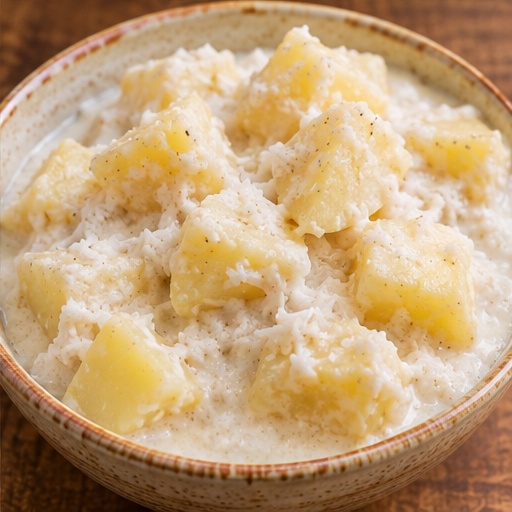
Tender potatoes in a light, coarsely blended fresh coconut gravy with optional rock salt and black pepper, without tomato, grains or legumes.
For food-taking Ekadasi observance, not a complete fast. Confirm permitted vegetables, dairy, nuts, fasting flours, makhana and seasonings with your temple. Cumin is accepted by many ISKCON communities but not by all Gaudiya traditions; omit it where restricted. Use fresh pure ghee, pure ingredients and utensils free from cereal grain and legume residues.
A tomato-free potato sabji
This preparation offers a gently moist potato dish without tomato or yogurt. Freshly blended coconut gives the cooking liquid a light texture. It is different from dry Sukha Aloo and from the existing tomato-based Aloo Tamatar Sabji. No commercial masala, hing or legume-derived ingredient is needed.
Choose fresh coconut
Use plain unsweetened grated coconut, fresh or previously frozen and thawed in the refrigerator. Avoid sweetened flakes or products blended with cereal starch. A small blender or mortar makes a textured paste. Unlike a canned coconut milk curry, this version retains the fine coconut solids in the sauce.
Add the paste near the end
Potato cubes should be nearly tender before adding the thick coconut mixture, which can stick to the pan if cooked too long. Add water gradually as needed and stir with a broad spoon. The gravy is meant to coat the potatoes rather than become a soup. Use only permitted optional seasonings and clean cookware.
Bhakti Thought
Let the simplicity of the meal support hearing, chanting and remembering Krishna. Prepare only what your observance permits, reserve a clean offering before tasting, and share prasadam with care.
PrintEkadasi Potato Sabji (Aloo with Fresh Coconut Gravy)
Tender potatoes in a light, coarsely blended fresh coconut gravy with optional rock salt and black pepper, without tomato, grains or legumes.
- Prep Time: 15 minutes
- Cook Time: 25 minutes
- Total Time: 40 minutes
- Yield: 4 servings 1x
- Category: Main course
- Method: Stovetop
- Cuisine: Indian-inspired
- Diet: Vegetarian
Ingredients
- 550 g peeled potatoes, cut into 2 cm cubes
- 1/2 cup fresh unsweetened grated coconut (40 g)
- 1 1/4 cups drinking water (300 ml), divided
- 2 teaspoons fresh pure ghee (9 g)
- 1/4 teaspoon pure rock salt (1.5 g), optional
- 1/8 teaspoon freshly ground black pepper (0.3 g), optional
- 1 teaspoon fresh lemon juice (5 ml), optional
US & metric measurements — original 1× batch
Use either measurement, not both. Equivalents are approximate; original specified weights are preserved. Counts, optional quantities and amounts to taste remain as written. This reference is for the original batch; multiply both quantities if scaling the recipe.
550 g (approx. 1.21 lb) peeled potatoes, cut into 2 cm (approx. 0.79 in) cubes
1/2 cup fresh unsweetened grated coconut (40 g)
1 1/4 cups drinking water (300 ml), divided
2 teaspoons fresh pure ghee (9 g)
1/4 teaspoon pure rock salt (1.5 g), optional
1/8 teaspoon freshly ground black pepper (0.3 g), optional
1 teaspoon fresh lemon juice (5 ml), optional
Approximate kitchen conversions: NIST and ingredient-specific baking weights.
Instructions
- Blend the fresh grated coconut with half a cup (120 ml) of the measured water to a slightly coarse paste.
- Place the potato cubes and remaining 180 ml water in a clean heavy saucepan. Cover and simmer until nearly tender, approximately 12–15 minutes; add hot water by the spoonful if the pot dries.
- Stir in coconut paste, optional rock salt and fresh ghee. Simmer gently for 5–8 minutes until the potato is fully tender and the gravy lightly coats the pieces.
- Add permitted pepper and lemon off the heat. Reserve an untouched offering and serve warm.
Notes
- Makes 4 reference portions. For food-taking Ekadasi observance, not a complete fast. Confirm permitted vegetables, dairy, nuts, fasting flours, makhana and seasonings with your temple. Cumin is accepted by many ISKCON communities but not by all Gaudiya traditions; omit it where restricted. Use fresh pure ghee, pure ingredients and utensils free from cereal grain and legume residues.
- Allergens: Coconut and milk-derived ghee.
- Estimated nutrients use representative ingredient values; minor seasonings omitted. Quantities, cook times and yield are not kitchen-tested.
- Ingredient quantities and cooking times are editorial estimates; confirm through kitchen testing.
- Nutrition values are estimates per serving unless otherwise specified.
Nutrition
- Serving Size: 1/4 of prepared batch
- Calories: 176
- Sugar: 1.9 g
- Sodium: 155 mg
- Fat: 5.7 g
- Saturated Fat: 4.4 g
- Unsaturated Fat: 1.3 g
- Trans Fat: 0.1 g
- Carbohydrates: 29.3 g
- Fiber: 3.4 g
- Protein: 3 g
- Cholesterol: 6 mg
Serving suggestions
Offer a small warm portion alongside a permitted fasting flatbread or plain yogurt. It is fine to omit lemon and pepper. This preparation is for devotees who take permitted food rather than those observing a full fast.
Storage and reheating
Refrigerate within two hours at 40°F (4°C) or below and consume within three days. Reheat until steaming hot throughout, adding a little water if needed. Fresh coconut dishes should not be left out for long periods.
Diet and nutrition
Contains coconut and dairy-derived ghee. All measured ingredients and optional salt are included in the approximate nutrient values. The quantity of water affects the finished serving weight but not the total energy of the ingredients.
Frequently Asked Questions
Does it contain tomatoes?
No; coconut supplies the body of the gravy.
Can I use dried coconut?
Plain unsweetened dried coconut can be soaked, but adjust quantities and liquid.
Can I make it without ghee?
Yes, if permitted, simmer the vegetables with water and coconut alone.
Why is the gravy thick?
Add hot drinking water in small amounts and stir gently.