
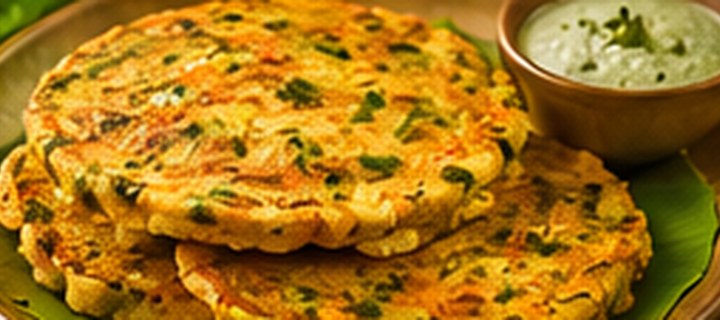
Mixed dal vegetable pancakes are savory breakfast crepes made from four soaked lentils and finely diced vegetables. The ground legumes form a substantial batter without eggs or flour, while ginger, turmeric and fresh vegetables provide flavor. This no-onion, no-garlic adaptation uses chana, moong, urad and toor dal rather than red lentils.
Why combine different lentils?
Each dal contributes a different texture. Urad dal helps the batter bind, while chana and toor dal contribute substance and yellow moong softens readily. Use split, dried dals rather than cooked canned legumes because the method depends on grinding soaked raw lentils into a batter that is subsequently cooked thoroughly on the griddle.
Preparing vegetables for even cooking
Dice carrots and beans into small pieces and soften them briefly before adding them to the batter. Drain the vegetables so they do not introduce excess water. Tomatoes can be used fresh, but avoid including a large amount of watery seed pulp. Smaller pieces are less likely to tear the pancake when it is turned.
Getting the batter and pan right
Grind the soaked lentils with a small amount of clean water and add more gradually. The batter should be thick enough to contain vegetables yet soft enough to spread. Cook small pancakes over medium heat so the lentils set all the way through before the exterior becomes overly dark. Do not eat uncooked lentil batter.
Bhakti Thought
Combining several modest ingredients into one nourishing preparation reflects the value of cooperation in service. Cook carefully and share with gratitude.
PrintMixed Dal Vegetable Pancakes
Savory mixed-lentil pancakes with carrots, green beans, tomato, ginger and mild spices. No onion, garlic, eggs or mushrooms.
- Prep Time: 25 minutes
- Dal soaking: 240 minutes
- Cook Time: 30 minutes
- Total Time: 295 minutes
- Yield: 6 servings 1x
- Category: Breakfast
- Method: Griddle
- Cuisine: Indian
- Diet: Vegan
Ingredients
- 1/4 cup chana dal (50 g)
- 1/4 cup split yellow moong dal (50 g)
- 1/4 cup split skinned urad dal (50 g)
- 1/4 cup toor dal (50 g)
- 1/2 cup finely diced carrot (60 g)
- 1/2 cup finely diced green beans (65 g)
- 1/2 cup finely diced tomato (90 g)
- 1 teaspoon grated ginger
- 1 small green chili, minced, optional
- 1/4 teaspoon turmeric
- 1/8 teaspoon pure asafoetida, optional (verify ingredients)
- 3/4 teaspoon fine salt (4.5 g)
- 1/4 teaspoon baking soda (1 g)
- About 1/2 cup water (120 ml), for grinding, plus more as needed
- 2 tablespoons neutral oil (28 g), for cooking
- Additional clean water for soaking
US & metric measurements — original 1× batch
Use either measurement, not both. Equivalents are approximate; original specified weights are preserved. Counts, optional quantities and amounts to taste remain as written. This reference is for the original batch; multiply both quantities if scaling the recipe.
1/4 cup chana dal (50 g)
1/4 cup split yellow moong dal (50 g)
1/4 cup split skinned urad dal (50 g)
1/4 cup toor dal (50 g)
1/2 cup finely diced carrot (60 g)
1/2 cup finely diced green beans (65 g)
1/2 cup finely diced tomato (90 g)
1 teaspoon (approx. 5 mL) grated ginger
1 small green chili, minced, optional
1/4 teaspoon (approx. 1.25 mL) turmeric
1/8 teaspoon (approx. 0.63 mL) pure asafoetida, optional (verify ingredients)
3/4 teaspoon fine salt (4.5 g)
1/4 teaspoon baking soda (1 g)
About 1/2 cup water (120 ml), for grinding, plus more as needed
2 tablespoons neutral oil (28 g), for cooking
Additional clean water for soaking
Approximate kitchen conversions: NIST and ingredient-specific baking weights.
Instructions
- Rinse the four dals and cover with clean water. Soak for 4 hours; refrigerate during soaking if the kitchen is very warm. Drain thoroughly.
- Steam or boil the finely diced carrot and green beans for 3–5 minutes until just tender, then drain and cool. Grind the soaked dals with ginger and part of the measured water to a fairly smooth, thick batter.
- Fold in the prepared vegetables, tomato, optional chili, turmeric, optional asafoetida and salt. Add a little water if needed so the batter spreads with a spoon. Stir in baking soda immediately before cooking.
- Heat a heavy griddle over medium heat. Brush with a thin coating of oil, spoon on about 1/4 cup batter and spread into a small pancake. Cook for 3–4 minutes until the edges set, then turn and cook another 2–3 minutes until the center is fully cooked.
- Make about 12 pancakes, using the remaining measured oil sparingly. Reserve a clean portion for offering before serving.
Notes
- Keep vegetable pieces small and cook the batter thoroughly; large wet pieces can prevent it setting.
- Check compounded asafoetida for onion, garlic, wheat or other unsuitable ingredients; omit if uncertain.
- Estimated nutrition assumes two pancakes and all measured oil.
- Ingredient quantities and cooking times are editorial estimates; confirm through kitchen testing.
- Nutrition values are estimates per serving unless otherwise specified.
Nutrition
- Serving Size: 1/6 of prepared batch
- Calories: 174
- Sugar: 2 g
- Sodium: 337 mg
- Fat: 5.2 g
- Saturated Fat: 0.7 g
- Unsaturated Fat: 4.3 g
- Trans Fat: 0 g
- Carbohydrates: 22.3 g
- Fiber: 5.2 g
- Protein: 8.2 g
- Cholesterol: 0 mg
Serving ideas
Two small pancakes make a practical portion for a breakfast platter. Pair with a homemade chutney or a mild vegetable dish, without onion or garlic. For a community meal, grind the dals ahead, refrigerate the batter, and add the vegetables and baking soda close to cooking time. Offer a portion before sharing.
Storage and reheating
Keep unused batter refrigerated and cook it within one day. Refrigerate cooked pancakes in a covered container within two hours and use within three days. Reheat on a skillet or in the oven until hot. If the pancakes become too soft, reheat on a lightly greased griddle rather than adding water.
Dietary and nutrition notes
The recipe is vegan and uses no wheat flour. Verify the asafoetida label and prevent gluten cross-contact if necessary. Because the base contains multiple legumes, it is not a standard Ekadasi recipe. Nutrition estimates are based on dry dal weights, vegetables and the measured oil; toppings and chutney are not included.
Frequently Asked Questions
Can I replace one dal with more moong dal?
Yes, but the binding and texture may differ. Add water only as needed.
Do the pancakes need fermentation?
No. The dals need soaking, but the batter is cooked after grinding and mixing.
Why does the batter fall apart?
Too much water, large vegetable pieces or turning before the bottom sets may cause tearing.
Can I make the recipe without hing?
Yes. Ginger and turmeric provide flavor without asafoetida.