
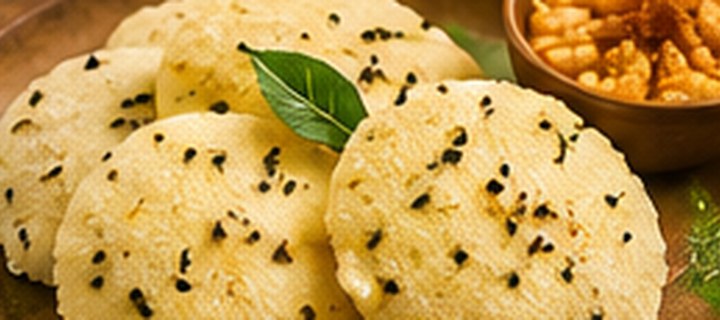
Kanchipuram dal idli is a spiced steamed breakfast cake inspired by a Tamil Nadu preparation using yellow split moong dal and urad dal. Pepper, cumin, ginger and curry leaves give the cakes a distinctive savory character, while cashews and a few raisins add texture. This is a particular dal-based variation rather than a claim that all Kanchipuram idlis are made without rice.
Choosing the two dals
Use yellow split moong dal and split, skinned urad dal for a smooth batter. Whole beans require different preparation and can result in a heavier texture. Rinse both thoroughly and soak until they soften. Grinding with limited water helps create a thick batter that can hold small air pockets during fermentation.
Developing a well-aerated batter
Fermentation depends on the temperature and the condition of the batter. A pleasantly tangy smell and a modest increase in volume are better indicators than a rigid schedule. Leave space at the top of the bowl, cover loosely and refrigerate the batter after it has fermented. Do not use an actively heated oven to speed up the process.
Adding the spices without losing air
Coarsely crushed pepper and cumin provide a stronger aroma than a large quantity of powdered spice. Heat them gently in ghee, then add the other ingredients in the order specified. Let the tempering cool slightly before folding into the batter. A few turns with a spatula are sufficient; vigorous stirring can deflate the mixture.
Bhakti Thought
The slow preparation of soaked lentils is a reminder that devotional cooking is not measured by speed alone. Care and patience are part of the offering.
PrintKanchipuram Dal Idli
A spiced Kanchipuram-style idli made from yellow moong dal and urad dal, with pepper, cumin, ginger, cashews and raisins. No onion or garlic.
- Prep Time: 30 minutes
- Soaking and fermentation: 840 minutes
- Cook Time: 25 minutes
- Total Time: 895 minutes
- Yield: 8 servings 1x
- Category: Breakfast
- Method: Steaming
- Cuisine: Tamil Nadu, South Indian
- Diet: Vegetarian
Ingredients
- 1 cup yellow split moong dal (200 g)
- 1 cup split skinned urad dal (200 g)
- About 3/4 cup water (180 ml), for grinding, plus more as needed
- 1 teaspoon fine salt (6 g)
- 1 tablespoon ghee (14 g)
- 1 teaspoon black peppercorns, coarsely crushed
- 1 teaspoon cumin seeds
- 1/4 teaspoon pure asafoetida, optional (verify ingredients)
- 1/2 teaspoon turmeric
- 1 tablespoon finely grated ginger
- 1 small green chili, minced, optional
- 8 fresh curry leaves, finely chopped
- 2 tablespoons chopped cilantro
- 1 tablespoon broken unsalted cashews (9 g)
- 1 tablespoon raisins (10 g)
- A little extra ghee to grease the molds (about 3 g)
- Clean water for soaking
US & metric measurements — original 1× batch
Use either measurement, not both. Equivalents are approximate; original specified weights are preserved. Counts, optional quantities and amounts to taste remain as written. This reference is for the original batch; multiply both quantities if scaling the recipe.
1 cup yellow split moong dal (200 g)
1 cup split skinned urad dal (200 g)
About 3/4 cup water (180 ml), for grinding, plus more as needed
1 teaspoon fine salt (6 g)
1 tablespoon ghee (14 g)
1 teaspoon (approx. 5 mL) black peppercorns, coarsely crushed
1 teaspoon (approx. 5 mL) cumin seeds
1/4 teaspoon (approx. 1.25 mL) pure asafoetida, optional (verify ingredients)
1/2 teaspoon (approx. 2.5 mL) turmeric
1 tablespoon (approx. 15 mL) finely grated ginger
1 small green chili, minced, optional
8 fresh curry leaves, finely chopped
2 tablespoons (approx. 30 mL) chopped cilantro
1 tablespoon broken unsalted cashews (9 g)
1 tablespoon raisins (10 g)
A little extra ghee to grease the molds (about 3 g (approx. 0.11 oz by weight))
Clean water for soaking
Approximate kitchen conversions: NIST and ingredient-specific baking weights.
Instructions
- Rinse both dals and soak for 6 hours in clean water, refrigerating if the kitchen is very warm. Drain thoroughly.
- Grind the dals in batches, adding water gradually until the paste is smooth, thick and aerated. Transfer to a large bowl with room for expansion, stir in salt and cover loosely.
- Ferment for approximately 8 hours at a moderate warm room temperature, until slightly risen and pleasantly tangy. Refrigerate when ready if you will not steam immediately; discard any batter showing mold, unusual discoloration or unpleasant odor.
- Heat the measured ghee in a small pan. Toast pepper and cumin briefly, then stir in cashews, turmeric, optional asafoetida, curry leaves, ginger and optional chili. Cool slightly. Fold the tempering and cilantro into the batter without beating out all the air.
- Bring the steamer water to a boil. Grease idli molds lightly, place a few raisins in each and fill about three-quarters full with batter. Steam for 15–20 minutes until set and a skewer comes out clean. Work in batches to make approximately 16 idlis. Rest briefly before removing and reserve a portion for offering.
Notes
- This is the dal-based Kanchipuram variation; other traditional Kanchipuram idlis use rice.
- Pepper and chili are reduced for a mild breakfast. Do not use onion- or garlic-containing spice mixes.
- Contains milk-derived ghee and cashews; check compounded hing for wheat and other ingredients.
- Nutrition assumes two idlis per serving; accompaniments excluded.
- Ingredient quantities and cooking times are editorial estimates; confirm through kitchen testing.
- Nutrition values are estimates per serving unless otherwise specified.
Nutrition
- Serving Size: 1/8 of prepared batch
- Calories: 205
- Sugar: 2.1 g
- Sodium: 305 mg
- Fat: 3.7 g
- Saturated Fat: 1.6 g
- Unsaturated Fat: 1.8 g
- Trans Fat: 0.1 g
- Carbohydrates: 31 g
- Fiber: 8.2 g
- Protein: 12.1 g
- Cholesterol: 5 mg
Serving ideas
Serve two warm idlis with a suitable coconut chutney or mild vegetable preparation. These cakes are more strongly spiced than plain idlis, so a simple accompaniment is usually enough. For a community breakfast, measure portions into identical molds and steam in batches, keeping prepared food at a safe temperature.
Storage and reheating
Refrigerate fermented batter promptly and use it within two days. Refrigerate cooked idlis within two hours and consume within three days. Steam leftovers briefly until hot; the texture generally holds up better with moist reheating. Avoid leaving the filled molds standing for long periods before steaming.
Allergens and dietary considerations
This recipe contains cashews and milk-derived ghee. Asafoetida may contain a wheat carrier, so inspect the label if gluten is a concern or omit it. Although this version uses no rice, the lentils are legumes and it is not suitable for the usual Ekadasi observance. Nutrition is estimated from dry dal weights and the measured fat and seasonings.
Frequently Asked Questions
Does Kanchipuram idli always contain rice?
No single variation represents every tradition. This particular recipe uses two dals rather than rice.
Can I omit the cashews?
Yes, omit them if necessary, especially when serving someone with a tree nut allergy.
Can I reduce the pepper?
Yes. Use half the pepper and omit green chili if a milder flavor is preferred.
Why are the centers wet?
Steam for longer and ensure the steamer has a steady supply of steam. Larger molds require more time.