
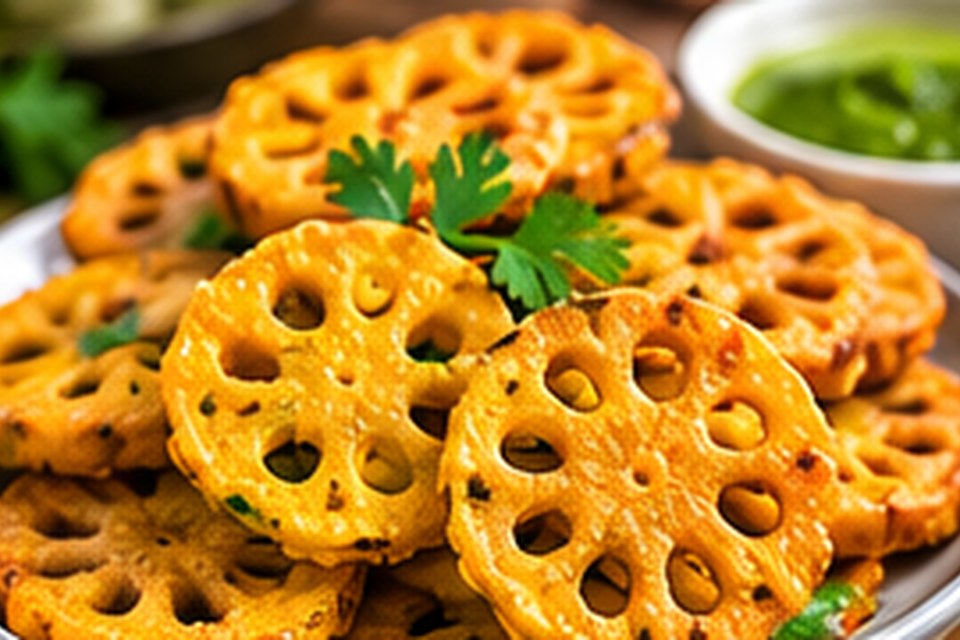
Lotus stem pakora is a crisp Indian vegetable fritter made from the edible rhizome of the lotus plant. When sliced crosswise, lotus root reveals its characteristic wheel-like pattern. A thin coating of chickpea flour, yogurt and spices gives it a savory crust while preserving the pleasantly firm texture of the vegetable. This preparation contains no onion or garlic.
Selecting and cleaning lotus root
Look for pale, firm roots without soft spots or a sour odor. Fresh lotus root requires careful cleaning because soil can remain in the natural channels. Peel and slice it before rinsing the holes under running water. Frozen plain lotus slices are an alternative when fresh roots are difficult to find. Read the package label to ensure that no seasoning or sauces have been added.
Why blanching helps
Lotus root is firmer than vegetables such as zucchini or eggplant. A brief blanch softens the slices slightly and helps the batter and vegetable finish cooking at the same time. Drain thoroughly and blot dry. Surface water will dilute the batter and may cause excess splattering when the slices enter hot oil.
Making a coating that stays crisp
Besan and plain yogurt give the fritter a substantial savory coating. Add water gradually instead of assuming that every brand of yogurt has the same consistency. A thin, even layer lets some of the root's distinctive shape remain visible. Ajwain and cumin contribute their own aroma without a commercial spice blend.
Bhakti Thought
The lotus is often associated with purity in devotional traditions. Washing and preparing its edible root carefully can become an opportunity to practice that same attention in service.
PrintLotus Stem Pakora (Kamal Kakdi Fritters)

Thin lotus root rounds in a spiced chickpea flour and yogurt batter, fried until golden and crisp without onion or garlic.
- Prep Time: 25 minutes
- Cook Time: 25 minutes
- Total Time: 50 minutes
- Yield: 6 servings 1x
- Category: Appetizer
- Method: Deep frying
- Cuisine: Indian
- Diet: Vegetarian
Ingredients
- 250 g peeled lotus root (kamal kakdi)
- 1 1/3 cups chickpea flour (besan; about 120 g)
- 1/2 cup plain unsweetened yogurt (120 g)
- 1/3 cup water (80 ml), plus 1–2 tablespoons if needed
- 1/2 teaspoon ajwain (carom seeds)
- 1/2 teaspoon cumin seeds
- 1/4 teaspoon turmeric
- 1/4 teaspoon mild red chili powder
- 3/4 teaspoon fine salt
- About 2 cups neutral frying oil (480 ml); approximately 35 g retained
US & metric measurements — original 1× batch
Use either measurement, not both. Equivalents are approximate; original specified weights are preserved. Counts, optional quantities and amounts to taste remain as written. This reference is for the original batch; multiply both quantities if scaling the recipe.
250 g (approx. 8.82 oz by weight) peeled lotus root (kamal kakdi)
1 1/3 cups (approx. 113 g) chickpea flour (besan; about 120 g (approx. 4.23 oz by weight))
1/2 cup plain unsweetened yogurt (120 g)
1/3 cup water (80 ml), plus 1–2 tablespoons (approx. 15–30 mL) if needed
1/2 teaspoon (approx. 2.5 mL) ajwain (carom seeds)
1/2 teaspoon (approx. 2.5 mL) cumin seeds
1/4 teaspoon (approx. 1.25 mL) turmeric
1/4 teaspoon (approx. 1.25 mL) mild red chili powder
3/4 teaspoon (approx. 3.75 mL) fine salt
About 2 cups neutral frying oil (480 ml); approximately 35 g (approx. 1.23 oz by weight) retained
Approximate kitchen conversions: NIST and ingredient-specific baking weights.
Instructions
- Peel the lotus root and cut into rounds about 1/8 inch (3 mm) thick. Rinse thoroughly, paying attention to the natural holes, and discard any damaged pieces.
- Bring a pot of water to a boil. Blanch the slices for 3–5 minutes until slightly tender but firm, then drain, cool and blot dry.
- Whisk the besan, yogurt, ajwain, cumin, turmeric, chili and salt. Slowly incorporate the measured water until the batter is smooth and coats a slice evenly. Adjust with a tablespoon of water at a time if needed.
- Heat oil in a heavy pan to 350°F (175°C), filling the vessel no more than halfway. Dip each dry slice in the batter, let excess drip off, and fry in small batches for 3–5 minutes, turning until golden and tender.
- Drain on a wire rack. Reserve a clean portion for offering before serving warm.
Notes
- Use fresh, firm lotus root or thawed, unseasoned frozen slices; do not use pre-seasoned products.
- Wash the natural cavities thoroughly and cook the lotus root before serving.
- Contains milk. Use plain yogurt without unsuitable additives.
- Nutrition assumes six portions, typical ingredient composition and about 35 g retained oil.
- Ingredient quantities and cooking times are editorial estimates; confirm through kitchen testing.
- Nutrition values are estimates per serving unless otherwise specified.
Nutrition
- Serving Size: 1/6 of the batch
- Calories: 175
- Sugar: 3.2 g
- Sodium: 312 mg
- Fat: 7.3 g
- Saturated Fat: 1.2 g
- Unsaturated Fat: 5.8 g
- Trans Fat: 0 g
- Carbohydrates: 20.3 g
- Fiber: 3.8 g
- Protein: 6 g
- Cholesterol: 3 mg
Serving and pairing
Serve warm as a starter with a suitable homemade herb or tamarind chutney. Lotus root provides a different texture from potato cutlets, so it is a useful addition to a mixed prasadam platter. Arrange the slices separately rather than stacking them while still steaming.
Storage and reheating
The root can be blanched in advance and refrigerated in a covered container, but dip it in batter only shortly before frying. Refrigerate cooked leftovers within two hours and use within three days. Reheat in an oven at 375°F (190°C) until hot and crisp. Avoid adding extra liquid during reheating.
Allergens and nutrition
This version contains yogurt and is lacto-vegetarian. The main batter is chickpea flour; confirm gluten-free processing if needed and avoid cross-contact. The nutrition figures use a representative lotus root, besan and yogurt composition and an estimate of absorbed oil. The actual amount of oil depends on frying temperature and coating thickness.
Frequently Asked Questions
Is kamal kakdi the same as lotus root?
Yes. Kamal kakdi commonly refers to the edible rhizome of the lotus plant.
Can I use frozen lotus root?
Yes. Thaw, rinse, cook until just tender and blot dry before coating.
Why do my fritters stay hard?
The slices may be too thick or insufficiently blanched. Use thin slices and soften them briefly first.
Can I use a different flour?
A little rice flour may replace some besan for a lighter crust, but besan supplies the main coating.