
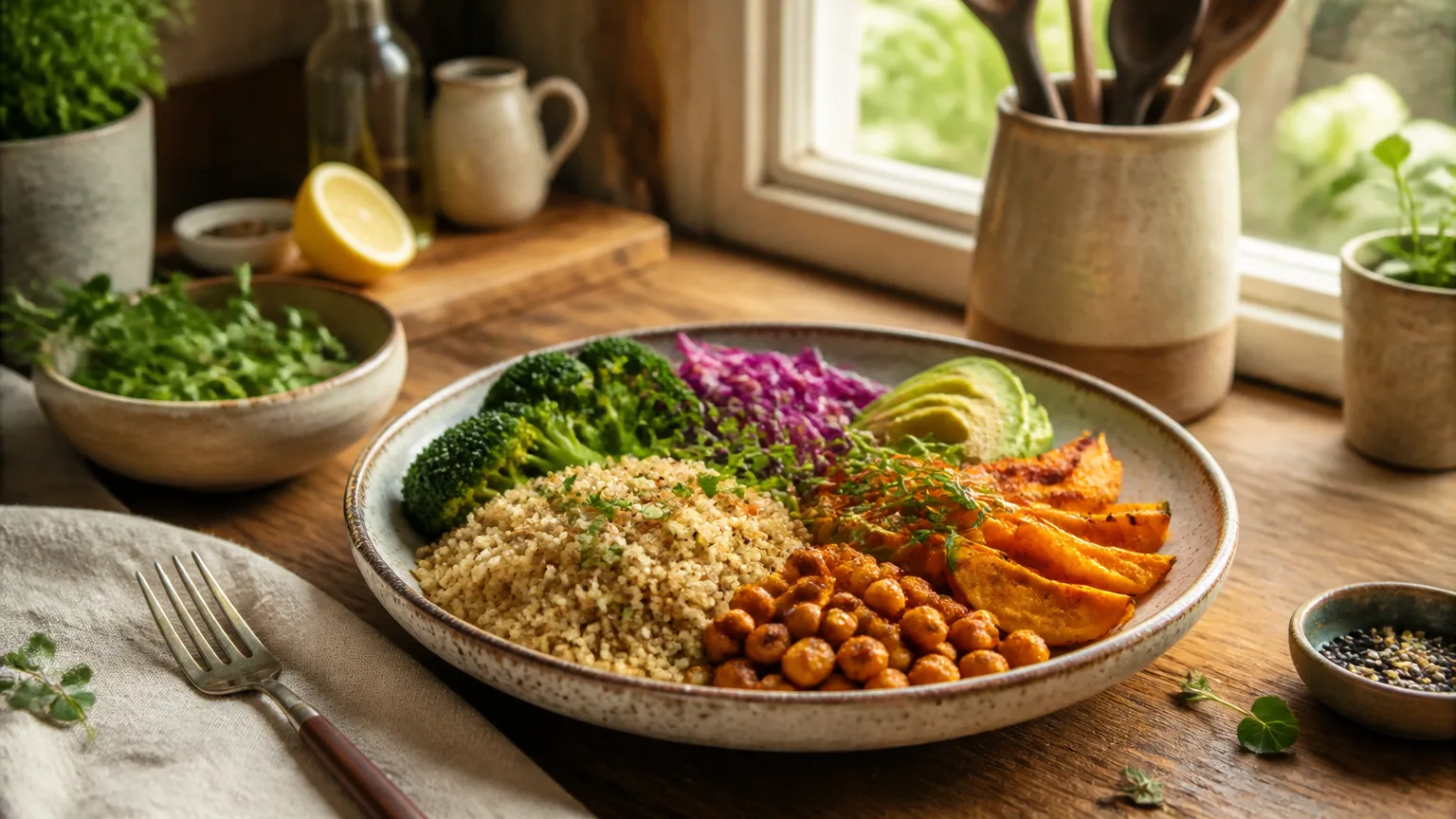
Searching for “courtney cooking” may lead to questions about who Courtney is, what kind of food she makes, and where her recipes appear online. Public information can help answer those questions, but it does not always confirm personal details or explain how different pages are connected.
This guide focuses on what readers can verify: Courtney’s public cooking presence, recipes they can locate, and the sources that publish them. It also considers the spiritual context that may matter to Hare Krishna audiences, including how a recipe’s ingredients or presentation relate to devotional cooking. Where information is unclear, the distinction between documented facts and assumptions matters.
Readers looking for a Hare Krishna food resource can also explore Hare Krishna Recipes. The aim here is to help you assess available sources and find recipes with confidence, without treating online claims as confirmed facts.
Who Is Courtney? What Readers Can—and Cannot—Confirm
The name “Courtney” may appear on a recipe website, in an author byline, or across linked social accounts. Those details can help readers identify the person behind the recipes, but they do not confirm a full biography. For a grounded picture of Courtney Cooking, start with information Courtney has published about herself.
Start with Courtney’s own profiles
An author bio or profile page is the strongest place to look for biographical details. It may explain Courtney’s role, cooking interests, or experience creating recipes. Treat those statements as self-reported information, and distinguish them from descriptions written by other websites.
Recipe introductions can provide more context. Courtney may describe why she developed a dish, how she prepares it, or when she serves it. These details help readers understand her approach to cooking, but they do not necessarily establish professional credentials, formal training, or personal background.
Check that linked accounts belong to the same author
A website may link to Courtney’s social media accounts. Check whether those accounts use the same name, refer to the recipe site, or link back to it. Consistent links make it easier to confirm that a profile is associated with the author, rather than someone else with a similar name.
Use the site’s own links where possible. Search results and third-party biographies may repeat claims without showing where they came from. If a third-party description adds details that Courtney’s own profiles do not mention, treat those details as unverified unless a reliable source supports them.
Separate published facts from assumptions
Readers should avoid filling gaps in the public record with guesses. A recipe’s ingredients, cultural references, or style do not, by themselves, confirm Courtney’s heritage, religious beliefs, or spiritual affiliation. If her published profiles do not explicitly state a background or affiliation, the accurate answer is that it is not confirmed by those sources.
The same care applies to her role. A byline or author page can show that Courtney is associated with published recipes, but it may not explain whether she develops, tests, photographs, or edits every dish. Look for direct descriptions before assigning those responsibilities.
For readers searching “courtney cooking,” the most useful approach is to compare the author bio, recipe introductions, and linked profiles. That provides a clearer view of what Courtney has shared publicly while keeping unverified claims separate from confirmed details.
What Courtney’s Cooking Is Known For
The most reliable way to describe Courtney’s cooking is to focus on what her public recipes show. Look at the ingredient lists, preparation steps, and recipe introductions rather than relying on broad labels attached to her name.
If a recipe uses vegetables, grains, beans, or dairy, those ingredients can support a vegetarian meal. They do not, by themselves, establish that the dish is sattvic, devotional, or connected to a particular spiritual practice. Those claims need clear support from Courtney’s own notes or other reliable sources.
How to assess the recipes
Start with the recipe itself. Check whether the ingredients are easy to find, whether the instructions explain each step, and whether the cooking time and equipment suit a home kitchen. A short ingredient list and clear directions can make a recipe approachable, but avoid attributing those qualities to Courtney unless her published recipes demonstrate them.
Then read any introduction or serving notes. Courtney may explain why she chose certain ingredients or how she prepares and offers a dish. Such context can indicate a devotional perspective when it is stated directly. Without that explanation, it is more accurate to describe the recipe by its ingredients and method.
This distinction matters because the same dish can be prepared with different intentions. A vegetarian curry, for example, may be an everyday meal for one cook and part of a devotional offering for another. The ingredients alone do not tell readers which practice applies.
Separate ingredients from intention
When exploring “courtney cooking,” use a simple evidence check:
Ingredients: Does the recipe clearly avoid meat, fish, or other ingredients relevant to your needs?
Method: Are the steps and cooking details practical for your kitchen?
Context: Does Courtney explicitly describe a devotional purpose, offering, or food practice?
Attribution: Is the recipe published on a profile or site that can be linked to her?
This approach also helps when comparing vegetarian food across cultures. For instance, vegetarian dishes from another culinary tradition may share plant-based ingredients while reflecting different histories and customs. Vegetarian does not mean culturally or spiritually identical.
Treat each recipe as its own source. If Courtney provides a clear note about its preparation or purpose, readers can use that information. If she does not, describe what is confirmed and leave the intention open rather than assigning a spiritual label.
Where to Find Courtney’s Recipes Online
Start with the website or publishing profile that identifies Courtney as the recipe author. An author bio, publication date, and consistent recipe format can help confirm that you are viewing a publisher’s original source. If you arrived through a general search for “courtney cooking,” check the site name and author details before treating a result as Courtney’s work.
Check the publisher’s author page and recipe index
Open the publisher’s author page to find Courtney’s posts in one place. It may include a short biography, links to recent recipes, or a note about the topics she covers. From there, use the site’s recipe index or category pages to browse by dish type, ingredient, or meal.
If the site has a search tool, enter a specific phrase, such as “Courtney lentil soup” or the recipe title you remember. Search results may show a short preview, but a snippet is not the full recipe and can omit important details. Open the original post to read the ingredients, instructions, serving notes, and any updates.
Follow official profiles back to original posts
Courtney’s social profiles can help readers discover new recipes, but verify that a profile is official before relying on it. The safest route is to follow a social link from the publisher’s website or author page. A matching name or profile photo alone does not confirm that an account belongs to the author.
Social posts may share recipe photos, quick tips, or excerpts. When a post links to a full recipe, use that link to return to the original publication. Reposts, screenshots, copied captions, and search snippets can leave out measurements, substitutions, or context. They should not replace the source post when accuracy matters.
Use related resources for ingredient questions
For a specific cooking question, check the recipe itself first. Courtney may provide substitutions or explain how an ingredient affects texture and flavor. If the post does not address your question, a separate resource can offer background without establishing what Courtney recommends.
For example, readers exploring meat-free cooking fats can review these vegetarian alternatives to lard. Treat that article as a related reference, not as a substitute for Courtney’s own recipe notes.
A practical search route is:
- Start at the publisher’s site or Courtney’s linked author profile.
- Browse the author page, recipe index, or site search.
- Open the original recipe post and check its date and instructions.
- Verify social accounts through links from the publisher.
- Use reposts and snippets as discovery aids, not as the final source.
How to Choose a Recipe That Fits Your Kitchen and Practice
Once you have opened the original recipe, assess whether it suits your household before you start cooking. A recipe can look appealing online but still require ingredients, equipment, or preparation steps that do not fit your needs. Read the full ingredient list and instructions, not just the title or preview.
Check each ingredient against your dietary needs and personal preferences. Look for items you avoid, such as dairy, nuts, onion, or garlic, and check labels on packaged foods for less obvious ingredients. If a recipe calls for turmeric, for example, review practical tips for cooking with turmeric to understand how its flavor and use may affect the dish.
Substitute thoughtfully. Replacing an ingredient may change a recipe’s moisture, texture, or flavor, so choose alternatives that serve the same role. For instance, swapping one cooking oil for another may be straightforward, while replacing a thick dairy ingredient with a thin liquid could make a sauce runny. If the recipe provides tested substitutions, start there; otherwise, consider making a small batch before adapting it for a gathering.
Match the recipe to your available time, tools, and cooking experience. Check whether it requires special equipment, long resting or cooking times, or techniques such as tempering spices. A beginner may prefer clear instructions and familiar methods, while an experienced cook may be comfortable adjusting seasoning or timing. For someone exploring Courtney Cooking, the recipe’s own directions are a better guide to its demands than a short social-media caption.
Also consider whether the recipe aligns with your devotional standards and household practice. Terms such as sattvic and prasadam may be understood or applied differently across communities and individuals. Follow the teachings of your community and your own commitments rather than assuming that one definition applies to everyone.
If a recipe does not state its spiritual purpose or preparation standards, avoid assigning it a label. Instead, check the ingredients and method against the guidance you follow, and ask a knowledgeable person in your community if you are unsure. You can then decide whether to prepare the recipe as written, adapt it, or choose another dish.
Before cooking, use this quick check:
Ingredients: Do they fit your dietary needs and commitments?
Substitutions: Will they preserve the dish’s intended texture and flavor?
Practical fit: Do you have the time, tools, and skill required?
Practice: Does the preparation align with your household’s guidance?
Cooking as Devotional Practice: Context for Hare Krishna Readers
The previous sections distinguish what Courtney has shared publicly from what readers might infer. That distinction also matters when considering Hare Krishna traditions, where cooking may hold spiritual meaning—but should not be attributed to Courtney without support from her own materials.
In many Hare Krishna communities, preparing food can be part of devotional life. Some devotees offer food to Krishna before eating it, understanding the offering as an expression of devotion and gratitude. The food may then be shared as prasadam, a term commonly used for food that has been offered.
Specific practices vary. Devotees and communities may follow different guidance about ingredients, preparation, kitchen routines, and how an offering is made. For example, some people avoid particular ingredients or take care to keep food preparation separate from foods they do not consider suitable for an offering. Readers should not assume that every Hare Krishna household follows identical rules.
This context can help explain why a recipe’s ingredients or preparation notes may matter to some readers beyond taste and convenience. A recipe featuring vegetables and grains, for instance, is not automatically an offering recipe. Its suitability may depend on the cook’s commitments, community guidance, and the recipe’s own instructions.
For readers who are not part of the tradition, the basic idea is accessible: cooking can be both a practical task and a meaningful act of care or devotion. But terms such as “offering” and “prasadam” describe specific religious meanings. They should not be used as general labels for food unless the source supports that description.
When assessing Courtney Cooking recipes, look for direct evidence in the original post, author bio, or linked profiles. A note explaining that a dish is prepared for an offering would support that description. A recipe’s ingredients, its appearance on a Hare Krishna-themed site, or another person’s repost would not establish Courtney’s beliefs or intentions on its own.
Readers can use this context without making assumptions. Check the recipe’s stated purpose, follow any preparation guidance that matters to your household, and consult trusted community sources if you have questions about religious practice. If Courtney’s public materials do not explain a recipe’s spiritual role, describe what they do confirm—such as ingredients and cooking steps—and leave its devotional purpose open.
Frequently Asked Questions
Who is Courtney?
“Courtney” may refer to a recipe creator or author featured on a cooking website, but the name alone does not establish a unique identity. Check the publisher’s author bio and linked profiles to confirm which Courtney a search result refers to.
If those pages do not provide a full name, location, or background, treat those details as unconfirmed. Search snippets and copied recipe pages may omit context or combine information from different sources.
Where can readers find Courtney’s recipes?
Start with the website or publisher that originally posted the recipe. Use its author page, recipe index, or search function, then open the full recipe post to review the ingredients, instructions, and publication details.
A social profile can help readers discover new recipes, but verify it through links on the publisher’s site. For comparison, readers can also explore a step-by-step recipe for elephant ears, which is a separate recipe resource—not proof that Courtney created or endorsed it.
Are Courtney’s recipes vegetarian?
Do not assume that every recipe is vegetarian based on a general description of Courtney’s cooking. Check each recipe’s ingredient list, including broths, sauces, and optional toppings, which may contain animal products.
When a recipe includes substitutions, review the full instructions before deciding whether it fits your diet. If the page does not clearly identify a recipe as vegetarian, describe what its listed ingredients show rather than applying a label without evidence.
Are Courtney’s recipes Hare Krishna or prasadam recipes?
A recipe’s ingredients or vegetarian status do not, by themselves, confirm that it is Hare Krishna food or prasadam. Those terms refer to spiritual context and practice, so look for a clear statement from Courtney or the original publisher about the recipe’s purpose and preparation.
If no such statement appears, leave the spiritual classification open. Readers who follow a particular tradition can also consult trusted community guidance about preparation and offering practices.
How can readers confirm a recipe’s source?
Use the original recipe page as the primary source. Confirm the author name, page details, ingredients, and instructions; then check whether the publisher links to Courtney’s profile or social account.
Treat reposts, image captions, and search-result summaries as discovery aids rather than final confirmation. If sources conflict, rely on the page with the clearest publication context and direct author or publisher attribution. When the original source remains unclear, say so instead of presenting an attribution as fact.
How to Follow Courtney’s Work and Keep Track of New Recipes
Once you have identified a reliable source for Courtney’s recipes, use its official pages to stay updated. Follow social accounts only when a verified publisher site or Courtney’s own author page links to them. A familiar name or profile photo alone does not confirm that an account belongs to her.
Save the original recipe URL in your bookmarks or a notes app. This makes it easier to return to the full instructions, ingredient amounts, and any updates. Search-result snippets and reposts can help you discover a recipe, but the original page is the better reference when you cook.
Check the publication date when you revisit a recipe. Some sites update older posts with revised ingredients, clearer instructions, or new photographs. If the page shows an update date, note that as well; it can help explain why a recipe differs from an earlier version you saved.
For “courtney cooking” searches, keep a short record of the page title, author attribution, and source URL. If a social post links to a recipe, compare it with the original page before sharing or relying on its details. When Courtney’s official profile or publisher page changes, use those verified links to confirm where her current work appears.
Finding Courtney’s Recipes with Confidence
The most reliable way to explore Courtney’s recipes is to start with her own public channels. Check her publisher page or linked author profile, then open the original recipe for its ingredients, instructions, publication date, and any updates. Search results and reposts can help you find a dish, but the original source is best for confirming details.
As you choose what to cook, assess each recipe against your dietary needs, available time, and household or devotional practices. For example, a recipe may suit vegetarian preferences while still requiring substitutions or guidance from a trusted community source. If Courtney’s materials do not explain a dish’s spiritual purpose, avoid assigning one based on its ingredients or online descriptions.
Readers searching for “courtney cooking” can use these steps to distinguish Courtney’s documented work from assumptions about her beliefs. With that distinction in mind, you can explore vegetarian cooking with spiritual meaning while respecting what the available sources do—and do not—confirm. Return to Courtney’s original pages when details matter, and check them again for changes before relying on or sharing a recipe.