
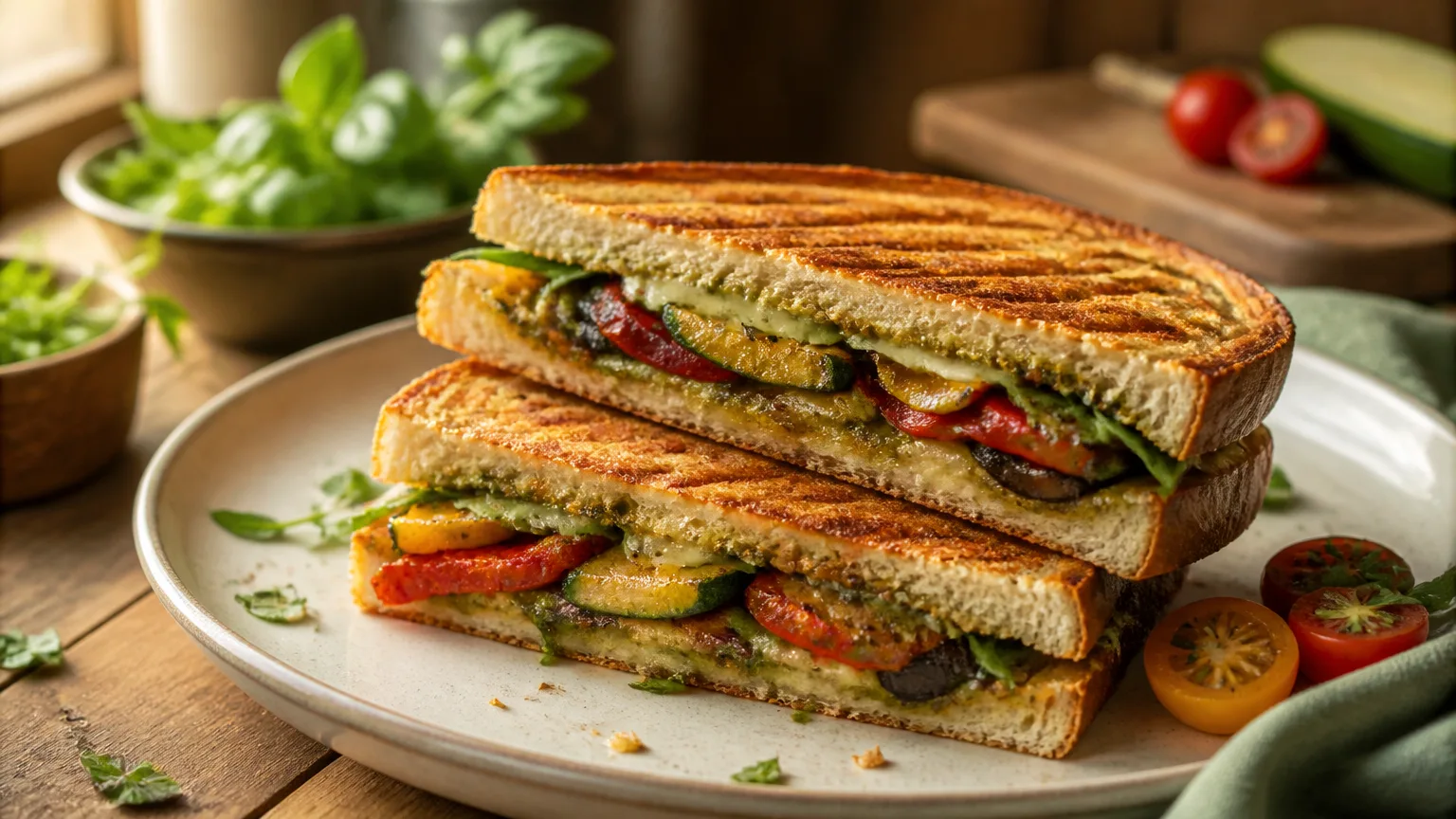
A good panini turns everyday vegetables, cheese, and pantry staples into a warm, satisfying weekday meal. These panini recipes offer nine distinct combinations, from savory and hearty to bright and fresh, so each sandwich brings its own flavor rather than repeating the same filling.
Use the recipes as written or adapt them to what you have on hand. Roasted vegetables, leafy greens, beans, herbs, and different cheeses can all work well between slices of crisp, toasted bread. With a few simple ingredients and a panini press or skillet, lunch or dinner can come together without much fuss.
Cooking can also be a chance to slow down and bring care to an ordinary meal. For readers who value devotional practice, preparing food with mindfulness and gratitude can add meaning; it is an invitation, not a requirement. For more vegetarian inspiration, explore more Hare Krishna recipes.
A Few Simple Rules for Better Vegetarian Panini
A few reliable techniques help vegetarian panini recipes cook evenly and stay crisp. Start with sturdy bread, such as sourdough, ciabatta, or a firm country loaf. Use a moderate amount of filling so the sandwich holds together and the center heats through before the crust gets too dark.
Manage moisture before layering. Drain ingredients such as roasted peppers, marinated artichokes, or mozzarella, and cook vegetables like mushrooms, zucchini, and spinach to release excess water. Use spreads sparingly; a thin layer adds flavor without soaking the bread.
Place cheese next to the bread, rather than between wet ingredients. It melts into the slices and helps hold the filling in place. For example, layer cheese, cooked mushrooms, and another slice of cheese to keep moisture away from the bread.
You do not need a panini press to get a crisp, warm sandwich. Heat a skillet over medium heat and lightly coat the outside of the bread with butter or olive oil. Add the sandwich, place a second heavy skillet or another heat-safe weight on top, and cook until the bottom is golden. Flip carefully, replace the weight, and cook the other side until crisp and the cheese melts.
Keep the heat moderate. High heat can brown the bread before the filling warms, especially in a thick sandwich. If the crust colors too quickly, lower the heat and give the center more time.
Butter and olive oil both work well for the exterior; choose a fat that suits the recipe and your preferences. For more options, see this guide to vegetarian alternatives to lard.
1. Caprese Panini with Tomato, Mozzarella, and Basil
For a bright, familiar weekday lunch, layer ripe tomato, fresh mozzarella, and basil between slices of rustic bread. Spread a thin layer of pesto on the inside, or use a light drizzle of olive oil to keep the flavors simple. This easy combination is one of the most reliable panini recipes when you want a satisfying meal without much prep.
Slice the tomato and mozzarella evenly. Drain the tomato slices on a paper towel, then pat them dry to remove excess moisture. This helps prevent soggy bread, especially if the tomatoes are very ripe.
Assemble the sandwich with mozzarella against both slices of bread, then add the tomato and basil in the middle. The cheese creates a barrier between the bread and the wetter ingredients. Close the sandwich and lightly brush or spread butter or olive oil on the outside.
Heat a panini press and cook until the bread is golden and crisp. If you are using a skillet, press the sandwich with a spatula or a heavy pan, then flip it once. The mozzarella is ready when it looks soft and glossy and begins to yield under gentle pressure; it does not need to run out of the sandwich.
Serve while warm, when the basil is fragrant and the cheese is tender. For a little extra tang, finish with a few drops of balsamic vinegar or a light balsamic glaze. Use a small amount so it complements the tomato and mozzarella rather than overpowering them.
2. Roasted Vegetable and Provolone Panini
Roasted zucchini, bell pepper, and eggplant make a hearty filling with deep, savory flavor. You can swap in mushrooms or red onion, too. Cut the vegetables into even slices, toss lightly with olive oil, salt, and pepper, then roast in a single layer at 425°F until tender and browned, about 20–25 minutes. Roasting concentrates their flavor and removes excess moisture, so the panini is less likely to turn soggy.
For weekday meals, roast the vegetables ahead and refrigerate them in a covered container within two hours of cooking. Use them within three to four days, reheating briefly or letting them lose their chill before assembly. Having the vegetables ready makes these panini recipes much faster to prepare.
Spread a thin layer of herb mayonnaise or pesto on the bread; a little goes a long way. Layer on a modest portion of vegetables and provolone. The cheese melts around the filling, helping hold the slices together, while restrained layers keep the sandwich easy to press and eat. Too much filling can spill out or prevent the bread from crisping evenly.
Brush the outside of the bread with olive oil or butter, then cook in a preheated panini press until golden and the provolone has melted. Without a press, use a skillet over medium heat and weigh the sandwich down with another pan. Turn once, and lower the heat if the bread browns before the center warms through.
3. Spinach, Mushroom, and Swiss Panini
Earthy mushrooms, tender spinach, and nutty Swiss make a filling panini that works well for a weekday lunch or dinner. The key to a crisp sandwich is cooking the mushrooms until their released liquid evaporates before adding them to the bread.
Slice the mushrooms and cook them in a skillet over medium heat with a little olive oil. Stir occasionally as they release moisture. Continue cooking until the liquid has evaporated and the mushrooms are browned, about 6 to 8 minutes. Add the spinach and cook just until wilted, then remove the skillet from the heat.
Layer the mushroom and spinach mixture with Swiss cheese on sturdy bread. Add a thin spread of mustard or a few turns of black pepper for extra depth. Avoid piling on too much filling; a thick layer can make the bread harder to toast evenly.
Brush the outside of each slice with olive oil or butter. Cook in a preheated panini press until the bread is golden and the Swiss has melted. For skillet cooking, set the sandwich over medium heat, press it with another pan, and turn once. Lower the heat if the bread browns before the center warms through.
For an easy variation, replace Swiss with Gruyère or provolone, both of which melt well. You can also use kale instead of spinach; cook it until tender before assembling. Among simple panini recipes, this combination is especially satisfying with a green salad or a bowl of soup.
4. Pesto, Mozzarella, and Grilled Zucchini Panini
For a fresh, herb-forward weekday meal, pair tender zucchini with creamy mozzarella and pesto. The vegetables bring a light, savory flavor, while the cheese melts into a satisfying filling.
Slice one small zucchini lengthwise into thin strips. Grill or pan-sear them over medium-high heat until tender with light browning, about two minutes per side. Let the zucchini cool briefly so its moisture does not make the bread soggy.
Spread a thin layer of pesto on the inside of each bread slice. Pesto packs plenty of flavor, and a light coating helps keep its oil from soaking through the bread. Place mozzarella against the bread on both sides; it helps hold the zucchini in place as the cheese melts.
Layer the zucchini between the mozzarella, then brush the outside of the bread lightly with olive oil or butter. Cook in a preheated panini press until the bread is crisp and the cheese is soft. If using a skillet, press the sandwich with another pan and turn it once. Lower the heat if the bread browns before the center warms through.
Pesto ingredients vary by brand and recipe. Some versions contain nuts or cheese, while others use different herbs or plant-based ingredients. Check the label or make your own to match your dietary preferences. This combination is one of the lighter panini recipes to serve with soup or a simple salad.
5. Curried Chickpea and Spinach Panini
For a filling weekday lunch, try a chickpea and spinach panini with gentle curry spices. Chickpeas provide protein and substance, while a creamy yogurt or plant-based spread helps the filling hold together.
Mash about half the chickpeas with a fork, leaving the rest whole. Stir in plain yogurt or a thick plant-based spread, mild curry powder, and a pinch of salt. The mashed chickpeas bind the mixture; the whole ones add texture. If it seems dry, add a little more spread. If it feels loose, mash a few more chickpeas.
Fold in chopped spinach until evenly distributed. Keep the seasoning mild, then adjust to taste with black pepper or a squeeze of lemon. For extra color and warm, earthy flavor, add a small pinch of turmeric. These tips for cooking with turmeric can help you pair it with other spices without overpowering the filling.
Prepare the mixture ahead and refrigerate it in a covered container. Use it cold when assembling, or warm it briefly before spreading it over the bread. Add a moderate layer, leaving a small border around the edges to help prevent spills as the sandwich presses.
Brush the outside of the bread with olive oil or butter, then cook in a panini press until golden and heated through. A skillet works too: weigh the sandwich down with another pan and turn it once. Among easy panini recipes, this one pairs well with tomato soup or a crisp side salad.
6. Apple, Cheddar, and Caramelized Onion Panini
Crisp apple, sharp cheddar, and sweet caramelized onion make a balanced filling for an easy weekday meal. Choose a firm apple, such as Granny Smith or Honeycrisp, so it holds its shape as the sandwich warms.
Slice the apple thinly and evenly, about ⅛ inch thick. This helps the slices soften slightly during cooking without turning mushy. Cut the cheddar into thin slices, too, so it melts evenly around the apple.
Spread a little mustard on the inside of one slice of bread, if you want a tangy counterpoint to the sweet onion. Add cheddar, then arrange the apple slices in a single, slightly overlapping layer. Top with a thin layer of caramelized onions; too many can make the bread soggy and overpower the other ingredients. Finish with another layer of cheddar to help hold the filling together.
A prepared batch of caramelized onions speeds up assembly on a busy day. If making them fresh, cook sliced onions slowly over low heat until soft and deep golden, stirring often. Let them cool before adding them to the sandwich.
Brush the outside of the bread with olive oil or butter. Cook in a preheated panini press until golden and the cheese melts. Or use a skillet over medium heat, weighing the sandwich down with another pan and turning it once. These panini recipes pair well with a green salad or a cup of soup.
7. Hummus, Roasted Red Pepper, and Cucumber Panini
For a Mediterranean-inspired weekday meal, spread hummus over the bread before adding roasted red peppers and cucumber. The hummus brings creamy, savory flavor and helps buffer the bread from moisture released by the vegetables. Add crumbled feta for a salty finish, or leave it out for a dairy-free sandwich.
Cucumber is crisp and refreshing, but it can soften when heated. For the best texture, slice it thinly and use a light layer. Or press the sandwich with the roasted peppers and feta, then add cucumber after cooking for a cool, crunchy contrast.
To assemble, spread hummus on the inside of two slices of sturdy bread. Add drained roasted red peppers and optional feta, keeping the filling even and away from the edges. Brush the outside with olive oil or butter, then cook in a preheated panini press until golden and warmed through.
If you do not have a press, cook the sandwich in a skillet over medium heat and weigh it down with another pan. Turn once, and lower the heat if the bread browns before the filling warms. Add cucumber after pressing, if desired, and season with black pepper, a squeeze of lemon, or chopped fresh herbs such as parsley.
These panini recipes are easy to adapt to what you have on hand. Serve this sandwich with a green salad or soup for a quick, satisfying meal.
8. Sweet Potato, Black Bean, and Pepper Jack Panini
Sweet potato and black beans make a filling base for this hearty vegetarian panini, while pepper jack adds gentle heat. Use cooked sweet potato, such as leftovers from dinner, to make weekday assembly quick.
Slice the sweet potato thinly so it warms evenly, or lightly mash it for a softer filling. Season the black beans simply with salt and black pepper. Mash a portion of the beans, then mix them with the rest; the mashed beans help hold the filling together without making it dry.
Layer the sweet potato, beans, and shredded or sliced pepper jack between sturdy bread. Keep the filling in a thin, even layer, and leave a small border around the edges to reduce spills as the sandwich presses. Adjust the spice to suit your taste: choose mild cheese instead of pepper jack, or add a small pinch of chili for more heat.
Brush the outside of the bread with olive oil or butter. Cook in a preheated panini press until the bread is golden and the cheese melts. For a skillet, weigh the sandwich down with another pan, turn it once, and lower the heat if the bread browns before the filling warms through.
Serve with salsa on the side rather than inside the sandwich. Wet salsa can soak the bread and make the filling slip out; dipping each bite keeps the sandwich crisp. This is one of the more substantial panini recipes, especially with a green salad or soup.
9. Paneer, Bell Pepper, and Mint Chutney Panini
Paneer, sweet bell pepper, and mint chutney bring familiar Indian-inspired flavors to this final sandwich. The key is to keep the filling balanced: let the paneer and peppers lead, and use chutney sparingly for a fresh, herbal note.
Cut paneer and bell pepper into bite-size pieces. In a skillet, warm a little oil and season them with a gentle blend of ground cumin, coriander, and a pinch of turmeric. Cook for several minutes, stirring, until the vegetables soften and the paneer is heated through. Add salt to taste.
Paneer is a mild dairy cheese, so it pairs well with the peppers and spices without adding a strong flavor of its own. For a plant-based option, use firm tofu, pressed and cut into cubes. Cook it with the same spices until warmed and lightly golden.
Spread a thin layer of mint chutney on the inside of the bread, then add the warm filling. Too much chutney can dampen the bread and overwhelm the other ingredients. If you prefer a milder taste, use less chutney or serve it on the side. You can also skip the chili in homemade chutney or choose a mild store-bought version.
Brush the outside of the bread with olive oil or butter. Cook in a preheated panini press until crisp and golden, or press it in a skillet over medium heat, turning once. Lower the heat if the bread browns before the center warms through. Like other adaptable panini recipes, this sandwich works well with tomato soup or a simple salad.
Frequently Asked Questions
Do I need a panini press?
No. A skillet makes crisp, well-heated panini without special equipment. Warm a lightly oiled skillet over medium heat, add the sandwich, and weigh it down with another heavy pan. Cook until golden, turn once, and lower the heat if the bread browns before the filling warms.
Which bread works best?
Choose sturdy bread that can hold the filling without falling apart. Sourdough, ciabatta, focaccia, and firm Italian bread are good choices. Slice the bread evenly, and avoid overfilling, especially with moist ingredients such as tomatoes or roasted vegetables.
How far ahead can I prepare the fillings?
You can prepare most fillings a day ahead and refrigerate them in separate, airtight containers. Cooked vegetables, sliced cheese, and spreads are easy to portion before mealtime. Keep wet ingredients, such as fresh tomatoes, separate until assembly to help prevent soggy bread.
For quick weekday meals, prepare a few fillings at once and combine them in different ways. Explore these vegetarian dinner ideas for families for more meal inspiration.
Can I store or reheat an assembled panini?
Panini taste best freshly pressed. An assembled, uncooked sandwich can be refrigerated for a few hours, but moisture from the filling may soften the bread. For better texture, store the components separately and assemble just before cooking.
You can reheat a cooked panini in a skillet over low heat, turning once, or in an oven until warmed through. A microwave is quick but tends to soften the bread.
How can I make these panini vegan or dairy-free?
Use plant-based cheese or omit the cheese and add extra vegetables, beans, or hummus for a more filling sandwich. Choose olive oil or a dairy-free spread for the outside of the bread. Check ingredient labels on pesto, spreads, bread, and plant-based cheeses, since some contain dairy or other ingredients you may wish to avoid.
Make Weekday Meals Warm, Simple, and Satisfying
These nine panini recipes are flexible starting points, not strict formulas. A satisfying sandwich depends more on thoughtful layers and balanced textures—creamy cheese, tender vegetables, and crisp bread—than on special equipment. Use a skillet if that is what you have.
Choose one recipe for the week, then adapt it to your household’s preferences and ingredients. Preparing fillings ahead, such as roasted vegetables or washed greens, can make weekday assembly easier. For a fuller meal, add vegetarian appetizers to serve alongside.
Take a moment to prepare and enjoy each sandwich with care and gratitude. Start with one combination, make it your own, and let a warm, simple meal bring the day together.