
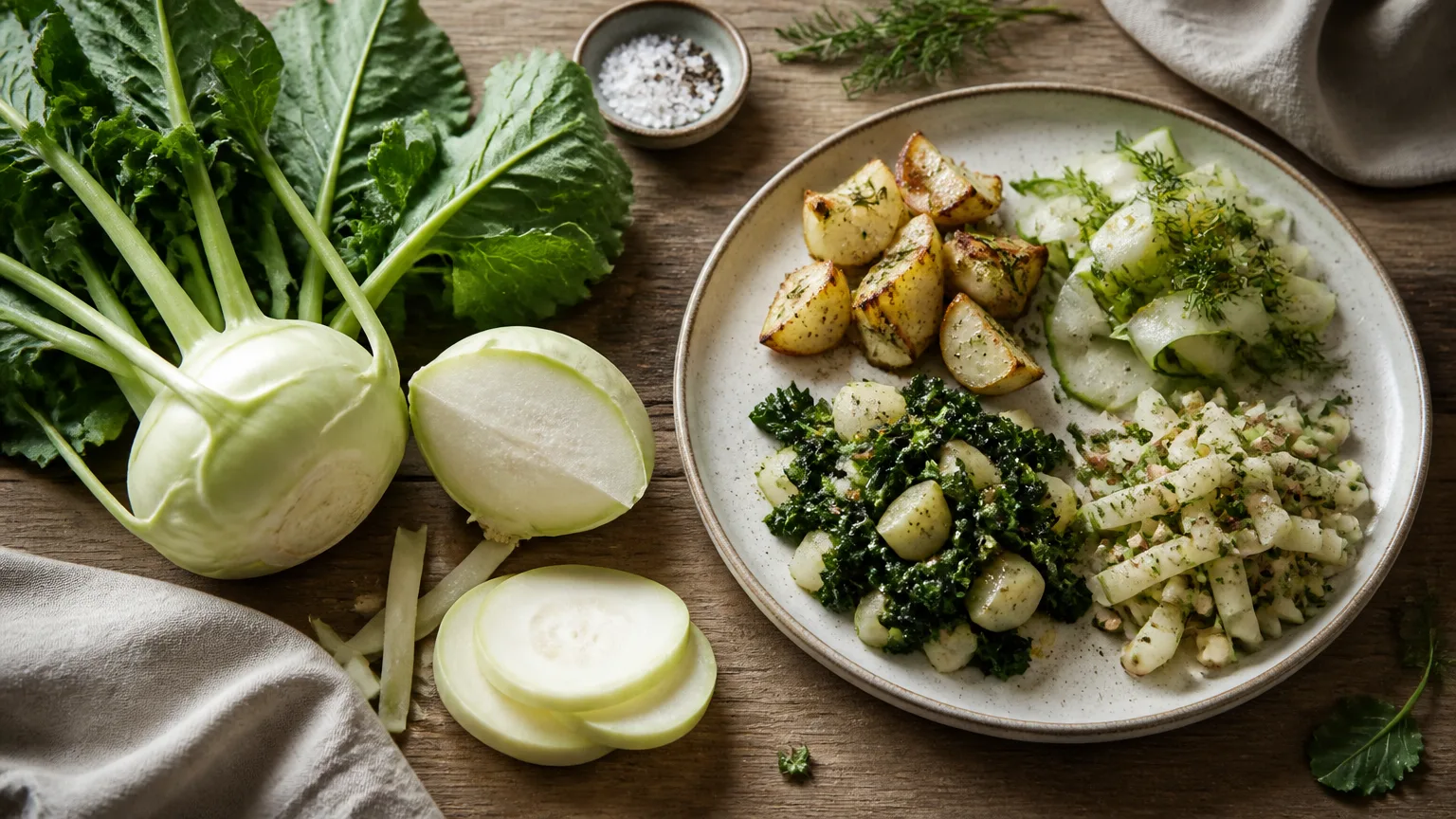
Kohlrabi recipes offer a fresh way to bring variety to a vegetarian kitchen. This underused vegetable has a round, crisp bulb with a mildly sweet flavor, somewhere between cabbage, broccoli stems, and a gentle turnip. Its clean taste makes it easy to season with herbs, spices, and other fresh ingredients.
The bulb is the most familiar part, but the leaves are useful, too. Young leaves can be sautéed like greens, stirred into soups, or added to fillings. Peel the bulb before cooking, as its outer skin can be firm. Inside, the texture stays pleasantly crisp when raw and becomes tender when cooked.
This collection explores five simple ways to prepare kohlrabi, from bright raw preparations to comforting cooked dishes. Roasting brings out its natural sweetness, while sautéing creates a quick side dish. You will also see how simmering, baking, and combining kohlrabi with other vegetables can produce satisfying meals without relying on meat.
Cooking can become a mindful practice: selecting fresh ingredients, preparing them carefully, and offering nourishing food with gratitude. Whether you follow the devotional practices of the Hare Krishna Recipes tradition or simply want more intentional meals, these recipes provide a practical starting point. The act of offering food depends on your own practice, ingredients, and standards; a recipe is not automatically spiritually offered on its own.
All five recipes are vegetarian and can be adapted for a sattvic kitchen according to individual Hare Krishna or Vaishnava standards. Adjust ingredients such as onions, garlic, and certain spices as needed. With its flexible texture and mild flavor, kohlrabi can become a useful staple for thoughtful, wholesome cooking.
1. Roasted Kohlrabi with Ghee, Cumin, and Fresh Herbs
Roasting brings out kohlrabi’s natural sweetness while creating caramelized edges and a lightly crisp surface. This simple method provides a useful starting point for kohlrabi recipes and works equally well as a side dish or a topping for grain bowls.
Begin with firm kohlrabi bulbs that feel heavy for their size. Cut away the stems and leaves, then trim the root end. Use a vegetable peeler or small knife to remove the thick outer skin, including any woody areas beneath the surface.
Cut the peeled kohlrabi into evenly sized wedges or cubes. Pieces about 1 inch thick roast well. Uniform cuts matter because smaller pieces may burn before larger pieces become tender.
Heat the oven to 425°F (220°C). Toss the kohlrabi with melted ghee or a suitable cooking oil, then season it with cumin seeds, turmeric, and salt. If your dietary tradition allows, add a pinch of ground coriander, black pepper, or asafoetida for additional depth.
- 2 medium kohlrabi bulbs, trimmed, peeled, and cut into 1-inch pieces
- 1½ tablespoons ghee or neutral cooking oil
- 1 teaspoon cumin seeds
- ¼ teaspoon ground turmeric
- Salt, to taste
- 2 tablespoons chopped fresh cilantro
Spread the pieces on a baking sheet in a single layer. Leave space between them so the vegetables roast rather than steam. For easier cleanup, line the sheet with parchment, but avoid overcrowding the pan.
Roast for 25 to 35 minutes, turning the pieces once halfway through. The kohlrabi is ready when the centers feel tender when pierced with a fork. The edges should look caramelized, and the surface should have a light crispness without becoming dry.
Transfer the roasted kohlrabi to a serving bowl while it is still warm. Sprinkle it with fresh cilantro and taste for salt. A squeeze of lemon can brighten the dish, although it is optional and may not suit every dietary practice.
Serve the kohlrabi with steamed rice and dal for a balanced meal. It also pairs well with chapati, vegetable pulao, or a simple bowl of yogurt. For a cooling accompaniment, stir chopped cilantro and a small pinch of cumin into plain yogurt.
This preparation can also become a complete bowl topping. Layer the roasted kohlrabi over rice, lentils, or cooked grains, then add yogurt and fresh herbs just before serving.
If you prepare food as an offering, keep the cooking process attentive and follow your household’s Hare Krishna or Vaishnava standards. You may adjust the spices, avoid ingredients that do not fit your practice, and offer the finished dish mindfully before serving.
2. Kohlrabi and Potato Curry
Kohlrabi becomes tender and comforting in a gently spiced potato curry. Its firm texture holds up well during simmering, while potatoes add softness and body. Tomatoes create a bright, savory base for this flexible one-pot vegetarian main.
Build the Curry in Layers
The order of cooking helps each ingredient develop flavor without making the kohlrabi mushy. Cut the kohlrabi and potatoes into similar, bite-sized pieces so they cook evenly.
Heat oil or ghee in a heavy pot. Temper whole cumin seeds, mustard seeds, or a small cinnamon piece until fragrant.
Add chopped aromatics that suit your household standards, then cook until soft. For a sattvic version, omit onions and garlic and use grated ginger or asafoetida instead.
Stir in ground turmeric, cumin, coriander, and a small amount of chili powder. Bloom the spices briefly, taking care not to let them burn.
Add chopped tomatoes and cook until they soften into a thick, seasoned base.
Fold in the kohlrabi and potatoes. Add water, cover, and simmer until both vegetables are tender but still hold their shape.
Test the kohlrabi with a fork after about 15 minutes. It should feel tender at the center, not collapse when stirred. If the potatoes need more time, continue cooking gently and check the pot often.
Choose a Rich or Light Finish
The tomato-based version has a familiar balance of tang, warmth, and savory depth. Add a pinch of garam masala near the end, if desired, and finish with fresh cilantro. Keep the seasoning modest when serving children, guests, or a shared family meal.
For a lighter variation, replace part of the water with unsweetened coconut milk. You can also stir in a little plain yogurt after removing the pot from the heat. Let the curry cool for a minute, then add the yogurt gradually to reduce the chance of curdling.
Adjust the Consistency for Serving
The amount of water determines how the curry fits your meal plan. Use these simple adjustments:
For a dry sabzi, add only a small splash of water and cook uncovered near the end.
For a spoonable curry, add enough water to create a light sauce around the vegetables.
For meal prep, make it slightly thicker because the potatoes and kohlrabi absorb liquid as the curry rests.
Serve the curry with steamed rice, jeera rice, roti, or another flatbread. A balanced spice profile allows the dish to work for an everyday lunch, a potluck, or a devotional gathering. If you are exploring more other vegetarian foods that start with K, this curry shows why kohlrabi deserves a place among practical kohlrabi recipes.
If preparing the dish as an offering, cook attentively and follow your household’s Hare Krishna or Vaishnava standards. Offer the finished curry mindfully before serving.
3. Crispy Kohlrabi Fritters with Yogurt or Chutney
These crispy kohlrabi fritters turn a mild, crunchy vegetable into a satisfying appetizer or light meal. Grated kohlrabi provides moisture and texture, while chickpea flour and rice flour create structure without eggs.
Prepare the Kohlrabi for a Crisp Texture
Peel two medium kohlrabi bulbs and grate them using the large holes of a box grater. Place the shreds in a bowl, sprinkle with ½ teaspoon salt, and let them rest for 10 minutes.
Salt draws out excess water, which is essential for successful fritters. Squeeze the kohlrabi firmly with your hands, or wrap it in a clean kitchen towel and press out as much liquid as possible. If the vegetable remains wet, the fritters will steam instead of browning.
Build an Egg-Free Fritter Batter
Transfer the squeezed kohlrabi to a clean bowl. Add:
- ½ cup chickpea flour, 2 tablespoons rice flour, 1 teaspoon ground cumin, 1 teaspoon grated ginger, 2 tablespoons chopped cilantro, and optional finely chopped green chile
Mix thoroughly until the flour coats the vegetable. The mixture should hold together when pressed. If it feels loose, add another tablespoon of chickpea flour. If it seems dry, add water one teaspoon at a time.
Chickpea flour provides binding and a nutty flavor. Rice flour improves crispness, so using both creates a balanced texture. For a simpler version, use only chickpea flour.
Choose a Cooking Method
Shape the mixture into small, thin patties. Smaller fritters cook more evenly and are easier to turn without breaking.
For shallow-frying, heat about ¼ inch of neutral oil in a heavy skillet over medium heat. Add the patties only after the oil is hot, leaving space between them. Cook for 3 to 4 minutes per side, until deeply golden. Avoid moving them too soon, because the batter needs time to form a firm crust.
For skillet cooking with less oil, lightly coat a nonstick or well-seasoned cast-iron pan. Cook the patties over medium-low heat and press them gently with a spatula. A lower temperature prevents the outside from burning before the center sets.
Air-frying uses less oil but may produce a slightly drier surface. Brush or spray the fritters lightly with oil, arrange them in a single layer, and cook at 400°F for 10 to 14 minutes. Turn them halfway through, and avoid overcrowding the basket.
Place cooked fritters on a wire rack instead of paper towels. A rack allows steam to escape and helps preserve their crisp edges while you finish cooking.
Serve the fritters hot with plain yogurt, coriander chutney, or both. For a no-onion/no-garlic accompaniment, use yogurt seasoned with roasted cumin, cilantro, and a pinch of salt. These fritters also pair well with more easy vegetarian meals when planning a varied vegetarian menu.
If preparing the dish as an offering, follow your household’s Hare Krishna or Vaishnava standards. Omit green chile or other ingredients as needed, and offer the finished fritters mindfully before serving.
4. Creamy Kohlrabi Soup with Ginger and Coconut
This creamy kohlrabi soup turns the vegetable’s mild, crisp flavor into a smooth and soothing meal. Ginger adds gentle warmth, while coconut milk brings richness without making the soup feel heavy. Serve it on a cool day, as a light dinner, or as part of a comforting vegetarian meal.
Start by peeling and chopping the kohlrabi into small, even pieces. For four servings, use about three medium kohlrabi bulbs, one diced potato, one small carrot, and a thumb-sized piece of grated ginger. You can also add a cup of cooked white beans or lentils for extra protein and body.
Warm a little oil or ghee in a heavy pot. Sauté the kohlrabi, potato, carrot, and ginger for five to seven minutes. Stir often, until the vegetables soften slightly and develop light color. This step builds deeper flavor than boiling every ingredient from the start.
Add four cups of vegetable broth, then season with salt and a small pinch of turmeric or ground coriander. Cover and simmer for 20 to 25 minutes, until the kohlrabi and potato are completely tender. If using canned beans, rinse them before adding them during the final 10 minutes of cooking.
For a fully smooth soup, blend the mixture in batches until creamy. A stick blender works directly in the pot and makes cleanup easier. For a more rustic texture, blend only half the soup, then stir it back into the pot. The remaining vegetable pieces create a satisfying contrast.
Use caution when blending hot liquids. Do not fill a countertop blender to the top. Remove the center vent from the lid, cover it with a folded towel, and start at low speed. The open vent allows steam to escape and helps prevent pressure from building.
Return the blended soup to the pot and stir in half to one cup of coconut milk. Warm it gently without allowing the soup to boil. Taste and adjust the salt, ginger, or lemon juice. A small squeeze of lemon brightens the coconut’s richness and sharpens the kohlrabi’s mild flavor.
Finish each bowl with chopped cilantro, toasted pumpkin seeds, or a few drops of coconut milk. These garnishes are optional, so omit them when following particular ingredient guidelines. You can also serve the soup with warm rice or flatbread for a more substantial meal.
For simple temple-inspired hospitality, keep the seasoning gentle and let the vegetables remain the focus. If preparing the soup as an offering, cook attentively and follow your household’s Hare Krishna or Vaishnava standards. Adjust the aromatics, spices, and garnishes as needed, then offer the finished soup mindfully before serving.
5. Kohlrabi Stir-Fry with Paneer and Seasonal Vegetables
This quick stir-fry finishes the collection with a colorful, high-heat meal for busy weeknights. Kohlrabi adds a fresh, crisp texture, while golden paneer and tender vegetables make the dish satisfying enough to serve as a main course.
Ingredients
1 medium kohlrabi, peeled and cut into thin matchsticks or small batons
225 g paneer, cut into bite-size cubes
1 tablespoon neutral oil or ghee
1 carrot, sliced into thin strips
1 cup green beans, cut into short pieces
½ cup peas or shredded cabbage
1 teaspoon grated ginger
½ teaspoon ground cumin
½ teaspoon ground coriander
¼ teaspoon turmeric
Salt, to taste
1 tablespoon chopped cilantro or fresh herbs
1 teaspoon lemon juice
Cut the kohlrabi into thin pieces so it cooks quickly without losing its gentle crunch. Small batons also blend well with the softer paneer and tender seasonal vegetables.
Cooking Method
Heat half the oil in a large skillet or wok over medium-high heat. Add the paneer in a single layer and cook until several sides are golden. Turn the cubes occasionally, then transfer them to a plate.
Add the remaining oil to the pan. Stir-fry the carrot and green beans for two to three minutes. Add the kohlrabi, peas, or cabbage, and cook until the vegetables are crisp-tender.
Stir in the ginger, cumin, coriander, turmeric, and salt. Keep the heat high and toss continuously so the spices coat the vegetables without burning.
Return the browned paneer to the pan. Add the chopped herbs and lemon juice, then toss for another minute. Serve immediately over rice, quinoa, or noodles.
Browning the paneer separately gives it a firmer surface and prevents it from steaming among the vegetables. Returning it at the end preserves its golden texture while allowing the finishing spices and herbs to coat every piece.
Easy Substitutions for Weeknight Cooking
This recipe works with whatever vegetables are available, but aim for a balance of textures. Kohlrabi should remain slightly crisp, while paneer provides a soft, chewy contrast and the browned edges add depth.
Replace paneer with firm tofu for a dairy-free version.
Use sliced cabbage, peas, or carrots in place of green beans.
Add bell peppers, broccoli, or snap peas for more color.
Substitute cilantro with parsley, mint, or another fresh herb.
Omit or adjust spices to suit your household’s preferences.
For more practical meat-free meal ideas, explore another creative vegetarian alternative when planning a varied weekly menu. Like other adaptable kohlrabi recipes, this stir-fry can shift with the season while keeping its main contrast intact.
Serve the dish soon after cooking. Kohlrabi can release water as it sits, which may soften the vegetables and dilute the seasoning.
If preparing the stir-fry as an offering, cook attentively and follow your household’s Hare Krishna or Vaishnava standards. Adjust the spices, herbs, and other ingredients as needed, then offer the finished meal mindfully before serving.
Frequently Asked Questions About Cooking Kohlrabi
Do you have to peel kohlrabi?
Small, young kohlrabi bulbs usually need only a thorough scrub. Their skin is thin enough to eat, especially when the bulb feels firm and smooth.
Larger bulbs often develop a thick, fibrous outer layer. Trim away the stems and root end, then use a vegetable peeler or sharp knife to remove the skin before slicing, roasting, or adding the bulb to soups.
Can you eat kohlrabi leaves?
Yes. Tender kohlrabi leaves are edible and can be sautéed like spinach, kale, or Swiss chard. Remove the thick stems if needed, then cook the leaves with a little oil, salt, and suitable seasonings.
Older leaves may be tougher. Add them to soups and stews, where simmering softens their texture, or compost them if they are too fibrous.
What does kohlrabi taste like?
Kohlrabi has a mild flavor that combines elements of broccoli stem, cabbage, and turnip. Its raw texture is crisp and juicy, while cooking makes it tender without removing its gentle sweetness.
This versatility makes kohlrabi recipes suitable for slaws, fritters, curries, soups, and quick vegetable sautés. Use raw slices for crunch or cooked pieces for a softer, heartier texture.
How should cooked kohlrabi be stored?
Transfer cooked kohlrabi to an airtight container and refrigerate it within two hours. For the best flavor and texture, eat it within three to four days.
Reheat roasted kohlrabi or fritters in a skillet, oven, or air fryer. These methods help restore crisp edges. Reheat soup and curry gently on the stovetop, adding a small splash of water if they have thickened.
Can kohlrabi be prepared in advance?
You can peel and cut kohlrabi up to two days ahead. Store the pieces in a sealed container in the refrigerator, ideally with a slightly damp paper towel to prevent drying.
For meal preparation, keep raw kohlrabi separate from dressings and wet ingredients. This preserves its crisp texture until you are ready to cook or serve it.
How can these recipes suit a sattvic or devotional kitchen?
Follow the standards of your own lineage, household, or devotional practice. Depending on those standards, you may adjust or omit onions, garlic, mushrooms, dairy, strong spices, or other ingredients.
- Choose fresh, wholesome ingredients and keep preparation attentive.
- Replace ingredients with suitable alternatives when needed.
- Offer prepared food according to your household’s practice before serving.
These adjustments allow the recipes to remain practical while respecting individual Hare Krishna or Vaishnava cooking traditions.
Making Kohlrabi Part of a Mindful Vegetarian Table
These five kohlrabi recipes show how one vegetable can suit many meals. Choose roasting for a crisp, simple side, simmering for a hearty and saucy curry, or frying for a snackable fritter. Blending creates a soothing soup, while stir-frying delivers a quick, fresh meal with bright vegetables.
Use the whole kohlrabi when possible. Peel and cook the bulb, then add tender leaves to soups, sautés, or stir-fries. Adjust spices, aromatics, and accompaniments to suit your household’s devotional standards, including Hare Krishna or Vaishnava practices.
Above all, let preparation remain an attentive act. Fresh food prepared with care can express gratitude and generosity, whether shared with family, guests, or a spiritual community. Continue exploring vegetarian cooking, and treat your kitchen as a place for mindfulness, connection, and nourishing service.