
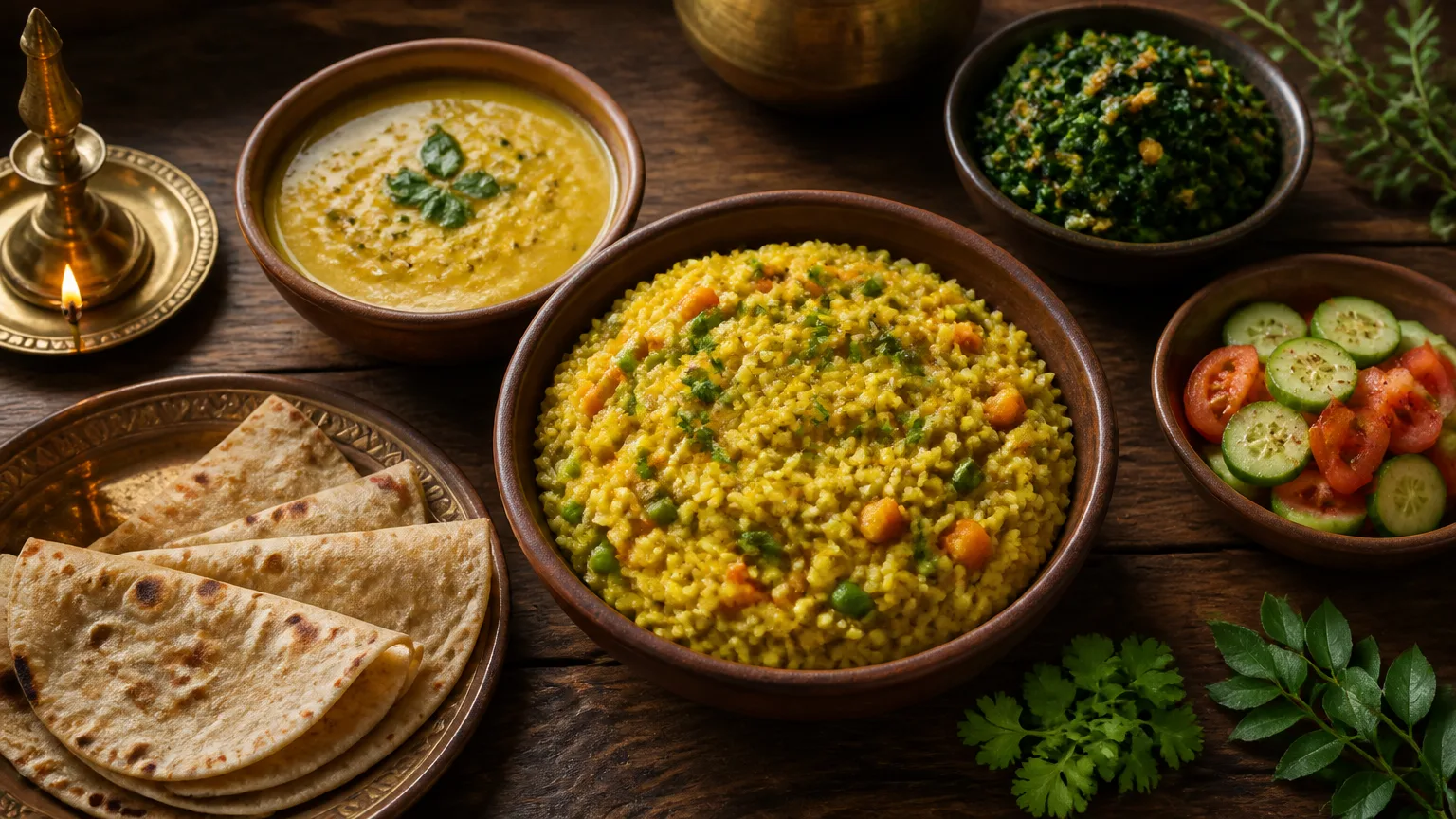
A Wednesday meal can be simple, nourishing, and spiritually meaningful without becoming a source of stress. With fresh ingredients, mindful preparation, and a spirit of gratitude, an everyday vegetarian dish can become a sincere devotional offering.
You do not need elaborate recipes or hours in the kitchen. A balanced plate of rice, dal, seasonal vegetables, and a light salad can provide comfort and nourishment. Simple combinations such as vegetable khichdi, sautéed greens with chapati, or a warm potato and cauliflower curry make thoughtful choices for a busy midweek schedule.
This guide shares practical meal ideas that support calm, attentive cooking. You will find suggestions for combining grains, legumes, vegetables, and cooling sides, along with preparation principles that help you work efficiently. Small steps—washing produce carefully, tasting with awareness, and keeping the cooking space clean—can bring greater purpose to the process.
For Hare Krishna devotees, the meal may be prepared and offered according to personal practice before it is served as prasadam. Those who are simply exploring spiritually conscious vegetarian cooking can follow the same spirit of care, gratitude, and generosity. The focus is not perfection, but sincerity.
Whether you are preparing a family dinner or a quiet meal for yourself, let the process remain welcoming and manageable. Explore more vegetarian inspiration through Hare Krishna Recipes, then choose ingredients that suit your time, budget, and household. With a little planning, Wednesday can become a peaceful opportunity to cook with intention and share food with gratitude.
What Makes a Wednesday Meal a Meaningful Offering?
A meaningful Wednesday meal begins with intention, not complexity. In Hare Krishna practice, cooking can become an act of devotion when food is prepared thoughtfully and offered with gratitude before it is eaten.
This approach changes the purpose of the meal. Instead of cooking only for personal convenience, you prepare food as an offering and share in the spirit of service. The ingredients may remain simple, but the care behind them gives the meal greater purpose.
Choose Balanced Vegetarian Ingredients
Sattvic-leaning ingredients can provide a balanced foundation without requiring rigid rules for every household. Grains, legumes, vegetables, fruit, dairy, and gentle spices offer variety, nourishment, and satisfying flavor.
For example, a Wednesday meal might include:
- Rice with yellow split peas and mild spices
- Steamed vegetables with homemade yogurt
- Fresh fruit or a simple rice pudding
- Whole-grain flatbreads with a chickpea and vegetable curry
Use ingredients that suit your dietary needs, budget, and cooking experience. A sattvic-leaning meal does not need to be elaborate. Seasonal vegetables, lentils, rice, and fresh herbs can create a complete offering with modest effort.
Prepare the Kitchen and Food Attentively
Cleanliness supports both practical food safety and devotional focus. Before cooking, wash your hands, clean the work surfaces, and organize the ingredients. A tidy kitchen helps reduce distractions and encourages careful preparation.
In Hare Krishna practice, cooks traditionally avoid tasting food before it is offered. Season the dish thoughtfully, follow a trusted recipe, and rely on experience rather than sampling during preparation. After cooking, place the food in clean serving dishes and offer it according to your household’s practice.
Attention also matters during ordinary tasks. Cut vegetables carefully, avoid unnecessary waste, and keep the cooking area orderly. These small actions can turn routine preparation into vegetarian cooking with more meaning and purpose.
Honor Different Traditions and Households
Not every reader will follow Hare Krishna customs in the same way. People from different spiritual backgrounds can respectfully adapt the devotional spirit by preparing food with gratitude, cleanliness, and a desire to nourish others.
Follow your own tradition, family practice, or household guidelines when offering food. Some families may pray before eating, while others may pause for silent thanks. The essential principle remains accessible: prepare the Wednesday meal with care, offer it sincerely, and share it generously.
A Simple Wednesday Thali: Rice, Dal, Vegetable, and Yogurt
A simple Wednesday meal does not need many dishes to feel complete. Build the plate around steamed basmati rice, a mild dal, one seasonal vegetable, plain yogurt or raita, and a small sweet or piece of fruit.
This combination offers balance without creating a demanding cooking schedule. Rice provides comfort and substance, dal adds protein and warmth, vegetables bring color and fiber, and yogurt contributes a cool, creamy contrast. A small sweet or fruit finishes the meal with minimal extra work.
Use a Dependable Five-Part Meal Template
Plan approximately one serving of each main component per person. Adjust the quantities based on appetite, leftovers, and whether you are serving bread or another side.
Steamed basmati rice: Allow about ½ to ¾ cup of uncooked rice per adult. Rinse it well, then cook it with water until the grains are tender and separate.
Mild dal: Use moong dal for a lighter meal or masoor dal when speed matters. Season either option simply with turmeric, salt, cumin, or a gentle tempering of spices.
Seasonal vegetable: Choose potatoes, peas, carrots, spinach, squash, or cauliflower. A quick sauté, steaming, or covered simmer keeps preparation practical.
Plain yogurt or raita: Serve a small bowl of yogurt with cucumber, grated carrot, or chopped herbs. Keep it chilled until the rest of the meal is ready.
Fruit or a small sweet: Offer a banana, orange, dates, or a modest portion of halwa. This adds a pleasant finish without requiring a separate dessert project.
The plate should feel colorful and inviting. White rice, golden dal, green vegetables, and cool yogurt create visual contrast while keeping the flavors mild enough for most households.
Follow a Simple Cooking Sequence
Efficient timing makes this meal easier for beginners. Start the dal first because it usually benefits from a gentle simmer and can rest briefly without losing quality.
While the dal cooks, rinse and begin the rice. Use that cooking time to prepare the vegetable. For example, peas and carrots need only a short sauté, while potatoes or cauliflower may require more time to soften.
Finish with the yogurt, fresh herbs, lemon, or other garnishes. These final elements require little preparation and help refresh the meal just before serving.
A practical order looks like this:
Wash the rice and lentils, then start the dal.
Prepare and cook the basmati rice.
Chop and cook the seasonal vegetable.
Stir together the yogurt or raita.
Taste the dal and vegetable, then add garnishes and the fruit or sweet.
For additional inspiration, explore these vegetarian dinner recipes for a meaningful devotional meal. You can borrow a seasoning idea or vegetable preparation while keeping this thali structure intact.
Plan Portions and Storage With Confidence
For two people, one cup of uncooked rice, ½ to ¾ cup of dry dal, and three to four cups of prepared vegetables usually provide a generous meal with some leftovers. If you prefer lighter portions, reduce the rice and serve extra vegetables or yogurt.
Store rice, dal, and vegetables in separate covered containers. Refrigerate them promptly and use them within three days. Keep yogurt separate so it remains fresh, and add a little water when reheating dal if it has thickened.
Three Fast Wednesday Meal Combinations for Busy Days
A simple Wednesday meal does not require several elaborate dishes. Choose one filling staple, add a fresh or cooling side, and use shortcuts that reduce cooking time and cleanup.
1. Khichdi, Cucumber Raita, and Fresh Fruit
Khichdi makes an ideal one-pot meal for a busy evening. Cook rice and split mung dal with turmeric, cumin, ginger, salt, and enough water for a soft, comforting texture. Add carrots, peas, or spinach if you want extra vegetables.
Serve the khichdi with cucumber raita and sliced bananas, apples, or oranges. The cool yogurt balances the warm spices, while fresh fruit adds a naturally sweet finish without additional cooking.
For an efficient shortcut, soak the dal for several hours or overnight. It will cook faster and create a smoother texture. You can also make extra khichdi for the next day; add a little water when reheating if it becomes thick.
2. Chapatis or Rice with Cabbage-and-Pea Sabzi, Dal, and Yogurt
For a familiar vegetarian plate, pair chapatis or cooked rice with a quick cabbage-and-pea sabzi. Sauté cumin, cabbage, peas, turmeric, and salt until the vegetables are tender but still slightly crisp. A basic moong or masoor dal completes the meal with protein and warmth.
Add plain yogurt on the side, or stir in chopped cilantro and a pinch of roasted cumin. This combination uses affordable staples and works well for households with different appetites. Serve smaller portions of rice and extra vegetables for a lighter meal.
The most useful shortcut is cooking extra rice in advance. Refrigerate it promptly in a covered container, then reheat it thoroughly while the sabzi cooks. If you soak the dal before work, it will also require less time on the stove.
3. Vegetable Pulao, Sautéed Vegetables, and Cooling Raita
Vegetable pulao creates a colorful Wednesday meal with little effort. Cook basmati rice with peas, carrots, green beans, onion, and whole spices such as cumin, cinnamon, or cardamom. The rice feels special, yet the method remains simple enough for a weeknight.
Serve the pulao with roasted or sautéed vegetables and a cooling cucumber or mint raita. Prewashed greens, frozen peas, and ready-cut vegetables can shorten preparation without compromising variety. For more flavor, serve a small spoonful of chutney alongside the plate.
Prepare the chutney the day before and store it in a clean, covered container. You can also chop the vegetables in advance, so dinner requires only cooking the rice and assembling the sides. For additional inspiration, explore vegetarian ideas featuring foods that start with S when planning vegetables, spices, and fresh accompaniments.
How to Choose Ingredients, Spices, and Substitutions
A simple Wednesday meal does not require a long shopping list or one fixed regional menu. Choose ingredients that fit your household, budget, cooking time, and devotional practice. Fresh, available produce can create a thoughtful offering just as well as specialty ingredients.
Build a Flexible Shopping List
Organize your list by category so preparation stays efficient:
- Staples: Rice, dal, flour, potatoes, or another grain
- Fresh produce: Seasonal vegetables, leafy greens, lemons, and fruit
- Dairy or alternatives: Yogurt, milk, ghee, paneer, or unsweetened plant-based options
- Herbs: Fresh cilantro, mint, or parsley
- Spices: Cumin, coriander, turmeric, ginger, cardamom, and cinnamon
Seasonal produce often costs less and tastes better. For example, use squash or carrots in cooler months, and tomatoes, green beans, or zucchini during warmer seasons. You can also explore vegetarian ideas featuring foods that start with R when selecting fresh ingredients.
Create Depth with a Small Spice Collection
A few balanced spices can make a basic rice-and-dal meal feel complete. Cumin adds warmth, coriander brings a gentle citrus note, and turmeric contributes color and earthiness. Fresh ginger can brighten dal, while cardamom and cinnamon add a soft sweetness to rice, fruit, or warm milk.
Start with small amounts, then adjust carefully. A practical combination might include cumin and ginger for dal, turmeric for vegetables, and coriander for a simple finishing note. Fresh cilantro adds brightness at the end without requiring another complex sauce or side dish.
Use Practical Substitutions
Substitutions help you prepare a nourishing meal when an ingredient is unavailable. Replace white rice with brown rice, millet, quinoa, or another grain, adjusting the cooking time as needed. Red lentils, yellow split peas, or another suitable dal can often stand in for the variety named in a recipe.
For dairy, use plain yogurt, coconut milk, or an unsweetened plant-based alternative when appropriate. Swap vegetables according to freshness: cauliflower can replace broccoli, spinach can replace other greens, and sweet potatoes can replace squash.
Ingredient guidelines differ among devotional communities and households. Some traditions may avoid particular foods or recommend specific preparation practices. Check your community’s guidance, then adapt the Wednesday meal respectfully rather than treating one menu as the only authentic choice.
Preparing and Offering the Meal With Attention
Create a Calm Cooking Environment
Before preparing your Wednesday meal, take a brief moment to set an intention. You might offer a prayer, express gratitude, or pause silently before beginning. This simple practice can help shift your focus from completing a task to preparing food with care.
Keep the kitchen clean and organized as you cook. Wash produce, clear unused equipment, and keep serving dishes ready. A calm workspace supports careful preparation and makes the transition from cooking to offering feel natural rather than rushed.
Avoid unnecessary distractions during the final stages of cooking. For example, turn down loud music, finish unrelated tasks, and check that the rice, dal, vegetables, and accompaniments are ready at about the same time. These small choices help the meal feel deliberate and welcoming.
Plate the Meal With Care
Once the food is cooked, taste and plating practices may vary. In a Hare Krishna household, cooks may follow specific guidance about tasting food before it is offered, using separate utensils, or arranging the meal in a particular way. These practices reflect devotional standards and household discipline, not universal rules for every vegetarian kitchen.
Follow the guidance of your teacher, temple, or community if you are preparing food within a Hare Krishna tradition. If you are adapting the practice at home, ask questions and use a respectful approach rather than assuming that one method suits every family.
Serve modest portions on a clean plate or serving tray. Place separate components—such as rice, dal, vegetables, yogurt, and chutney—so each remains distinct and visually appealing. A small garnish of fresh herbs or a neat arrangement of vegetables can make a simple meal feel special without creating waste.
Allow Time for the Offering
Set the prepared plate aside in a clean, suitable place for the amount of time your household or community recommends. The timing and words used may differ among traditions, so follow your established practice when one exists.
If you do not follow a formal tradition, you can pause for silent gratitude before serving. Consider the farmers, suppliers, cooks, and people who will share the meal. This brief pause gives the Wednesday meal a sense of purpose and helps everyone approach it with attention.
After the offering, serve guests and family members generously but sensibly. Offer additional portions, water, or accompaniments as needed, and maintain a welcoming atmosphere rather than focusing on perfection.
In many Hare Krishna communities, food offered with devotion is shared as prasadam. This understanding presents the meal as more than fuel. It becomes an opportunity to practice gratitude, hospitality, and spiritual remembrance through an ordinary act of cooking and sharing.
Frequently Asked Questions About Wednesday Vegetarian Offerings
What is an easy Wednesday vegetarian meal for a beginner?
Start with a simple, complete plate of rice, moong dal, one cooked vegetable, and yogurt. This combination provides grains, plant protein, vegetables, and a cooling side without requiring advanced cooking skills.
Season the dal with turmeric, cumin, or salt according to your household guidelines. Choose an easy vegetable, such as potatoes, carrots, spinach, or green beans.
Can I prepare the meal in advance?
Yes. Rice, dal, and cooked vegetables store well in separate, covered containers. Refrigerate them promptly and use them within three days.
Refresh rice with a small splash of water before reheating. Add water to thickened dal and warm it gently. Reheat vegetables in a covered pan, then prepare fresh yogurt or garnish before serving.
Do I have to cook an elaborate Indian meal?
No. A meaningful Wednesday meal does not require many dishes or complex techniques. Simplicity, cleanliness, and sincere intention matter more than an elaborate menu.
A meal of rice, dal, and one vegetable can fully support a thoughtful offering. However, follow any specific customs taught by your family or devotional community.
What if I cannot use dairy or do not have every spice?
Replace yogurt with a suitable plant-based alternative, such as unsweetened coconut or soy yogurt. You can also serve fresh fruit, cucumber, or a simple salad instead.
Missing a spice should not prevent you from cooking. Use the seasonings you have while following your dietary needs and devotional guidelines. Ingredient rules may differ among communities, so adapt the meal respectfully.
How should I serve the food to family or guests?
Serve the food on clean plates or bowls, and arrange the rice, dal, vegetables, and sides neatly. Offer portions that suit each guest, including lighter servings for children or those with smaller appetites.
If appropriate, briefly explain that the food was prepared and offered with gratitude. In many Hare Krishna communities, such food is shared as prasadam. A welcoming explanation helps guests understand the practice without feeling pressured.
Make Wednesday’s Meal Simple, Nourishing, and Intentional
A meaningful Wednesday meal does not require an elaborate menu. Begin with a simple formula: a grain, a protein-rich preparation, a seasonal vegetable, a cooling accompaniment, and a small sweet or piece of fruit. Rice with dal, sautéed greens, yogurt, and fresh mango can create a balanced meal without demanding hours in the kitchen.
This structure also makes planning easier. Choose ingredients that fit your household, budget, tradition, and schedule. If Wednesday is busy, prepare the dal or chop the vegetables in advance. If your family prefers lighter meals, serve smaller portions of grain and add more vegetables or yogurt.
Consistency matters more than complexity. Repeating a familiar meal pattern each Wednesday can create a peaceful rhythm, even when the dishes change. One week might include khichdi and cucumber raita; another might feature chapati, chickpea curry, roasted squash, and seasonal fruit.
Thoughtful preparation can transform an ordinary weekday meal into a pause for gratitude, devotion, and connection. Whether your household prays aloud, offers food according to a devotional tradition, or observes a moment of silent thanks, cooking with care gives the meal deeper purpose. In communities that share food as prasadam, the offering also becomes an expression of hospitality and spiritual remembrance.
Start with one manageable offering rather than trying to perfect an entire routine at once. Prepare a simple Wednesday meal, share it generously, and notice what works for your household. Over time, adapt the menu with new vegetables, grains, accompaniments, and spiritually meaningful vegetarian recipes that reflect your family’s practice.