
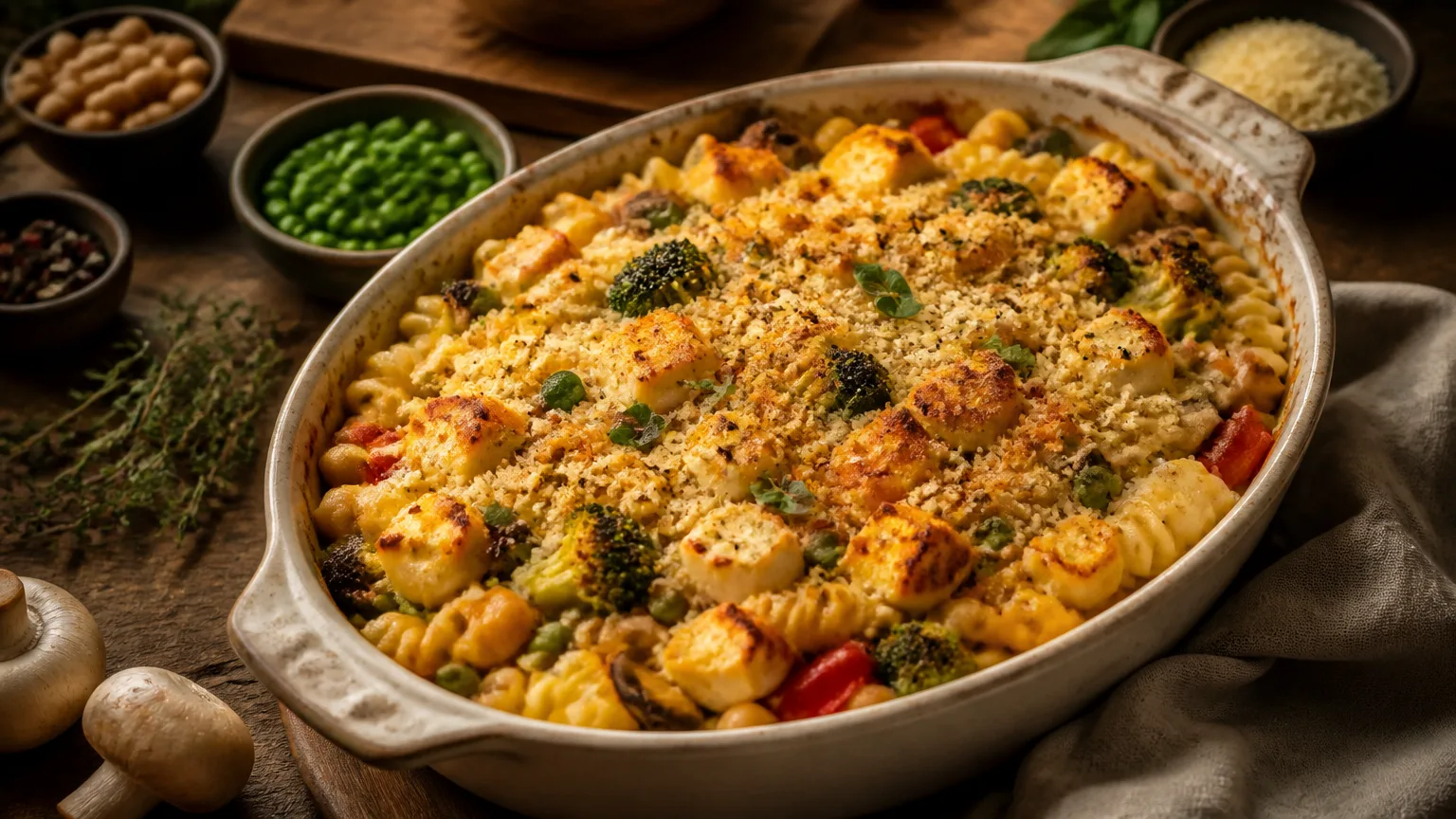
Tuna casserole recipes are beloved for good reason: creamy sauce, tender pasta, savory filling, and a crisp topping create familiar comfort in every bite. This collection reimagines that structure with five vegetarian alternatives inspired by the classic dish, without trying to imitate seafood exactly.
Each version offers its own character and nourishment. You will find hearty legumes, creamy paneer, seasonal vegetables, and plant-based proteins that bring satisfying texture and depth. These recipes also give vegetarians and spiritual seekers flexible ways to adapt a family favorite to their tastes and dietary needs.
For Hare Krishna devotees and those following a sattvic or Vaishnava kitchen tradition, cooking can become an offering. Choose fresh ingredients, prepare them attentively, and keep the process clean and thoughtful. When your tradition calls for it, avoid onion and garlic while building flavor with herbs, spices, ginger, asafoetida, or other suitable ingredients.
The goal is not simply to replace tuna. It is to create a nourishing casserole with the same generous spirit: warm, creamy, wholesome, and easy to share. Whether you are planning a temple meal, a family dinner, or a mindful offering, Hare Krishna Recipes can provide inspiration for cooking with intention.
As you explore the five versions, consider the ingredients that best suit your household. Lentils may provide a hearty base, paneer adds richness, vegetables bring color, and plant-based proteins offer extra substance. Choose one that matches your preferences, then make it with care.
How to Build a Vegetarian Casserole with Tuna Casserole Comfort
Classic tuna casserole recipes feel satisfying because they balance soft noodles, creamy sauce, savory seasoning, and a crisp topping. You can recreate that comfort without fish by building the dish around six essential parts:
- Starch: Choose noodles, rice, potatoes, or quinoa for structure.
- Creamy or savory binder: Use yogurt, milk-based sauce, cashew cream, coconut milk, or blended white beans.
- Protein-rich element: Add chickpeas, white beans, green jackfruit, paneer, tofu, or textured vegetable protein.
- Vegetables: Include peas, mushrooms, spinach, carrots, corn, or cauliflower.
- Aromatic seasoning: Use celery, ginger, cumin, black pepper, fresh herbs, lemon, or asafoetida, also called hing.
- Contrasting topping: Finish with breadcrumbs, crushed crackers, seeds, grated cheese, or toasted nuts.
Choose a Tuna Substitute by Texture
Each vegetarian protein creates a different eating experience. Chickpeas and white beans add a soft, hearty bite, while shredded green jackfruit resembles flaky pieces. Crumbled tofu absorbs sauce well, paneer stays firm and rich, and textured vegetable protein provides a more substantial, chewy texture.
For a devotional or onion- and garlic-free kitchen, build flavor with celery, ginger, hing, cumin, black pepper, lemon, and fresh herbs. These ingredients create depth without requiring alliums. Such choices can support spiritual observance, but they also suit anyone seeking lighter, flexible comfort food.
Build a Creamy Sauce That Bakes Properly
Dairy options include milk thickened with flour, plain yogurt, or a combination of milk and cheese. For dairy-free casseroles, use cashew cream, coconut milk, or blended white beans. Add vegetable stock gradually so the sauce remains thick enough to coat the starch.
Prevent a watery bake by draining canned beans, squeezing excess moisture from tofu, and thawing frozen vegetables before mixing. The sauce should look slightly thicker than desired because vegetables release moisture as the casserole cooks.
Combine the components while the starch is warm, then transfer the mixture to a greased baking dish. Add the topping just before baking so it stays crisp. This simple structure supports approachable vegetarian comfort food while leaving plenty of room for regional flavors and household preferences.
1. Creamy Chickpea and Noodle Casserole
This creamy chickpea and noodle casserole offers the most familiar vegetarian take on classic tuna casserole. It combines tender pasta, green peas, carrots, celery, and a smooth white sauce with chickpeas for a satisfying, protein-rich filling.
Using both mashed and whole chickpeas creates a better texture. Mashed chickpeas blend into the sauce and provide body, while whole chickpeas add pleasantly substantial bites. The result feels hearty without becoming heavy.
Ingredients and Preparation
Use egg noodles or another short pasta, depending on your preference. For a fully vegetarian dish, check that the noodles contain no animal-based ingredients.
-
Cook the pasta: Boil the noodles in salted water until slightly underdone. They will continue cooking in the oven. Drain them well to prevent a watery casserole.
-
Prepare the vegetables: Lightly cook diced carrots and celery until just tender. Stir in the peas during the final minutes. This preserves their color and gives the vegetables a gentle bite.
-
Make the white sauce: Prepare a simple sauce with butter or oil, flour, and milk. Cook it until smooth and lightly thickened. For a dairy-free version, use plant-based milk and a suitable butter alternative.
-
Build the filling: Mash about one-third of the chickpeas with a fork. Combine them with the remaining whole chickpeas, vegetables, pasta, and white sauce. Season with salt, mild herbs, and paprika for warmth and color.
For sattvic-friendly seasoning, leave out onion and garlic. Use a small amount of grated ginger, fresh parsley, coriander, or a pinch of turmeric instead. Keep the seasoning gentle so the creamy sauce and chickpeas remain central.
Transfer the mixture to a greased baking dish. For the topping, choose breadcrumbs, crushed plain crackers, or toasted sunflower and pumpkin seeds. Add parsley, dried oregano, or a light dusting of paprika before baking.
Bake at 375°F (190°C) until the edges bubble and the topping turns golden, usually 20 to 25 minutes. If the topping browns too quickly, cover the dish loosely with foil for the remaining baking time.
Let the casserole cool for five to ten minutes before serving. This brief rest helps the sauce settle and makes each portion easier to spoon. Present it simply with a fresh green salad or steamed vegetables.
If you enjoy adapting familiar comfort food, explore these vegetarian casserole recipes for more practical ideas. This version also fits naturally into a collection of tuna casserole recipes while replacing seafood with an accessible plant-based staple.
2. Paneer, Pea, and Spinach Pasta Bake
Paneer gives this pasta bake a rich, satisfying texture without seafood or meat. Its mild flavor works well with spinach, peas, and a creamy sauce seasoned with gentle Indian spices. Like many tuna casserole recipes, this version combines a comforting sauce, short pasta, and a crisp topping in one family-friendly dish.
Use about 8 ounces of paneer for a standard baking dish. Cube it into bite-sized pieces if you want distinct, meaty bites throughout the casserole. For a more integrated filling, crumble the paneer with your fingers so it blends into the sauce and pasta.
Cook short pasta, such as shells, penne, or fusilli, until just tender. Reserve a little cooking water before draining. The pasta will continue cooking in the oven, so slightly firm noodles help prevent a soft or mushy bake.
Prepare a mild sauce with milk, Greek yogurt, or a light cream base. Stir in grated ginger, ground cumin, black pepper, and a small amount of turmeric. These spices should warm the dish without overpowering its creamy casserole character.
For an onion- and garlic-free version, omit both ingredients and add a small pinch of hing, also called asafoetida. Check the label if you follow strict dietary practices, since some hing products contain wheat or other additives. A little lemon juice added at the end can brighten the sauce.
Fold the warm pasta into the sauce with the paneer, two handfuls of chopped spinach, and a cup of peas. Fresh spinach wilts quickly, while frozen peas can go straight into the mixture after thawing. Add reserved pasta water, one tablespoon at a time, if the sauce needs a smoother consistency.
Transfer the filling to a greased baking dish and finish it with a light topping. Use a modest layer of grated mozzarella, cheddar, or another mild cheese. For a lighter bake, combine breadcrumbs with a teaspoon of oil and scatter them over the surface instead.
Bake at 375°F (190°C) until the sauce bubbles and the top turns golden, usually 20 to 25 minutes. Let the casserole rest for five minutes before serving. This brief pause helps the creamy sauce thicken and makes the portions easier to serve.
You can adapt the filling while preserving its soft, creamy texture:
Replace paneer with pressed, cubed tofu for a lighter option.
Stir crumbled ricotta into the sauce for extra tenderness.
Use vegan paneer and plant-based milk for a dairy-free bake.
Add chopped bell pepper for more color and mild sweetness.
Serve the casserole with a fresh green salad or steamed vegetables.
3. Mediterranean White Bean and Olive Casserole
This Mediterranean white bean casserole brings brightness to the familiar comfort of tuna casserole recipes. Cannellini beans replace tuna as the protein base, while tomatoes, olives, herbs, and roasted peppers create a savory filling with fresh, layered flavor.
Cook pasta, rice, or another grain until just tender. Reserve a little cooking water, then gently crush about one-quarter of the beans with a fork. The crushed beans release starch and help the sauce cling to the pasta or grains, while the remaining beans maintain a satisfying texture.
Build a Bright Mediterranean Filling
Combine the warm starch with cannellini beans, diced tomatoes, chopped roasted peppers, and sliced olives. Kalamata olives provide a bold, salty note, while milder green olives create a softer flavor. Add oregano, chopped parsley, and lemon zest to balance the richness.
Keep the seasoning adaptable for a devotional kitchen. Use herbs, lemon, and olives for depth, and omit onion or garlic when needed. You can also adjust the olives and feta to suit household preferences or dietary practices.
For more regional inspiration, explore these vegetarian Greek dishes, which pair well with the herbs and ingredients used in this bake.
Choose a Creamy, Soup-Free Sauce
A tomato-cream sauce gives the casserole body without relying on canned condensed soup. Stir crushed tomatoes with a small amount of cream, milk, or unsweetened plant-based milk. Add reserved cooking water until the sauce coats the ingredients without becoming heavy.
For a dairy-free option, blend soaked cashews with water, lemon juice, and a pinch of salt. Fold the cashew cream into the tomato mixture, then taste and adjust the seasoning. Optional crumbled feta adds tang and a lightly salty finish, while a plant-based feta keeps the casserole dairy-free.
Transfer the mixture to a greased baking dish and spread it evenly. The filling should remain moist because the starch will continue absorbing sauce in the oven.
Top the casserole with breadcrumbs, sunflower seeds, or a mixture of chopped parsley and herbs. A drizzle of olive oil helps the topping brown evenly. Bake until the edges bubble and the top turns crisp and golden.
The best texture comes from contrast: the interior should stay soft and creamy, while the topping provides a firm, savory crunch. Serve the casserole with a crisp green salad, steamed vegetables, or roasted zucchini. A squeeze of lemon just before serving brightens the entire dish.
4. Jackfruit and Corn Creamy Casserole
Young green jackfruit creates a flaky, strand-like texture that recalls how tuna separates in a baked casserole. Choose jackfruit packed in water or brine, not ripe jackfruit, which is sweet and fruity. Rinse it thoroughly, drain it well, and pull the pieces into small strands with your fingers or two forks.
Jackfruit contributes texture more than protein. For a more filling dish, combine it with white beans or chickpeas, fold in cubed tofu, or serve the casserole with a protein-rich side. This approach keeps the recipe aligned with the comfort and structure of traditional tuna casserole recipes while using entirely vegetarian ingredients.
Build a Savory Jackfruit Filling
Begin by sautéing the prepared jackfruit in a little oil over medium heat. Cook it for several minutes until excess moisture evaporates and the edges begin to brown. This brief stovetop step prevents a watery casserole and gives the jackfruit a deeper, more savory flavor.
Add corn, peas, and finely chopped celery to the pan. Stir in lemon juice, black pepper, and herbs such as parsley, thyme, or dill. A small pinch of hing, also called asafoetida, can add a subtle savory depth, especially when the casserole contains beans or tofu.
Prepare the pasta separately and drain it while it remains slightly firm. Short shapes such as shells, elbows, or fusilli hold the creamy sauce and distribute the vegetables evenly. Combine the warm pasta with the jackfruit mixture before transferring everything to a greased baking dish.
Add a Creamy Sauce and Bake
Use a cashew sauce, oat-based sauce, or traditional dairy sauce according to your dietary needs. For a cashew version, blend soaked cashews with water, lemon juice, garlic, and a little salt until smooth. An oat or dairy sauce also works well when you want a lighter texture and a faster preparation.
Pour the sauce over the pasta and vegetables, then stir gently to coat each piece. Taste the mixture before baking and adjust the lemon, herbs, or black pepper. If the filling seems dry, add a small amount of vegetable broth or extra sauce.
Top the casserole with breadcrumbs, crushed crackers, or seasoned oats. Bake at 375°F (190°C) until the center is bubbling and the topping is crisp and golden, usually 20 to 25 minutes. Let it rest for five minutes so the sauce can thicken before serving.
Serve this sweet-savory casserole with a green salad, steamed broccoli, or roasted zucchini. The fresh side balances the creamy sauce and corn while adding color and contrast to the plate.
5. Tofu and Vegetable “Tuna” Casserole
This tofu and vegetable casserole is the most adaptable vegan option in this collection of tuna casserole recipes. Crumbled tofu provides substance, mushrooms add umami, and mixed vegetables bring color and texture. A small amount of nori creates a subtle ocean-like note for anyone who wants a seafood-inspired flavor without using fish.
Build the Tofu Filling
Press firm tofu for at least 15 minutes, then crumble it into bite-sized pieces. Mix it with nutritional yeast, lemon juice, mustard, finely chopped celery, salt, and pepper. Add a small amount of crumbled nori or another sea vegetable if you enjoy a savory, ocean-like taste.
Sauté sliced mushrooms until they release their moisture and begin to brown. This step concentrates their flavor and prevents the casserole from becoming watery. Stir in vegetables such as:
Broccoli florets
Peas
Diced carrots
Green beans
Chopped bell pepper
Combine the tofu, mushrooms, and vegetables with cooked pasta or another sturdy gluten-free starch. Short pasta shapes, such as shells or penne, hold the sauce well and make each serving substantial.
Make the Dairy-Free Sauce
For a creamy sauce, blend soaked cashews with oat milk, nutritional yeast, lemon juice, mustard, garlic, and salt. Blend until smooth, then warm the sauce gently in a saucepan before combining it with the filling.
White beans provide another nut-free option. Blend them with oat milk, vegetable broth, nutritional yeast, and seasonings until creamy. The finished sauce should coat a spoon but remain pourable. If it looks too thick, add oat milk or broth one tablespoon at a time. If it seems thin, simmer it briefly or blend in more white beans.
Fold the sauce into the tofu mixture while the pasta remains warm. Transfer everything to a greased baking dish, then add breadcrumbs mixed with olive oil. Bake at 375°F until the center is bubbling and the topping is crisp and golden, usually 20 to 25 minutes.
Use Practical Substitutions
This casserole works well for mixed households because each component can be adjusted without changing the basic method.
No sea vegetables: Omit the nori and add extra mustard, lemon, celery, or capers for savory brightness.
No soy: Replace tofu with mashed white beans, chickpeas, or chopped cauliflower.
No nuts: Use blended white beans or sunflower seeds instead of cashews.
Gluten-free: Choose gluten-free pasta and certified gluten-free breadcrumbs.
No mushrooms: Substitute finely chopped zucchini, eggplant, or additional broccoli.
Let the casserole rest for five minutes before serving. Pair it with a crisp green salad, steamed vegetables, or roasted zucchini for a balanced plant-based meal.
Frequently Asked Questions
Can I make these vegetarian casseroles vegan?
Yes. Replace dairy and egg-based ingredients with plant-based alternatives:
- Use unsweetened soy, oat, or cashew milk instead of milk.
- Choose vegan cheese, nutritional yeast, or blended cashews for richness.
- Replace paneer with pressed tofu or vegan paneer.
- Substitute plain dairy yogurt with unsweetened plant-based yogurt.
- Use olive oil or vegan butter instead of butter.
- Replace egg noodles with wheat, rice, or chickpea pasta without eggs.
Check every label, especially on broth, pasta, cheese substitutes, and prepared sauces.
What is the best tuna substitute for texture?
The best choice depends on the texture you want. Chickpeas provide a firm, flaky bite when lightly mashed, while crumbled tofu absorbs creamy sauces well. Jackfruit offers a stringy texture but needs seasoning, and beans create a softer, heartier filling.
Textured vegetable protein delivers a chewy, protein-rich result after rehydration. Try chickpeas for a classic casserole feel, tofu for a lighter dish, or textured vegetable protein when you want a more substantial center.
How do I keep a vegetarian casserole from becoming watery?
Drain canned vegetables, thawed spinach, and cooked beans thoroughly before combining them. Cook pasta slightly below package directions because it will continue softening in the oven. A thick sauce, made with flour, cornstarch, blended cashews, or reduced plant milk, also helps control moisture.
Let the baked casserole rest for five minutes before serving. This pause allows the sauce to set and prevents liquid from collecting on the plate.
Can I prepare these casseroles without onion and garlic?
Yes. Build flavor with grated ginger, celery, hing, fresh herbs, black pepper, cumin, paprika, or lemon juice. Sautéing celery and ginger in oil creates a savory base without onion or garlic.
Always review packaged ingredients, including broth, spice blends, and cheese alternatives. Some contain onion or garlic powder.
How can I offer a casserole in a Hare Krishna or Vaishnava setting?
Follow your personal tradition or the guidance of your local community. Select suitable ingredients, avoid items restricted in your practice, and prepare the meal with cleanliness, attention, and a respectful mindset.
Cook mindfully, then offer the completed casserole with gratitude according to your tradition. Ingredient choices may vary, so confirm specific standards with your teacher or temple. These practices can add devotional purpose to familiar tuna casserole recipes adapted with vegetarian ingredients.
Choosing the Right Vegetarian Tuna Casserole Alternative
Each vegetarian alternative offers a different texture and flavor profile. Choose chickpea casserole for the closest classic tuna casserole experience, with a hearty bite and familiar savory flavor. Paneer creates a richer, spiced bake, while white beans bring creamy texture and Mediterranean brightness.
For a lighter, flaky texture, try jackfruit, especially with lemon, herbs, and a crisp topping. Tofu provides a vegan, highly adaptable base that absorbs sauces and seasonings well. It also works smoothly in this easy vegetarian recipe for dinner.
Let your dietary needs and spiritual practice guide each substitution. They should support your values, not require compromise. Confirm ingredient standards when needed, and adjust dairy, gluten, or alliums according to your household.
Whichever version you choose, make it thoughtfully and share it generously. Familiar comfort food can become an occasion for mindful cooking, hospitality, and devotion. Then explore more accessible vegetarian meals that bring the same warmth to your table.