
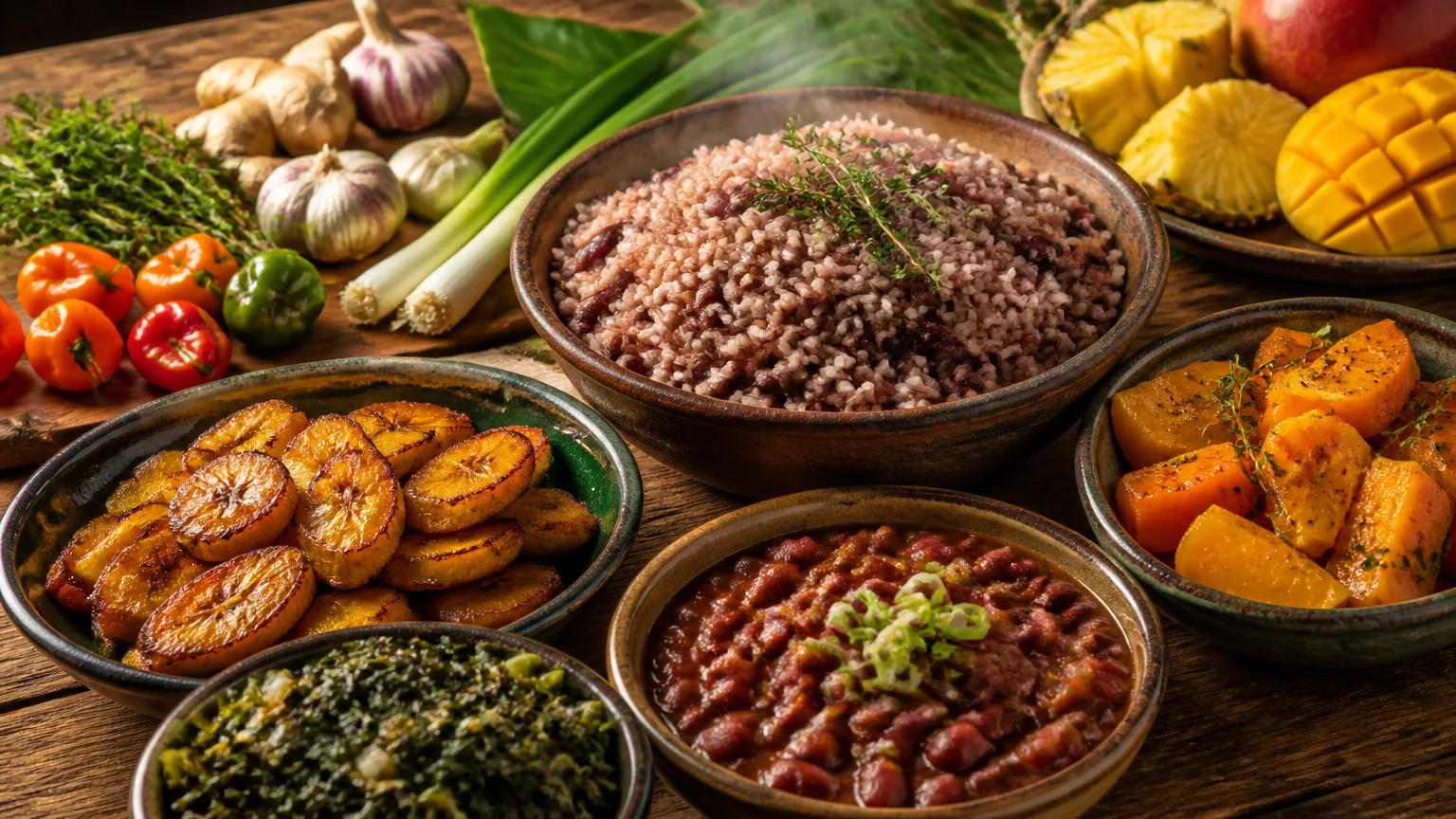
Jamaican food is a vibrant culinary tradition shaped by Indigenous, African, European, Asian, and wider Caribbean influences. Its bold character comes from layered seasoning, fresh produce, aromatic herbs, and cooking methods that turn simple ingredients into deeply satisfying meals.
Vegetarian Jamaican food is not a separate cuisine. It is a plant-based adaptation of Jamaica’s diverse food culture, drawing on naturally meat-free ingredients such as rice, peas, callaloo, pumpkin, plantains, beans, coconut, and root vegetables. Traditional techniques—including slow simmering, careful seasoning, and the balanced use of heat—translate beautifully into vegetarian recipes.
For Hare Krishna readers, these dishes also invite mindful preparation. Cooking with gratitude, care, and clear intention can transform a flavorful meal into an offering that supports a devotional lifestyle. Hospitality remains central, whether you are preparing curry vegetables for family or sharing a colorful plate with guests.
This article serves as both a culinary guide and a thoughtful introduction to Jamaican-inspired vegetarian cooking. You will discover signature flavors, useful pantry staples, approachable recipes, and practical ways to serve a spiritually mindful meal. Explore more devotional cooking ideas through Hare Krishna Recipes as you begin.
The Cultural Roots of Jamaican Food
Jamaican food reflects centuries of movement, exchange, and adaptation. Its flavors developed through Indigenous Caribbean knowledge, African traditions, European colonial rule, Asian migration, and connections across the wider Caribbean. This history makes Jamaican cuisine distinctive without placing it into a single category.
The island’s geography shapes its ingredients. Indigenous Taíno communities cultivated and prepared foods such as cassava and corn. Tropical conditions supported plantains, coconut, beans, rice, and fruits such as mangoes, papayas, pineapples, and breadfruit. These ingredients remain central because they grow well in Jamaica and pair naturally with bold herbs, spices, and sauces.
African culinary traditions became especially influential during and after the transatlantic slave trade. African cooks carried knowledge of seasoning, one-pot meals, leafy vegetables, legumes, and resourceful preparation. Techniques such as pounding, stewing, frying, and combining starches with richly seasoned vegetables helped shape the foundations of Jamaican cooking.
British colonial history also affected the island’s foodways. Imported crops, trade systems, and preserved foods entered Jamaican kitchens, often blending with local ingredients and African methods. This process produced practical dishes that made careful use of available food, including meals built around rice, peas, root vegetables, and slow-cooked sauces.
Indian migration added another important layer. Indian Jamaican communities contributed techniques involving toasted spices, curries, lentils, roti, and vegetable-based preparations. These influences connect Jamaican food to broader Caribbean traditions, where cooking methods and ingredients traveled between islands through migration, trade, and family networks.
Chinese Jamaican communities also shaped the island’s culinary landscape. Stir-frying, noodles, soy-based seasonings, and vegetable-forward combinations became part of Jamaica’s evolving food culture. These influences do not exist as separate compartments. Jamaican cooks have continually adapted outside techniques to local produce, personal taste, and household needs.
Seasoning is central, but Jamaican food involves more than heat or jerk flavor. Cooks build depth through scallions, thyme, ginger, garlic, pimento, peppers, citrus, and carefully balanced salt. Preservation methods, including drying, salting, pickling, and smoking, helped families extend seasonal ingredients and prepare food for travel or shared occasions.
Slow cooking also matters. Simmering beans, braising vegetables, or reducing a sauce allows flavors to develop and creates satisfying textures. Communal meals further express the cuisine’s social character, whether served at home, during celebrations, or through neighborhood food traditions.
A vegetarian adaptation should honor this spirit through technique, seasoning, and texture. For example, mushrooms, jackfruit, eggplant, lentils, or firm tofu can replace meat in a dish while retaining its aromatic base and slow-cooked character. However, not every plant-based version is historically traditional. It is more accurate to describe many recipes as Jamaican-inspired adaptations that respectfully engage with the cuisine’s living, evolving tradition.
The Signature Flavors of Jamaican Vegetarian Cooking
Jamaican vegetarian cooking is defined by balance. Aromatic vegetables, herbs, chile, citrus, coconut, and warm spices create food that tastes layered rather than simply hot. These elements bring heat, sweetness, acidity, savoriness, and fragrance to beans, vegetables, rice dishes, stews, sauces, and marinades.
The Aromatic Base
Many Jamaican-inspired dishes begin with a slow-sautéed base of scallions, onion, garlic, ginger, and thyme. Cooking these ingredients gently allows their natural oils and sweetness to develop before adding beans, vegetables, or grains.
This method builds depth without depending on meat or heavy seasoning. For example, sautéed scallions and garlic can anchor red beans, while ginger and thyme add brightness to coconut rice or a vegetable stew.
Fresh aromatics also strengthen marinades and sauces. Combine minced garlic, grated ginger, scallions, lime juice, and thyme for a flavorful coating for mushrooms, tofu, cauliflower, or roasted vegetables.
Pimento and Warm Spices
Pimento, also called allspice, is one of the defining seasonings in Jamaican food. Its flavor suggests a blend of clove, cinnamon, and nutmeg, giving dishes a warm, fragrant character.
Use whole pimento berries in beans, rice, or stews, then remove them before serving. Ground allspice works well in spice rubs, sauces, patties, and marinades, but use it carefully. A small amount can shape the entire dish.
Other warm spices may include cinnamon, nutmeg, or a touch of clove. These spices are especially effective with sweet potatoes, pumpkin, plantains, coconut, and slow-cooked legumes.
Managing Scotch Bonnet Heat
Scotch bonnet chile contributes both aroma and heat. Its fruity character can make a sauce taste brighter, but the chile’s intensity should not overwhelm the other flavors.
For a milder dish, add a whole Scotch bonnet during cooking and remove it before serving. This perfumes beans, stews, and rice without releasing as much heat. For stronger heat, mince a small portion and distribute it through the dish.
- Start with a small amount, taste, and add more gradually.
- Remove the seeds and inner membrane for a gentler result.
- Wear gloves when handling fresh chiles.
- Balance heat with coconut milk, lime, sweetness, or additional vegetables.
Brightness, Coconut, and Savory Depth
Lime juice adds acidity that lifts rich beans, coconut-based sauces, and roasted vegetables. Add it near the end of cooking to preserve its fresh flavor. Coconut milk contributes creaminess and mild sweetness, especially in rice dishes, curries, and vegetable stews.
For salt-free or reduced-salt cooking, deepen flavor through slow sautéing, toasted spices, fresh herbs, and citrus. Lime, thyme, ginger, garlic, and scallions can make a dish satisfying without relying only on sodium. Toasting allspice or other spices briefly before adding liquid also releases more fragrance and creates a fuller, more savory result.
Essential Ingredients for a Jamaican Vegetarian Pantry
A Jamaican vegetarian pantry begins with affordable staples that build body, warmth, and contrast. You can find most ingredients in a standard grocery store, while an international market may offer fresher herbs, specialty peppers, and traditional flatbreads.
Build meals around grains, legumes, and starches
Rice and peas is a foundational combination in Jamaican food. Kidney beans provide a creamy texture and earthy flavor, while black-eyed peas or lentils offer useful alternatives for soups, stews, and patties. Canned beans simplify weeknight cooking; dried beans cost less and develop deeper flavor when cooked with aromatics.
Plantains and sweet potatoes bring natural sweetness and satisfying texture. Use green plantains for frying or boiling, and ripe plantains for roasting or pan-frying. One bunch can support several meals. Pumpkin or another firm squash thickens soups and adds gentle sweetness.
Rice and peas: Use long-grain rice with kidney beans, coconut milk, thyme, and scallions.
Beans and lentils: Substitute another legume when kidney beans are unavailable, but adjust cooking time and seasoning.
Plantains: Roast ripe slices, fry them, or simmer green plantains in savory dishes.
Sweet potatoes and squash: Add them to stews, curries, or roasted vegetable plates.
Cornmeal and flatbreads: Use cornmeal for porridge or dumpling-style sides. Flatbreads can accompany stewed vegetables when rice is not practical.
Substitutions should preserve balance rather than imitate every original ingredient. For example, lentils cook faster than kidney beans and create a softer texture, so add them later in a stew.
Stock vegetables, greens, and aromatic ingredients
Cabbage, okra, and callaloo support many simple vegetable dishes. Callaloo may be difficult to find, so spinach is a practical substitute, although it cooks more quickly and has a milder character. Okra adds body to soups and stews, while cabbage provides sweetness and a pleasant bite.
Coconut milk creates richness in rice, beans, and vegetable stews. Fresh thyme, scallions, ginger, garlic, and lime add brightness and balance. Beginners can rely on dried thyme, ground allspice, paprika, and other ground spices when fresh ingredients are unavailable.
Scotch bonnet peppers bring distinctive heat and fruitiness. Use a mild pepper when needed, recognizing that it will provide flavor without the same intensity. Add pepper gradually, especially when serving children or guests with different heat preferences.
Shop and prepare for less waste
Cook a large batch of beans and freeze portions for future meals. Save cabbage cores, scallion ends, herb stems, and other clean vegetable trimmings for stock. Ripe plantains can be prepared in multiple ways, helping one purchase stretch across breakfasts, sides, and main dishes.
Vegetarian Jamaican Recipes to Cook at Home
Build a satisfying Jamaican-inspired vegetarian meal by combining one hearty centerpiece, one bright vegetable dish, and one fresh accent. This approach reflects the layered character of Jamaican food while keeping each preparation manageable at home. For more ideas, explore these easy meal ideas to nourish your body and spirit.
Start with Simmered Staples
Rice and peas is a natural foundation for a meat-free plate. Cook kidney beans with rice, coconut milk, thyme, scallions, garlic, and measured chile heat. Coconut milk adds richness, while thyme and scallions provide the savory, herbal flavor associated with this classic dish.
Serve rice and peas as a main dish with vegetables or as a side for stew. Rice and beans provide complementary proteins when eaten together, and the combination becomes more satisfying with greens, vegetables, or tofu. Use cooked beans from a large batch to reduce preparation time.
A Jamaican vegetable stew offers another substantial centerpiece. Begin by browning pumpkin, sweet potato, okra, and other firm vegetables in oil. Add tomatoes, legumes, garlic, ginger, thyme, and warming spices, then simmer until the vegetables soften and the liquid thickens.
Browning creates roasted notes before the liquid is added. Slow simmering then allows the tomatoes, spices, legumes, and vegetables to build deeper flavor. Serve the stew over rice or alongside flatbread to absorb the fragrant sauce.
Roast with Jerk-Inspired Seasoning
Roasting concentrates the natural sweetness of vegetables and creates crisp edges. Try carrots, cauliflower, squash, mushrooms, tofu, or tempeh with a jerk-inspired marinade made from:
Scallions and fresh thyme
Grated ginger and garlic
Lime juice and zest
Ground allspice
A small amount of chile or hot pepper
Adjust the chile gradually. The marinade should deliver fragrance, acidity, and warmth without overpowering the food. Tofu and tempeh benefit from extra marinating time, while mushrooms absorb the seasoning quickly.
Add Quick Sides and Fresh Contrast
Balance slow-cooked dishes with a fast cabbage-and-carrot sauté. Cook shredded cabbage, carrots, scallions, and a little thyme over high heat until tender but still lively. For a leafy option, prepare callaloo-style greens with garlic, onion, and a splash of lime.
Fried or baked plantains provide caramelized sweetness against spicy or savory dishes. Use ripe plantains with darkened skin for the sweetest result, and bake them when you want less oil.
Finish the plate with something cool and fresh. A mango-lime relish, cucumber salad, or bowl of tropical fruit cuts through rich coconut sauces and chile heat. This contrast keeps each bite balanced and makes a simple vegetarian spread feel complete.
Adapting Jamaican Food for a Hare Krishna Vegetarian Table
Jamaican food can inspire a flavorful devotional meal, but each Hare Krishna kitchen follows its own standards. Many devotees avoid meat, fish, eggs, onion, and garlic. Others follow guidance from their spiritual teacher, temple, or local community. Always confirm which ingredients and practices apply to your household.
Traditional Jamaican cooking often builds flavor with onion, garlic, scallions, thyme, Scotch bonnet pepper, allspice, and other aromatic ingredients. When onion and garlic are not used, cooks can create a different but satisfying foundation with hing, ginger, celery, herbs, scallions where appropriate, and toasted spices.
For example, a Jamaican-inspired bean stew might begin with celery, grated ginger, thyme, allspice, and a small amount of hing. Coconut milk adds richness, while lime juice and fresh herbs brighten the finished dish. This approach honors the dish’s flavor direction without claiming to reproduce every traditional ingredient or method.
Ingredient awareness also supports respectful cultural appreciation. Name a recipe accurately, such as “Jamaican-inspired kidney bean stew,” when it has been adapted for devotional practice. A vegetarian or sattvic version should not replace Jamaican culinary history or suggest that one interpretation represents the entire cuisine.
In many Hare Krishna traditions, prasadam refers to food prepared with devotion and offered to Krishna according to the practitioner’s lineage and practice. A dish does not become inherently sacred through its name alone. Its spiritual significance comes from sincere offering, conscious preparation, and the devotee’s relationship with the practice.
Before cooking, select clean ingredients and organize the workspace. Prepare each step attentively rather than rushing through the meal. Toast spices carefully, taste with awareness, and maintain gratitude for the farmers, cooks, and natural resources that made the food possible.
After preparation, follow your established offering practice. Some households offer the complete meal in a dedicated space before serving it. Others follow specific temple or teacher guidance. The process may differ, but the central principle remains attentive service.
Generous sharing extends that service beyond the kitchen. Serve rice, cabbage, plantains, beans, or coconut-based vegetables to family and guests without presenting your adaptation as the definitive form of Jamaican food. For additional morning inspiration, explore these Hare Krishna breakfast recipes.
A mindful meal can therefore connect culinary curiosity with devotion. Jamaican-inspired flavors bring warmth and character, while ingredient choices, offering practices, and respectful language keep the table aligned with personal and community values.
How to Build and Serve a Balanced Jamaican Vegetarian Meal
A balanced Jamaican vegetarian meal should offer contrast in every bite. Combine creamy, spicy, fresh, crisp, and softly cooked elements instead of serving several rich dishes together.
A practical sample plate might include:
- Coconut rice and peas for a creamy, savory base.
- Jerk-seasoned vegetables or tofu for heat, aroma, and protein.
- Steamed callaloo, cabbage, or another leafy green for freshness.
- Baked plantain for gentle sweetness and caramelized edges.
- Mango-lime relish or another fruit-based condiment for brightness.
Balance rich coconut dishes with acidic or fresh foods. Pair spicy jerk flavors with cooling cucumber, avocado, or lightly dressed greens. If the main dish has a soft texture, add roasted vegetables, baked plantain, or toasted coconut for contrast. These simple choices make Jamaican food feel satisfying without becoming heavy.
For a weekday dinner, work in a steady sequence. Start the beans or rice first, then mix the jerk marinade and coat the tofu or vegetables. While the rice cooks, roast the vegetables and prepare the greens. Finish with fresh herbs, sliced scallions, lime juice, or fruit relish just before serving. This order protects delicate flavors and keeps the meal warm without rushing.
A Sunday gathering can expand the same framework into communal dishes. Serve rice and peas in a broad bowl, place jerk tofu on a colorful platter, and offer greens, plantains, and condiments separately. Guests can build plates according to their preferences, whether they want more heat, sweetness, or fresh flavor.
For a shared devotional meal, presentation and welcome matter as much as the menu. Use bright serving dishes, arrange foods by color, and provide generous portions for sharing. Invite guests to experience the meal respectfully without assuming they share the same spiritual beliefs. A brief explanation of the ingredients or offering practice can create understanding while keeping hospitality at the center.
Frequently Asked Questions About Jamaican Vegetarian Food
What is Jamaican food?
Jamaican food is a broad cuisine shaped by the island’s history, climate, agriculture, and cultural exchanges. It includes dishes, ingredients, and cooking methods influenced by African, Indigenous, European, Indian, and Chinese traditions.
It is not one fixed dish or flavor. Rice and peas, plantains, vegetable sides, legumes, soups, and richly seasoned sauces all reflect the range of Jamaican cooking.
Is Jamaican food vegetarian?
Much traditional Jamaican food includes meat or seafood, such as jerk chicken, curry goat, and fish. However, the cuisine also offers many ingredients that adapt well to vegetarian cooking.
Beans, peas, lentils, cabbage, callaloo, plantains, rice, and root vegetables can form satisfying main dishes. Mushrooms, jackfruit, tofu, or additional legumes can replace meat while preserving a dish’s aromatic base and hearty texture.
What makes Jamaican food taste Jamaican?
Key flavor contributors include:
Allspice, often called pimento
Fresh thyme and scallions
Ginger and garlic
Coconut and lime
Chile peppers
Balanced sweet-savory seasoning
No single ingredient appears in every recipe. Jamaican flavor develops through layering, such as sautéing aromatics, toasting spices, and finishing a coconut stew with lime.
Can Jamaican vegetarian food be prepared without onion and garlic?
Yes. Cooks can build depth with hing, ginger, thyme, scallions when appropriate, celery, chile peppers, and toasted spices. Coconut milk, lime, allspice, and roasted vegetables also add body and fragrance.
This approach is an adaptation rather than a claim about every traditional preparation. Check packaged seasonings and sauces carefully, since onion and garlic may appear in curry powders, bouillon, or bottled marinades.
How can Jamaican-inspired food support Hare Krishna devotional practice?
Jamaican-inspired cooking can become spiritually meaningful through mindful preparation, gratitude, offering, and generous sharing. A cook might prepare rice and peas or a vegetable curry with focused attention, offer the meal according to their devotional practice, and then serve it respectfully.
This personal practice does not define all Jamaican cuisine. It allows readers to connect vibrant island-inspired flavors with their own values while honoring the food’s cultural roots and welcoming guests with care.
Bringing Jamaican Flavor and Devotional Intention to the Table
Jamaican food reflects a rich, varied cultural identity shaped by history, migration, agriculture, and community. Vegetarian and Hare Krishna-friendly recipes are thoughtful adaptations, not replacements for that tradition. They engage Jamaican flavors with respect while making room for plant-based nourishment and devotional practice.
Begin with one approachable dish, such as rice and peas, seasoned vegetables, fried or baked plantains, or a coconut-based stew. Build your confidence by balancing rich, spicy, fresh, and bright elements. Over time, you can create a complete menu with beans, greens, tropical fruit, relishes, and cooling salads.
As you cook, honor the cuisine’s cultural roots and describe adaptations accurately. Prepare ingredients with attention, follow your offering practice, and welcome guests without assuming they share your beliefs. These simple actions turn meal preparation into an opportunity for mindfulness and service.
A thoughtfully prepared meal can nourish the body and awaken gratitude. When shared with generosity, it also strengthens community. Let each dish become an invitation to cook with care, honor tradition, and bring devotional intention to the table.