
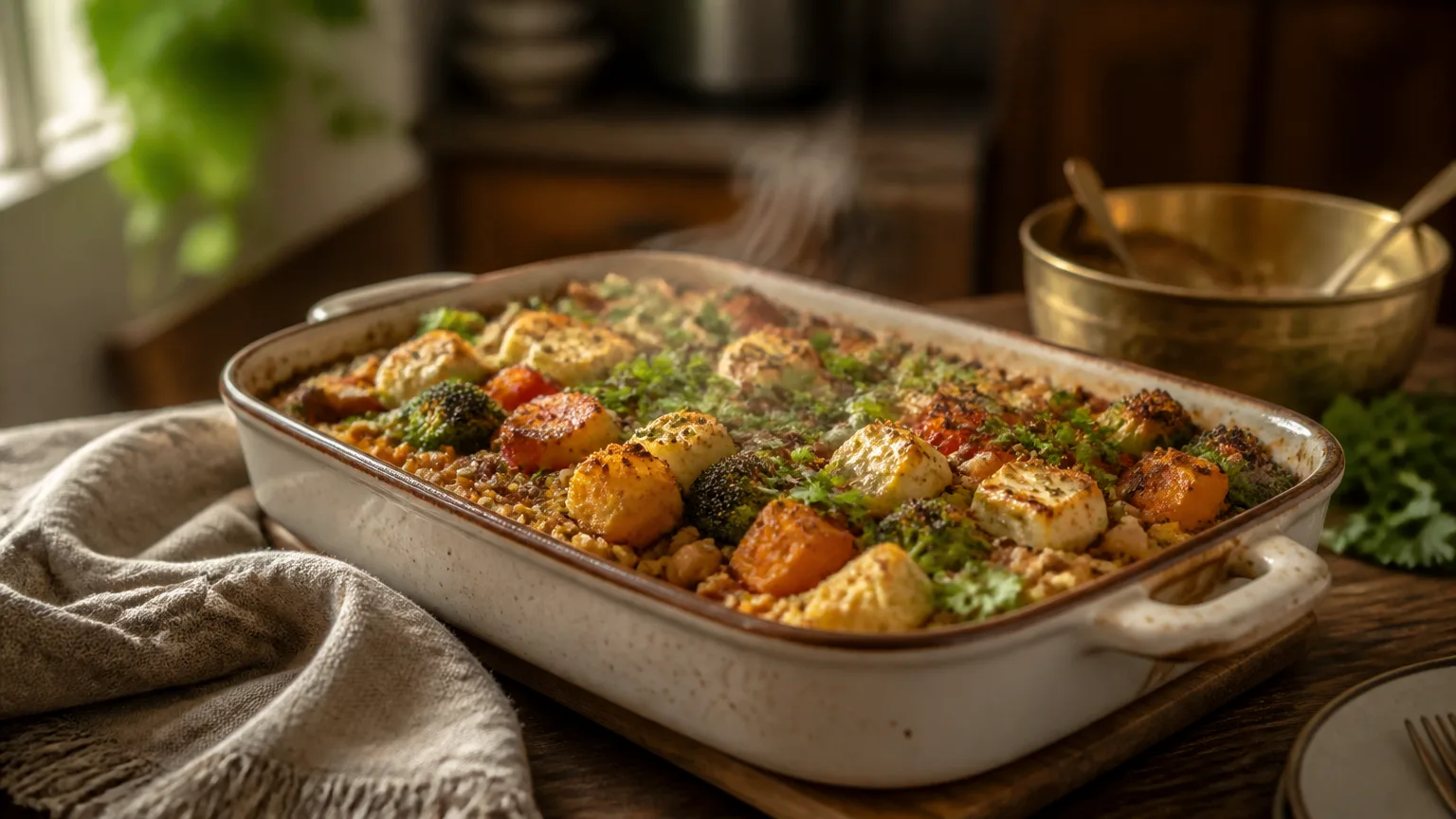
Casserole recipes offer a practical way to create nourishing, shareable vegetarian meals with the warmth of home cooking. Baked grains, seasonal vegetables, legumes, paneer, and warming spices come together in satisfying dishes that feed both family and community.
This collection brings comfort food into a mindful kitchen. Fresh ingredients, careful preparation, and gratitude can transform an ordinary meal into an act of hospitality. Suitable dishes may also be offered to Krishna before eating, according to your personal devotional practice.
The recipes reflect the welcoming spirit of broader ISKCON-inspired vegetarian cooking without requiring one specific observance or temple standard. Ingredients and preparation methods should always be adapted to your tradition, dietary needs, and offering practices. For further inspiration, explore these ISKCON vegetarian recipes for spiritual growth.
From creamy paneer bakes to hearty lentil and vegetable layers, these ideas make meatless cooking feel generous rather than restrictive. Prepare them slowly, serve them warmly, and let each casserole support meaningful connection around the table.
1. Creamy Paneer and Spinach Rice Casserole
This creamy paneer and spinach rice casserole brings together basmati rice, tender greens, and mild Indian spices. It suits a family lunch, Sunday gathering, or prasadam-inspired meal that feels generous and comforting.
Layer cooked basmati rice, sautéed spinach, paneer, and a yogurt or cream-based sauce in a baking dish. The sauce keeps each layer moist, while the rice prevents the casserole from becoming heavy or dense. Finish with fresh coriander or chopped herbs before baking until warm and lightly golden.
Use cumin, coriander, ginger, turmeric, and garam masala in moderate amounts. These spices create a fragrant profile without overpowering the spinach, paneer, or creamy sauce. For a lighter variation, replace paneer with firm tofu or add roasted cauliflower. Coat either substitute well with the sauce to maintain a soft, cohesive texture.
Among comforting casserole recipes, this dish stands out for its balance of richness and greens. Serve it with cucumber raita, a crisp salad, or warm flatbread for a complete vegetarian meal.
2. Vegetable Korma and Potato Bake
This celebratory vegetable korma and potato bake brings creamy Indian-inspired flavor to the table. It combines potatoes, carrots, peas, and cauliflower in a crowd-friendly casserole that offers an approachable alternative to stovetop korma.
Par-cook the firm vegetables before assembling the dish. Boil or steam the potatoes, carrots, and cauliflower until nearly tender, then add the peas during the final minute. This prevents an undercooked center while preserving each vegetable’s distinct color and texture.
For the sauce, blend soaked cashews with water, or use coconut milk for a naturally rich finish. Plain yogurt also adds body and gentle tang. These options create a smooth, satisfying sauce without relying on meat-based stock.
Layer the vegetables in a baking dish, pour over the korma sauce, and bake until bubbling and lightly golden. Adjust the chili to suit children or a community meal; use mild curry powder and add heat at the table. Among versatile casserole recipes, this bake works especially well with rice, chapati, or a simple cucumber salad.
3. Baked Kofta and Tomato Casserole
This baked kofta casserole turns tender vegetable dumplings into a complete vegetarian centerpiece. Shape the kofta from grated vegetables, paneer, chickpeas, or potatoes, then season them with fresh herbs, ginger, cumin, and coriander.
Bake the kofta until firm and lightly golden before adding the sauce. This extra step helps them hold their shape as the casserole finishes cooking. For a detailed method, see these baked kofta balls in tomato sauce.
Prepare the tomato sauce with onions, garlic, herbs, and warm spices. Reduce it until thick and concentrated. A loose sauce can make the kofta fall apart, while a reduced sauce lets them absorb flavor without becoming soggy.
Arrange the baked kofta in the sauce and return the dish to the oven until bubbling. This festive, shareable casserole suits devotional meals, community gatherings, and family dinners. Serve it with steamed rice, jeera rice, or warm flatbread to create a satisfying centerpiece among your favorite casserole recipes.
4. Lentil, Sweet Potato, and Coconut Casserole
This nourishing casserole combines roasted sweet potatoes, lentils, coconut milk, and gentle spices in one satisfying dish. It delivers plant-based protein and fiber, making it a practical choice for weeknight casserole recipes and make-ahead meals.
Roast cubed sweet potatoes until browned at the edges and tender inside. Roasting concentrates their natural sweetness and prevents them from becoming watery in the baking dish. Simmer lentils separately with garlic, cumin, turmeric, and a mild curry powder.
Choose red lentils for a soft, dal-like bake that blends easily with the coconut sauce. Brown or green lentils hold their shape better and create a more defined, textured filling. Stir in coconut milk, then combine the mixture with the roasted sweet potatoes.
Control the liquid carefully. Use just enough coconut milk to keep the casserole spoonable, not soupy, and allow it to rest for 10 minutes after baking. Assemble it a day ahead, refrigerate, and bake until bubbling. Finish with lime juice, chopped cilantro, or toasted pumpkin seeds for brightness and crunch.
5. Creamy Broccoli, Cauliflower, and Quinoa Bake
This modern vegetarian casserole combines fluffy quinoa, tender broccoli, and cauliflower in a creamy sauce. It delivers plant-based protein and satisfying texture without feeling overly heavy.
Rinse the quinoa thoroughly to remove its natural bitterness. Cook it separately, or partially cook it before baking, to prevent uneven hydration and a crunchy center. Steam the vegetables until just tender, then combine them with the quinoa in a greased baking dish.
Choose the sauce based on your household’s needs:
- Cashew sauce: Blend soaked cashews with vegetable broth, lemon juice, and garlic for a rich dairy-free option.
- Béchamel: Whisk butter, flour, and milk for a classic, velvety finish.
- Yogurt sauce: Stir Greek yogurt with broth and seasonings for a lighter, protein-rich variation.
Top the casserole with breadcrumbs, crushed roasted nuts, or rolled oats. Each option adds contrast without overwhelming the vegetables. Bake until bubbling and lightly browned, then rest for five minutes before serving. These balanced casserole recipes pair well with a crisp green salad or roasted carrots.
6. Eggplant, Chickpea, and Tomato Layer Bake
This Mediterranean-Indian crossover combines roasted eggplant, chickpeas, tomato sauce, and fragrant herbs. It stands alone as a complete meal, making it a practical choice among hearty casserole recipes.
Start by slicing the eggplant and salting it for 20 minutes. Pat it dry, then roast until lightly browned and tender. This step removes excess moisture and creates silky layers instead of a watery bake.
For the filling, season chickpeas with oregano and basil for Mediterranean flavor. Alternatively, use cumin and coriander for a warmer Indian-style profile. Stir the chickpeas into tomato sauce with garlic, onion, and a pinch of chili if desired.
Layer the roasted eggplant, chickpeas, and sauce in a baking dish. Repeat until the ingredients are used, finishing with tomato sauce and a light sprinkle of herbs. The layers soften together while the chickpeas add substance and satisfying texture.
Bake until bubbling and lightly browned. Rest the casserole for 10 to 15 minutes before serving so the layers set and the tomato juices distribute evenly. Serve with a green salad, warm flatbread, or cooling yogurt.
7. Paneer Tikka and Bell Pepper Rice Casserole
Bring the bold flavors of paneer tikka to the table with this colorful, one-dish bake. Paneer, bell peppers, onions, yogurt, and fragrant spices create a festive centerpiece among comforting casserole recipes.
Marinate paneer in thick yogurt, lemon juice, garam masala, cumin, paprika, ginger, and garlic. Briefly sear or roast the pieces before assembling the casserole. This step builds smoky flavor while keeping the paneer tender instead of rubbery.
For the rice layer, combine rinsed raw rice with the vegetables, marinade, and measured liquid. Use about 1¾ cups of liquid for each cup of long-grain rice, then cover tightly and bake until tender. If using par-cooked rice, reduce the liquid to prevent a soggy casserole.
Layer the rice mixture with roasted paneer, sliced bell peppers, and onions in a greased baking dish. Cover and bake until the rice absorbs the liquid, then uncover briefly to develop lightly golden edges. Rest the casserole for 10 minutes before serving.
Finish with chopped cilantro, fresh mint, and lemon juice. A spoonful of mint chutney or cooling yogurt adds bright contrast. The red, yellow, and green peppers also make this dish especially appealing for festive vegetarian tables.
8. Creamy Corn, Potato, and Green Bean Casserole
Sweet corn, tender potatoes, and green beans create a familiar, family-friendly bake. A light homemade cream sauce keeps this vegetarian casserole comforting without relying on canned soup.
Use fresh vegetables when they are in season, or choose frozen options for convenience. Thaw frozen corn and green beans first, then drain them well to prevent excess liquid from thinning the casserole.
To make the sauce, melt butter or ghee in a saucepan. Whisk in flour, then gradually add milk, stirring until smooth and lightly thickened. Season with herbs, salt, and black pepper before folding the sauce through the vegetables.
For broad appeal, use parsley and plenty of black pepper. For an Indian-inspired variation, add cumin and turmeric to the sauce, then finish with fresh coriander. Layer the mixture in a greased baking dish and bake until bubbling and lightly golden.
Rest the casserole for five minutes before serving. It pairs well with a green salad, warm roti, or simple steamed rice among comforting casserole recipes.
9. Spinach, Mushroom, and Pasta Casserole
This savory pasta bake combines spinach, mushrooms, garlic, and a creamy or tomato-based sauce. To build depth without meat, brown the mushrooms in batches over medium-high heat. Crowding the pan causes steaming, which can make the casserole watery instead of richly caramelized.
Sauté garlic with the mushrooms, then fold in thoroughly squeezed cooked spinach. Use mozzarella, provolone, ricotta, or a vegetarian Parmesan-style cheese for a creamy finish. For a dairy-free option, stir nutritional yeast into the sauce and add a cashew topping blended with lemon juice and garlic.
Cook the pasta slightly under al dente because it continues cooking in the oven. Combine it with the sauce and vegetables, then transfer everything to a greased baking dish. Top with cheese, breadcrumbs, or the dairy-free cashew mixture, and bake until bubbling and lightly golden.
Rest the casserole for five minutes before serving. Among practical casserole recipes, this one feels comforting without becoming overly heavy; pair it with a crisp salad or roasted vegetables.
10. Savory Besan, Vegetable, and Yogurt Bake
This gluten-free bake transforms besan, or chickpea flour, into a savory, protein-rich casserole. Yogurt creates a tender, custard-like texture, while vegetables add color, fiber, and gentle sweetness. Serve it for breakfast, lunch, or a light dinner.
Whisk the besan thoroughly with yogurt, water, salt, and seasonings to remove lumps. Let the batter rest briefly so the flour hydrates and bakes evenly. Use vegetables with limited moisture, such as grated carrot, peas, spinach, or finely chopped bell pepper. Excess liquid can prevent the center from setting.
Fold the vegetables into the batter, then pour it into a greased baking dish. For added fragrance, prepare an optional tempering with mustard seeds, cumin, curry leaves, or sesame seeds, and spoon it over the top before baking. Omit the tempering when following devotional practices that avoid particular ingredients.
Bake until the center is set and lightly golden. Rest the casserole for several minutes before slicing, allowing its soft texture to firm. Among practical casserole recipes, this dish offers satisfying nourishment without feeling heavy.
11. Mexican-Style Black Bean and Corn Rice Casserole
For bold, globally inspired casserole recipes, layer cooked rice with drained black beans, corn, diced tomatoes, and sliced peppers. Stir salsa or crushed tomatoes through the mixture to provide moisture without making the dish watery. Add cumin, oregano, garlic, and fresh herbs for warmth and depth.
Spread the layers in a greased baking dish, cover with foil, and bake until hot and bubbling. Use mild salsa for family meals, or add chopped jalapeño and extra chili for a more robust flavor. Check prepared spice blends and sauces carefully, since some ingredients may not suit every devotee’s personal spiritual observance.
Rest the casserole briefly before serving so the rice settles and the flavors develop. Finish each portion with avocado, cilantro, lime juice, or cooling yogurt. These fresh toppings balance the baked layers and add color, creaminess, and brightness.
12. Root Vegetable and White Bean Shepherd’s Pie
Reimagine shepherd’s pie as a hearty vegetarian casserole with white beans, carrots, peas, and tender root vegetables. The creamy filling sits beneath a golden mashed potato topping, creating a complete one-pan meal with deeply comforting texture.
Build the filling by sautéing the vegetables with garlic and herbs. Stir in vegetable stock and a little flour, or blend in lentil puree, to thicken the mixture before adding the topping. Fold in the white beans and peas, then simmer until the filling is rich but not soupy.
For more flavor and color, combine potatoes with parsnips, sweet potatoes, or cauliflower. Parsnips add sweetness, sweet potatoes create a vibrant topping, and cauliflower makes the mash lighter. Spread it evenly over the filling, then drag a fork across the surface to create ridges that brown in the oven.
Bake until the edges bubble and the topping turns golden. Let the casserole rest for 10 minutes before portioning, so the filling sets and each serving holds its shape.
13. Mung Bean, Vegetable, and Rice Khichdi Casserole
This oven-baked khichdi casserole adapts a soothing Indian staple into a simple, restorative meal. Split mung dal cooks faster than many legumes, making it ideal for a soft bake with rice, vegetables, ghee or oil, turmeric, cumin, and a pinch of salt.
Rinse the mung dal carefully until the water runs mostly clear. Combine it with rinsed rice, diced carrots, peas, or zucchini, then add warm vegetable stock and your chosen spices. Transfer the mixture to a covered baking dish and bake until the grains, dal, and vegetables become tender.
Adjust the liquid to match your preferred texture:
- Use extra stock for a loose, porridge-like khichdi.
- Use less stock for a firmer, sliceable casserole.
Stir in ghee or oil before baking, or drizzle it over the finished dish for added richness. Avoid strong spices that can overpower its gentle flavor. Serve each portion simply with plain yogurt, chopped cilantro, fresh mint, or a small vegetable side. Among comforting casserole recipes, this one suits quiet dinners, mindful eating, and meals that feel nourishing without being heavy.
14. Butternut Squash, Sage, and Ricotta Casserole
Roasted butternut squash brings natural sweetness and a caramelized flavor to this seasonal vegetarian bake. Roast peeled squash cubes until tender and browned before assembling the casserole. This step removes excess moisture and prevents a watery filling.
Toss the squash with cooked pasta, farro, or another hearty grain. Fold in ricotta, paneer, cottage cheese, or blended tofu for a creamy, protein-rich layer. Add chopped sage, black pepper, and lemon zest to balance the squash’s sweetness. A small pinch of chili can add warmth if it suits your cooking tradition.
Transfer the mixture to a greased baking dish and top it with breadcrumbs, pumpkin seeds, or sunflower seeds. Bake until bubbling and lightly golden. The crisp topping contrasts with the soft squash and creamy filling without requiring intense seasoning.
Rest the casserole for five minutes before serving. Among comforting casserole recipes, this dish pairs well with a bitter green salad, steamed greens, or roasted vegetables.
15. Ekadashi-Friendly Buckwheat and Vegetable Casserole
This buckwheat and vegetable casserole offers a hearty alternative when rice, beans, corn, or other restricted foods are omitted. Use cooked buckwheat groats for a textured base, or combine buckwheat flour with yogurt or coconut cream for a softer, sliceable bake.
Before cooking, confirm your ingredients and preparation method. Ekadashi rules vary by lineage and individual practice, so buckwheat, potatoes, dairy, coconut products, and each spice may not suit every observance. Review Ekadashi ISKCON recipes and observance guidance and follow the guidance of your spiritual authority.
Ingredients and Preparation
- 2 cups cooked buckwheat groats or buckwheat-flour batter
- 2 diced potatoes
- 2 cups seasonal vegetables, such as carrots, squash, or spinach
- ¾ cup plain yogurt or coconut cream
- 1 teaspoon cumin seeds
- ½ teaspoon turmeric, if permitted
- Salt and fresh herbs, according to practice
Layer the potatoes, vegetables, and buckwheat in a greased baking dish. Whisk the yogurt or coconut cream with the spices, pour it over the layers, and bake until tender and lightly golden.
Keep the seasoning simple and prepare the dish intentionally. Offer the finished casserole according to your devotional practice rather than presenting it as universally Ekadashi-compliant. Rest for 10 minutes before serving with plain yogurt or fresh herbs.
Frequently Asked Questions About Vegetarian Casseroles
How do I keep a vegetarian casserole from becoming watery?
Remove excess moisture before assembling the dish. Sauté or roast watery vegetables, drain canned beans and tomatoes, and cook grains or legumes correctly. Avoid adding more liquid than the recipe requires.
Let the casserole rest for 5 to 15 minutes after baking. This pause allows sauces to thicken and layers to set, making each serving easier to portion.
Can these casseroles be made vegan?
Yes. Replace paneer, yogurt, cream, ricotta, and cheese with suitable plant-based options. Firm tofu, cashew cream, coconut milk, and dairy-free cheese can provide richness and structure.
Adjust the seasoning and moisture as needed. For example, coconut milk adds liquid, while cashew cream creates a thicker sauce.
Can I prepare a casserole in advance?
Most casserole recipes can be assembled one day ahead. Cover the dish, refrigerate it safely, and add extra baking time because the ingredients start cold.
Keep breadcrumbs, nuts, and other crunchy toppings separate until baking. Add them just before the casserole enters the oven to preserve their texture.
How should I adapt these recipes for offering?
Follow the ingredients and preparation methods required by your personal or temple standards. Cook attentively, maintain a clean preparation space, and avoid assuming that every vegetarian ingredient suits every devotional practice.
Offer the finished food before eating it. The spiritual practice is part of the preparation and sharing, not a garnish added afterward.
Which casserole is best for a community meal?
Choose sturdy dishes that scale well and hold their texture during serving. Good options include:
- Kofta tomato bake
- Vegetarian shepherd’s pie
- Paneer rice casserole
- Lentil and sweet potato bake
Prepare a test batch when serving a large group. Check seasoning, portion size, holding time, and dietary needs before the main meal.
Making Vegetarian Casseroles Part of a Devotional Kitchen
These casserole recipes offer more than convenient meatless meals. Across the collection, you will find varied textures and formats, from fragrant rice bakes and comforting khichdi to kofta, pasta, shepherd’s pie, and seasonal vegetable casseroles. Each dish can nourish a family, anchor a gathering, or provide a generous centerpiece for conscious hospitality.
A devotional kitchen treats preparation, sharing, and offering as connected expressions of care. Choose fresh ingredients, cook attentively, and consider the people you will serve. A creamy paneer bake may suit a family dinner, while a lentil casserole or vegetable kofta bake can provide practical nourishment for a larger community meal.
Adapt flavors and ingredients respectfully. Adjust spice levels for children, replace vegetables according to the season, and follow your household’s devotional practices when selecting ingredients. When serving guests, communicate clearly about dairy, nuts, gluten, and other dietary needs.
For continued meal planning, explore Hare Krishna vegan recipes for more plant-based inspiration. These ideas can help you build balanced menus beyond the baking dish while keeping mindful cooking at the center.
Begin with one casserole that fits your table. Prepare it with attention, offer it according to your practice, and share it warmly. Small, deliberate acts in the kitchen can become meaningful expressions of nourishment, gratitude, and connection.