
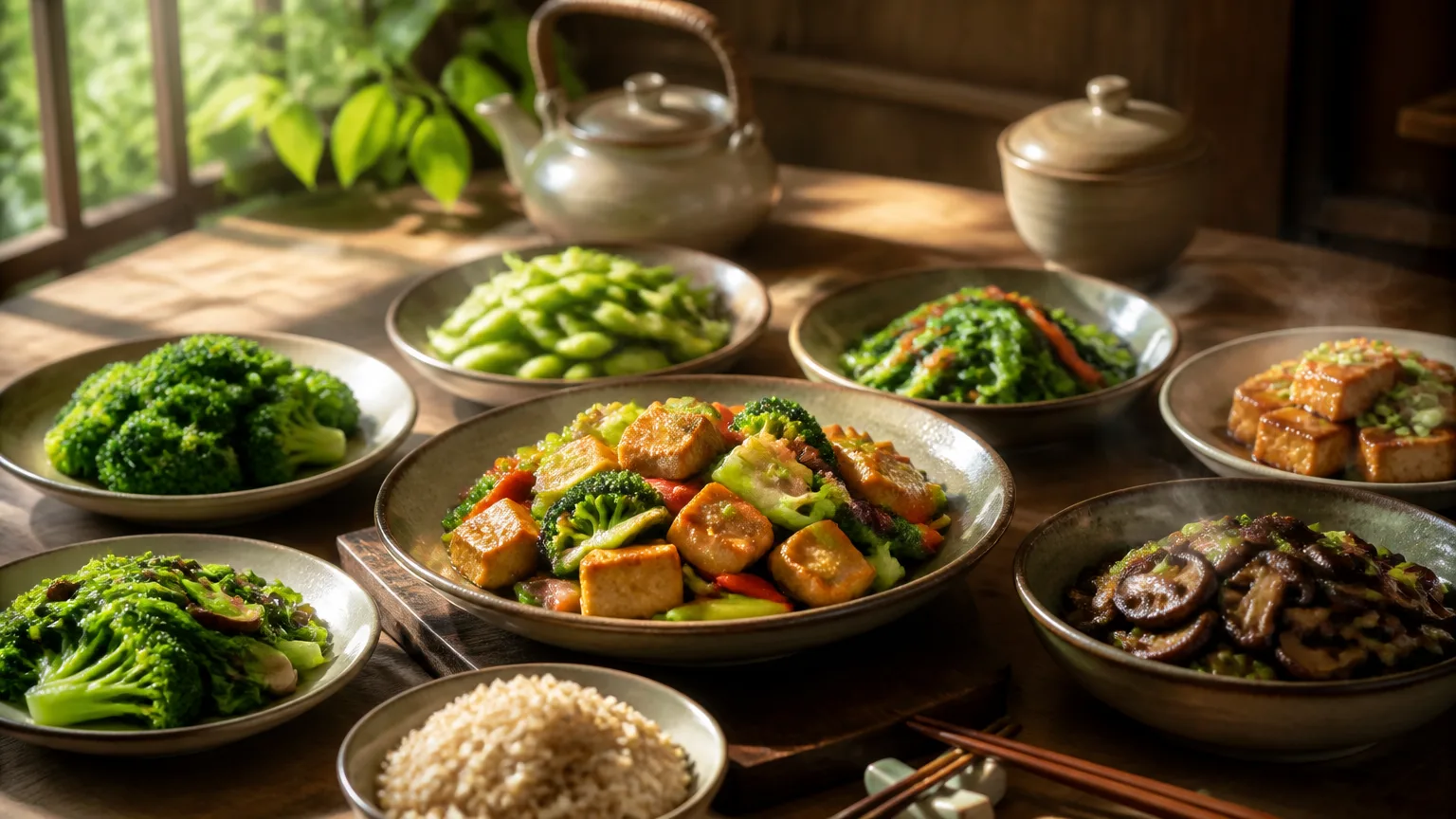
Healthy Chinese food options can bring bold flavor, nourishment, and variety to a vegetarian table. This collection shows how vegetables, tofu, mushrooms, legumes, and whole grains can create satisfying meals with moderate oil and sodium. Each dish can be prepared without meat, fish, eggs, or heavily processed ingredients.
Mindful cooking also offers a chance to work with cleanliness, gratitude, and devotional intention before offering food to Krishna. Practitioners who follow sattvic preferences may also choose to avoid onion and garlic. Simple swaps, fresh herbs, and balanced seasonings help preserve flavor while supporting these choices.
These recipes draw inspiration from Chinese flavors rather than claiming to represent every traditional regional dish. They reflect adaptable home cooking designed for vegetarian and sattvic preferences. For additional inspiration, explore these ISKCON Chinese recipes and discover how familiar ingredients can become nourishing devotional offerings.
1. Vegetable Stir-Fry with Tofu
A vegetable stir-fry with tofu is an easy, protein-rich starting point for healthy Chinese food options. Use firm or extra-firm tofu, broccoli, bell peppers, carrots, snap peas, and cabbage for colorful contrast, varied textures, and essential nutrients.
Pan-sear the tofu until golden before adding the vegetables. This step helps the tofu hold its shape and adds satisfying texture. Cook the vegetables briefly so they remain crisp and vibrant.
Finish with a light sauce made from tamari or reduced-sodium soy sauce, ginger, rice vinegar, and a small amount of sesame oil. Omit onion and garlic, or replace them with hing, extra ginger, celery, or scallion greens according to your devotional standards. Serve over brown rice or steamed grains for a balanced meal.
2. Steamed Vegetable Dumplings
Steamed vegetable dumplings offer a lighter choice among healthy Chinese food options. Fill egg-free wrappers with finely chopped cabbage, carrots, shiitake mushrooms, tofu, ginger, and sesame. Add water chestnuts for extra crunch and texture.
Choose steaming instead of deep-frying to reduce added oil. This method preserves the dumplings’ delicate texture while allowing the vegetables’ natural flavors to remain fresh. Steam them until the wrappers turn tender and slightly translucent.
For vegan diners, check that prepared wrappers contain no eggs or dairy. You can also make a simple dough with flour, warm water, and a pinch of salt. Serve the dumplings with tamari, rice vinegar, and grated ginger for a flavorful dipping sauce without heavy ingredients.
3. Brown Rice or Millet Fried Rice with Vegetables
Turn chilled, cooked brown rice, millet, or quinoa into a satisfying fried-rice-style meal. Cold grains stay distinct during cooking, so you can use less oil. This simple dish is one of the most practical healthy Chinese food options for vegetarians.
Heat a small amount of sesame oil in a skillet or wok. Add peas, carrots, corn, and shredded cabbage, then cook until crisp-tender. Stir in cubed tofu or scrambled tofu for plant-based protein, color, and texture.
Season with tamari, grated ginger, and a sprinkle of toasted sesame seeds. Fresh cilantro or scallion greens can add brightness without relying on large amounts of soy sauce. For a sattvic version, omit onion and garlic, and use extra ginger or fresh herbs instead.
4. Sautéed Bok Choy with Ginger and Sesame
Sautéed bok choy turns a simple leafy green into a quick, satisfying side dish. It supplies hydration, fiber, vitamin C, vitamin K, and other micronutrients while cooking in only a few minutes.
Warm a small amount of sesame oil in a skillet, then add sliced bok choy and grated ginger. Stir-fry until the stems become crisp-tender and the leaves wilt. Finish with a splash of tamari and toasted sesame seeds for depth without a heavy sauce.
This preparation fits many healthy Chinese food options and encourages exploration beyond familiar vegetables. If you enjoy discovering foods that begin with B, try baby bok choy, Shanghai bok choy, or other leafy greens. Serve with brown rice, tofu, or steamed grains for a balanced vegetarian meal.
5. Hot and Sour Vegetable Soup
Hot and sour vegetable soup offers a warming, satisfying choice among healthy Chinese food options. Build the broth with vegetable stock, mushrooms, bamboo shoots, carrots, cabbage, and tofu. Rice vinegar adds brightness, while white pepper creates gentle heat and savory depth.
Mix cornstarch with water, then stir it into the simmering soup. This creates a silky texture without cream or animal products. Adjust the vinegar and pepper gradually to balance the sour and savory flavors.
For a sattvic-friendly version, use ginger and white pepper for warmth. Omit onion, garlic, and excessively hot chilies when desired. Add cilantro or scallion greens before serving, and pair the soup with brown rice for a more complete meal.
6. Mapo Tofu with a Mild Vegetarian Sauce
Mapo tofu becomes one of the most adaptable healthy Chinese food options when prepared with a mild vegetarian sauce. Replace ground meat with minced shiitake mushrooms, tempeh, or finely crumbled tofu. These ingredients provide savory flavor and a hearty texture without adding meat.
Use a small amount of doubanjiang and Sichuan pepper for traditional depth. For less heat, reduce both or substitute mild miso, mushroom seasoning, and a pinch of white pepper. Simmer the tofu gently with ginger, mushrooms, and the sauce to preserve its soft texture.
If you follow strict devotional cooking standards, check fermented sauces carefully. Some products contain hidden onion, garlic, or animal-derived ingredients. Serve this dish with brown rice or steamed vegetables for a balanced vegetarian meal.
7. Chinese-Style Braised Eggplant
Chinese-style braised eggplant becomes tender, savory, and satisfying with a modest amount of sauce. Roast or steam the eggplant first to soften it and reduce the oil needed during braising.
For the sauce, combine grated ginger, rice vinegar, tamari, toasted sesame, and a small amount of jaggery or another natural sweetener. Eggplant absorbs flavor readily, so a little sauce creates a rich taste without making the dish heavy. This preparation fits healthy Chinese food options and works well for vegetarian or sattvic meals.
Serve the eggplant over brown rice, quinoa, or steamed grains. For a sattvic version, omit onion, garlic, and overly hot chilies, then add fresh herbs or scallion greens if they suit your cooking standards.
8. Vegetable Chow Mein with Whole-Grain Noodles
Vegetable chow mein becomes one of the more satisfying healthy Chinese food options when vegetables make up most of the dish. Use cabbage, bok choy, carrots, mushrooms, bell peppers, and tofu or edamame for plant-based protein, color, and texture.
Choose whole-grain or buckwheat noodles for added fiber. Cook them just until tender, then toss them with a light dressing made from ginger, tamari, rice vinegar, and a small amount of sesame oil. This keeps the noodles flavorful without creating a greasy result.
For a lower-carbohydrate meal, increase the vegetables and reduce the noodle portion. The dish will remain filling and appealing, especially with extra tofu or edamame. Those exploring vegetarian keto meal ideas can use more vegetables and protein while limiting noodles further. For a sattvic version, omit onion and garlic, using extra ginger or fresh herbs instead.
9. Crispy Baked Tofu with Sesame-Ginger Glaze
Crispy baked tofu delivers satisfying texture without deep-frying. Press firm tofu thoroughly, cut it into cubes, and coat it lightly with cornstarch. Bake or air-fry the pieces until golden and crisp, turning them halfway through cooking.
For the glaze, whisk together grated ginger, tamari, rice vinegar, sesame seeds, and a small amount of maple syrup or jaggery. Toss the hot tofu with the glaze just before serving to preserve its crisp coating. This preparation works well in grain bowls, wraps, or vegetable plates.
Serve it with steamed greens and brown rice. Together, these ingredients provide plant-based protein, fiber, and complex carbohydrates, making this dish one of the most balanced healthy Chinese food options. For a sattvic version, choose onion- and garlic-free sauces.
10. Buddhist-Style Vegetable and Mushroom Rice Bowl
Combine steamed rice with mushrooms, snow peas, carrots, leafy greens, bamboo shoots, and tofu. Add a modest sauce made with reduced-sodium soy sauce, ginger, rice vinegar, and a little sesame oil. This simple bowl is one of the most flexible healthy Chinese food options for vegetarians.
The format makes seasonal cooking easy. Use cabbage in winter, fresh greens in spring, or leftover roasted vegetables to reduce waste while keeping the plate balanced with grains, vegetables, and plant-based protein. Explore more ingredient ideas through these foods that start with G.
This dish draws inspiration from Buddhist vegetarian traditions, which often emphasize simplicity and mindful preparation. However, Chinese religious cuisines vary, so they should not be treated as identical to every Buddhist or spiritual food practice. For a sattvic version, omit onion and garlic and check sauces carefully.
Preparing Chinese Vegetarian Food with Intention
These ten dishes show how healthy Chinese food options can support balanced vegetarian eating. Build meals around colorful vegetables, plant protein, whole grains, moderate oil, and thoughtfully chosen seasonings. Tofu, mushrooms, edamame, brown rice, and leafy greens provide fiber, nourishment, and satisfying texture.
Adapt each recipe to your dietary needs and devotional kitchen standards. Check sauces and wrappers for hidden animal ingredients, onion, or garlic. Replace them with ginger, hing, fresh herbs, celery, or scallion greens when appropriate for your household practices.
Cook attentively, taste with gratitude, and prepare suitable dishes as offerings according to your tradition. The ingredients matter, but spiritual significance also comes from sincere intention, care, and service. For more inspiration, explore these Krishna recipes for spiritual enjoyment. With mindful choices, familiar Chinese flavors can become nourishing meals and meaningful devotional offerings.