
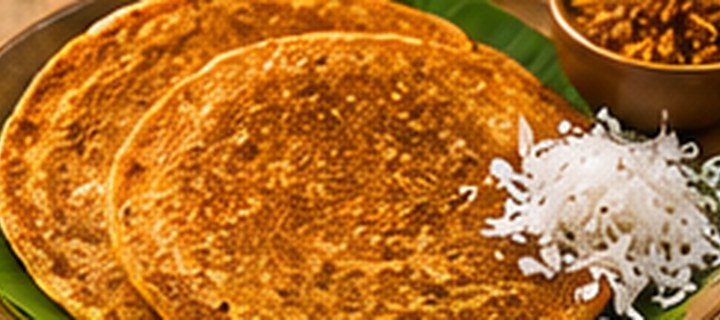
Eliappe is a sweet rice-based pancake preparation that combines soaked rice, softened poha, jaggery and cardamom. A little ghee in the skillet gives the edges a golden finish. This version is made without eggs, onion or garlic and uses a moderate quantity of jaggery for a sweet breakfast or a small festival prasadam portion.
Why use both rice and poha?
Soaked rice forms the main batter, while softened flattened rice contributes a softer texture. The two ingredients absorb water differently; soaking rice for several hours and briefly moistening poha helps them grind smoothly. Use plain poha and measure the dry amounts before adding water. Avoid ready-seasoned mixes.
Using jaggery in a pancake batter
Jaggery brings a caramel-like flavor that differs from white sugar. Finely grate a block or weigh the powdered form so the quantity is consistent. Blend it with the soaked rice to distribute it evenly. Since jaggery dissolves and changes batter thickness, add the grinding water gradually rather than assuming that the full amount will always be needed.
Cooking sweet pancakes gently
These pancakes contain sugar, so the outside can brown before the center is set. A medium-low griddle temperature and small portions are more reliable than large, thick pancakes. Wait for the lower surface to firm before turning. If the first pancake becomes too dark, lower the heat and give subsequent ones more time.
Bhakti Thought
Sweet preparations can be made simply and with moderation. Offer a portion with gratitude and share the rest in a spirit of hospitality.
PrintEliappe (Sweet Rice and Jaggery Pancakes)
Small sweet rice and flattened-rice pancakes with jaggery, cardamom and ghee, made without eggs, onion or garlic.
- Prep Time: 20 minutes
- Soaking and batter resting: 360 minutes
- Cook Time: 25 minutes
- Total Time: 405 minutes
- Yield: 6 servings 1x
- Category: Breakfast
- Method: Pan frying
- Cuisine: Indian
- Diet: Vegetarian
Ingredients
- 1 cup uncooked white rice (200 g)
- 1/2 cup thick poha (flattened rice; 40 g)
- 1/2 cup finely grated jaggery (90 g)
- 1/2 teaspoon ground cardamom
- 1 pinch fine salt (about 0.5 g)
- About 3/4 cup water (180 ml), for grinding, plus more as needed
- 2 tablespoons ghee (28 g), for cooking
- Additional clean water for soaking
US & metric measurements — original 1× batch
Use either measurement, not both. Equivalents are approximate; original specified weights are preserved. Counts, optional quantities and amounts to taste remain as written. This reference is for the original batch; multiply both quantities if scaling the recipe.
1 cup uncooked white rice (200 g)
1/2 cup (approx. 120 mL) thick poha (flattened rice; 40 g (approx. 1.41 oz by weight))
1/2 cup finely grated jaggery (90 g)
1/2 teaspoon (approx. 2.5 mL) ground cardamom
1 pinch fine salt (about 0.5 g (approx. 0.02 oz by weight))
About 3/4 cup water (180 ml), for grinding, plus more as needed
2 tablespoons ghee (28 g), for cooking
Additional clean water for soaking
Approximate kitchen conversions: NIST and ingredient-specific baking weights.
Instructions
- Rinse the rice and soak in clean water for 4 hours, then drain. Rinse poha briefly, drain, and let it soften for 5 minutes.
- Blend soaked rice with jaggery and part of the measured water until smooth. Grind softened poha separately with a little water, then combine the mixtures. The batter should be thick and spoonable.
- Cover and rest for 2 hours in the refrigerator. Stir in cardamom and salt, adding a small amount of water only if needed to obtain a thick pouring consistency.
- Heat a heavy skillet over medium-low heat and grease lightly with ghee. Spoon in roughly two tablespoons of batter per pancake. Allow the underside to set before turning; cook about 2–3 minutes per side until golden brown and cooked throughout. Reduce heat if the jaggery browns too quickly.
- Repeat to make approximately 12 small pancakes. Serve warm after reserving a separate portion for offering.
Notes
- Weigh jaggery for consistent sweetness; block and powdered forms pack differently. This adaptation reduces the original sweetener proportion.
- Use thick poha, not seasoned instant poha.
- The sugar content encourages browning; keep heat moderate to avoid a burned exterior and raw center.
- Contains milk-derived ghee. Estimated nutrition is per two pancakes.
- Ingredient quantities and cooking times are editorial estimates; confirm through kitchen testing.
- Nutrition values are estimates per serving unless otherwise specified.
Nutrition
- Serving Size: 1/6 of prepared batch
- Calories: 250
- Sugar: 15 g
- Sodium: 36 mg
- Fat: 4.9 g
- Saturated Fat: 2.9 g
- Unsaturated Fat: 1.7 g
- Trans Fat: 0.1 g
- Carbohydrates: 45 g
- Fiber: 1 g
- Protein: 3.6 g
- Cholesterol: 12 mg
Serving suggestions
Serve two small warm eliappe pancakes as part of a vegetarian breakfast or a special prasadam snack. The cardamom flavor is pleasant without syrup, but the dish may also accompany plain yogurt if appropriate. For a gathering, use several lightly greased skillets and serve the pancakes shortly after cooking.
Storage and reheating
Keep the resting batter refrigerated and cook it the same day. Refrigerate cooked pancakes within two hours and use within three days. Reheat gently on a skillet until hot; excessively high heat can make the jaggery-darkened surfaces bitter. Do not leave the rice batter warm for an extended period.
Dietary information
The dish contains rice and is not suitable for a standard grain-free Ekadasi fast. Ghee is milk-derived; neutral oil can replace it in a vegan variation. Jaggery is added sugar, so the pancakes should not be described as sugar-free. Nutrition is estimated from the measured dry rice, poha, jaggery and cooking fat.
Frequently Asked Questions
Can I substitute sugar for jaggery?
Yes, although the characteristic caramel flavor will be milder. The amount of sweetness may need adjustment.
Why do my pancakes burn?
The jaggery can brown quickly. Lower the heat, use smaller portions and allow the centers to cook.
Can I make these without eggs?
Yes. The rice and poha are the binding ingredients; eggs are not needed.
Can I use only rice flour?
It would require a different water ratio and texture adjustment; this recipe is designed for soaked rice and poha.