
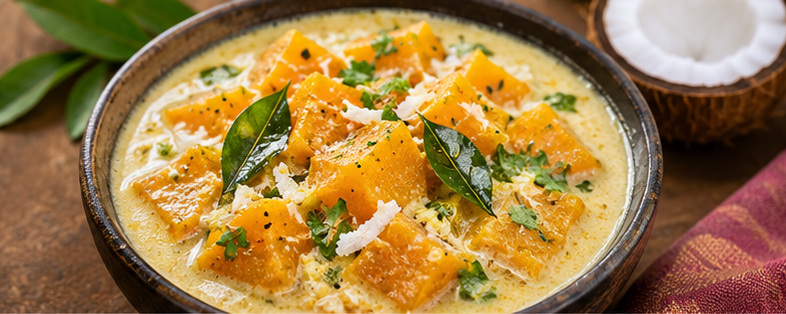
Soft pumpkin pieces in a light coconut milk stew, without peas, grains, curry leaves or packaged seasoning. This independently standardized fasting adaptation is designed for those who take permitted food on Ekadasi. Confirm local observance rules, particularly dairy, vegetables and seasonings; a complete fast is a separate practice.
Serving image: AI-generated illustration, not a photograph of a kitchen-tested recipe. Any pictured garnishes or additional seasonings are not part of this fasting preparation. Follow only the written ingredient list and your own Ekadasi observance rules.
A simplified coconut stew for Ekadasi
Kerala olan traditionally has several variations involving pumpkin, coconut milk and sometimes legumes. This adaptation removes peas and curry leaves entirely, focusing on squash and plain coconut milk. Its pale, mild sauce complements the natural sweetness of pumpkin without elaborate spices. Some fasting traditions vary in accepted vegetables and coconut products; follow local guidance.
Choosing pumpkin and coconut milk
Use firm cooking pumpkin or butternut squash. Cut away all seeds and fibrous portions before weighing. Choose unsweetened coconut milk, preferably coconut and water only, with no added grain starch or questionable flavorings. Full-fat coconut milk is used in the estimate; a permitted light version gives a thinner stew.
Keep the cubes intact
Cook the pumpkin in a little water until nearly tender before adding coconut milk. Stir gently with a broad spoon. Coconut milk can separate if boiled hard, so warm the final stew over low heat. Add just enough water for a spoonable consistency, and do not thicken with flour or cornstarch.
Bhakti Thought
A simple vegetable stew can be prepared with little effort, leaving time for hearing and chanting.
PrintEkadasi Pumpkin Coconut Stew
Soft pumpkin pieces in a light coconut milk stew, without peas, grains, curry leaves or packaged seasoning.
- Prep Time: 15 minutes
- Cook Time: 20 minutes
- Total Time: 35 minutes
- Yield: 4 servings 1x
- Category: Main course
- Method: Stovetop
- Cuisine: Kerala-inspired
- Diet: Vegan
Ingredients
- 500 g peeled and seeded pumpkin or butternut squash, cubed
- 1 cup plain unsweetened coconut milk (240 ml), without grain-derived additives
- 1/2 cup water (120 ml), plus more if needed
- 1/4 teaspoon pure rock salt (1.5 g), optional
- 1 pinch freshly ground black pepper (0.2 g), optional
US & metric measurements — original 1× batch
Use either measurement, not both. Equivalents are approximate; original specified weights are preserved. Counts, optional quantities and amounts to taste remain as written. This reference is for the original batch; multiply both quantities if scaling the recipe.
500 g (approx. 1.1 lb) peeled and seeded pumpkin or butternut squash, cubed
1 cup plain unsweetened coconut milk (240 ml), without grain-derived additives
1/2 cup water (120 ml), plus more if needed
1/4 teaspoon pure rock salt (1.5 g), optional
1 pinch freshly ground black pepper (0.2 g (approx. 0.01 oz by weight)), optional
Approximate kitchen conversions: NIST and ingredient-specific baking weights.
Instructions
- Peel and seed the pumpkin. Cut into evenly sized 2 cm (approx. 0.79 in) cubes.
- Place the cubes in a clean saucepan with measured water and optional salt. Bring to a gentle simmer.
- Cover and cook for 10–15 minutes until the pumpkin is nearly tender. Stir carefully so cubes retain their shape.
- Add coconut milk and warm over low heat for 3–5 minutes until the pumpkin is completely tender. Do not boil vigorously.
- Add optional pepper and reserve an offering portion before serving.
Notes
- Makes 4 portions. Intended for food-taking Ekadasi observance; follow your guru or temple's specific restrictions.
- No grains, legumes (including peanuts), onion, garlic, eggs, mushrooms, mustard, sesame, hing or mixed seasonings. Use clean cookware and fresh, uncontaminated ingredients.
- Nutrition estimates use representative ingredient data, including optional measured salt. Proportions and times are not kitchen-tested.
- Ingredient quantities and cooking times are editorial estimates; confirm through kitchen testing.
- Nutrition values are estimates per serving unless otherwise specified.
Nutrition
- Serving Size: 1/4 of prepared batch
- Calories: 151
- Sugar: 4.4 g
- Sodium: 156 mg
- Fat: 12.9 g
- Saturated Fat: 11.4 g
- Unsaturated Fat: 1.5 g
- Trans Fat: 0 g
- Carbohydrates: 9.8 g
- Fiber: 0.6 g
- Protein: 2.5 g
- Cholesterol: 0 mg
Serving a simple fasting-day meal
Serve a modest warm portion alongside a permitted potato or plantain preparation, or on its own. Do not accompany this stew with ordinary rice, bread or legumes on Ekadasi. Offer a separate portion first. The mild flavors make it a straightforward addition to a prasadam meal.
Storage and reheating
Refrigerate promptly within two hours and consume within three days. Reheat gently until steaming hot, stirring to combine any separated coconut fat. Add a little water if necessary. Do not leave coconut milk preparations at room temperature for extended periods.
Diet and nutrition
This plant-based recipe contains coconut and no dairy, grains or legumes. Coconut milk provides much of its fat and energy. The estimate uses typical full-fat coconut milk and four equal portions; brand composition varies considerably. Optional rock salt is included in the sodium estimate.
Frequently Asked Questions
Can I add black-eyed peas as in some olan recipes?
Not for Ekadasi. This version deliberately excludes all legumes.
Can I use fresh coconut milk?
Yes, prepare it from suitable fresh coconut and clean water.
Can I make it without pepper?
Yes. No spice is required.
Why did the coconut milk separate?
It may have been boiled too vigorously; reheat gently and stir.