
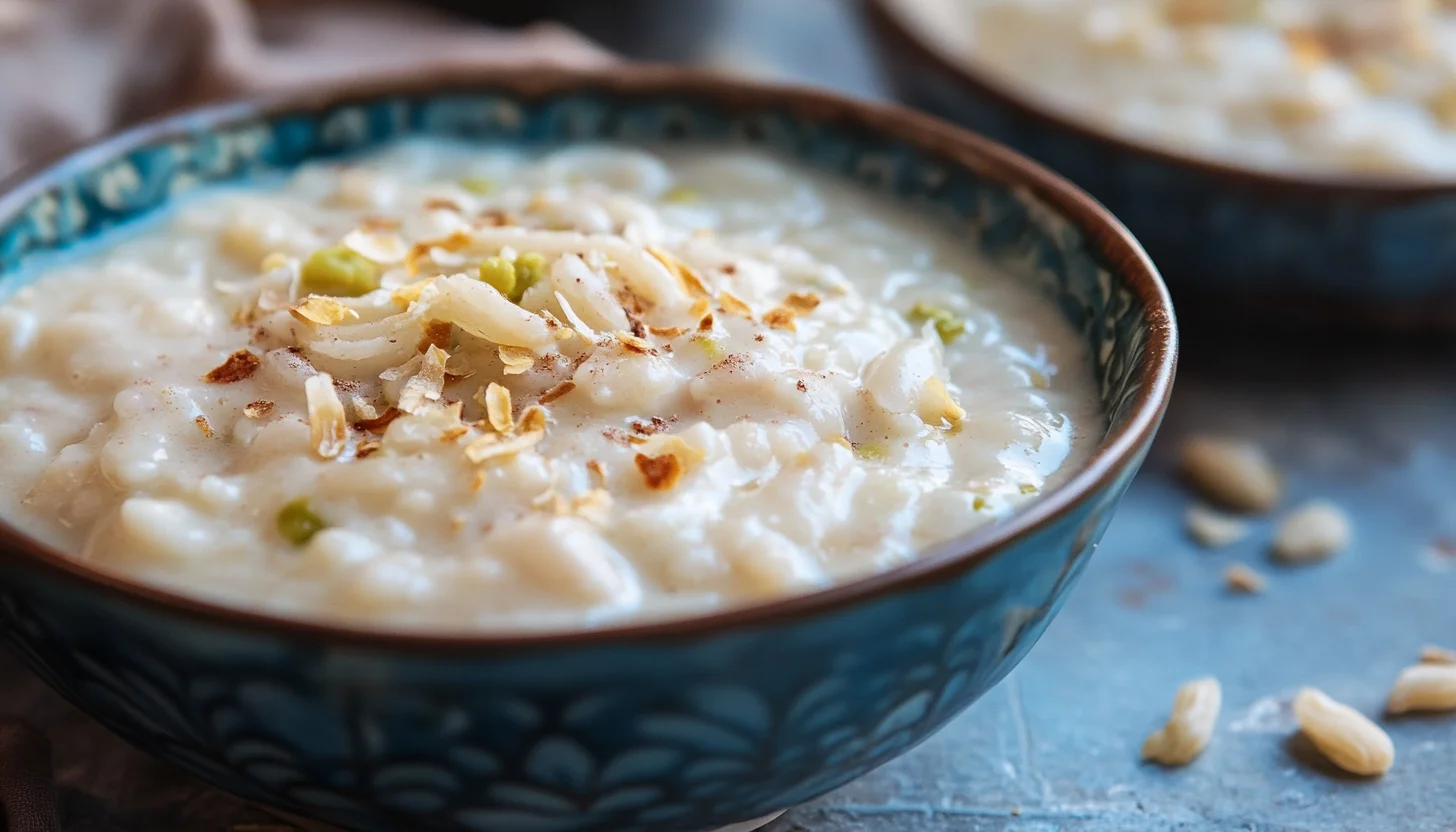
Rice kheer is a milk-based pudding in which rice and milk slowly thicken together. This bulk recipe is planned for small dessert bowls rather than large individual meals. It keeps the traditional cardamom, raisins and almonds but moderates added sugar, uses pasteurized milk and excludes alcohol-based flavor extracts or decorative foil.
This recipe is designed as a separate production guide for temple kitchens, Sunday feasts, community meals and prasadam distribution. It serves 100 as part of a planned menu; the recipe card is the baseline and the scaling guidance below is based on that yield.
Portion and yield planning
Approximately 100–130 g dessert per serving, depending on milk reduction.
The quantities are editorial planning estimates. Make a 25-serving trial with your actual ingredients and equipment before committing to a larger event. Weigh the finished batch and divide by the number of servings; allow a separately planned reserve for serving losses and additional guests.
Equipment and kitchen workflow
Four 8–12 L (8–13 qt) heavy milk-safe pans or commercial steam-jacketed kettles, scales, stirring paddles, sanitized probe, shallow cooling pans and sufficient refrigeration or blast chilling.
Divide production into four labeled 25-serving sets for 100 guests. For 250 servings plan ten sets; for 500 plan twenty. Use larger commercial equipment only within its rated capacity, and adjust the number of batches to match the available staff and time. Assign roles for receiving and washing ingredients, weighing, cooking, temperature monitoring and portioning.
Technique for consistent large batches
Milk is particularly prone to scorching in a large pot. Cook in shallow, manageable batches with moderate heat and a dedicated person stirring regularly. Use a clean immersion probe to check holding and cooling temperatures. Add sugar after the rice is tender, since early addition can affect hydration. Finished weight varies with evaporation; weigh the total before portioning. A warm spoonable pudding will become thicker after chilling.
Bhakti Thought
Plan the meal so preparation is orderly and service is generous without waste. Follow the measured recipe without tasting before the offering; reserve an untouched portion for Krishna and share the prasadam with care.
PrintCreamy Rice Kheer for 100 People

Rice kheer is a milk-based pudding in which rice and milk slowly thicken together. A measured 100-serving no-onion, no-garlic vegetarian recipe with batch scaling and service guidance.
- Prep Time: 25 minutes
- Soaking or resting: 30 minutes
- Cook Time: 90 minutes
- Total Time: 145 minutes
- Yield: 100 servings 1x
- Category: Dessert
- Method: Stovetop
- Cuisine: Indian
- Diet: Vegetarian
Ingredients
- 14 L (3.7 US gal) Pasteurized whole milk
- 850 g (1.87 lb) Dry basmati rice
- 1.1 kg (2.43 lb) Granulated sugar
- 250 g (8.82 oz) Raisins
- 250 g (8.82 oz) Sliced unsalted almonds
- 18 g (0.63 oz) Ground green cardamom
- 1 g (0.04 oz) Saffron threads, optional
- 100 g (3.53 oz) Pure ghee, for lightly coating rice
US & metric measurements — original 1× batch
Use either measurement, not both. Equivalents are approximate; original specified weights are preserved. Counts, optional quantities and amounts to taste remain as written. This reference is for the original batch; multiply both quantities if scaling the recipe.
14 L (approx. 58.33 US cups) (3.7 US gal) Pasteurized whole milk
850 g (1.87 lb) Dry basmati rice
1.1 kg (2.43 lb) Granulated sugar
250 g (8.82 oz) Raisins
250 g (8.82 oz) Sliced unsalted almonds
18 g (0.63 oz) Ground green cardamom
1 g (0.04 oz) Saffron threads, optional
100 g (3.53 oz) Pure ghee, for lightly coating rice
Approximate kitchen conversions: NIST and ingredient-specific baking weights.
Instructions
- Rinse and soak rice in clean water for 30 minutes, then drain. Divide measured ingredients into four 25-serving batches.
- In each heavy milk-safe pot gently warm ghee and stir in the drained rice briefly. Add the allocated pasteurized milk. Bring slowly to a gentle simmer while stirring.
- Simmer uncovered, scraping the base and sides regularly, until rice is fully tender and milk has thickened to a creamy consistency. Allow approximately 60–90 minutes per batch; pan width determines reduction.
- Add sugar, raisins, almonds and cardamom, and saffron if desired. Continue gentle cooking until sugar dissolves and the consistency is spoonable. Avoid reducing it to a stiff paste.
- Weigh the cooked yield and divide into 100 equal portions. Reserve an offering. Either serve hot with monitored holding or cool in shallow pans or a blast chiller following the cooling limits, then serve cold.
Notes
- 100 servings is the recipe-card baseline. Approximately 100–130 g dessert per serving, depending on milk reduction.
- All quantities are planning estimates, not kitchen-tested institutional yields. Weigh ingredients and record the actual finished yield from a 25-serving trial.
- Use suitable plain ingredients without onion, garlic, eggs, mushrooms, caffeine or alcohol-based extracts; check prepared dairy and spices.
- Allergens: Milk and almonds (tree nuts).
- Metric quantities control; US equivalents are approximate. Scale the ingredient weights, but not cooking times, pot capacity or evaporation blindly.
- Serving illustration reused from the matching home-size recipe; actual presentation and recipe details may vary.
- Ingredient quantities and cooking times are editorial estimates; confirm through kitchen testing.
- Nutrition values are estimates per serving unless otherwise specified.
Nutrition
- Serving Size: 1 of 100 equal portions
- Calories: 194
- Sugar: 19.9 g
- Sodium: 63 mg
- Fat: 7 g
- Saturated Fat: 3.4 g
- Unsaturated Fat: 3.4 g
- Trans Fat: 0.2 g
- Carbohydrates: 27.2 g
- Fiber: 0.5 g
- Protein: 5.8 g
- Cholesterol: 17 mg
Scaling for 25, 50, 250 and 500 servings
Use the complete ingredient scaling chart following this recipe. The 100-serving card uses metric weights and volumes with approximate US equivalents. Four 25-serving batches produce 100 servings; do not multiply the cook time by the number of diners. For spices and water, validate the smaller trial and document any adjustments rather than guessing.
| Ingredient | 25 servings | 50 servings | 100 servings | 250 servings | 500 servings |
|---|---|---|---|---|---|
| Pasteurized whole milk | 3.5 L (3.7 US qt) | 7 L (1.85 US gal) | 14 L (3.7 US gal) | 35 L (9.25 US gal) | 70 L (18.49 US gal) |
| Dry basmati rice | 212.5 g (7.5 oz) | 425 g (14.99 oz) | 850 g (1.87 lb) | 2.125 kg (4.68 lb) | 4.25 kg (9.37 lb) |
| Granulated sugar | 275 g (9.7 oz) | 550 g (1.21 lb) | 1.1 kg (2.43 lb) | 2.75 kg (6.06 lb) | 5.5 kg (12.13 lb) |
| Raisins | 62.5 g (2.2 oz) | 125 g (4.41 oz) | 250 g (8.82 oz) | 625 g (1.38 lb) | 1.25 kg (2.76 lb) |
| Sliced unsalted almonds | 62.5 g (2.2 oz) | 125 g (4.41 oz) | 250 g (8.82 oz) | 625 g (1.38 lb) | 1.25 kg (2.76 lb) |
| Ground green cardamom | 4.5 g (0.16 oz) | 9 g (0.32 oz) | 18 g (0.63 oz) | 45 g (1.59 oz) | 90 g (3.17 oz) |
| Saffron threads, optional | 0.25 g (0.01 oz) | 0.5 g (0.02 oz) | 1 g (0.04 oz) | 2.5 g (0.09 oz) | 5 g (0.18 oz) |
| Pure ghee, for lightly coating rice | 25 g (0.88 oz) | 50 g (1.76 oz) | 100 g (3.53 oz) | 250 g (8.82 oz) | 500 g (1.1 lb) |
Service and portioning
If serving chilled, prepare well ahead only when the kitchen has enough refrigeration or blast-chilling capacity to cool the entire production safely. Never place several large hot stockpots directly into an overloaded refrigerator. Portion in shallow containers, label the preparation time, and transport or hold below the cold threshold. Use clean ladles and disclose milk and tree nuts.
Food safety for community meals
For catered service, keep hot food at or above 135°F (57°C) and cold food at or below 41°F (5°C). If cooling cooked food for later service, divide into shallow pans or use an ice bath or blast chiller; cool from 135°F (57°C) to 70°F (57°C to 21°C (70°F)) within two hours, then to 41°F (5°C) within a total of six hours. Log temperatures with a sanitized probe. Reheat previously cooked and cooled food for hot holding to 165°F (74°C) for 15 seconds within two hours. Follow local health department requirements and discard food that cannot be safely held or cooled.
Use safe food-handling practices appropriate to a licensed or permitted kitchen. Allergen labels and a designated person in charge are important when preparing food for the public. These temperature limits reflect standard food-service guidance, not a substitute for local requirements.
Allergens and nutritional estimates
Contains: Milk and almonds (tree nuts). Check all packaged ingredients and prevent cross-contact. All nutrition values are estimated from representative ingredient composition and the measured amounts divided into 100 equal portions; minor spices are omitted, and variable ingredient brands and cooking yields affect values. No accompaniments are included.
Frequently Asked Questions
How long should I reduce milk?
Cook until the rice is soft and the mixture coats a spoon; the exact time depends on the vessel.
Can I make kheer without nuts?
Yes, omit the almonds and prevent cross-contact.
Can I leave it cooling overnight?
No. Use controlled rapid cooling and refrigeration.
Can I serve it warm?
Yes, provided safe hot-holding temperatures are maintained.