
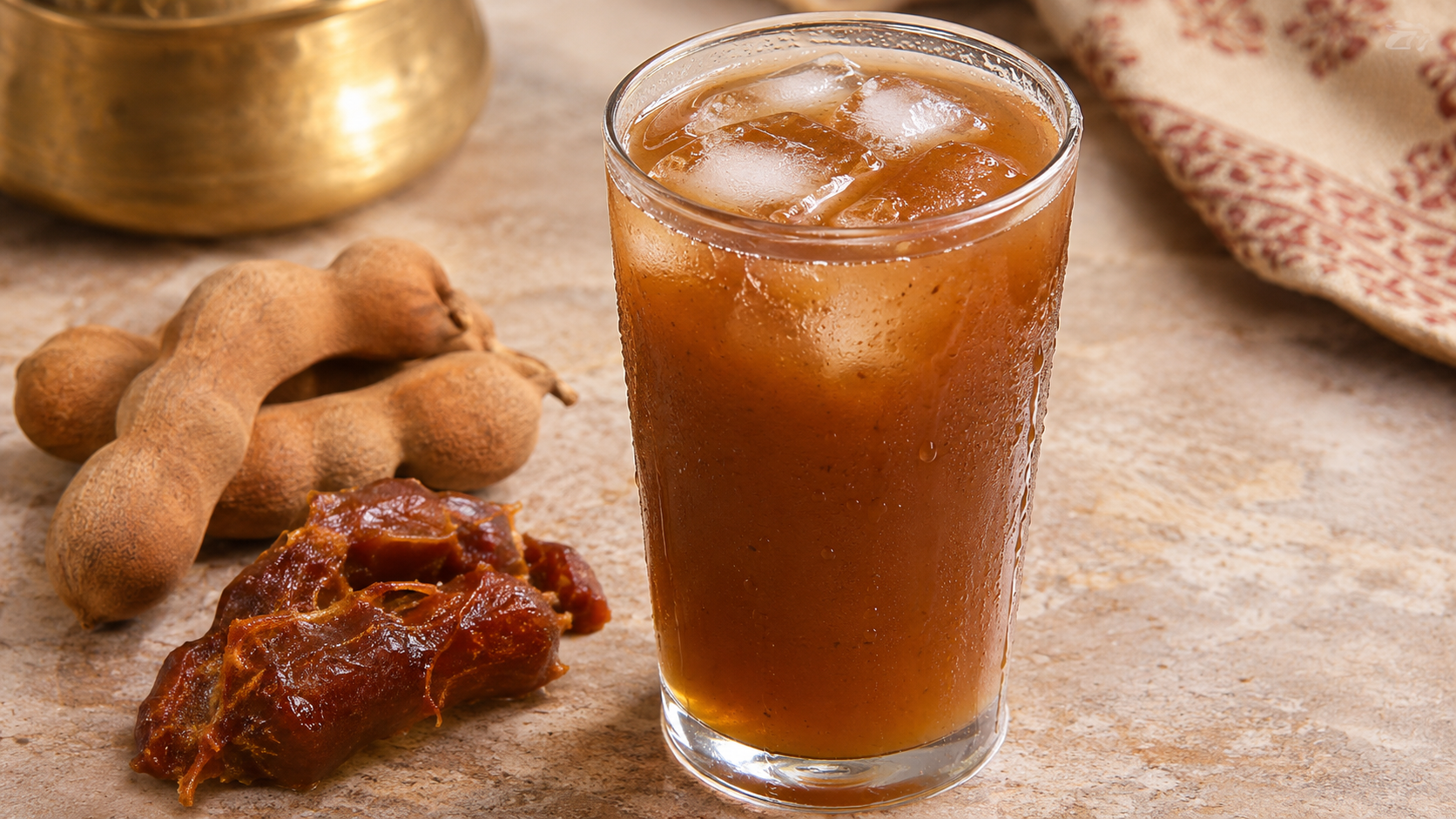
Tetul, the Bengali name for tamarind, brings a distinctive tang to this sharbat. Sweetness rounds out the sour pulp while a little black salt adds a savory note.
Serve it chilled as a contrast to a spicy vegetable meal.
What is Bengali tamarind sharbat?
Tamarind sharbat, sometimes called tetul sharbat, is a sweet, tangy beverage that uses soaked tamarind pulp instead of citrus juice. The brown fruit pulp provides a distinctive acidity and color, complemented by a small quantity of black salt. It makes a useful alternative to lemon-based drinks.
Tamarind pulp versus concentrate
Use a seedless block of tamarind pulp for this recipe. Bottled concentrate varies considerably in strength and is not a direct tablespoon-for-tablespoon replacement. Soften the measured pulp in warm water, press it to release the liquid and strain away seeds, shells or fibrous pieces. Measuring the pulp by weight improves repeatability.
How to balance the flavor
Tamarind varies in tartness depending on variety and age. The six-cup water base makes a relatively light drink. Stir the sugar into the warm extracted liquid so it dissolves, then add the remaining water and kala namak. For a more concentrated version, note the revised water quantity rather than changing multiple ingredients at once.
Bhakti Thought
A balanced preparation requires attention to each ingredient. In devotional cooking, that care can become a way of expressing gratitude for what we have received.
PrintBengali Tamarind Sharbat
Tangy Bengali tamarind sharbat with a touch of black salt and measured sweetness, served over ice.
- Prep Time: 15 minutes
- Chilling: 15 minutes
- Cook Time: 0 minutes
- Total Time: 30 minutes
- Yield: 6 servings 1x
- Category: Beverage
- Method: Soaking and straining
- Cuisine: Bengali
- Diet: Vegan
Ingredients
- 2 tablespoons seedless tamarind pulp (from a block, not concentrate)
- 6 cups water, divided
- 1/4 cup granulated sugar
- 1/4 teaspoon kala namak (black salt)
- 2 cups crushed ice
US & metric measurements — original 1× batch
Use either measurement, not both. Equivalents are approximate; original specified weights are preserved. Counts, optional quantities and amounts to taste remain as written. This reference is for the original batch; multiply both quantities if scaling the recipe.
2 tablespoons (approx. 30 mL) seedless tamarind pulp (from a block, not concentrate)
6 cups (approx. 1.44 L) water, divided
1/4 cup (approx. 50 g) granulated sugar
1/4 teaspoon (approx. 1.25 mL) kala namak (black salt)
2 cups (approx. 480 mL) crushed ice
Approximate kitchen conversions: NIST and ingredient-specific baking weights.
Instructions
- Break the tamarind pulp into small pieces and cover it with 1 cup of warm water. Leave for ten minutes to soften.
- Press the pulp with the back of a spoon, then pass the mixture through a fine strainer. Discard fibrous material.
- Stir the sugar into the warm tamarind liquid until dissolved. Add the remaining 5 cups of water and black salt, then mix.
- Chill in a covered pitcher. Divide the crushed ice among six glasses and add the sharbat just before offering and serving.
Notes
- Base-batch metric guide: about 30 g tamarind pulp, 1.42 L water and 50 g sugar.
- Use seedless block tamarind pulp, not concentrated paste.
- Press and strain well to remove fibers or fragments; extraction varies, so the nutrition estimate is approximate.
- Refrigerate covered and consume within two days; stir before serving.
- Nutrition is an estimate per stated serving, calculated from typical ingredient composition and approximate weights. Values may vary by brand, preparation, straining and final yield.
- These proportions have not been kitchen-tested; verify before publication.
Nutrition
- Serving Size: 1/6 of prepared batch
- Calories: 42
- Sugar: 9.9 g
- Sodium: 83 mg
- Fat: 0 g
- Saturated Fat: 0 g
- Unsaturated Fat: 0 g
- Trans Fat: 0 g
- Carbohydrates: 10.8 g
- Fiber: 0.2 g
- Protein: 0.1 g
- Cholesterol: 0 mg
Serving suggestions
Serve over crushed ice with a savory vegetarian meal or a small prasadam snack. Its tangy flavor complements richer fried preparations. For a community meal, extract and strain the pulp in advance, then mix the finished beverage in a clean, chilled pitcher.
Storage and troubleshooting
Refrigerate covered and use within two days. Stir before serving, since fine tamarind particles may settle. If the drink feels gritty, pass it through a finer strainer. Do not add all the ice to a pitcher that will be stored; melting ice can dilute the carefully measured ratio.
Dietary considerations
This recipe is vegan and free of dairy and caffeine. It contains added sugar and sodium from kala namak. Nutritional values are particularly approximate because the proportion of pulp solids retained after straining can vary.
Estimated nutrition per serving
Estimated per serving (1/6 of the prepared batch): 42 calories; 10.8 g carbohydrate, 9.9 g total sugars, 0.2 g fiber, 0.1 g protein, 0 g total fat, 0 g saturated fat, 0 g unsaturated fat, 0 g trans fat, approximately 83 mg sodium and 0 mg cholesterol. Values are calculated from typical ingredient composition and approximate edible weights, not laboratory testing. Actual values vary with brands, fruit ripeness, straining, and final yield.
Bengali Tamarind Sharbat FAQs
Can I use tamarind concentrate?
Yes, but start with a substantially smaller amount and dilute according to the strength of the product.
Why soak the tamarind?
Soaking makes it easier to separate the flavorful pulp from tough fibers.
Do I need to remove all the seeds?
Yes. Even seedless pulp can contain occasional fragments, so strain thoroughly before serving.
Related Hare Krishna beverages
Explore the complete beverage recipe collection or try Lemon Squash, Pomegranate Juice.