
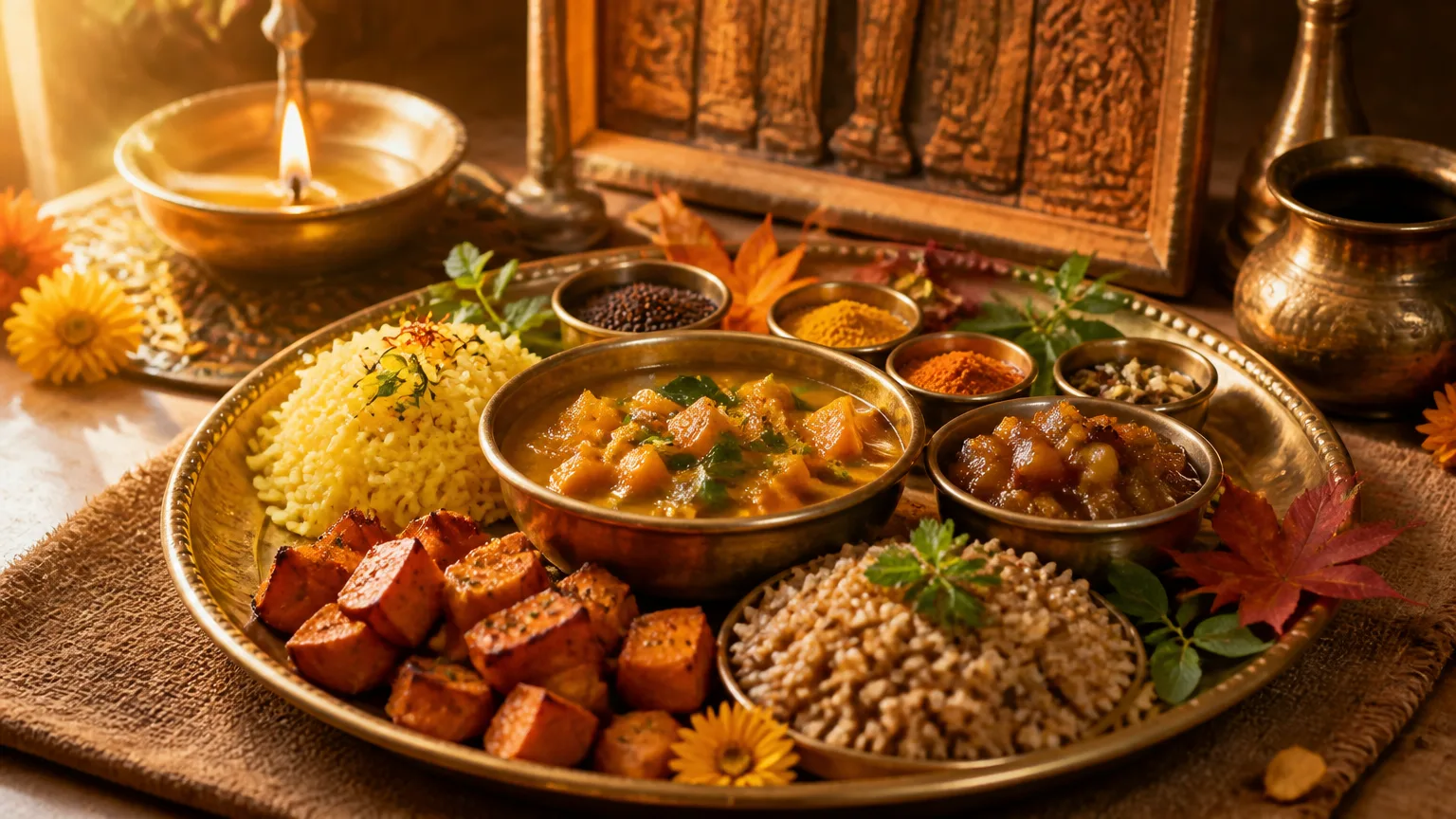
Fall recipes can become more than seasonal meals when prepared as thoughtful offerings for bhakti. Autumn’s pumpkins, apples, sweet potatoes, grains, and warming spices provide nourishing ingredients for home worship, family meals, festivals, and shared prasadam. With care, cleanliness, gratitude, and an offering mindset, simple food can support both spiritual practice and daily well-being.
This collection presents nine vegetarian offerings inspired by the flavors of fall. You will find comforting preparations suited to different occasions, from a quiet offering at home to a generous dish prepared for guests. Each recipe aims to balance seasonal appeal with the simplicity and reverence of devotional cooking.
Fall produce does not need to become overly rich or indulgent. Roasted vegetables, wholesome grains, fruit-based sweets, and gently spiced dishes can create satisfying meals while allowing the natural qualities of each ingredient to shine. Thoughtful preparation also turns ordinary kitchen work into an opportunity for focus and service.
Before cooking, adapt each recipe to your own devotional tradition and household standards. Preferences may vary regarding onion, garlic, dairy, specific seasonings, preparation methods, or fasting days. When in doubt, follow the guidance of your spiritual community and choose ingredients that align with your established practices.
Use these ideas as practical inspiration from Hare Krishna Recipes, then adjust portions, spices, and presentation for your home. Whether you are preparing a small plate for worship or a meal to share as prasadam, let the process remain attentive and sincere. The most meaningful offering is made with respect, gratitude, and the desire to serve.
1. Roasted Pumpkin and Sweet Potato Soup
This smooth soup brings together two naturally sweet, grounding fall vegetables. Pumpkin and sweet potato create a rich texture and full flavor without heavy seasoning, making them ideal for a first offering or light meal.
Choose fresh pumpkin or unsweetened pumpkin purée, depending on availability. Peel and cube the sweet potato, then roast both vegetables with a small amount of oil, salt, and mild spices such as cumin, ginger, or cinnamon. Roasting deepens their natural sweetness and adds a gentle, satisfying flavor.
Prepare the kitchen mindfully before cooking. Keep the workspace clean, handle each ingredient with care, and taste only according to your devotional tradition. Once the vegetables are tender and lightly browned, blend them with warm vegetable broth until smooth. Add more broth for a lighter soup or less for a thicker texture.
For a creamy variation, blend in a small amount of coconut milk. Plain yogurt can provide gentle tang when stirred in after blending, while fresh cilantro, parsley, or sage adds brightness. Toasted pumpkin seeds also offer a pleasant contrast to the soup’s silky texture.
Useful adaptations include:
- Add roasted carrots for extra sweetness.
- Use oat or cashew milk instead of coconut milk.
- Finish with grated ginger, fresh herbs, or a few toasted seeds.
- Replace cumin with mild curry spices for a warmer profile.
Serve the soup warm soon after preparation. Before serving the meal, set aside a clean portion for offering, using the practices followed in your home. This thoughtful step keeps the cooking process aligned with the spirit of vegetarian fall recipes and sincere devotional service.
2. Fall Vegetable Khichdi
Fall vegetable khichdi offers a nourishing one-pot meal for devotional cooking. Its simple base combines rice and split mung dal, creating a soft, balanced dish with carbohydrates, plant protein, and gentle nourishment. The texture makes it suitable for a simple offering, a family dinner, or a larger gathering served as prasadam.
Begin with equal parts rice and mung dal, then rinse them until the water runs mostly clear. Add seasonal vegetables such as carrots, peas, squash, cauliflower, or sweet potato. These ingredients bring fall color, natural sweetness, and satisfying substance without making the dish heavy.
Season the khichdi gently with cumin, grated ginger, and turmeric. Fresh cilantro or another suitable herb can add brightness after cooking. A small amount of ghee provides richness, while an appropriate plant-based substitute may work for households that avoid dairy. Follow the ingredient standards and devotional practices observed in your home.
For a spoonable khichdi, use more water and allow the mixture to cook until the rice and dal nearly dissolve. Reduce the water and cooking time for a firmer version that holds its shape on a plate. A pressure cooker, stovetop pot, or rice cooker can all produce good results; check the vegetables and adjust the liquid as needed.
Serve the khichdi warm, perhaps with plain yogurt, roasted vegetables, or a simple salad if those foods suit your household tradition. Set aside a clean portion before serving, following the offering practices of your home. Among practical fall recipes, this one stands out for its flexibility, gentle flavor, and ability to feed both a small household and a devotional gathering.
3. Apple, Pear, and Date Chutney
This apple, pear, and date chutney turns autumn fruit into a fragrant relish for rice, breads, vegetable entrées, or a festive thali. The fruit softens as it cooks, creating a naturally sweet texture without requiring much added sugar. Dates deepen the flavor, while lemon juice provides the bright, tangy contrast the chutney needs.
Peel and dice one apple and one firm pear. Chop four to six dates into small pieces, then place the fruit in a saucepan with a small amount of water. Add lemon juice, a pinch of salt, and a modest amount of cinnamon, cardamom, ginger, and cumin. These warming spices should support the fruit’s flavor without making the chutney taste like dessert.
Simmer the mixture over low heat until the apples and pears become tender and the dates begin to melt into the sauce. Stir occasionally to prevent sticking, and add a spoonful of water if the pan becomes dry. Taste near the end of cooking, adjusting the lemon juice for brightness or adding a small amount of sweetener only if the fruit lacks natural sweetness.
The finished chutney should be soft, fragrant, and lightly textured rather than completely smooth. Serve it beside steamed rice, flatbreads, roasted vegetables, or a simple vegetable entrée. Its gentle sweetness also brings balance to a savory devotional meal without overwhelming the main offering.
Thoughtful hospitality includes preparing food with care and making service easier for everyone. You can prepare this chutney one or two days ahead and refrigerate it in a clean, covered glass container. Bring it close to room temperature before serving, and set aside a clean portion according to the offering practices followed in your home. Among practical fall recipes, this chutney offers both seasonal flavor and dependable preparation.
4. Paneer and Autumn Vegetable Curry
Paneer and autumn vegetables create a hearty centerpiece for a shared devotional meal. This substantial vegetarian protein pairs well with squash, green beans, spinach, or cauliflower. The varied colors also make the dish inviting on a fall table.
Cut paneer into cubes and choose one of two methods:
- Lightly brown the cubes in ghee or oil for a firmer texture and golden edges.
- Simmer the cubes gently in the finished sauce for a softer, more tender bite.
Build the curry base with sautéed ginger, cumin, and other spices suited to your household practice. Add tomatoes for a bright, savory sauce, or use yogurt for gentle richness. Coconut milk creates a smooth, mellow curry, while blended cashews provide body without overpowering the vegetables.
Add firm vegetables first, such as cauliflower or squash, and cook them until tender. Stir in green beans next, then fold in spinach near the end. This timing keeps the vegetables colorful and prevents the greens from becoming dull. Add the paneer during the final minutes if you prefer it soft.
The sauce should coat the vegetables without becoming heavy. Adjust the consistency with water or vegetable stock, and season thoughtfully according to your devotional tradition. Dairy, ghee, yogurt, and other ingredients should align with the practices followed by the cook and household.
Serve the curry with steamed rice or warm chapatis. Present it as the main dish alongside chutney, salad, or another seasonal preparation rather than as an isolated recipe. As fall recipes go, this curry offers nourishment, warmth, and a generous format for sharing prasadam.
Set aside a clean portion before serving, following the offering practices observed in your home.
5. Sage and Pumpkin Stuffed Flatbreads
These stuffed flatbreads bring together pumpkin or winter squash, potatoes, and warming spices. They make a satisfying breakfast, afternoon snack, or special offering on a devotional table.
Prepare a soft dough with whole-wheat flour, a pinch of salt, a little oil or ghee, and enough warm water to form a smooth, pliable texture. Knead for several minutes, then cover the dough and let it rest for at least 20 minutes. This resting period makes the flatbreads easier to roll.
For the filling, mash roasted or steamed pumpkin with gently spiced potatoes. Add ground cumin, coriander, grated ginger, and finely chopped fresh cilantro. Use sage sparingly; its strong flavor should support the Indian-inspired seasoning rather than dominate it. A small amount of crumbled paneer or mild cheese can add richness if it suits your household tradition.
The filling must be relatively dry and completely cool before rolling. Excess moisture can tear the dough, while warm filling may soften it and cause uneven cooking.
- Divide the dough and filling into equal portions.
- Roll one dough portion into a small circle.
- Place filling in the center, then bring the edges together and seal.
- Flatten gently and roll again, using flour as needed.
- Cook on a hot, dry skillet until brown spots appear on both sides.
- Brush lightly with ghee, if desired, and keep covered.
Serve the flatbreads with plain yogurt, cilantro chutney, or a warm apple and pear preparation. You can also cook them in batches and keep them covered for guests. Set aside a clean portion before serving, following the offering practices observed in your home.
6. Creamy Cauliflower and Corn Offering
This creamy cauliflower and corn preparation offers a mild, comforting dish for children and adults. Its soft texture, gentle flavor, and golden color make it especially suitable for a family meal or devotional gathering.
Begin by cutting one medium cauliflower into small florets. Roast or sauté the florets with a small amount of ghee or oil until lightly golden. This step removes excess moisture, prevents a watery sauce, and adds savory depth that balances the natural sweetness of the corn.
Add cooked corn, a pinch of turmeric, and a modest amount of salt. For a smooth sauce, blend soaked cashews with warm water until creamy. You can also stir in coconut milk for a lightly sweet finish or use strained yogurt for gentle tang and extra body. Avoid boiling yogurt vigorously, as it may separate.
Combine the cauliflower and corn with the chosen sauce. Simmer briefly until the vegetables are tender but still hold their shape. Keep the seasoning restrained so the dish remains approachable for young children and complements rice, flatbreads, or other vegetarian cooking with more meaning and purpose.
As you roast, blend, and stir, work with attention rather than haste. Cooking can become an expression of intentionality and gratitude when each ingredient is handled with care. Before serving, set aside a clean portion according to the offering practices followed in your home.
For a festive presentation, spoon the preparation into a shallow serving bowl. Garnish with a few corn kernels, chopped cilantro, or a light sprinkle of toasted cashews. These simple touches create a welcoming appearance without elaborate decoration, making this dish a practical choice among fall recipes.
7. Warm Lentil and Roasted Root Vegetable Salad
This warm lentil and roasted root vegetable salad brings color, freshness, and substance to an autumn devotional meal. Combine tender lentils with roasted beets, carrots, parsnips, or sweet potatoes for a satisfying dish with varied textures.
Cook the lentils until tender but still intact. They should hold their shape when mixed with the vegetables and dressing. Overcooked lentils can become soft and lose the appealing texture this salad needs.
Roast the vegetables until browned at the edges and tender in the center. Their earthy sweetness pairs well with a bright dressing made from lemon juice, fresh herbs, grated ginger, and a small amount of maple syrup or another suitable sweetener.
For a simple preparation:
- Toss warm lentils and roasted vegetables with the dressing, then add chopped parsley or cilantro before serving.
Serve the salad warm, slightly above room temperature, or at room temperature. This flexibility makes it useful for potlucks, temple gatherings, and larger family offerings. The warm vegetables contrast with the fresh herbs and lemon, creating a balanced plate alongside rice, curry, or flatbreads.
You can roast the vegetables and cook the lentils one day ahead. Store them separately in clean, covered containers, then combine and warm them gently before serving. Add the dressing shortly before serving to preserve its fresh flavor and prevent the lentils from becoming soggy.
For a devotional meal, spoon the finished salad into a clean serving bowl. Set aside a clean portion before serving, following the offering practices observed in your home. Among nourishing fall recipes, this salad offers practical preparation, seasonal color, and generous portions for sharing prasadam.
8. Cardamom Apple Rice Pudding
This cardamom apple rice pudding offers a gentle, seasonal finish for a devotional meal. It combines rice, milk or a plant-based alternative, softened apples, and modest sweetness in a creamy dessert.
Rinse ½ cup of white rice, then combine it with 4 cups of milk in a heavy saucepan. Bring the mixture to a gentle simmer, then cook slowly over low heat. Stir often to prevent sticking as the rice releases its starch and naturally thickens the pudding.
While the rice cooks, peel and dice one or two apples. Sauté them gently in a small amount of ghee or water until tender but not mushy. Fold the softened apples into the thickened pudding near the end of cooking, allowing their texture and fall flavor to remain distinct.
Sweeten the pudding moderately with maple syrup, raw sugar, or another preferred ingredient. Add ¼ teaspoon of ground cardamom, then taste before adding more. A small pinch of saffron, cinnamon, or a few drops of rose water can add depth, but use these flavors carefully so the dessert remains balanced rather than perfumed.
Stir in optional raisins or finely chopped almonds for added texture. If the pudding becomes too thick, loosen it with a little warm milk. For the creamiest result, let it rest for several minutes after cooking.
Allow the pudding to cool slightly before serving. It may be offered warm, or chilled in a covered container for a firmer texture. Spoon a clean portion into a serving bowl before serving the meal, following the offering practices observed in your home. Among fall recipes, this dessert provides a simple, comforting close to prasadam.
9. Sweet Potato and Coconut Ladoo
Close this collection of fall recipes with sweet potato and coconut ladoo. These festive, bite-sized sweets combine cooked sweet potato, coconut, nuts, and warming spices in a naturally vegetarian offering.
- Steam or bake 2 medium sweet potatoes until completely tender. Peel and mash them while warm, then transfer the mash to a wide, heavy pan. Cook over low heat, stirring often, until excess moisture evaporates and the mixture becomes thick enough to pull away from the sides.
Stir in unsweetened grated coconut, chopped nuts, and a small amount of cardamom. Continue cooking until the mixture looks cohesive rather than wet. Proper drying is essential; undercooked ladoo will feel sticky, while excessive cooking can make them dense and difficult to shape.
Allow the mixture to cool until comfortable to handle. Grease your palms lightly, take modest portions, and roll each one into a smooth ball. If the mixture remains too soft, return it to the pan briefly or add a little more dry coconut. Avoid adding too much coconut at once, which can produce crumbly ladoo.
For variation, use toasted coconut for deeper flavor, chopped almonds for texture, or sesame seeds for a nutty finish. Dates can provide natural sweetness, while cardamom adds a warm festive note. Keep additions finely chopped so each ladoo holds its shape.
Arrange the sweets in small paper cups or on a clean serving plate. Garnish with coconut, almond slivers, or a few sesame seeds for a neat presentation. Modest portions often feel more thoughtful than abundance, especially when serving guests or preparing a small concluding offering.
Set aside a clean portion before serving, following the offering practices observed in your home. These ladoo may be offered warm or chilled in a covered container for a firmer texture.
Frequently Asked Questions About Fall Offerings for Bhakti
Must Every Recipe Be Offered?
No. You do not need to prepare or offer all nine dishes at once. Choose foods that suit your time, household tradition, and devotional practice. A thoughtful menu with one main dish, one accompaniment, and one sweet often feels more focused than an oversized spread.
Follow the guidance of your guru, temple, or household practice. Before serving, set aside a clean portion using the offering process observed in your home. Avoid tasting food intended for offering. Season carefully, then adjust future batches based on the finished prasadam.
How Can I Adapt the Ingredients?
These fall recipes can usually accommodate dietary needs without losing their seasonal character. Make substitutions that respect your household’s practices and the dish’s texture.
- Vegan: Replace ghee with coconut oil or another suitable plant oil. Use unsweetened plant yogurt where appropriate.
- Dairy-free: Choose coconut milk, cashew cream, or plain dairy-free yogurt.
- Gluten-free: Use gluten-free flour for flatbreads, and verify packaged spices, broths, and grains.
- Aromatic-free: Omit ingredients your tradition or family avoids, such as onion, garlic, or particular spices. Increase herbs, ginger, lemon, or toasted seeds for balance.
When unsure, confirm substitutions with your temple or spiritual teacher, especially for formal gatherings.
How Far Ahead Can I Prepare the Dishes?
Prepare chutneys, salads, sweets, and some vegetable dishes one day ahead. Store them in clean, covered containers, refrigerate perishable foods, and reheat main dishes thoroughly before serving. Flatbreads are best cooked close to mealtime, although you can keep them covered for a short period.
For weekly planning, organize offerings alongside meal prep breakfast ideas. Planned leftovers can provide simple breakfasts or lunches without turning devotional cooking into a daily burden.
How Should I Plan for a Seasonal Gathering?
Select a balanced menu with contrasting textures and colors. For example, serve a warm vegetable curry, a crisp seasonal salad, and a modest sweet. Prepare only the quantity you can offer and serve attentively, leaving enough time for clean presentation and prayerful service.
Cooking Fall Food as an Offering of Care
Seasonal vegetarian cooking becomes devotional when it is prepared with attention, cleanliness, gratitude, and a spirit of service. Bhakti does not depend on culinary perfection, rare ingredients, or an elaborate spread. A simple meal prepared sincerely can express deep care.
Choose one or two fall recipes that suit your household, then adapt them respectfully. You might combine a hearty savory dish, a seasonal accompaniment, and one sweet from this list. For example, serve a warm vegetable curry with a crisp salad and a modest dessert for a balanced offering.
Prepare only what you can serve attentively. Keep the cooking area clean, set aside a portion according to the offering practices followed in your home, and allow enough time for prayerful service. These small actions help transform an everyday meal into prasadam prepared with purpose.
The finished food also creates an opportunity to serve others. Share prasadam with family, guests, neighbors, or members of your devotional community. If you want to plan a fuller menu, explore these vegetarian dinner recipes for a meaningful devotional meal for more practical ideas.
Start with one recipe, cook with gratitude, and offer the result with sincerity. In bhakti, thoughtful service matters more than abundance.