
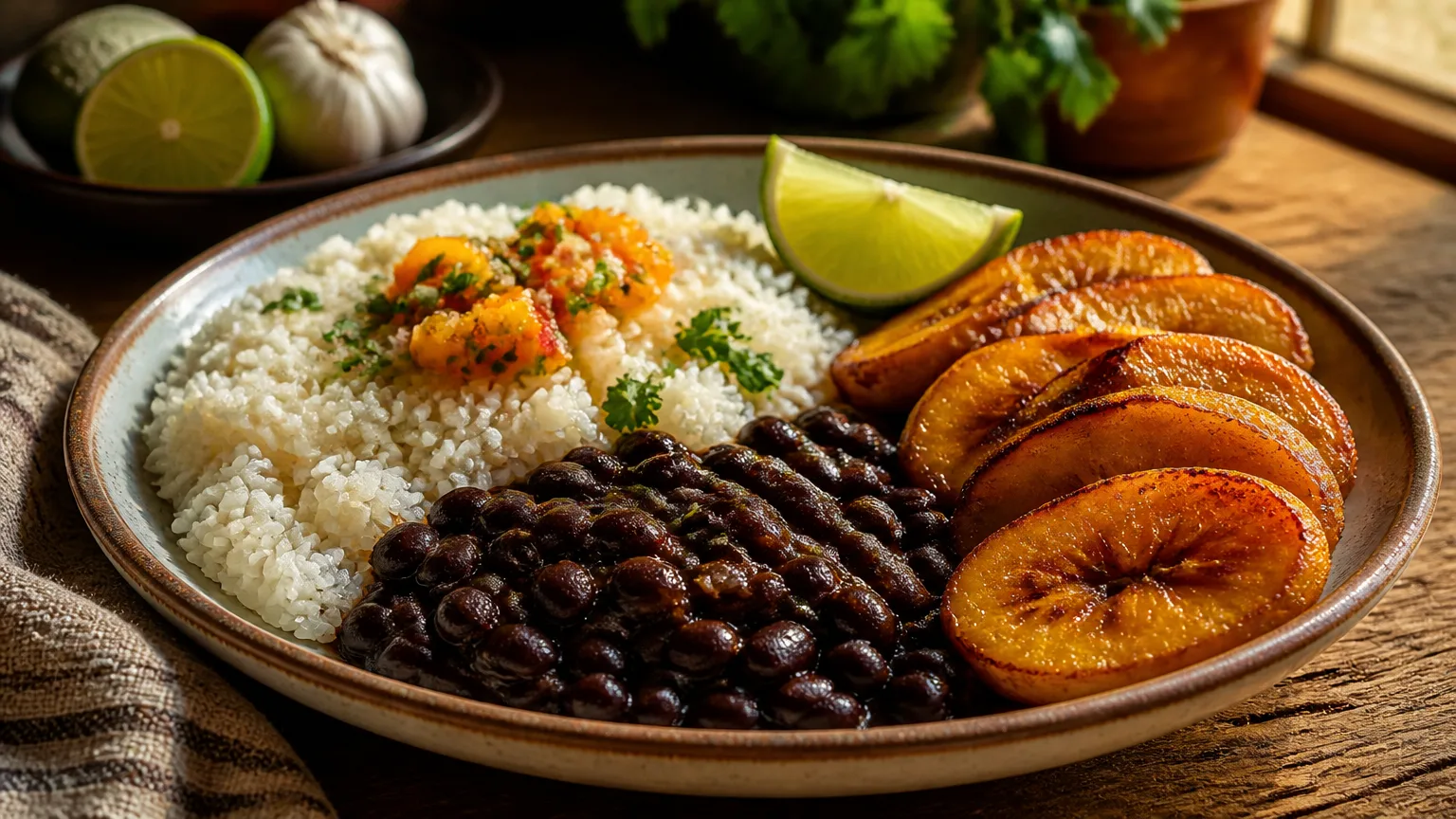
Cuban food is known for generous, comforting flavors built from everyday ingredients. Rice, beans, plantains, citrus, garlic, cumin, and sofrito—the aromatic base of sautéed vegetables and seasonings—can create deeply satisfying meals without meat.
This guide adapts familiar Cuban-inspired dishes for vegetarian home cooking. You’ll find practical ways to bring those flavors to your table, whether you’re preparing a weeknight meal or sharing food with family and friends. The recipes offer a starting point, not a definitive account of Cuban cuisine, which varies across the island and among its communities.
If cooking is part of your devotional practice, these dishes can also invite a more mindful approach. Choose ingredients and preparation methods that meet your tradition and household standards, and offer the finished food according to your practice. For guidance on selecting recipes and resources that support this approach, see our advice on choosing a vegetarian cookbook for bhakti cooking.
Explore more plant-based inspiration in the Hare Krishna Recipes collection. With a few pantry staples and fresh ingredients, you can make colorful, filling dishes that bring Cuban-inspired flavors into your home while honoring your own way of cooking and sharing food.
1. Moros y Cristianos: Cuban Black Beans and Rice
Moros y Cristianos pairs black beans with rice for a filling centerpiece or a dependable side. This classic Cuban food gets its depth from slowly seasoned beans, not meat. Serve the beans over fluffy white rice, or cook the rice with some of the bean liquid for a darker, more unified dish.
Build flavor with garlic, onion, and bell pepper, which create a savory, gently sweet base. Cumin adds warmth, oregano brings an earthy herbal note, and bay leaf gives the beans a subtle fragrance as they simmer. Ingredient choices and preparations vary from kitchen to kitchen, so adjust the seasonings to suit your taste.
For a practical weeknight version, use canned black beans. Sauté chopped onion, bell pepper, and garlic in oil, then stir in the beans, cumin, oregano, a bay leaf, and a little water. Simmer until the flavors come together, then taste and add salt, pepper, or a splash of vinegar as needed. Canned beans are a convenient choice, not an inauthentic one; careful seasoning makes the difference.
For a slower method, soak dried beans and simmer them until tender before adding the aromatics and seasonings. Reserve some cooking liquid to loosen the beans or flavor the rice. Dried beans take longer, but they offer control over texture and seasoning. Taste as you cook with either method, since beans, broths, and seasoning blends can vary in saltiness.
Keep the plate simple with sliced avocado or a citrusy salad of orange, lime, or grapefruit. The fresh, bright flavors balance the beans’ warmth and make a satisfying meal feel lighter. If you follow a specific dietary practice, check labels on stock and seasoning blends; some contain animal-derived ingredients or other items you avoid.
Serve the beans and rice together for a hearty bowl, or set them out separately so everyone can choose a portion. Either way, this flexible dish shows how a few pantry staples and well-chosen aromatics can create a deeply satisfying meal.
2. Cuban-Style Arroz Congrí
Arroz congrí brings rice and beans together in one pot, where the grains absorb the beans’ seasoned cooking liquid. The broth gives the rice its color and carries the flavor of garlic, onion, and other aromatics through the dish. The result is hearty and savory, with tender grains that remain distinct rather than turning mushy.
The names arroz congrí and moros y cristianos are often used for related rice-and-bean dishes, but their meanings are not fixed everywhere. In some Cuban households, the names refer to different bean choices or cooking styles; in others, they overlap. Black beans are common in many versions, while red beans appear in other regional and family preparations.
For a vegetarian version, build flavor with garlic, onion, bell pepper, cumin, and oregano. A bay leaf can add depth as the beans simmer. If you use canned beans, you can still make a flavorful dish, though cooking dried beans from scratch gives you more seasoned broth to use with the rice.
A simple method is to cook the beans until they are nearly tender, then measure the beans and their cooking liquid before adding the rice. Use the rice-to-liquid ratio on your rice package as a guide, accounting for the broth already in the pot. Add water or vegetable stock if needed, and season the liquid before it simmers.
Bring the mixture to a gentle boil, then cover and cook over low heat until the rice is tender and the liquid has been absorbed. Avoid frequent stirring, which can break the grains and make the dish dense. Let the pot rest, covered, for several minutes, then fluff gently with a fork.
Serve arroz congrí as a filling main dish or alongside vegetables and a crisp salad. For a broader taste of Cuban food at home, adjust the seasonings to suit your table while keeping the rice and beans at the center.
3. Yuca con Mojo: Cassava with Garlic-Citrus Sauce
After the rice and beans, yuca con mojo brings a bright, savory contrast to the table. Yuca, also called cassava, has a tender, starchy texture when boiled. A warm garlic-citrus sauce, or mojo, soaks into the pieces and gives this Cuban food classic its lively flavor.
Fresh cassava can be hard to find, but frozen, peeled yuca is widely available in many Latin American and Caribbean grocery stores. Use it straight from the freezer, following the package directions for cooking. If neither option is available, peeled russet potatoes make a practical substitute, though they are less dense and slightly less sweet.
To serve four, you’ll need about 2 pounds of yuca, ¼ cup olive oil, 4 minced garlic cloves, ¼ cup sour orange juice, and salt. If sour orange is unavailable, combine 2 tablespoons orange juice with 2 tablespoons lime juice. That blend brings the sweet-tart tang associated with traditional mojo.
Place the yuca in a pot, cover it with salted water, and bring it to a boil. Reduce the heat and simmer until tender, about 20 to 30 minutes for fresh yuca; frozen pieces may cook faster. Check with a fork, then drain. Let the yuca cool just enough to handle, and remove the tough, fibrous core running through each piece.
For the mojo, warm the oil in a small pan over low heat. Add the garlic and cook briefly, just until fragrant; do not let it brown. Stir in the citrus juice and salt, then pour the sauce over the warm yuca. Toss gently so the pieces hold their shape while absorbing the garlic and citrus.
Serve immediately as a comforting side dish, or pair it with beans and vegetables for a simple plant-based meal. The warm oil helps carry the garlic through each bite, while the citrus keeps the starchy yuca from feeling heavy. For more serving ideas, explore these vegetarian dip recipes, but keep mojo at the center of this Cuban-inspired plate.
4. Tostones: Twice-Fried Green Plantains
Tostones are crisp, savory rounds made from green plantains, a staple in Cuban food. Serve them as a snack, a side dish, or a sturdy base for toppings. Unlike ripe plantains, green ones are firm and starchy, with little sweetness. They hold their shape during frying and develop a crisp, golden exterior.
Choose green plantains with firm, mostly unblemished skins. Their peel can be difficult to remove, so trim off both ends and score the skin lengthwise in a few places. Lift the peel away with your fingers or a small knife, then cut the plantain crosswise into rounds about one inch thick.
- Heat a shallow layer of neutral oil in a heavy skillet over medium heat. Fry the rounds in batches for about two to three minutes per side, until lightly golden and just tender. Avoid crowding the pan so the oil stays hot.
- Transfer the rounds to a paper-towel-lined plate and let them drain briefly. While they are still warm, press each round with a sturdy cup or plantain press until it is about half an inch thick. Press evenly and gently; too much force can make the plantain break apart.
- Return the flattened rounds to the hot oil and fry for another two to three minutes per side, until crisp and golden. Drain them again, then season with salt while hot.
Let the oil return to temperature between batches, and use a slotted spoon or tongs to handle the rounds safely. If a slice feels too soft to flatten neatly, let it cool for a minute before pressing. A plantain press makes the job easier, but the flat bottom of a sturdy cup works well too.
Serve tostones warm with garlic-citrus mojo, or add a simple topping of seasoned beans. Diced tomato, avocado, or fresh herbs can also work, depending on your preferences and food standards. Their crisp texture pairs especially well with the beans and rice from earlier in this meal, or with cooked vegetables for a simple plant-based plate.
5. Maduros: Sweet Fried Ripe Plantains
Maduros bring a soft, sweet contrast to savory Cuban food. Unlike tostones, which are made from green plantains and fried for a crisp, starchy bite, maduros use ripe fruit. Their sugars caramelize in the pan, creating browned edges and a tender center.
Choose plantains with yellow skins and generous dark patches. They should feel ripe and yielding when gently pressed, but not be mushy, leaking, or show signs of spoilage. If the plantains are mostly green, leave them at room temperature for a few days until they soften and develop darker spots.
To prepare them, peel the plantains and slice them diagonally into pieces about half an inch thick. Heat a thin layer of suitable cooking oil in a skillet over moderate heat. Add the slices in a single layer, working in batches if needed so they brown evenly.
Cook each side for a few minutes, turning once the underside is golden. Keep the heat moderate: plantain sugars can burn quickly, so lower the temperature if the slices darken before becoming tender. Transfer the maduros to a plate lined with paper towel and let them drain briefly before serving.
Maduros are naturally vegetarian when cooked in suitable oil. Check the oil and any seasoning you add if you follow specific food standards. The plantains need little more than a light sprinkle of salt, though you can also serve them plain to let their sweetness stand out.
Serve maduros alongside beans and rice, or add them to a plate with yuca and mojo. Their mellow sweetness balances garlicky, tangy, and savory flavors without making the meal complicated. For an easy Cuban-inspired dinner, pair a few slices with seasoned beans and rice, then add vegetables or another savory main.
6. Ajiaco: Hearty Cuban Vegetable Stew
After the sweetness of fried plantains, a bowl of ajiaco brings a savory, comforting option to the table. Cuban ajiaco has varied across regions, generations, and households, so there is no single fixed ingredient list. This version adapts the idea as a generous, vegetable-forward stew for home cooks.
Start by building flavor with a sofrito-style base. Sauté chopped onion, garlic, and bell pepper in a little oil until soft, then add oregano, cumin, or black pepper if you like. Pour in vegetable broth rather than meat stock to keep the stew vegetarian; homemade broth or a carefully checked store-bought option both work.
Choose a mix of vegetables based on what you have. Cassava, pumpkin or squash, potatoes, corn, and plantain are all possible additions. Cut them into similar-sized pieces, but add them in stages: start with firm roots, then add quicker-cooking vegetables later so they stay tender rather than falling apart.
Simmer gently until the vegetables are cooked through and the broth tastes full and savory. If the stew becomes too thick, stir in more broth or water. For a heartier bowl, leave some vegetables whole and mash a few pieces against the side of the pot to thicken the liquid naturally.
Taste before serving and adjust the salt and pepper. A squeeze of lime or sour orange and a handful of chopped cilantro or parsley can brighten the stew at the end. Add citrus gradually, then taste again so it complements the broth without overpowering the vegetables.
Serve ajiaco hot as a main dish, with rice or bread for a more filling meal. It also fits naturally alongside seasoned beans or other Cuban food favorites from this menu. Since the ingredients can vary, use the vegetables you enjoy and adjust the seasoning to suit your table.
7. Cuban-Inspired Sofrito Beans
A pot of beans simmered with sofrito makes a hearty, flexible addition to a Cuban-inspired meal. Spoon it over rice, serve it beside sweet plantains, or add both to the plate for a filling vegetarian dinner.
Sofrito is an aromatic base that builds flavor at the start of cooking. For this home-style version, cook finely chopped onion and bell pepper in oil until softened. Stir in minced garlic, chopped tomato, and herbs such as oregano or cilantro, then cook until fragrant and the tomato begins to break down. This combination is a practical starting point, not a claim that every Cuban bean recipe uses the same ingredients.
For a quick meal, add drained canned black or red beans to the softened sofrito. Stir in a little water or vegetable broth, then simmer for 10 to 15 minutes so the flavors come together. If you use dried beans, soak and cook them until tender first; add the cooked beans and some of their cooking liquid to the sofrito.
Bean liquid helps control the texture. Use a small amount for beans that hold their shape, or add more and gently mash a few beans for a thicker, creamier pot. Avoid draining away all the cooking liquid before tasting—it can add body and bean flavor without animal ingredients.
For a deeper savory taste, let the sofrito cook slowly enough to soften fully, and season the beans with salt, black pepper, and a pinch of cumin if desired. Taste before serving, then brighten the pot with a splash of vinegar or a squeeze of lime or orange juice. Add it gradually so the acidity lifts the flavor without overpowering the beans.
Serve the beans hot over rice, alongside fried or baked plantains, or with both for a substantial plate. They also work well with yuca and mojo from earlier in this menu. Make a larger batch and refrigerate leftovers for an easy lunch; the flavors often deepen as the beans rest.
8. Cuban-Style Vegetable Stuffed Peppers
Stuffed peppers make a practical final dish for this Cuban food menu. They turn leftover rice, beans, and vegetables into a filling main course, while garlic, cumin, oregano, and citrus give the filling a Cuban-inspired flavor.
Use cooked rice and beans as the base. Stir in diced tomato, corn, or finely chopped vegetables such as zucchini, onion, or carrots. Season with minced garlic, cumin, dried oregano, salt, and a squeeze of lime or orange juice. Taste the mixture before stuffing the peppers and adjust the seasoning as needed.
To prepare the peppers, cut off their tops and remove the seeds and ribs. If you prefer a softer texture, partially cook the peppers in boiling water for a few minutes, then drain them before filling. For firmer peppers, skip this step and bake them directly with extra moisture in the dish.
Spoon the filling into each pepper and arrange them upright in a baking dish. Add a little water or broth to the bottom, then cover the dish with foil. Bake at 375°F (190°C) until the peppers are tender and the filling is hot, about 30 to 40 minutes; remove the foil near the end if you want the tops to brown.
Serve the peppers hot, topped with chopped cilantro or parsley. A side of maduros adds sweet contrast, while a simple salad or extra beans makes the meal more substantial. For a balanced plate, offer one pepper per person and adjust the sides to match appetites.
Refrigerate leftovers in a covered container for up to four days. Reheat them in the oven, covered, with a splash of water or broth to keep the filling moist. The recipe is easy to adapt: use whatever cooked vegetables and pantry staples you have, while keeping the rice, beans, and seasonings as the foundation.
Frequently Asked Questions
Can Cuban food be vegetarian?
Yes. Many Cuban-inspired meals center on rice, beans, vegetables, yuca, and plantains. Some traditional recipes use meat or animal-based broth, so check the ingredients and adapt each dish to your preferences.
What can I use instead of sour orange?
If sour orange is unavailable, mix orange juice with lime juice. A blend of orange and lemon juice also works. Taste as you go: the goal is a bright, tangy flavor, not a precise imitation.
Can I make these dishes with canned beans?
Yes. Drain and rinse canned beans, then add them to your recipe as directed. Because they are already cooked, simmer them just long enough to absorb the garlic, onion, and spices. Reduce added salt until you taste the finished dish.
How can I adapt recipes to personal or devotional dietary standards?
Use ingredients that fit your own standards; devotional practices and dietary rules vary. Check packaged broth, oil, and seasonings, since blends may contain ingredients you avoid. For example, choose vegetable broth and plain oil when those suit your needs, and season with individual spices.
How should I store and reheat rice and beans?
Refrigerate cooked rice and beans in covered, shallow containers within two hours of cooking. Use refrigerated leftovers within three to four days. Reheat until steaming hot throughout, adding a splash of water to loosen the rice or beans. Avoid leaving cooked rice at room temperature for extended periods.
Where can I find more Latin American vegetarian ideas?
For more regional inspiration, explore Brazilian vegetarian recipes and vegetarian dishes from El Salvador. These collections offer more ways to build satisfying plant-based meals at home.
Bring Cuban-Inspired Vegetarian Cooking to Your Table
Cuban food can offer a varied vegetarian spread built around rice, beans, sweet plantains, and hearty root vegetables. Garlic, citrus, and other bright seasonings bring balance and depth to these simple ingredients.
Start with a manageable menu of beans and rice, maduros, and yuca with mojo. Once you are comfortable with those dishes, combine other recipes from this article into a meal that suits your household, preferences, and spiritual practice.
Prepare each dish mindfully, choosing ingredients and seasonings with care. Cuban cooking has many regional and household variations, so adapt recipes thoughtfully rather than treating any one version as definitive. With respect for the food’s cultural roots, you can create a satisfying meal that feels at home at your table.