
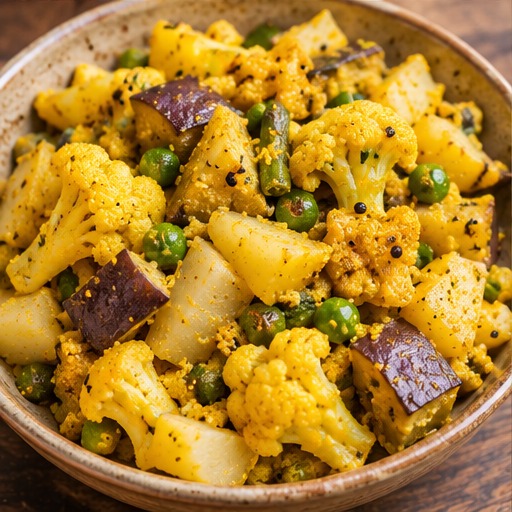
Cauliflower, potato, eggplant, peas and radish cooked together with mustard and turmeric in a covered pan.
This Bengali preparation is independently adapted for a Hare Krishna prasadam meal, using measured ingredients and practical home-kitchen guidance.
Why this chorchori is cooked covered
Bati refers to the vessel used for this vegetable dish. The source method cooks the vegetables together, relying largely on their own moisture. For home use, a heavy saucepan with a snug lid is a practical alternative to a traditional bowl. This adaptation uses measured neutral cooking oil instead of a larger quantity of mustard oil.
Prepare a fresh mustard paste
Grind a modest amount of whole mustard seed with water to make a pungent paste. Prepared bottled mustard has a different acidity and may contain unsuitable ingredients. The heat should be gentle, as a prolonged dry fry can make mustard taste bitter. The vegetables supply moisture as they soften.
Check the denser vegetables first
Potatoes and cauliflower need more time than eggplant. Cut everything into manageable pieces, and stir carefully so soft eggplant retains some shape. The covered method limits evaporation, but a few spoonfuls of water can prevent scorching in a particularly dry pan.
Bhakti Thought
Different regional traditions offer many ways to prepare a meal with devotion. Reserve a clean portion for Krishna before tasting, and share the prasadam with gratitude.
PrintBengali Bati Chorchori (Mustard Mixed Vegetables)
Cauliflower, potato, eggplant, peas and radish cooked together with mustard and turmeric in a covered pan.
- Prep Time: 20 minutes
- Cook Time: 25 minutes
- Total Time: 45 minutes
- Yield: 4 servings 1x
- Category: Vegetable side
- Method: Stovetop
- Cuisine: Bengali
- Diet: Vegan
Ingredients
- 200 g cauliflower florets
- 200 g peeled potato, cubed
- 200 g eggplant, cubed
- 100 g white radish, peeled and cubed
- 80 g shelled green peas
- 2 teaspoons black or yellow mustard seeds (6 g)
- 1/4 teaspoon turmeric
- 1/4 teaspoon mild red chili powder, optional
- 1 green chili, optional
- 1 tablespoon neutral food-grade cooking oil (14 g)
- 1/2 teaspoon fine salt (3 g)
- 2–4 tablespoons water (30–60 ml), only as needed
US & metric measurements — original 1× batch
Use either measurement, not both. Equivalents are approximate; original specified weights are preserved. Counts, optional quantities and amounts to taste remain as written. This reference is for the original batch; multiply both quantities if scaling the recipe.
200 g (approx. 7.05 oz by weight) cauliflower florets
200 g (approx. 7.05 oz by weight) peeled potato, cubed
200 g (approx. 7.05 oz by weight) eggplant, cubed
100 g (approx. 3.53 oz by weight) white radish, peeled and cubed
80 g (approx. 2.82 oz by weight) shelled green peas
2 teaspoons black or yellow mustard seeds (6 g)
1/4 teaspoon (approx. 1.25 mL) turmeric
1/4 teaspoon (approx. 1.25 mL) mild red chili powder, optional
1 green chili, optional
1 tablespoon neutral food-grade cooking oil (14 g)
1/2 teaspoon fine salt (3 g)
2–4 tablespoons water (30–60 ml), only as needed
Approximate kitchen conversions: NIST and ingredient-specific baking weights.
Instructions
- Wash and cut vegetables into 2 cm (approx. 0.79 in) pieces. Grind mustard seeds with two tablespoons of water to a coarse paste.
- Combine vegetables, mustard paste, turmeric, optional chili, oil and salt in a heavy lidded stainless-steel saucepan.
- Cover and cook over medium-low heat. Stir gently every few minutes, adding a little water only if the vegetables begin to stick.
- Continue 18–25 minutes until potato and cauliflower are fork-tender. Remove the lid and reduce surplus liquid so the vegetables are coated rather than swimming in sauce.
- Reserve an untouched portion for offering before serving warm.
Notes
- Makes 4 portions. Use suitable plain ingredients without onion, garlic, eggs, mushrooms, caffeine or alcohol-based extracts.
- Allergens: Mustard and legumes (peas).
- Nutritional figures use representative ingredient values; minor spices omitted. Cooking times, yield and proportions have not been kitchen-tested.
- Ingredient quantities and cooking times are editorial estimates; confirm through kitchen testing.
- Nutrition values are estimates per serving unless otherwise specified.
Nutrition
- Serving Size: 1/4 of prepared batch
- Calories: 122
- Sugar: 4.8 g
- Sodium: 325 mg
- Fat: 4.4 g
- Saturated Fat: 0.4 g
- Unsaturated Fat: 4 g
- Trans Fat: 0 g
- Carbohydrates: 18.4 g
- Fiber: 5.2 g
- Protein: 4.1 g
- Cholesterol: 0 mg
Serving ideas
Serve beside rice and Bengali cholar dal or a simple moong dal. It provides a distinct mustard flavor without onion or garlic. For a gathering, divide into smaller pan batches to avoid crushing the vegetables while stirring.
Storage
Refrigerate within two hours and use within three days. Warm gently until steaming hot throughout. A little water may be needed if the potatoes have dried; reduce it briefly before serving.
Diet and estimated nutrition
Vegan as written. Mustard can cause allergic reactions; omit it only if a different flavor is acceptable. The recipe contains peas and potato and is not a standard Ekadasi preparation. Nutrition assumes four equal portions and the measured oil and salt.
Frequently Asked Questions
Do I need a brass bowl?
No. A heavy, food-safe stainless-steel pan with a lid works well.
Can I use a mustard dressing?
Plain ground seeds are preferable because dressings may contain unwanted additives.
Why is the dish watery?
Uncover briefly once the vegetables are tender.
Can I use frozen peas?
Yes, use plain unseasoned peas.
Explore More Recipes
Bengali Sorse Begun (Mustard Eggplant Curry)