
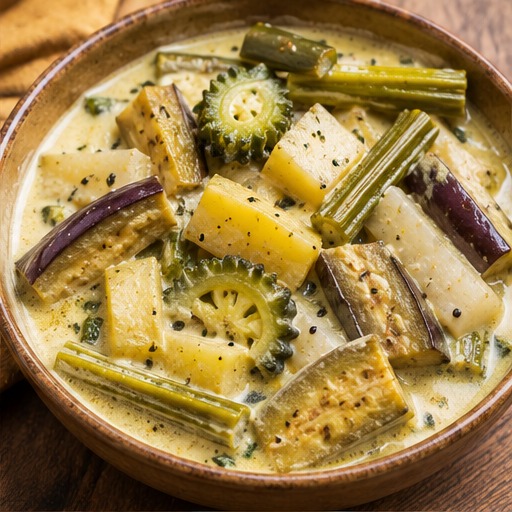
A gently bitter Bengali mixed vegetable stew with karela, green banana, potato, eggplant, mustard, milk and a five-spice tempering.
This Bengali preparation is independently adapted for a Hare Krishna prasadam meal, using measured ingredients and practical home-kitchen guidance.
A distinctive opening dish in a Bengali meal
Shukto combines a deliberate bitter note with gently cooked vegetables and a mellow milk finish. Karela is important to this particular style; it should be noticeable without overwhelming the other ingredients. The source preparation uses bori, dried pulse cakes, and additional vegetables. This home version leaves the bori out for easier sourcing and uses white radish in place of the source's ambiguous horseradish entry.
Choose vegetables of similar size
Use green cooking banana, not ripe dessert banana. Slice the bitter gourd and remove mature hard seeds. Cut dense vegetables into similar batons and add the softer eggplant later. Moringa pods are optional if unavailable; young pods have a tender center but a fibrous exterior.
Balance the bitter and mild flavors
A brief separate sauté of the bitter gourd brings out its aroma and prevents it from dominating the cooking liquid. Simmer the other vegetables until tender, then finish with the five-spice tempering. A little milk and optional sugar soften the bitter impression, but the dish should not become a sweet dessert.
Bhakti Thought
Different regional traditions offer many ways to prepare a meal with devotion. Reserve a clean portion for Krishna before tasting, and share the prasadam with gratitude.
PrintBengali Shukto (Gentle Bitter Vegetable Stew)
A gently bitter Bengali mixed vegetable stew with karela, green banana, potato, eggplant, mustard, milk and a five-spice tempering.
- Prep Time: 30 minutes
- Cook Time: 35 minutes
- Total Time: 65 minutes
- Yield: 6 servings 1x
- Category: Vegetable side
- Method: Stovetop
- Cuisine: Bengali
- Diet: Vegetarian
Ingredients
- 200 g peeled potatoes, cut into batons
- 150 g eggplant, cut into batons
- 100 g peeled white radish, cut into batons
- 150 g peeled green cooking banana, cut into batons
- 150 g bitter gourd (karela), seeded and sliced
- 100 g prepared moringa pods (drumsticks), cut into 5 cm pieces, optional
- 2 tablespoons pure ghee (28 g), divided
- 2 teaspoons neutral cooking oil (9 g)
- 1 tablespoon grated fresh ginger (12 g)
- 1 teaspoon plain ground mustard seed paste (5 g), made with water
- 1/2 teaspoon ground cumin
- 1/4 teaspoon turmeric
- 1/2 teaspoon panch phoron (equal parts fennel, cumin, mustard, fenugreek and nigella)
- 1 teaspoon sugar (4 g), optional
- 3/4 teaspoon fine salt (4.5 g)
- 1 1/2 cups water (360 ml), plus more as needed
- 1/4 cup pasteurized whole milk (60 ml)
US & metric measurements — original 1× batch
Use either measurement, not both. Equivalents are approximate; original specified weights are preserved. Counts, optional quantities and amounts to taste remain as written. This reference is for the original batch; multiply both quantities if scaling the recipe.
200 g (approx. 7.05 oz by weight) peeled potatoes, cut into batons
150 g (approx. 5.29 oz by weight) eggplant, cut into batons
100 g (approx. 3.53 oz by weight) peeled white radish, cut into batons
150 g (approx. 5.29 oz by weight) peeled green cooking banana, cut into batons
150 g (approx. 5.29 oz by weight) bitter gourd (karela), seeded and sliced
100 g (approx. 3.53 oz by weight) prepared moringa pods (drumsticks), cut into 5 cm (approx. 1.97 in) pieces, optional
2 tablespoons pure ghee (28 g), divided
2 teaspoons neutral cooking oil (9 g)
1 tablespoon grated fresh ginger (12 g)
1 teaspoon plain ground mustard seed paste (5 g), made with water
1/2 teaspoon (approx. 2.5 mL) ground cumin
1/4 teaspoon (approx. 1.25 mL) turmeric
1/2 teaspoon (approx. 2.5 mL) panch phoron (equal parts fennel, cumin, mustard, fenugreek and nigella)
1 teaspoon sugar (4 g), optional
3/4 teaspoon fine salt (4.5 g)
1 1/2 cups water (360 ml), plus more as needed
1/4 cup pasteurized whole milk (60 ml)
Approximate kitchen conversions: NIST and ingredient-specific baking weights.
Instructions
- Wash and cut vegetables into similarly sized batons. Remove the large hard seeds from bitter gourd. If using moringa pods, trim the ends and cut into short sections.
- Heat oil and half the ghee in a heavy pan. Lightly brown the bitter gourd and set it aside. Add potato, radish and green banana, stirring for 3–4 minutes.
- Add ginger, mustard paste, cumin, turmeric, water and salt. Cover and simmer 10–12 minutes. Add eggplant, optional moringa pods and browned bitter gourd; simmer until all vegetables are tender.
- In a separate small skillet warm remaining ghee and briefly toast the panch phoron. Stir into the stew. Reduce heat and add milk and optional sugar. Simmer gently for 2–3 minutes without boiling hard.
- Reserve a clean offering and serve in small portions. Moringa pod skins are fibrous; eat the soft interior and discard tough outer fibers.
Notes
- Makes 6 portions. Use suitable plain ingredients without onion, garlic, eggs, mushrooms, caffeine or alcohol-based extracts.
- Allergens: Milk and mustard.
- Nutritional figures use representative ingredient values; minor spices omitted. Cooking times, yield and proportions have not been kitchen-tested.
- Ingredient quantities and cooking times are editorial estimates; confirm through kitchen testing.
- Nutrition values are estimates per serving unless otherwise specified.
Nutrition
- Serving Size: 1/6 of prepared batch
- Calories: 145
- Sugar: 6.5 g
- Sodium: 318 mg
- Fat: 7.1 g
- Saturated Fat: 3.3 g
- Unsaturated Fat: 3.6 g
- Trans Fat: 0.2 g
- Carbohydrates: 19.9 g
- Fiber: 3.7 g
- Protein: 2.5 g
- Cholesterol: 13 mg
Serving suggestions
Serve a small bowl at the beginning of a Bengali-style prasadam meal with rice, followed by dal and another sabji. Remove the toughest drumstick fibers when eating. Offer the finished preparation before tasting.
Storage and reheating
Refrigerate within two hours and consume within three days. Reheat until steaming hot throughout using gentle heat to avoid separating the milk. The vegetables may become softer after storage; make the stew fresh for the best texture.
Allergens and dietary notes
Contains dairy and mustard. Panch phoron contains several seeds; measure the spices individually or verify the blend. Nutrition is estimated with optional sugar and moringa included, based on edible portion estimates. The recipe is not designed to treat a medical condition or meet all Ekadasi restrictions.
Frequently Asked Questions
Can I omit bitter gourd?
It would lose the defining bitter character of this version.
What is panch phoron?
A five-seed blend; here use fennel, cumin, mustard, fenugreek and nigella.
Can I omit bori?
Yes, this recipe is deliberately bori-free.
Can I use plant milk?
Plain unsweetened coconut milk creates a different but dairy-free variation if oil replaces ghee.
Explore More Recipes
Bengali Mocha Ghanto (Banana Blossom and Coconut)