
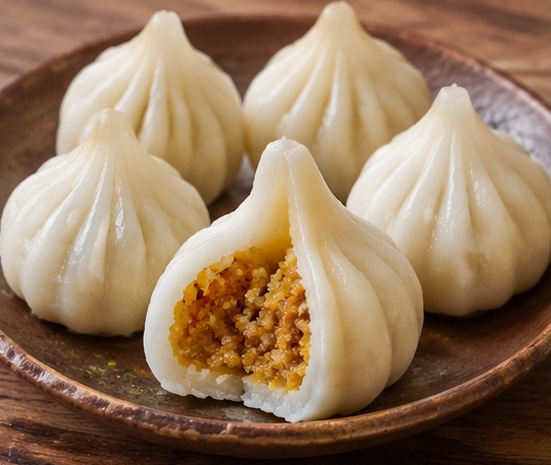
Soft steamed rice-flour dumplings filled with coconut, jaggery and cardamom, shaped into little pleated modaks.
Prepare this measured recipe as part of a suitable festival offering. Check the timing and dietary requirements of the observance with your temple; the preparation itself is not a fasting prescription.
A traditional steamed sweet
Coconut-jaggery dumplings are known by regional names including kozhukattai and modak. This version uses the South Indian rice-flour shell and a coconut filling, with pleats for a festive presentation. It is appropriate as a vegetarian sweet at celebrations when the ingredients are permitted.
Prepare a dry filling first
Finely grate coconut and jaggery to help them combine. Use low heat until the jaggery melts and the mixture holds together; too much moisture makes sealing difficult. Do not cook until the jaggery hardens into candy. Let the filling cool before shaping.
Work with warm rice dough
Rice flour is not elastic like wheat. Add it to hot water and stir until hydrated. Keep the dough covered and use damp fingers while forming cups. Make the shells fairly even and avoid large thick seams. The steamer should be ready before you assemble the last dumplings.
Bhakti Thought
A festival is an opportunity to deepen remembrance of Krishna through service. Prepare the offering with care, keep it separate before tasting, and share the prasadam generously.
PrintCoconut Jaggery Steamed Modak (Kozhukattai)

Soft steamed rice-flour dumplings filled with coconut, jaggery and cardamom, shaped into little pleated modaks.
- Prep Time: 30 minutes
- Resting or cooling: 10 minutes
- Cook Time: 25 minutes
- Total Time: 65 minutes
- Yield: 12 servings 1x
- Category: Festival sweet
- Method: Steaming
- Cuisine: South Indian
- Diet: Vegetarian
Ingredients
- 1 cup fine rice flour (120 g)
- 1 1/4 cups water (300 ml), plus a little as needed
- 2 teaspoons pure ghee (9 g), divided
- 1 pinch fine salt (0.3 g)
- 1 cup finely grated unsweetened coconut (80 g)
- 1/2 cup finely grated jaggery (90 g)
- 1/4 teaspoon ground cardamom
- 1 teaspoon water, for filling if needed
US & metric measurements — original 1× batch
Use either measurement, not both. Equivalents are approximate; original specified weights are preserved. Counts, optional quantities and amounts to taste remain as written. This reference is for the original batch; multiply both quantities if scaling the recipe.
1 cup fine rice flour (120 g)
1 1/4 cups water (300 ml), plus a little as needed
2 teaspoons pure ghee (9 g), divided
1 pinch fine salt (0.3 g (approx. 0.01 oz by weight))
1 cup finely grated unsweetened coconut (80 g)
1/2 cup finely grated jaggery (90 g)
1/4 teaspoon (approx. 1.25 mL) ground cardamom
1 teaspoon (approx. 5 mL) water, for filling if needed
Approximate kitchen conversions: NIST and ingredient-specific baking weights.
Instructions
- Cook coconut and jaggery together over low heat with a teaspoon of water if needed, stirring until the jaggery melts and the mixture is moist but not runny. Mix in cardamom and cool.
- Bring the measured water to a boil with salt and half the ghee. Reduce heat and stir in rice flour until it absorbs the water and forms a soft dough. Cover for ten minutes.
- When cool enough to handle, knead the dough gently with damp hands. Divide dough and filling into twelve equal portions.
- Flatten each dough ball into a cup, fill with cooled coconut mixture, pinch small pleats around the edge and bring them together at the top. Repair cracks with damp fingertips.
- Grease a steamer plate with remaining ghee. Steam over gently boiling water for 10–12 minutes until the shells are set and slightly translucent. Rest briefly and reserve an offering portion.
Notes
- Makes 12 portions. Use plain vegetarian ingredients without onion, garlic, eggs, mushrooms, caffeine or alcohol-based extracts.
- Nutrition estimated from representative ingredient composition; minor spices omitted. Recipe quantities, cooking times and yield are not kitchen-tested.
- Festival associations are serving suggestions; follow your temple's offering, fasting and feast schedule.
- Ingredient quantities and cooking times are editorial estimates; confirm through kitchen testing.
- Nutrition values are estimates per serving unless otherwise specified.
Nutrition
- Serving Size: 1/12 of prepared batch
- Calories: 96
- Sugar: 7.6 g
- Sodium: 13 mg
- Fat: 3.1 g
- Saturated Fat: 2.5 g
- Unsaturated Fat: 0.6 g
- Trans Fat: 0 g
- Carbohydrates: 16.4 g
- Fiber: 0.8 g
- Protein: 0.8 g
- Cholesterol: 2 mg
Serving and celebration
These steamed dumplings are commonly associated with Ganesh Chaturthi in regional traditions. They can also be offered to Krishna as part of a suitable festive menu. Follow your own worship practice rather than treating the recipe as a ritual requirement.
Storage and reheating
Serve freshly steamed for the softest texture. Refrigerate within two hours and use within three days. Steam briefly until hot when reheating. Coconut-filled dumplings are not shelf-stable and should not sit out for prolonged periods.
Diet and nutrition
Contains coconut and milk-derived ghee. Rice flour contains no gluten by nature, but confirm cross-contact requirements. The estimated nutrients assume twelve dumplings and all the measured jaggery and ghee. Rice flour is a grain and not appropriate for a strict grain-free fast.
Frequently Asked Questions
Why do the shells crack?
The dough may be too dry. Work with it warm, covered, and use damp fingertips.
Can I use sugar instead of jaggery?
Yes; the flavor and moisture will differ.
Do modaks need deep frying?
No, this version is steamed.
Can I make them ahead?
Steam the same day if possible and refrigerate promptly.