
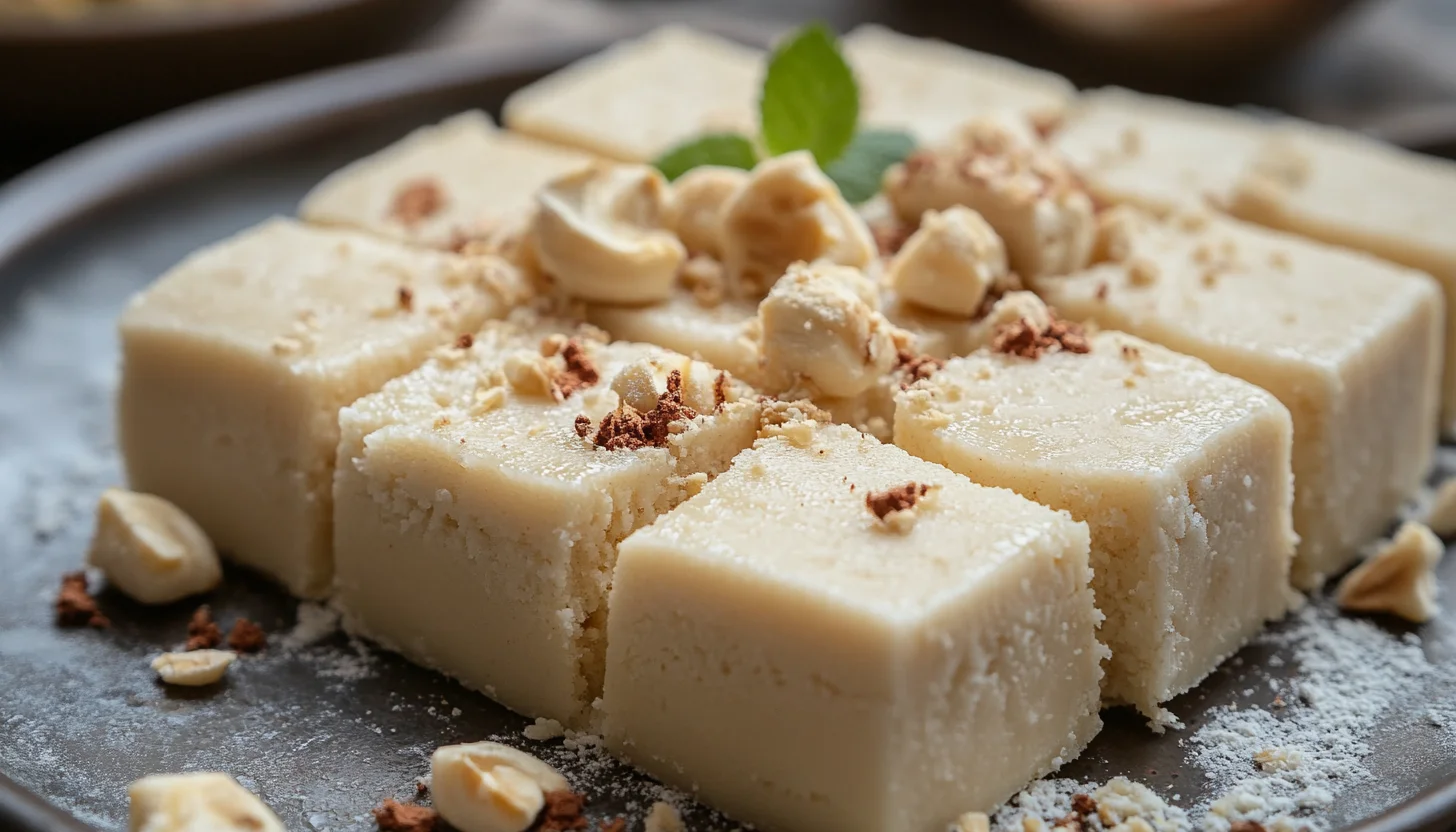
Semolina halava is a practical festive sweet when prepared in manageable batches. This version uses a measured sugar syrup, roasted semolina, ghee and modest quantities of dried fruit and nuts. No food coloring is required. The sweetness is adjusted from traditional richer formulas for a small dessert portion served with other prasadam.
This recipe is designed as a separate production guide for temple kitchens, Sunday feasts, community meals and prasadam distribution. It serves 100 as part of a planned menu; the recipe card is the baseline and the scaling guidance below is based on that yield.
Portion and yield planning
Approximately 100–120 g dessert portion; adjust after cooking.
The quantities are editorial planning estimates. Make a 25-serving trial with your actual ingredients and equipment before committing to a larger event. Weigh the finished batch and divide by the number of servings; allow a separately planned reserve for serving losses and additional guests.
Equipment and kitchen workflow
Four heavy 8–12 L (8–13 qt) pans or staggered batches; separate syrup pot, heat-resistant long paddle, splash protection, scale, ladle and temperature probe.
Divide production into four labeled 25-serving sets for 100 guests. For 250 servings plan ten sets; for 500 plan twenty. Use larger commercial equipment only within its rated capacity, and adjust the number of batches to match the available staff and time. Assign roles for receiving and washing ingredients, weighing, cooking, temperature monitoring and portioning.
Technique for consistent large batches
Roasting is the defining step, and a deep pile of semolina tends to toast unevenly. Use a wide heavy pan and stir constantly until the grains are evenly pale golden, without letting them turn dark. Make the syrup separately and add it gradually over low heat, wearing appropriate protection; steam and hot sugar can burn. Smaller batches make the hydration more predictable and safer than pouring several gallons of syrup into one vessel.
Bhakti Thought
Plan the meal so preparation is orderly and service is generous without waste. Follow the measured recipe without tasting before the offering; reserve an untouched portion for Krishna and share the prasadam with care.
PrintSuji Halava for 100 People

Semolina halava is a practical festive sweet when prepared in manageable batches. A measured 100-serving no-onion, no-garlic vegetarian recipe with batch scaling and service guidance.
- Prep Time: 25 minutes
- Cook Time: 35 minutes
- Total Time: 60 minutes
- Yield: 100 servings 1x
- Category: Dessert
- Method: Stovetop
- Cuisine: Indian
- Diet: Vegetarian
Ingredients
- 2.5 kg (5.51 lb) Fine semolina (suji)
- 2 kg (4.41 lb) Granulated sugar
- 1 kg (2.2 lb) Pure ghee
- 7.5 L (1.98 US gal) Drinking water
- 200 g (7.05 oz) Unsalted cashews, chopped
- 250 g (8.82 oz) Raisins
- 20 g (0.71 oz) Ground green cardamom
- 1 g (0.04 oz) Saffron threads, optional
US & metric measurements — original 1× batch
Use either measurement, not both. Equivalents are approximate; original specified weights are preserved. Counts, optional quantities and amounts to taste remain as written. This reference is for the original batch; multiply both quantities if scaling the recipe.
2.5 kg (5.51 lb) Fine semolina (suji)
2 kg (4.41 lb) Granulated sugar
1 kg (2.2 lb) Pure ghee
7.5 L (approx. 31.25 US cups) (1.98 US gal) Drinking water
200 g (7.05 oz) Unsalted cashews, chopped
250 g (8.82 oz) Raisins
20 g (0.71 oz) Ground green cardamom
1 g (0.04 oz) Saffron threads, optional
Approximate kitchen conversions: NIST and ingredient-specific baking weights.
Instructions
- Prepare four sets of 25 servings, each with its own measured semolina, sugar, ghee and water. Toast cashews and raisins gently in some of the allocated ghee, then set aside.
- In a heavy pot dissolve sugar in the allocated water and bring to a simmer. Add saffron if using. Keep the syrup hot nearby.
- In a second deep heavy pan, roast the semolina in the remaining ghee over moderate-low heat, stirring continuously until pale golden and evenly toasted.
- Lower the heat. Carefully add the hot syrup in small portions while stirring with a long-handled utensil; the mixture can bubble vigorously. Do not lean over the pot. Cook until absorbed and semolina is tender.
- Stir in cardamom and the toasted cashews and raisins. Divide the measured final yield into 100 equal portions, reserve an offering and maintain safe holding.
Notes
- 100 servings is the recipe-card baseline. Approximately 100–120 g dessert portion; adjust after cooking.
- All quantities are planning estimates, not kitchen-tested institutional yields. Weigh ingredients and record the actual finished yield from a 25-serving trial.
- Use suitable plain ingredients without onion, garlic, eggs, mushrooms, caffeine or alcohol-based extracts; check prepared dairy and spices.
- Allergens: Wheat, milk, cashews (tree nuts).
- Metric quantities control; US equivalents are approximate. Scale the ingredient weights, but not cooking times, pot capacity or evaporation blindly.
- Serving illustration reused from the matching home-size recipe; actual presentation and recipe details may vary.
- Ingredient quantities and cooking times are editorial estimates; confirm through kitchen testing.
- Nutrition values are estimates per serving unless otherwise specified.
Nutrition
- Serving Size: 1 of 100 equal portions
- Calories: 279
- Sugar: 21.7 g
- Sodium: 1 mg
- Fat: 11.2 g
- Saturated Fat: 6.4 g
- Unsaturated Fat: 4.4 g
- Trans Fat: 0.3 g
- Carbohydrates: 40.8 g
- Fiber: 1.1 g
- Protein: 3.6 g
- Cholesterol: 26 mg
Scaling for 25, 50, 250 and 500 servings
Use the complete ingredient scaling chart following this recipe. The 100-serving card uses metric weights and volumes with approximate US equivalents. Four 25-serving batches produce 100 servings; do not multiply the cook time by the number of diners. For spices and water, validate the smaller trial and document any adjustments rather than guessing.
| Ingredient | 25 servings | 50 servings | 100 servings | 250 servings | 500 servings |
|---|---|---|---|---|---|
| Fine semolina (suji) | 625 g (1.38 lb) | 1.25 kg (2.76 lb) | 2.5 kg (5.51 lb) | 6.25 kg (13.78 lb) | 12.5 kg (27.56 lb) |
| Granulated sugar | 500 g (1.1 lb) | 1 kg (2.2 lb) | 2 kg (4.41 lb) | 5 kg (11.02 lb) | 10 kg (22.05 lb) |
| Pure ghee | 250 g (8.82 oz) | 500 g (1.1 lb) | 1 kg (2.2 lb) | 2.5 kg (5.51 lb) | 5 kg (11.02 lb) |
| Drinking water | 1.875 L (1.98 US qt) | 3.75 L (3.96 US qt) | 7.5 L (1.98 US gal) | 18.75 L (4.95 US gal) | 37.5 L (9.91 US gal) |
| Unsalted cashews, chopped | 50 g (1.76 oz) | 100 g (3.53 oz) | 200 g (7.05 oz) | 500 g (1.1 lb) | 1 kg (2.2 lb) |
| Raisins | 62.5 g (2.2 oz) | 125 g (4.41 oz) | 250 g (8.82 oz) | 625 g (1.38 lb) | 1.25 kg (2.76 lb) |
| Ground green cardamom | 5 g (0.18 oz) | 10 g (0.35 oz) | 20 g (0.71 oz) | 50 g (1.76 oz) | 100 g (3.53 oz) |
| Saffron threads, optional | 0.25 g (0.01 oz) | 0.5 g (0.02 oz) | 1 g (0.04 oz) | 2.5 g (0.09 oz) | 5 g (0.18 oz) |
Service and portioning
Portion halava warm using a measured scoop. It firms as it stands, so do not repeatedly add unmeasured ghee or water. If the sweet is made for a public gathering, identify the wheat, milk and cashew allergens clearly and keep the nut garnish separate when planning an allergen-conscious alternative.
Food safety for community meals
For catered service, keep hot food at or above 135°F (57°C) and cold food at or below 41°F (5°C). If cooling cooked food for later service, divide into shallow pans or use an ice bath or blast chiller; cool from 135°F (57°C) to 70°F (57°C to 21°C (70°F)) within two hours, then to 41°F (5°C) within a total of six hours. Log temperatures with a sanitized probe. Reheat previously cooked and cooled food for hot holding to 165°F (74°C) for 15 seconds within two hours. Follow local health department requirements and discard food that cannot be safely held or cooled.
Use safe food-handling practices appropriate to a licensed or permitted kitchen. Allergen labels and a designated person in charge are important when preparing food for the public. These temperature limits reflect standard food-service guidance, not a substitute for local requirements.
Allergens and nutritional estimates
Contains: Wheat, milk, cashews (tree nuts). Check all packaged ingredients and prevent cross-contact. All nutrition values are estimated from representative ingredient composition and the measured amounts divided into 100 equal portions; minor spices are omitted, and variable ingredient brands and cooking yields affect values. No accompaniments are included.
Frequently Asked Questions
Can I omit the nuts?
Yes, and use clean equipment if avoiding nut cross-contact.
Why is the halava lumpy?
Syrup may have been added too quickly. Stir as you add it in small portions.
Can I make 500 servings at once?
Use twenty 25-serving batches or a suitable validated commercial kettle, not one oversized domestic pot.
How do I avoid burns?
Use a deep stable pan, long utensil and careful small additions of hot syrup.